

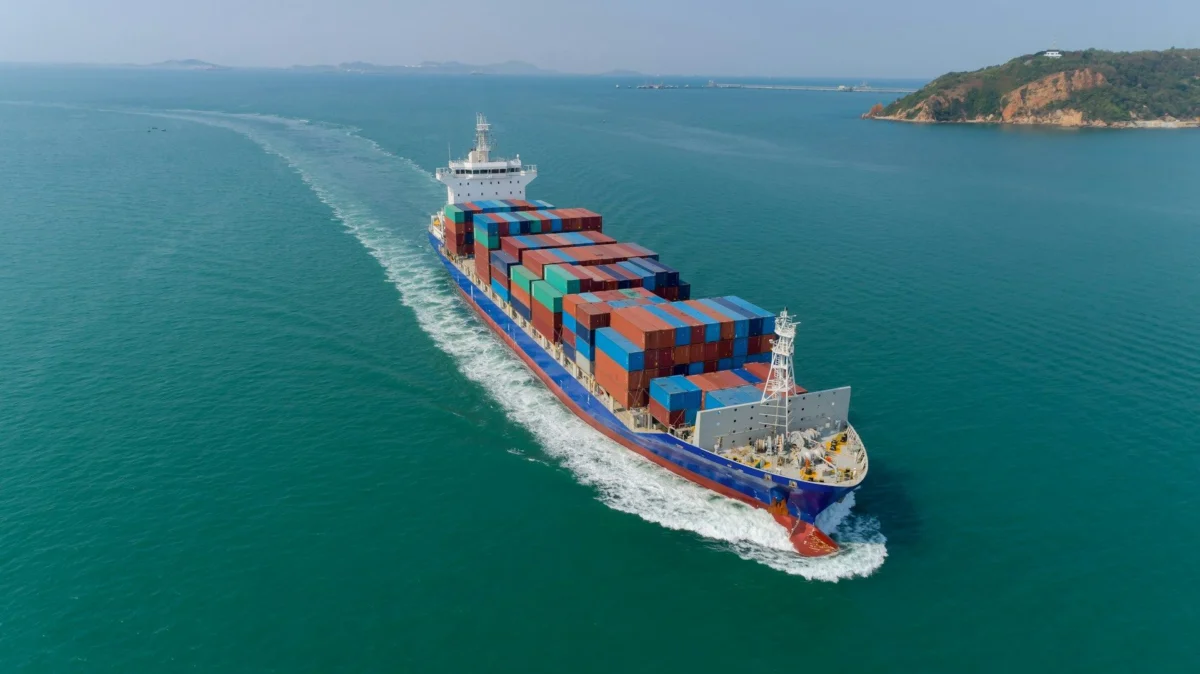
The landscape of global trade finance is undergoing a fundamental transformation as geopolitical instability in the Middle East forces a decoupling between traditional banking institutions and the commodity trading sector. As the conflict involving Iran intensifies, Western financial institutions are accelerating a process known as "debanking," leaving commodity traders and non-bank lenders to seek alternative settlement methods. This shift has catapulted stablecoins—digital assets pegged to the value of fiat currencies—from the periphery of the crypto market into the center of a $2 trillion international trade ecosystem.
According to Luke Sully, CEO of Haycen, a stablecoin issuer specializing in trade finance, the current war has heightened compliance anxieties to a breaking point. Western banks, fearing the severe penalties associated with secondary sanctions and indirect exposure to Iranian entities, are increasingly severing ties with traders operating in regional hubs such as Oman, Qatar, and the United Arab Emirates. The result is a fragmented financial system where the "plumbing" of global trade is being rebuilt on blockchain rails.
The Mechanics of Debanking and the Shift to Non-Bank Finance
Trade finance is the lifeblood of the global economy, providing the credit and guarantees necessary to move goods across borders. Historically dominated by massive global banks, the sector has seen a steady retreat of traditional players over the last decade. This vacuum has been filled by non-bank investment funds and private credit entities. Today, the trade finance market is estimated to be worth approximately $2 trillion, with a significant portion of this liquidity provided by specialized funds rather than commercial banks.
"Everybody thinks they know about trade finance, but they don’t," Sully noted in a recent industry briefing. "It’s predominantly non-bank investment funds lending to borrowers around the world to move goods and services." These funds often achieve annualized returns of roughly 15% by financing the movement of critical commodities—such as manganese from South Africa to Indonesia or helium from Qatar to South Korea.
However, even these non-bank lenders require access to traditional banking "rails" to settle payments and move US dollars. As banks retreat due to Iran-linked risk fears, these lenders are finding their accounts closed or their transactions indefinitely flagged. This "de-risking" strategy by banks is intended to protect the institutions from regulatory scrutiny, but for the traders moving physical goods, it represents an existential threat to their operational capacity.
Chronology of the Trade Finance Disruption (2022–2026)
The transition from traditional banking to digital settlement has not occurred in a vacuum. It is the result of a multi-year escalation of geopolitical and regulatory pressures:
- 2022–2023: Initial "de-risking" trends began as global banks faced record fines for Anti-Money Laundering (AML) failures. Smaller commodity traders in emerging markets were the first to lose access to US dollar clearing services.
- 2024: The expansion of conflict in the Middle East led to the designation of several regional shipping hubs as "high-risk" zones. Banks began requiring exhaustive documentation for any transaction involving the Persian Gulf, leading to 14-to-21-day settlement delays.
- 2025: Stablecoin market capitalization surpassed $300 billion, driven by a 50% annual growth rate. Transaction volumes exceeded $4 trillion, with on-chain activity accounting for 30% of all global digital payments. This year marked the "tipping point" where stablecoins became a viable alternative for institutional settlement.
- Early 2026: The escalation of the war involving Iran triggered a mass exodus of Western banks from trade finance flows in the Middle East and North Africa (MENA) region. Reports surfaced of Bitcoin being used as a "currency of choice" for securing safe passage through the Strait of Hormuz, a critical chokepoint for 20% of the world’s oil supply.
- April 2026: Leading trade finance figures confirm that "debanking" has reached mid-to-large-tier commodity firms, forcing a rapid adoption of Tether (USDT) and specialized stablecoins like Haycen’s USDhn.
The Rise of Tether and the "Emerging Market Workaround"
In the absence of reliable banking corridors, Tether (USDT) has emerged as the de facto reserve currency for global commodity trade in sanctioned or high-risk environments. The appeal of USDT lies in its deep liquidity and near-universal acceptance among traders in emerging markets.
In many jurisdictions where US dollar access is restricted by local central banks or avoided by foreign commercial banks, USDT provides a frictionless medium of exchange. A trader in South Africa can accept USDT for a shipment of minerals, knowing that their counterparties in Southeast Asia or the Middle East can easily convert the tokens into local currency or hold them as a hedge against domestic inflation.
"Tether is soaking up a lot of the payments flow," Sully observed. "If you want to make a one-time payment into an emerging market, USDT is helping."
However, experts argue that while USDT solves the immediate problem of payment transmission, it remains a "workaround" rather than a structured financial solution. The lack of institutional-grade compliance frameworks and the volatility of the broader crypto market mean that while traders are using it out of necessity, they are simultaneously seeking more regulated, purpose-built alternatives.
Institutional Innovation: Haycen and the Liquidity Layer
Recognizing the limitations of general-purpose stablecoins, firms like Haycen are developing niche products specifically for the trade finance sector. Haycen’s USDhn is a US dollar-backed stablecoin designed to act as a liquidity and settlement layer for non-bank global trade.
Unlike retail-focused tokens, these institutional stablecoins are built to integrate with the existing workflows of private credit funds and commodity houses. The primary value proposition is the elimination of the "correspondent banking trap," where funds can be trapped in transit for a week or more while various intermediary banks conduct compliance checks.
By using a blockchain-based settlement layer, traders can achieve near-instant finality. "Funds don’t get lost for seven days," Sully explained. "You can log in, see your deposits and counterparties in one place, and settle instantly." This efficiency is particularly valuable in commodity markets, where price volatility can erode margins if a transaction takes too long to finalize. Furthermore, these platforms allow users to earn interest on their deposits, a feature that is often unavailable or heavily taxed in traditional trade finance accounts.
Regulatory Responses and the "Shadow" Trade System
The shift toward stablecoins has not gone unnoticed by global regulators and rating agencies. A recent report from S&P Global highlighted that while the stablecoin market is growing, major banks remain "cautious" about direct integration. The concern for regulators is the creation of a "shadow" trade finance system that operates outside the reach of traditional Western oversight.
If a significant portion of the $2 trillion trade finance market migrates to on-chain settlement, the ability of Western governments to enforce sanctions through the SWIFT messaging system could be severely diminished. However, proponents of the shift argue that blockchain technology actually offers superior transparency. Every transaction on a public ledger is traceable, providing a permanent record that could, in theory, be more effective for AML monitoring than the opaque ledgers of correspondent banks.
Broader Implications for Global Trade and Energy Security
The debanking of commodity traders has implications that extend far beyond the balance sheets of financial firms. As the costs and risks of financing trade increase, the prices of essential commodities—from energy to industrial metals—are likely to experience heightened volatility.
The use of Bitcoin for safe-passage payments in the Strait of Hormuz is perhaps the most stark example of how geopolitical conflict is driving a "non-bank" reality. When traditional insurance and banking services are withdrawn from a conflict zone, traders and shippers must rely on censorship-resistant assets to ensure the continued flow of goods.
This trend suggests that the global economy is entering a period of "financial balkanization." On one side is the traditional, bank-led system centered on Western regulatory standards; on the other is a burgeoning, decentralized network of non-bank lenders, commodity traders, and digital asset providers.
Conclusion: A New Paradigm for Trade Finance
The retreat of banks from commodity flows due to the Iran war is not merely a temporary reaction to a specific conflict; it is a catalyst for a structural shift in how the world moves value. The "debanking" of the commodity sector has exposed the fragility of a global trade system that relies on a handful of aging banking rails.
As stablecoins continue to mature and institutional-grade platforms like Haycen gain traction, the reliance on traditional banks for trade settlement is likely to continue its decline. While this transition presents new challenges for regulators and introduces new forms of systemic risk, it also offers the promise of a more efficient, transparent, and resilient global trade infrastructure. For the commodity traders currently navigating the risks of the Middle East conflict, the move to stablecoins is no longer a futuristic experiment—it is a matter of survival in an increasingly fragmented world.