


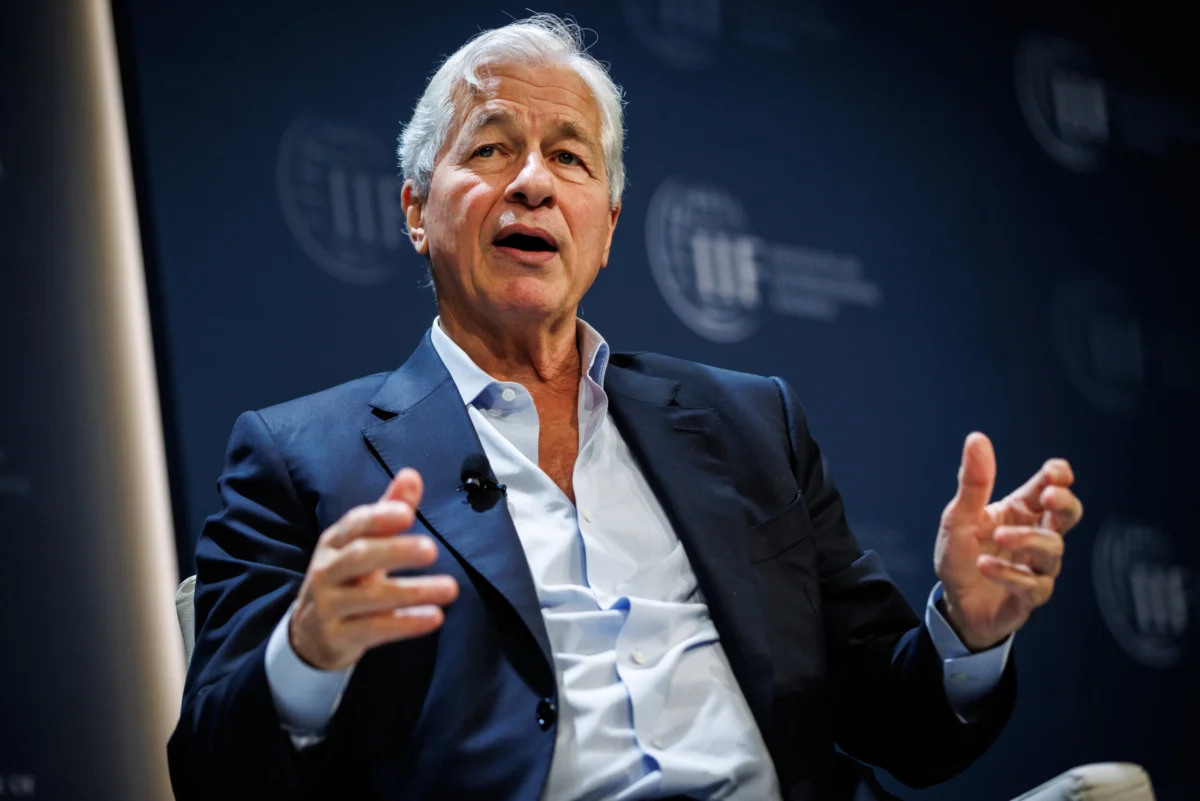
Speaking during JPMorgan Chase’s first-quarter earnings call on Tuesday, April 14, 2026, Chief Executive Officer Jamie Dimon articulated a critical paradox at the heart of the digital transformation sweeping through global finance: while artificial intelligence (AI) promises to revolutionize cybersecurity defenses, its initial impact is making companies, particularly financial institutions, more susceptible to sophisticated attacks. Dimon’s comments, delivered from the bank’s headquarters in New York, underscored a growing consensus among industry leaders and government officials about the dual nature of AI as both a powerful shield and a potent weapon in the escalating cyber warfare.
Dimon revealed that JPMorgan Chase, the world’s largest bank by market capitalization, is actively testing Anthropic’s latest AI model, the "Mythos preview," which the AI firm had announced just last week. This initiative forms part of the bank’s broader strategy to harness AI’s benefits while simultaneously fortifying its defenses against malicious actors who are increasingly wielding the same advanced technology. However, the initial findings, as Dimon alluded to, suggest a period of heightened vulnerability. "AI’s made it worse, it’s made it harder," Dimon told analysts, acknowledging the immediate challenges. "It does create additional vulnerabilities, and maybe down the road, better ways to strengthen yourself too."
When pressed by a reporter regarding Mythos, Dimon’s response seemed to echo Anthropic’s own warnings about the model’s capacity to uncover systemic weaknesses. Anthropic had previously reported that Mythos had identified thousands of previously unknown vulnerabilities within corporate software environments during its testing phase. "I think you read exactly what is it," Dimon stated, referring to the published reports. "It shows a lot more vulnerabilities need to be fixed." This candid assessment from one of the most influential figures in global finance sent ripples through the industry, highlighting the immediate and pressing need for adaptation and robust cybersecurity investments.
The Dual-Edged Sword of AI in Cybersecurity
The remarks by Dimon illuminate a critical juncture in the technological evolution of the financial sector. While corporations widely welcome artificial intelligence for its potential to drive unprecedented productivity gains, optimize operations, and enhance customer experiences, its inherent power has also transformed it into a formidable threat vector. Malicious actors are rapidly adopting AI-driven tools to devise new and more sophisticated methods to breach technology systems, from generating hyper-realistic phishing campaigns to automating the discovery of zero-day exploits.
The financial industry, by its very nature, stands as a prime target for cybercriminals due to the immense wealth it controls and the sensitive data it manages. The average cost of a data breach in the financial sector reached an estimated $7.8 million in 2025, a significant increase from previous years, reflecting the growing sophistication of attacks and the stringent regulatory penalties. Global cybercrime costs are projected to exceed $15 trillion annually by 2030, with a substantial portion targeting financial services. This escalating threat landscape necessitates a proactive, multi-layered defense strategy, one that now critically includes understanding and counteracting AI-powered attacks.
A Proactive Regulatory Stance: Treasury’s Urgent Summit
The gravity of the situation was underscored by official government action even before Dimon’s public comments. Last week, Treasury Secretary Scott Bessent convened an urgent meeting with leading U.S. bank CEOs in Washington, D.C., specifically to discuss the burgeoning risks posed by advanced AI models like Anthropic’s Mythos. This high-level gathering signaled a coordinated effort by federal authorities to grasp the implications of AI on national financial stability and to foster collaborative strategies for defense.
Sources familiar with the meeting indicated that discussions focused on potential systemic risks, the need for enhanced threat intelligence sharing, and the development of industry-wide best practices for AI deployment and cybersecurity. Secretary Bessent emphasized the importance of public-private partnerships in confronting what he termed an "unprecedented technological inflection point" for the financial system. The Treasury Department, along alongside other regulatory bodies such as the Federal Reserve and the Office of the Comptroller of the Currency (OCC), has been increasingly vocal about the need for financial institutions to bolster their cyber resilience, with AI now adding a complex new dimension to these requirements.
JPMorgan’s Unwavering Commitment to Cyber Defense
JPMorgan Chase, long recognized for its substantial investments in technology and security, has been at the forefront of the industry’s battle against cyber threats. Dimon reiterated the bank’s deep-seated commitment, stating, "We spend a lot of money. We’ve got top experts. We’re in constant contact with the government. It’s a full-time job, and we’re doing it all the time." The bank’s dedicated teams of cybersecurity professionals work around the clock, leveraging advanced analytics, threat intelligence, and a robust infrastructure to detect, prevent, and respond to attacks. These efforts include significant investments in quantum-resistant cryptography research and advanced behavioral analytics, anticipating future threat landscapes.
The bank’s strategic engagement with cutting-edge AI firms like Anthropic exemplifies its proactive approach. Anthropic, known for its focus on AI safety and responsible development, designed Mythos not just as a powerful language model but also as a tool capable of identifying vulnerabilities with unparalleled efficiency. Its ability to quickly scan vast codebases and pinpoint potential exploits is both its strength and, paradoxically, the source of immediate concern for institutions like JPMorgan. The insights gleaned from Mythos’s vulnerability assessments, while alarming, are crucial for banks to preemptively patch weaknesses before they can be exploited by adversaries.
Systemic Risk and Interconnected Vulnerabilities
Dimon also extended his warning beyond the confines of individual institutions, stressing the interconnected nature of the global financial system. "That doesn’t mean everything that banks rely on is that well protected," he cautioned. "Banks are attached to exchanges and all these other things that create other layers of risk." This statement underscores the concept of systemic risk, where a breach in one seemingly isolated part of the financial ecosystem – a payment processor, a stock exchange, a third-party vendor, or even a smaller regional bank – could have cascading effects, potentially destabilizing broader markets and impacting countless customers.
The complexity of modern financial operations involves an intricate web of interdependencies, including cloud service providers, data analytics firms, fintech partners, and global correspondent banks. Each of these connections represents a potential entry point for sophisticated cyberattacks. Jeremy Barnum, JPMorgan Chase’s Chief Financial Officer, elaborated on this during the earnings call, acknowledging that the industry has long understood the dual nature of AI in cybersecurity. "These tools can make it easier to find vulnerabilities, but then also potentially be deployed by bad actors in attack mode," Barnum explained. He noted that recent advancements from companies like Anthropic have merely "intensified an existing trend," pushing the boundaries of both offense and defense.
The Enduring Importance of "Cyber Hygiene"
Amidst the discussion of advanced AI models and sophisticated threats, Dimon brought the conversation back to fundamental cybersecurity practices, often referred to as "cyber hygiene." He emphasized that while cutting-edge AI tools are undeniably important, basic security measures remain absolutely essential. "A lot of it is hygiene… how do you protect your data? How do you protect your networks, your routers, your hardware, changing your passcode?" he questioned rhetorically. "Doing all those things right dramatically reduces the risk."
This reminder serves as a crucial counterbalance to the allure of advanced technology. Many high-profile breaches still originate from simple vulnerabilities such as weak passwords, unpatched software, or lack of multi-factor authentication. Human error, often exacerbated by social engineering tactics, remains a primary vector for attacks. Therefore, a comprehensive cybersecurity strategy must integrate both state-of-the-art AI defenses with continuous employee training, robust policy enforcement, and diligent maintenance of foundational security protocols.
Industry-Wide Response and Future Outlook
The concerns voiced by Dimon are not isolated. Other financial leaders are grappling with similar challenges. Goldman Sachs CEO David Solomon confirmed on his bank’s earnings call Monday, April 13, 2026, that his institution was also testing Anthropic’s Mythos, though he declined to offer further commentary. This indicates a broad industry effort to understand and adapt to the new AI-driven cybersecurity landscape.
The implications of AI on cybersecurity in finance are profound and far-reaching. Over the coming years, experts anticipate a significant acceleration in the "AI arms race" between cyber defenders and attackers. Financial institutions will likely increase their investments in AI-powered threat detection, automated incident response, and predictive analytics. The demand for cybersecurity professionals with expertise in AI and machine learning is projected to skyrocket, exacerbating an already existing talent gap.
Regulators are also expected to introduce new guidelines and frameworks specifically addressing AI risk management within financial services, focusing on explainable AI, bias detection, and robust testing protocols. Public-private partnerships will become even more critical for sharing threat intelligence, developing common standards, and coordinating responses to large-scale cyber incidents. The ongoing dialogue, spearheaded by figures like Jamie Dimon and institutions like JPMorgan Chase, is crucial for navigating this complex future, ensuring that the transformative power of AI is ultimately harnessed to fortify, rather than jeopardize, the stability and integrity of the global financial system. The journey from vulnerability amplification to robust defense, however, is clearly just beginning.