


The automotive world underwent a significant transformation at the turn of the millennium, marked by a resurgence of interest in niche body styles that combined the practicality of a coupe with the emotional appeal of a convertible. At the forefront of this movement was the Peugeot 206 CC, a vehicle that not only captured the market’s imagination upon its late 2000 release but also served as a modern vindication of a technology Peugeot had pioneered nearly seven decades earlier. Designed to democratize the luxury of the retractable hardtop, the 206 CC emerged from the "2-0-Heart" concept car, a project led by designer Murat Günak that sought to reconcile everyday mechanical reliability with the "romance" of open-air motoring. While critics initially suggested the French manufacturer was merely following the trend set by the Mercedes-Benz SLK, historical records and the testimony of its creators confirm that the 206 CC was the modern realization of a long-standing Peugeot tradition.
The Genesis of the 2-0-Heart Concept
The journey toward the production-ready 206 CC began in earnest at the 1998 Geneva Motor Show, where Peugeot unveiled the "2-0-Heart" (Vingt-Coeur) concept. The name, a play on the French pronunciation of "206," signaled the brand’s intention to add an emotional layer to its highly successful B-segment platform. The concept was a direct response to the growing consumer desire for versatile vehicles that could adapt to changing weather conditions without the security and insulation drawbacks of traditional fabric soft-tops.
Murat Günak, the lead designer behind the project, emphasized that the goal was to "narrow the gap between dreams and reality." By utilizing the mechanical underpinnings of the standard 206 hatchback—a car already lauded for its modern styling and accessible price point—Peugeot aimed to bring a premium feature to a mass-market audience. The 2-0-Heart was more than a styling exercise; it was a statement of intent that Peugeot intended to reclaim its position as a leader in innovative body engineering.
Rebutting the Mercedes-Benz Comparison
Upon the reveal of the 2-0-Heart and the subsequent production 206 CC, industry analysts frequently drew comparisons to the Mercedes-Benz SLK (R170), which had launched in 1996 and popularized the modern retractable hardtop. However, Murat Günak was quick to dismiss claims that Peugeot was copying the German luxury brand. Speaking to Autocar during the era, Günak asserted that retractable hardtops were deeply embedded in Peugeot’s DNA, long predating the modern Mercedes-Benz interpretation.
To support this claim, Peugeot pointed to the historical record, noting that even the official literature for the Mercedes SLK acknowledged Peugeot’s pre-war contributions to the technology. The "Peugeot Eclipse" system, developed in the 1930s, provided the blueprint for the folding metal roofs that would become a staple of the early 21st-century automotive landscape.
The Historical Foundation: Georges Paulin and the Eclipse
The true origin of the "metallique decouvrable" (metal convertible) dates back to the early 1930s, making Peugeot the first company to put a retractable hardtop into series production. This innovation was the result of a collaboration between Peugeot, the French coachbuilder Pourtout, and an unlikely engineering genius named Georges Paulin.
Paulin, a dentist by profession with a passion for aerodynamics and mechanics, designed a system that allowed a solid roof to be stowed in the luggage compartment of a car. This was first applied to the Peugeot 401 in 1934. The technology was subsequently extended to the 601 and the aerodynamically advanced 402 models. These "Eclipse" models featured a complex arrangement of side links and electric motors that could lower the roof into the boot, which would automatically raise its lid to accommodate the unit.
At the 1935 Paris Motor Show, the technology was a focal point of discussion. Reports from the time noted that while the mechanical operation was impressive, the process was deliberate, often taking up to a full minute to complete. Despite the complexity and the significant cost—the Eclipse models were considerably more expensive than their standard counterparts—the technology established Peugeot as a pioneer in convertible engineering.
Engineering the 206 CC: Production and Specifications
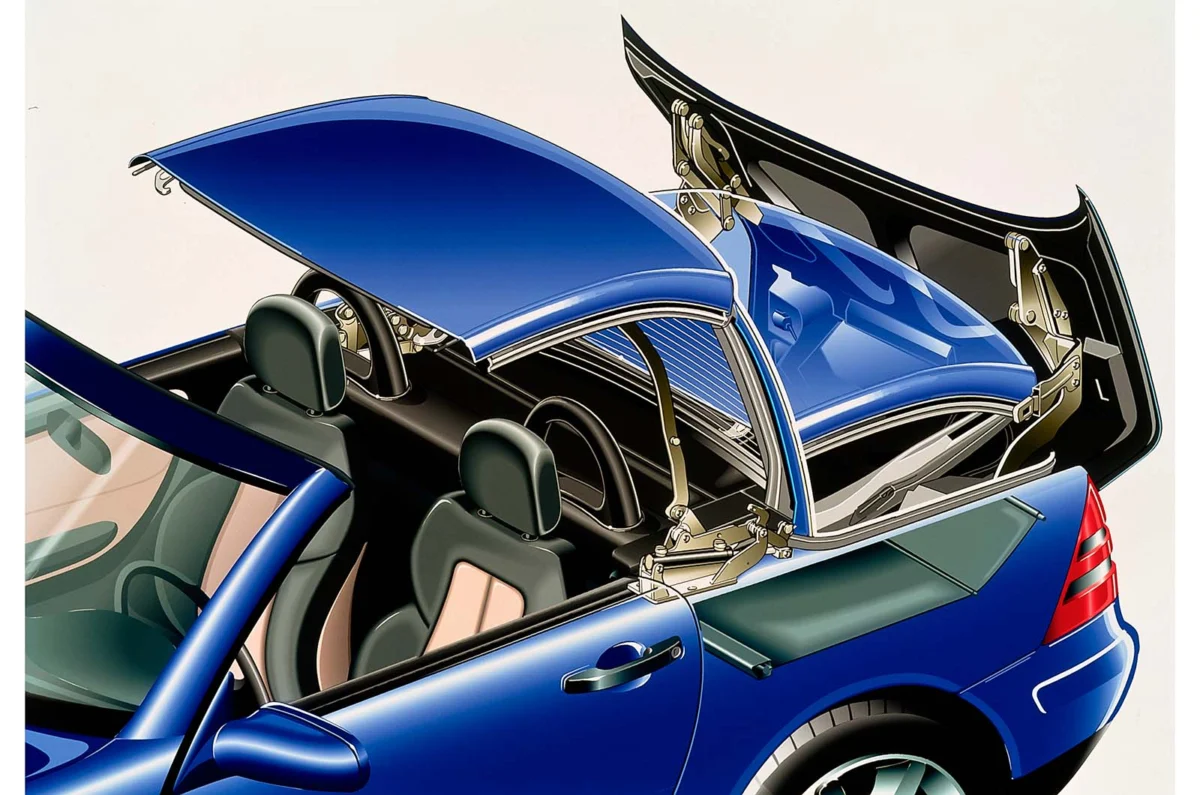
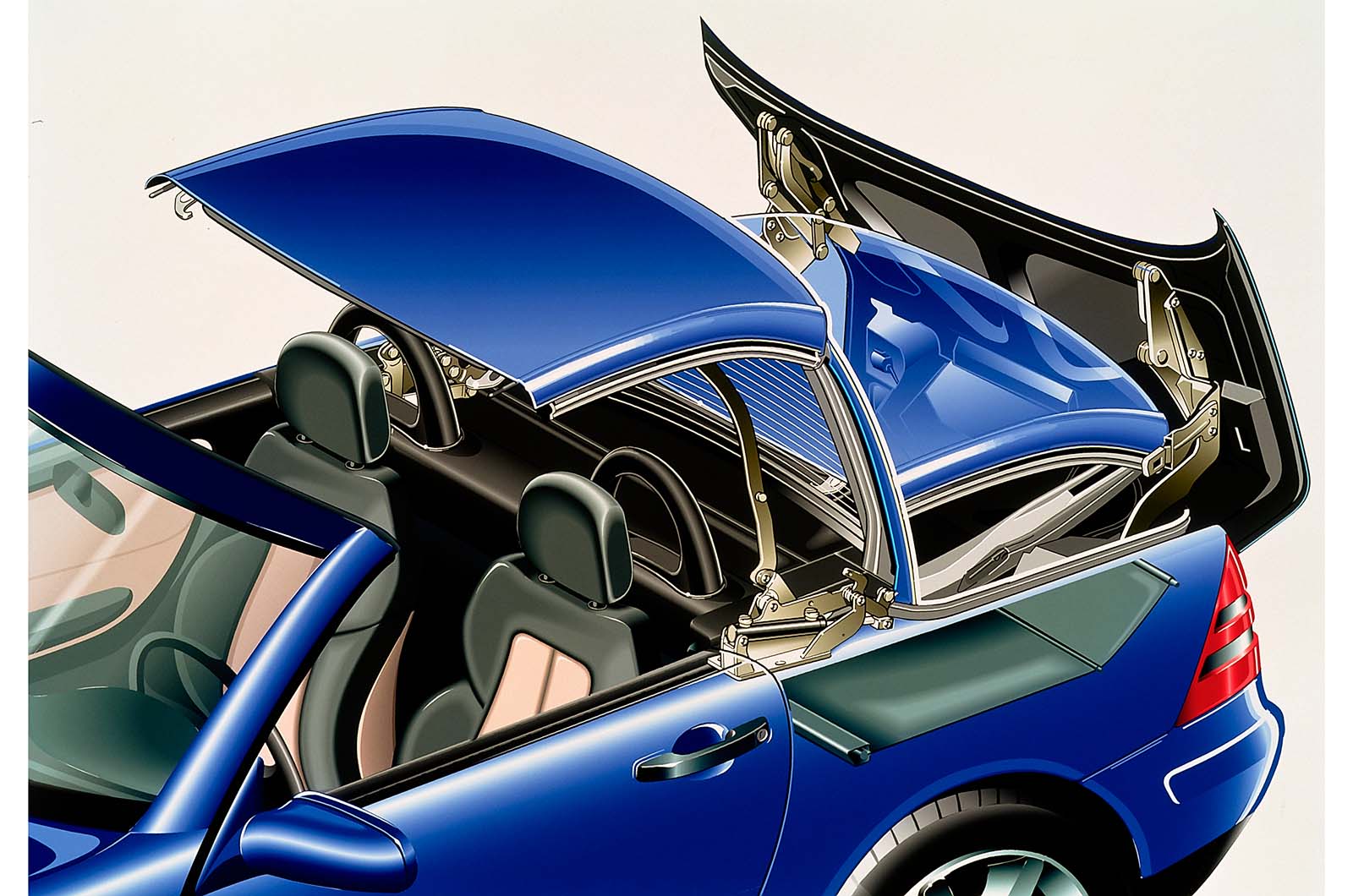
When the 206 CC (Coupé Cabriolet) finally transitioned from concept to production in late 2000, it represented a significant engineering feat for a B-segment car. To manage the production of the complex roof mechanism, Peugeot partnered with the French specialist coachbuilder Heuliez. The 206 CC featured an electro-hydraulic roof that could be transformed from a closed coupe to an open-air roadster in approximately 20 seconds, a massive improvement over the pre-war Eclipse systems.
Mechanically, the 206 CC shared much with the 206 hatchback, which helped keep maintenance costs manageable for owners. It was offered with two primary petrol engine options:
- 1.6-litre 16-valve (TU5JP4): Producing approximately 110 bhp, this engine offered a balance of efficiency and sufficient power for urban cruising.
- 2.0-litre 16-valve (EW10J4): Shared with the 206 GTI, this unit produced 138 bhp, providing the CC with a more spirited performance profile, though the added weight of the roof mechanism (approximately 140kg) meant it was never as agile as its hatchback sibling.
Despite the added weight and the compromises in rear-seat legroom and boot space when the roof was stowed, the car’s aesthetic appeal was undeniable. It offered a "2+2" seating configuration, though the rear seats were largely relegated to storage or very small children.
Market Reception and Sales Data
The 206 CC was an immediate commercial success, proving that there was a massive, untapped market for affordable hardtop convertibles. In its first full year of production (2001), the model attracted more than 70,000 buyers. This figure far exceeded initial expectations and forced competitors to accelerate their own development of similar models.
By the time production ended in 2008 to make way for the 207 CC, Peugeot had manufactured approximately 360,000 units of the 206 CC. At its peak, it was the best-selling convertible in Europe, particularly popular in markets like the United Kingdom, France, and Germany. The car’s success was driven by its "two-cars-in-one" proposition: a secure, weatherproof coupe for the winter and a stylish cabriolet for the summer, all at a price point that was accessible to middle-class consumers.
Broader Impact on the Automotive Industry
The success of the 206 CC triggered a "Coupé Cabriolet" craze that dominated the 2000s. Seeing Peugeot’s success, other manufacturers rushed to enter the segment. This led to the creation of competitors such as the Renault Mégane CC, the Opel/Vauxhall Tigra TwinTop, the Ford Focus CC, and the Nissan Micra C+C.
Peugeot itself expanded the range, introducing the larger 307 CC in 2003, which applied the same logic to the C-segment. The 307 CC was designed to be a more practical four-seater, further cementing Peugeot’s dominance in the folding-hardtop market. The trend continued with the 207 CC and 308 CC, maintaining the brand’s momentum well into the next decade.
However, the CC trend eventually began to wane. The rise of the SUV and Crossover segments shifted consumer preferences toward higher seating positions and rugged aesthetics. Furthermore, the inherent drawbacks of the CC design—namely the heavy roof mechanisms, reduced boot capacity, and the engineering challenges of maintaining structural rigidity—led many manufacturers to return to lighter, more space-efficient fabric tops or to abandon the convertible segment entirely.
Analysis of Implications and Legacy
The legacy of the Peugeot 206 CC is one of democratic innovation. By reviving a technology that had previously been reserved for the elite coachbuilt cars of the 1930s, Peugeot proved that high-concept design could be successfully integrated into mass-produced vehicles. The 206 CC changed the perception of what a small car could be, moving the B-segment beyond mere utility into the realm of lifestyle and fashion.
From an engineering perspective, the 206 CC pushed the boundaries of packaging. Fitting a multi-part folding metal roof into a chassis as small as the 206 required meticulous spatial planning. While the resulting "cab forward" design and the elongated rear deck altered the proportions of the original 206, the car remained a styling icon of its era.
Today, the 206 CC is beginning to be recognized as a modern classic. It serves as a reminder of a period when European manufacturers were willing to take significant risks on body styles and mechanical complexity to capture the public’s imagination. For Peugeot, the 206 CC was not just a sales winner; it was a successful bridge between its pioneering past and its modern identity as a brand capable of blending style with technical ingenuity. The "2-0-Heart" may have had a sentimental name, but its impact on the automotive market was calculated, profound, and historically grounded.