

The narrative of British sports car ownership is often defined by a singular pursuit of driver engagement, a philosophy famously championed by Lotus Cars founder Colin Chapman. For Chris Smith, this journey began in 1996 at the age of 23, when he acquired his first Lotus Elise S. At the time, the Elise was a revolutionary entry into the automotive market, signaling a return to the "simplify, then add lightness" ethos that had characterized the brand’s early success. Smith’s decision to use the spartan, mid-engined roadster as his primary vehicle was met with skepticism by peers, yet it cemented a lifelong affinity for the Norfolk-based manufacturer. His transition through various iterations of the brand’s lineup—interrupted briefly by a foray into German engineering—offers a detailed case study in the specific tactile appeal of Lotus vehicles and the current state of the mid-engine modern classic market.
The Genesis of an Enthusiast: From Ginetta to the Elise S1
Chris Smith’s immersion in automotive culture predates his first Lotus purchase. While still a student, Smith and his father collaborated on the construction of a Ginetta G15. The G15, produced by the British manufacturer Ginetta Cars between 1968 and 1974, utilized a rear-mounted Hillman Imp engine and a lightweight fiberglass body. This project provided Smith with a foundational understanding of power-to-weight ratios and the mechanical intimacy of small-batch British sports cars. The Ginetta G15 remains in his collection today, serving as a permanent link to his formative years in automotive engineering.
In 1996, Smith replaced his BMW 3 Series with the then-new Lotus Elise S1. The Elise represented a radical departure from the luxury-oriented trajectory of the 1990s sports car market. Utilizing an extruded and bonded aluminum chassis—a technology that was pioneering at the time—the Elise S1 weighed roughly 725 kilograms. Despite its modest power output from the 1.8-liter Rover K-Series engine, its lack of power steering and minimal sound deadening provided a visceral driving experience that Smith recalls as "great fun" for every journey, despite the practical sacrifices required for daily use.
The German Interlude and the Return to Analog Driving
After seven years of Elise ownership, Smith transitioned to a Porsche Cayman. The Cayman, often cited as the benchmark for mid-engine refinement and everyday usability, provided a stark contrast to the Lotus experience. While Smith acknowledged the Porsche’s technical excellence and build quality, he found the vehicle’s increased dimensions and focus on occupant comfort to be a detriment to the raw "magic" he had grown accustomed to in the Elise.
This realization prompted a return to the Lotus brand with the acquisition of a 2010 Elise S3. This model marked a significant technical shift for Lotus, as the company had moved away from the Rover K-Series in favor of Toyota-sourced powerplants to ensure global emissions compliance and improved reliability. Smith’s S3 featured the 1.6-liter 1ZR-FAE engine. Although it lacked the low-end torque of larger displacement rivals, the engine’s high-revving nature required the driver to maintain engine speeds above 4,000 rpm to extract maximum performance—a characteristic that Smith found engaging rather than cumbersome.
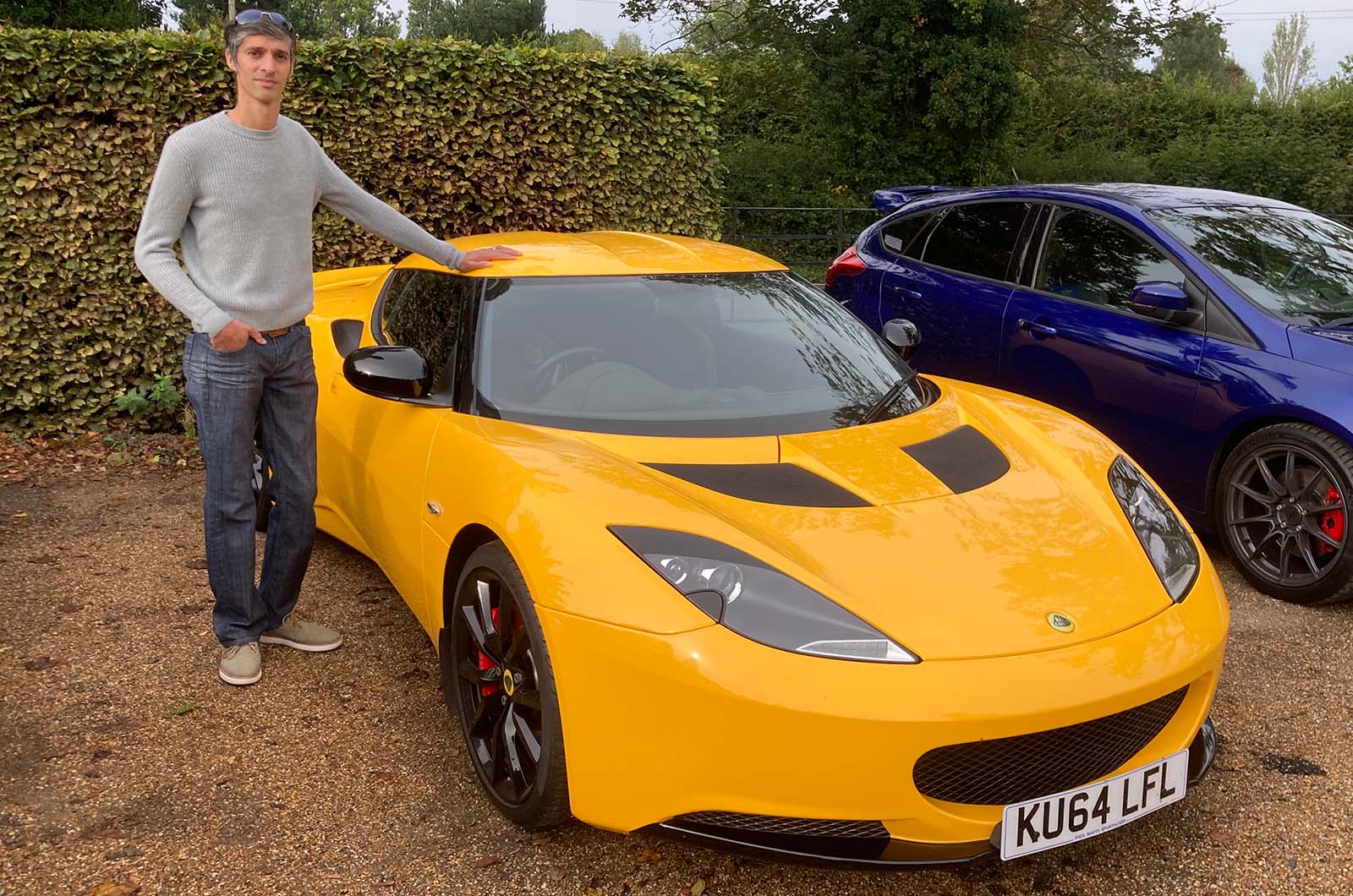
Following the S3, Smith briefly explored the brand’s heritage with an Esprit Turbo. The Esprit, which enjoyed a nearly 30-year production run, represents the brand’s most famous foray into the supercar territory of the late 20th century. However, it was the search for a more modern, capable grand tourer that eventually led him to his current vehicle: the 2014 Lotus Evora S Sports Racer.
Technical Analysis of the 2014 Lotus Evora S Sports Racer
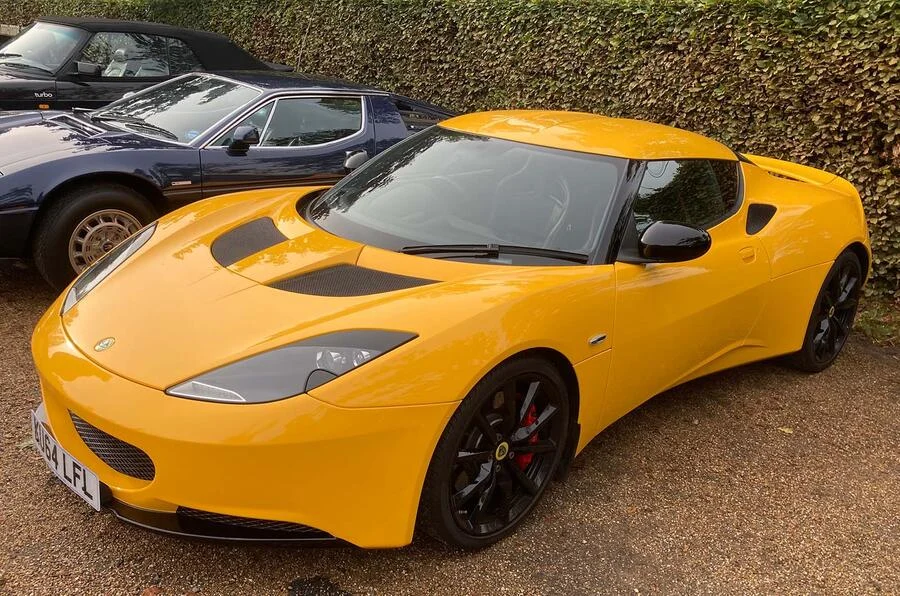
The Lotus Evora, launched in 2009, was designed to expand the brand’s reach by offering a 2+2 seating configuration and a more sophisticated interior, targeting the market share held by the Porsche 911. By 2014, the model had been refined into the "S" variant, which introduced forced induction to the 3.5-liter Toyota V6 engine.
Powerplant and Performance
The Evora S utilizes the 2GR-FE V6 engine, augmented by a Harrop HTV 1320 supercharger utilizing Eaton TVS technology. This configuration produces 345 brake horsepower (bhp) and 295 lb-ft of torque, a substantial increase over the naturally aspirated base model’s 276 bhp. The integration of the supercharger was praised by automotive journalists for providing linear power delivery that mimicked a larger displacement naturally aspirated engine rather than the peaky delivery often associated with turbocharging.
The vehicle features a heavy-duty version of the EA60 six-speed manual transmission, which was specifically tuned by Lotus engineers to provide shorter throws and more precise engagement than the standard Toyota unit. The performance metrics for the Evora S include a 0-60 mph time of 4.6 seconds and a top speed of 172 mph, placing it firmly within the performance bracket of its contemporary rivals.
The Sports Racer Trim and Equipment
The "Sports Racer" edition, launched in late 2012 for the 2013/2014 model years, was a value-added trim level designed to consolidate the most popular options into a single package. Historically, Lotus cars were often criticized for having complex and expensive option lists; the Sports Racer addressed this by including both the "Sport Pack" and the "Tech Pack" as standard equipment.
- Sport Pack: This included a switchable sports mode that sharpened throttle response, increased the rpm limit, and altered the settings of the Dynamic Performance Management (DPM) system to allow for more driver slip. It also featured a sports diffuser and cross-drilled brake discs.
- Tech Pack: This focused on cabin amenities, including an upgraded Pioneer touchscreen infotainment system, Bluetooth connectivity, cruise control, and rear parking sensors.
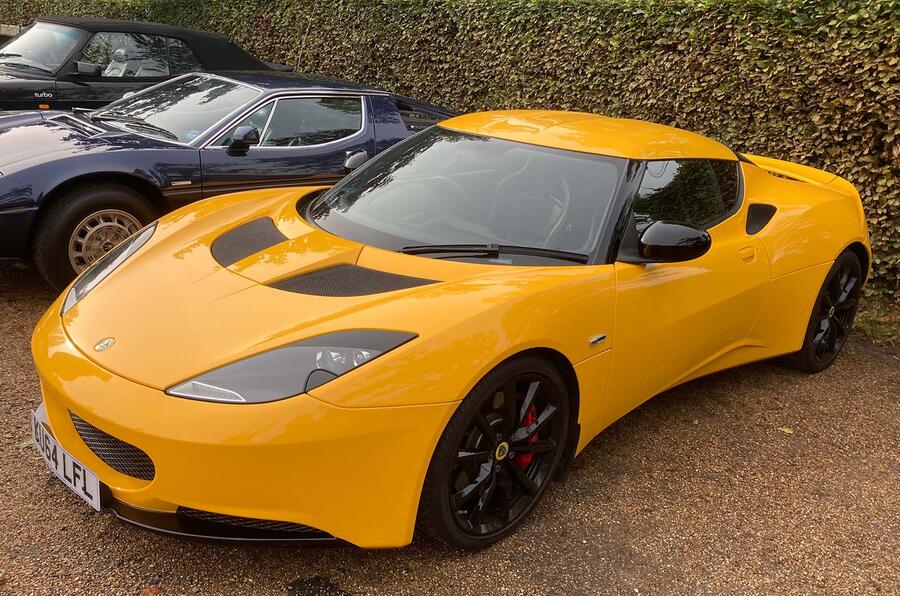
The Sports Racer was aesthetically distinguished by a blacked-out roof, sills, and rear spoiler, along with gloss black forged wheels. At its launch, it was priced significantly lower than a standard Evora S would have been if equipped with the same options individually, making it a highly sought-after variant on the used market.
Market Trends and Specialist Acquisition
Smith acquired his Evora S five years ago from Paul Matty Sports Cars, a renowned specialist dealership in the United Kingdom. The purchase highlights the importance of the specialist network in the Lotus community. Paul Matty, who has since retired, was widely regarded as a "Lotus legend" for his deep knowledge of both classic and modern iterations of the brand.
At the time of purchase, Smith’s Evora had 13,000 miles on the odometer. Over five years of ownership, he has added 4,500 miles, bringing the total to 17,500. This low-mileage usage pattern is typical for enthusiasts who balance a high-performance sports car with other vehicles, such as Smith’s Ginetta G15.
Valuation and Economic Implications
The financial trajectory of Smith’s Evora S reflects broader trends in the "modern classic" automotive market. Smith purchased the vehicle for approximately £35,000. Current market assessments suggest the car is now valued at roughly £40,000. This appreciation, while modest compared to some high-end supercars, is significant for a mass-marketed sports car that originally retailed for approximately £65,000.
Several factors contribute to the rising prices of the Evora S:
- The End of an Era: With Lotus transitioning to an all-electric future under the ownership of Geely, the Evora, along with the Elise and Exige, represents the final generation of internal combustion, hydraulic-steering vehicles from the brand.
- The Emira Effect: The launch of the Lotus Emira, the brand’s final petrol-powered model, has renewed interest in its predecessor. As the Emira’s price point remains high, many enthusiasts are looking toward the Evora S as a more accessible entry into the mid-engine V6 experience.
- Reliability Reputation: The use of the Toyota V6 engine has mitigated many of the reliability concerns historically associated with British sports cars, making the Evora a viable long-term prospect for collectors.
Broader Impact on the Lotus Community
The experiences of owners like Chris Smith underscore the resilience of the Lotus brand’s core identity. Despite shifts in ownership and global economic fluctuations, the demand for driver-centric, lightweight vehicles remains consistent. The transition from the Elise to the Evora represents a natural progression for the enthusiast—moving from raw, uncompromising performance to a more capable and refined platform that retains the essential feedback and balance characteristic of the marque.
As the automotive industry pivots toward electrification and autonomous driving technologies, the mechanical purity of vehicles like the 2014 Evora S Sports Racer is increasingly valued. For the specialist market and independent dealerships, this shift ensures a continued relevance as they maintain the aging fleet of internal combustion vehicles for a dedicated base of collectors and drivers. Smith’s journey, beginning in a school workshop with a Ginetta and culminating in a supercharged Lotus, serves as a testament to the enduring appeal of the British sports car tradition.