

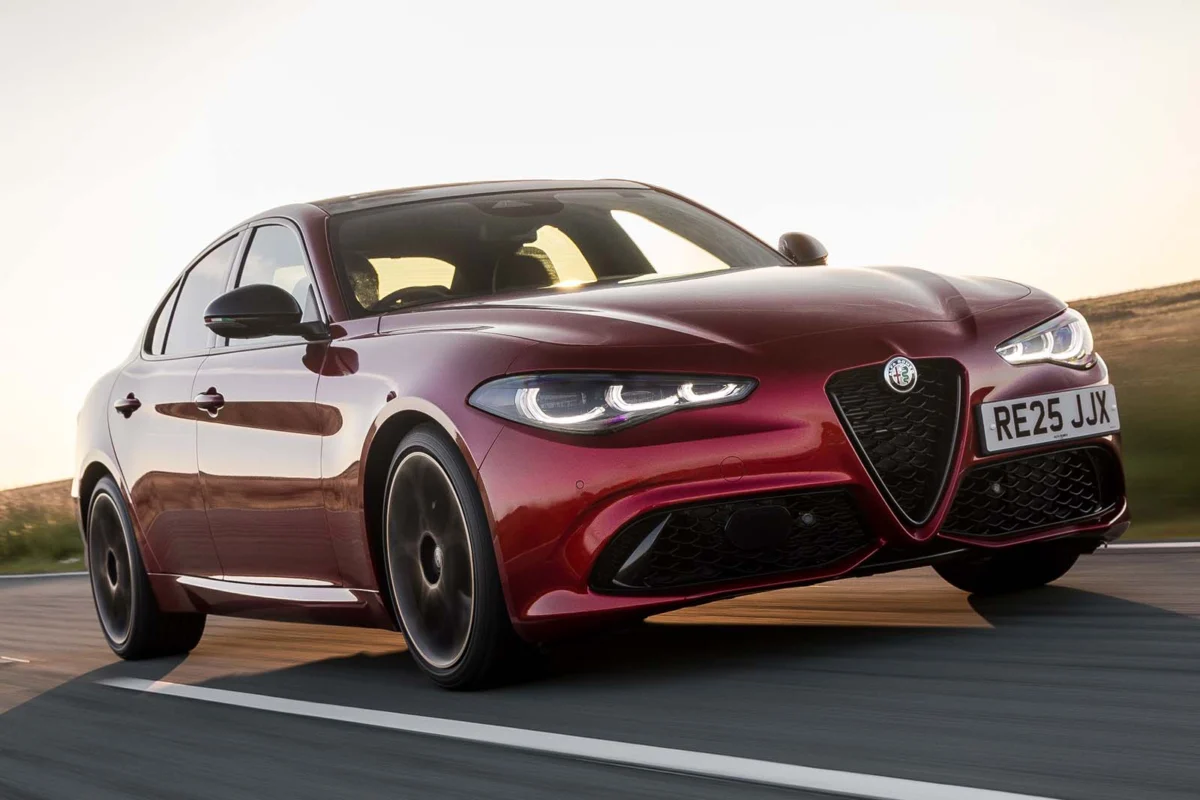
The Alfa Romeo Giulia, a vehicle that redefined the Italian marque’s modern identity upon its debut, has officially entered its tenth year of production. In an industry where model cycles typically conclude after six or seven years, the Giulia’s longevity is a testament to its foundational engineering and the shifting strategic priorities within its parent company, Stellantis. Originally launched in 2015 as a direct challenger to the established German hegemony in the premium D-segment, the Giulia has survived through a series of incremental updates, a significant mid-cycle facelift in 2023, and a recent pivot in corporate strategy that ensures its presence in showrooms until at least 2027.
The decision to extend the lifespan of the current Giulia comes alongside a major revision of Alfa Romeo’s electrification roadmap. While previous executive directives suggested an immediate transition to a battery-electric vehicle (BEV) successor, Turin-based leadership has opted for a "stay of execution" for the internal combustion engine (ICE) platform. The next-generation Giulia, slated for a 2028 release, will now utilize a multi-energy architecture capable of supporting both fully electric drivetrains and traditional combustion engines. To bolster the current lineup during this transition, Alfa Romeo has reopened order books for the flagship 513bhp V6 Quadrifoglio, a move widely interpreted as a response to sustained demand for high-performance, analog driving experiences.
A Chronological Overview of the Giorgio Platform
The development of the Giulia began under the leadership of the late Sergio Marchionne, who envisioned a "skunkworks" project to return Alfa Romeo to its rear-wheel-drive roots. The result was the Giorgio platform, a multi-billion-euro investment designed to offer class-leading torsional stiffness and near-perfect 50/50 weight distribution.
- 2015: The Giulia is unveiled in Arese, Milan, specifically in its Quadrifoglio trim, signaling Alfa Romeo’s intent to compete at the highest level of performance.
- 2016: Global deliveries begin for the standard 2.0-liter petrol and 2.2-liter diesel variants.
- 2020: A significant interior update is introduced, addressing criticisms of the infotainment system and material quality. This update introduced the 8.8-inch touchscreen and improved Advanced Driver Assistance Systems (ADAS).
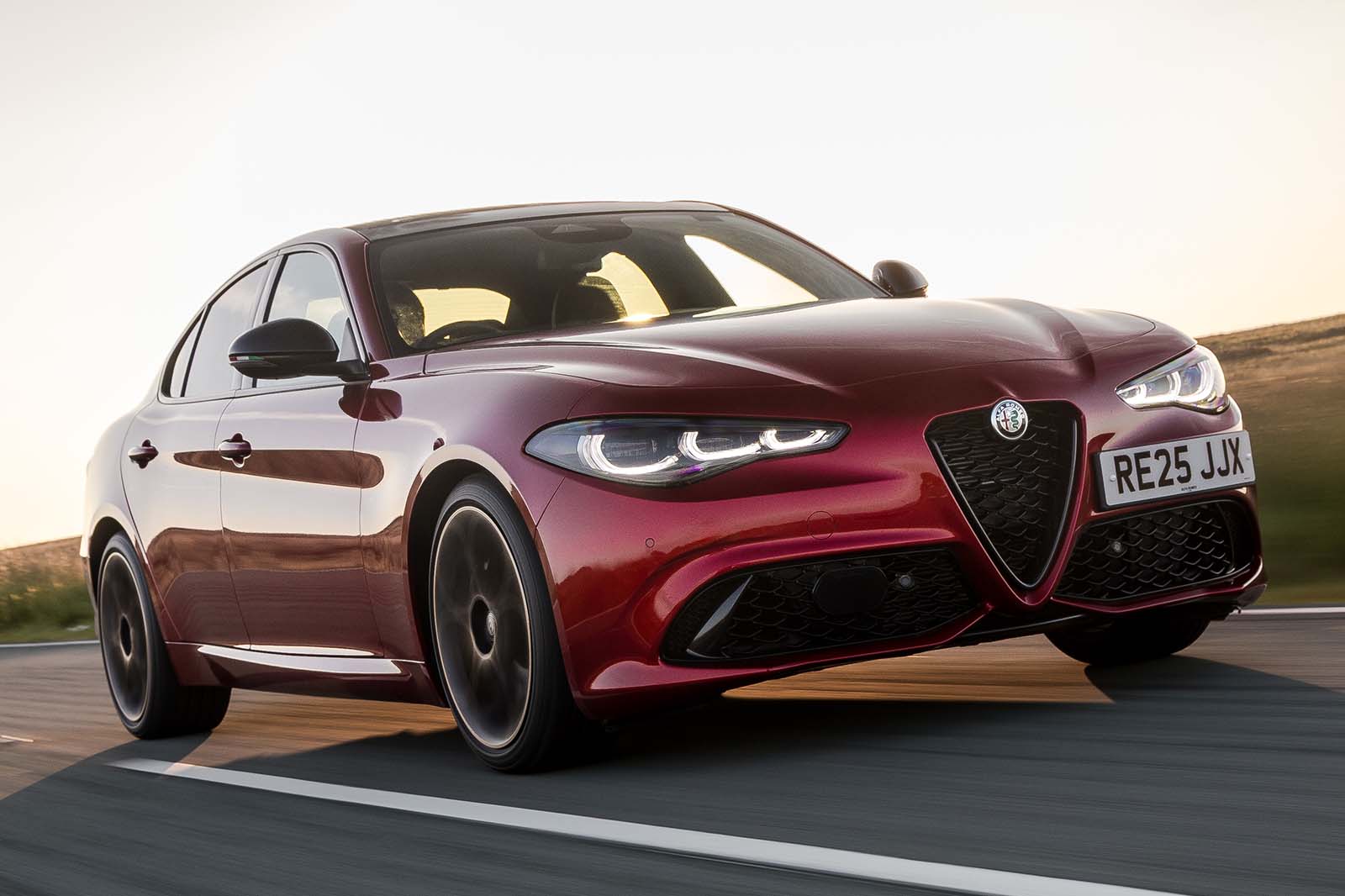
- 2023: The "Series 2" facelift is launched, featuring "3+3" Matrix LED adaptive headlights—a nod to the SZ Sprint Zagato and the Tonale SUV—and a new 12.3-inch digital instrument cluster.
- 2025: The introduction of the "Intensa" trim level, positioned as a range-topping aesthetic package featuring gold-finished wheels and premium interior accents, marking the model’s entry into its sunset years.
Technical Specifications and Performance Data
At the heart of the 2025-2026 Giulia lineup is the Stellantis Global Medium Engine (GME) T4. This 2.0-liter, all-aluminum, turbocharged four-cylinder engine remains the primary powertrain for the Sprint, Veloce, and Intensa trims. It produces 276bhp (280 PS) and 295lb-ft (400 Nm) of torque, delivered to the rear wheels via a ZF-sourced eight-speed automatic transmission.
The performance metrics remain competitive within the segment. The Giulia can accelerate from 0 to 62 mph in 5.7 seconds, a figure that matches or exceeds several entry-level performance variants from BMW and Mercedes-Benz. One of the vehicle’s most significant advantages is its mass; with a curb weight maintained below 1,500kg in several configurations, it remains one of the lightest vehicles in its class. This lightweight construction is achieved through the extensive use of aluminum in the doors, fenders, and suspension components, as well as a carbon-fiber driveshaft—a feature standard across all Giulia models, not just the high-performance Quadrifoglio.
However, the lack of hybridization is a notable data point in the Giulia’s technical profile. Unlike the BMW 3 Series (G20) or the Mercedes-Benz C-Class (W206), the Giulia does not offer 48V mild-hybrid assistance or a plug-in hybrid (PHEV) powertrain. This omission impacts its efficiency ratings, with combined fuel economy figures hovering around 38-40 mpg (WLTP) and CO2 emissions that place it in higher tax brackets for fleet and corporate buyers.
Market Positioning and Comparative Analysis
The Giulia occupies a unique niche in the 2026 automotive market. As rivals have moved toward "hyperscreens," haptic touch surfaces, and complex semi-autonomous driving suites, Alfa Romeo has maintained a focus on ergonomic traditionalism.
Pricing Structure (UK Market Estimates):
- Sprint: Starting at £43,800
- Veloce: Starting at £48,800
- Intensa: Starting at £53,200
When compared to the BMW 320i M Sport, the Giulia Veloce offers nearly 100 additional horsepower for a similar price point. To achieve equivalent performance in a BMW, a buyer would typically need to move to the M340i, which carries a significantly higher MSRP of approximately £65,000. While the German competitors offer superior interior technology and more sophisticated software integration, the Giulia leverages its mechanical "honesty" as a primary selling point.
The interior experience remains a point of contention among analysts. The 12.3-inch "Cannocchiale" digital display successfully modernizes the driver’s view, yet the 8.8-inch central infotainment screen is increasingly viewed as outdated. The requirement for a physical cable for smartphone mirroring (Apple CarPlay and Android Auto) is a visible reminder of the platform’s age in an era of wireless connectivity. Conversely, the retention of physical rotary dials for the infotainment and tactile buttons for climate control has seen a resurgence in popularity among consumers fatigued by touch-only interfaces.
Dynamic Architecture and Handling Characteristics
The Giulia’s enduring appeal is largely attributed to its "Alfa Link" suspension system. The front utilizes a double-wishbone setup with a semi-virtual steering axis, which keeps the wheels perpendicular to the ground during hard cornering. The rear features a four-and-a-half link system designed to provide high lateral grip while maintaining comfort.
The steering rack remains one of the quickest in the industry, with a 11.8:1 ratio. While some critics suggest the steering lacks the heavy feedback of classic hydraulic systems, its precision and the agility of the front end remain benchmarks for the D-segment. The ride quality, particularly on the standard 18-inch wheels, is noted for its ability to isolate cabin occupants from road imperfections without sacrificing body control—a balance that Alfa Romeo engineers have prioritized over the stiffer, more aggressive damping found in some German "M Sport" or "AMG Line" equivalents.
Strategic Pivot: The Road to 2028
The decision to extend the Giulia’s lifecycle is a significant indicator of the broader "multi-energy" strategy being adopted by Stellantis CEO Carlos Tavares. Initially, Alfa Romeo had committed to becoming an EV-only brand by 2027. However, cooling global demand for premium EVs and the logistical challenges of infrastructure have prompted a more pragmatic approach.
The forthcoming 2028 Giulia will be built on the STLA Large platform. This architecture is designed to be "EV-native" but is flexible enough to house internal combustion engines and hybrid systems. This ensures that Alfa Romeo can continue to serve markets with varying rates of EV adoption.
Industry analysts suggest that the return of the Quadrifoglio order books is a strategic move to maintain brand prestige. "By keeping the V6 engine in production, Alfa Romeo is preserving its enthusiast base," says one industry observer. "It allows the brand to transition to electric power from a position of emotional strength rather than appearing to be forced into it by regulation alone."
Broader Industry Implications and Verdict
The story of the Alfa Romeo Giulia in 2026 is one of survival through specialization. In a market increasingly dominated by SUVs and "software-defined vehicles," the Giulia stands as one of the last proponents of the classic sports saloon formula. Its age, once considered a liability, has become a differentiator. It offers a tactile, driver-centric experience that is becoming increasingly rare as manufacturers prioritize digital ecosystems over mechanical engagement.
While the Giulia faces legitimate criticism regarding its secondary infotainment tech and the lack of a hybrid option for tax-conscious buyers, its chassis balance and timeless styling continue to resonate with a specific demographic of "Alfisti" and driving enthusiasts. As the automotive world marches toward an electrified future, the Giulia’s extended stay provides a final opportunity for consumers to acquire a vehicle born from the Giorgio project—a platform that many believe represented the pinnacle of internal combustion driving dynamics for the Italian brand.
The Giulia’s legacy will likely be defined not by its sales volume, which has always trailed behind the BMW 3 Series, but by its influence on the brand’s reputation. It proved that Alfa Romeo could build a world-class, rear-wheel-drive platform capable of challenging the best in the world. As it nears its eventual retirement in 2027, it remains a "fine sports saloon" that prioritizes the connection between the driver and the road above all else.