

The Kingdom of Saudi Arabia has officially announced a strategic recalibration of its massive economic diversification program, signaling a significant shift in how it allocates its multi-billion-dollar sovereign wealth. During a high-profile press conference held on Wednesday, Yasir Al-Rumayyan, the Governor of the Public Investment Fund (PIF), provided a comprehensive update on the Kingdom’s 2026-2030 strategy. This update confirmed that Saudi Arabia is scaling back the pace and scope of several flagship tourism and real estate "giga-projects," including the futuristic city of Neom and the Red Sea Destination, to prioritize investments in artificial intelligence (AI) and digital infrastructure.
Al-Rumayyan explained that while the core objectives of Vision 2030 remains intact, the government has reached a juncture where a "reshuffling of priorities" is necessary to ensure the long-term sustainability of the national economy. The Governor noted that investment objectives are being repositioned with a heightened focus on AI companies and the underlying hardware and software infrastructure required to make Saudi Arabia a global technological hub. This pivot marks a departure from the heavy emphasis on physical construction and tourism that has defined the Kingdom’s economic narrative since the launch of Vision 2030 nearly a decade ago.
The Evolution of Vision 2030 and the Neom Vision
Launched in 2016 by Crown Prince Mohammed bin Salman, Vision 2030 was conceived as a transformative roadmap to decouple the Saudi economy from its historic dependence on oil revenues. Central to this plan was the creation of entirely new economic sectors, with tourism, entertainment, and advanced manufacturing serving as the primary pillars. The crown jewel of this initiative was Neom, a $500 billion development project situated in the Tabuk Province.
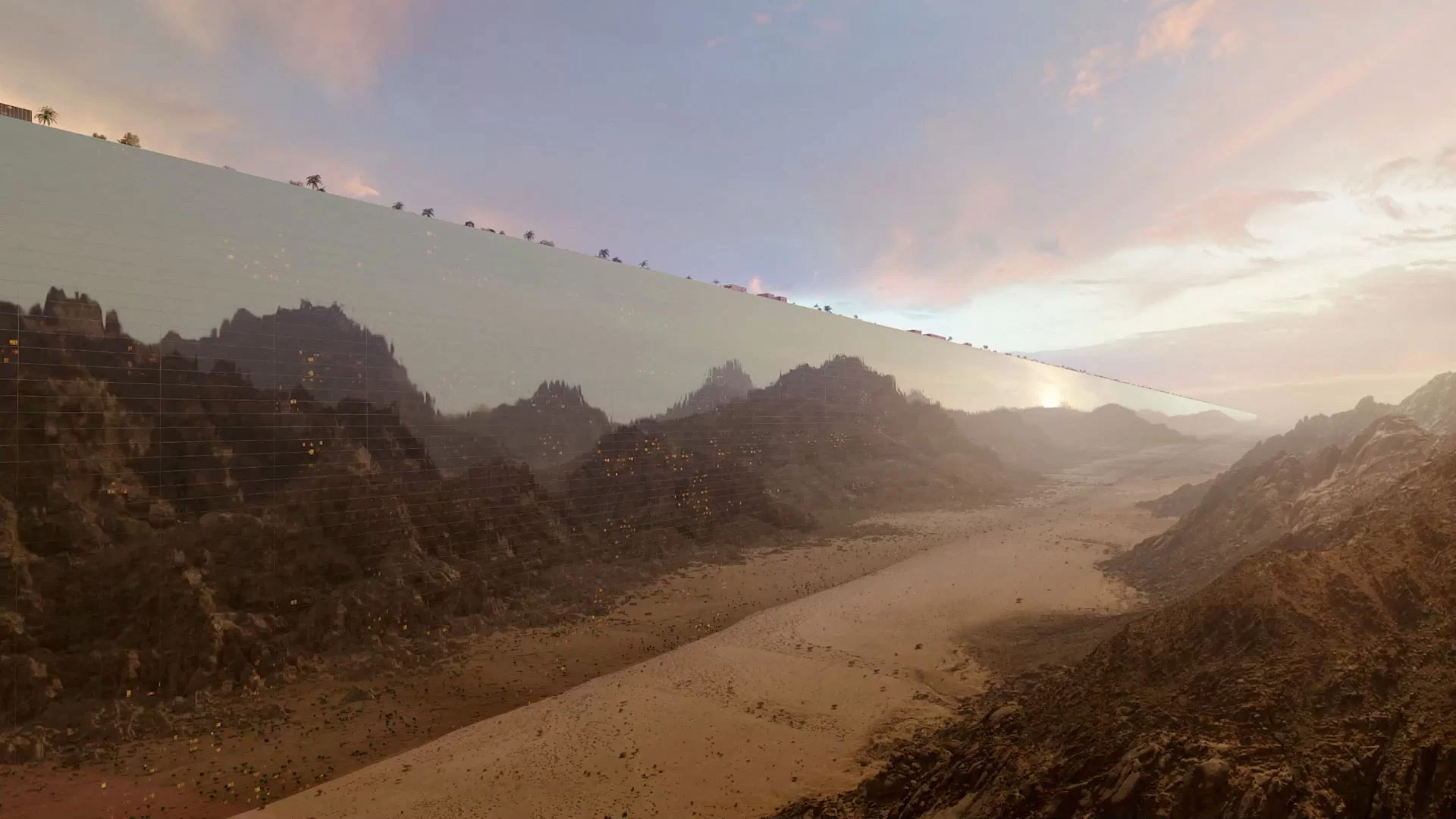
Neom was designed to be a living laboratory for the future, encompassing several distinct regions: Sindalah, a luxury yachting island; Trojena, a year-round mountain destination and ski resort; and The Line, a 170-kilometer-long, mirror-clad linear city. Originally intended to house millions of residents in a car-free, carbon-neutral environment, The Line represented the pinnacle of the Kingdom’s architectural and social ambitions. However, the recent strategic update suggests that the timeline and physical scale of these developments are being adjusted.
While Sindalah is nearing its operational phase and Trojena remains a priority for the 2029 Asian Winter Games, reports indicate that the development of The Line may be more modular than initially planned. Instead of completing the full 170-kilometer stretch by the original deadlines, the Kingdom is now focusing on delivering functional segments that can demonstrate immediate economic utility and return on investment.
Chronology of the Strategic Pivot
The decision to realign the PIF’s strategy is the result of a multi-year assessment of global economic trends and internal fiscal realities.
- 2016: Vision 2030 is launched, establishing the PIF as the primary engine for economic diversification.
- 2017: Neom is announced at the inaugural Future Investment Initiative in Riyadh, capturing global headlines for its sheer scale.
- 2018-2020: The Kingdom focuses on legislative reforms to attract foreign direct investment (FDI) and begins the foundational work on the Red Sea Destination and Amaala.
- 2021: The Line is officially unveiled, introducing the concept of "Zero Gravity Urbanism."
- 2022-2023: Construction reaches peak intensity across multiple sites. However, global interest rates rise and oil price volatility begins to impact the Kingdom’s fiscal surplus projections.
- Early 2024: Internal reviews suggest that the simultaneous execution of multiple giga-projects is straining the local supply chain and labor market, leading to rising costs.
- Late 2024: The PIF announces the 2026-2030 strategy update, officially elevating AI infrastructure over some of the more ambitious phases of real estate development.
Supporting Data: The Financial Logic Behind the Shift
The repositioning of the PIF’s capital is backed by significant financial data. As of 2024, the PIF manages approximately $925 billion in assets. While the fund has seen substantial growth, the projected cost of completing all Vision 2030 projects simultaneously was estimated by some analysts to exceed $1.5 trillion.
By scaling back the immediate capital expenditure on construction, Saudi Arabia aims to protect its fiscal reserves. The decision also aligns with the Kingdom’s "breakeven" oil price requirements. With oil prices fluctuating between $70 and $85 per barrel, the government must balance its ambitious spending with the reality of its primary revenue stream.
Furthermore, the shift toward AI is driven by market projections. The global AI market is expected to contribute up to $15.7 trillion to the global economy by 2030. Saudi Arabia seeks to capture a significant share of this through its newly established entity, "Alat," a company chaired by the Crown Prince that focuses on advanced manufacturing and electronics. The Kingdom has also signaled intentions to create a $40 billion fund specifically dedicated to AI investments, potentially making it the world’s largest investor in the sector.
Official Responses and Strategic Repositioning
Government officials have been quick to frame the shift as an evolution rather than a retreat. Faisal Al-Ibrahim, the Minister of Economy and Planning, has previously noted that the Kingdom’s strategy has always been intended to be agile. "We are building an economy for the next century, not just the next decade," Al-Ibrahim stated in a recent economic forum. "If the global landscape shifts toward generative AI and semi-conductors, our investment strategy must reflect that reality."
Yasir Al-Rumayyan’s comments during Wednesday’s press conference reinforced this sentiment. He emphasized that the PIF is looking for "multipliers." While a luxury hotel in the Red Sea provides steady tourism revenue, an investment in a global AI leader or the domestic production of AI chips provides a technological foundation that can transform every other sector of the Saudi economy, from healthcare to logistics.
Industry analysts suggest that this "right-sizing" of projects is a sign of institutional maturity. By prioritizing the most viable portions of Neom and the Red Sea Destination, the Kingdom reduces the risk of "white elephant" projects—vast infrastructures that are expensive to maintain but underutilized.
The AI Infrastructure Mandate
The Kingdom’s pivot to AI is not merely about venture capital investments in Silicon Valley startups. It involves a massive domestic undertaking to build data centers, supercomputers, and the energy infrastructure required to power them. Saudi Arabia’s vast solar energy potential provides a unique competitive advantage for hosting energy-intensive AI data centers, which are increasingly under scrutiny in the West for their carbon footprints.
The PIF’s updated strategy includes:
- Domestic Manufacturing: Through Alat, the Kingdom aims to manufacture the hardware necessary for AI, reducing reliance on imports and creating high-tech jobs for the Saudi youth.
- Data Sovereignty: Building localized AI models that reflect the linguistic and cultural nuances of the Middle East.
- Human Capital: Redirecting educational scholarships and vocational training toward computer science and machine learning to support the new economic focus.
Broader Impact and Implications for the Global Market
The decision to scale back tourism megaprojects has immediate implications for the global construction and engineering sectors. For years, Saudi Arabia has been the world’s largest construction site, attracting major firms from the United States, Europe, and Asia. A reduction in the pace of these projects may lead to a cooling of the regional construction market and a shift in contract opportunities toward technology and digital services.
For the tourism sector, the Kingdom’s goals remain high—aiming for 150 million visitors by 2030—but the path to achieving them may now rely more on the enhancement of existing cities like Riyadh and Jeddah, and the successful completion of the first phases of the Red Sea and Neom, rather than the immediate realization of the most futuristic concepts.
Internationally, the Kingdom’s aggressive move into AI could trigger a new wave of competition. As Saudi Arabia seeks to become a bridge between Eastern and Western technology markets, its massive capital injections could influence the valuation and development trajectory of AI firms globally.
Conclusion: A Pragmatic Vision for the Future
The recalibration of the Public Investment Fund’s strategy represents a pragmatic shift in Saudi Arabia’s national development. By acknowledging the limits of rapid physical expansion and embracing the potential of the digital frontier, the Kingdom is attempting to future-proof its economy.
While the "reshuffling of priorities" may mean that the 170-kilometer vision of The Line takes longer to materialize, the focus on AI infrastructure suggests that the Saudi Arabia of 2030 may be less about gleaming glass towers in the desert and more about the invisible algorithms and data networks that will drive the global economy. As the PIF moves into its 2026-2030 cycle, the world will be watching to see if this pivot from "bricks to bits" can deliver the economic transformation that Vision 2030 promised.