


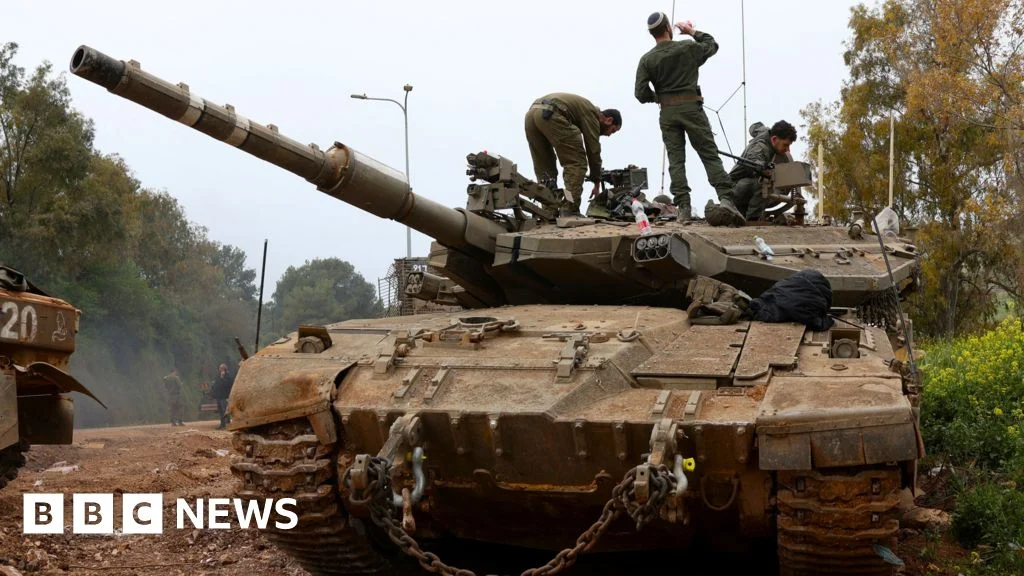
A precarious 10-day ceasefire has been announced between Israel and Lebanon, effective from 17:00 EST (21:00 GMT; midnight local time) on Thursday, marking a significant, albeit fragile, pause in six weeks of intense cross-border conflict. The breakthrough, announced by US President Donald Trump, comes after a period of escalating hostilities primarily involving Israeli forces and Hezbollah, the powerful Iran-backed armed group and political movement operating in southern Lebanon. The cessation of hostilities is intended to pave the way for unprecedented direct talks between the leaders of Israel and Lebanon at the White House, signalling a bold American diplomatic gambit to de-escalate a conflict that has exacted a devastating human toll and threatened broader regional stability.
The agreement was confirmed by Israeli Prime Minister Benjamin Netanyahu, who nonetheless stipulated that Israeli troops would maintain a 10km-deep (6.2 mile) "security zone" within southern Lebanon. "We are there, and we are not leaving," Netanyahu asserted, underscoring Israel’s persistent security concerns. Hezbollah, while expressing willingness to participate in the truce, laid down its own conditions, insisting on "a comprehensive halt to attacks" across all Lebanese territory and "no freedom of movement for Israeli forces." This immediate divergence in interpretations highlights the inherent challenges that lie ahead in transforming a temporary truce into a lasting peace.
Six Weeks of Escalation and Devastation
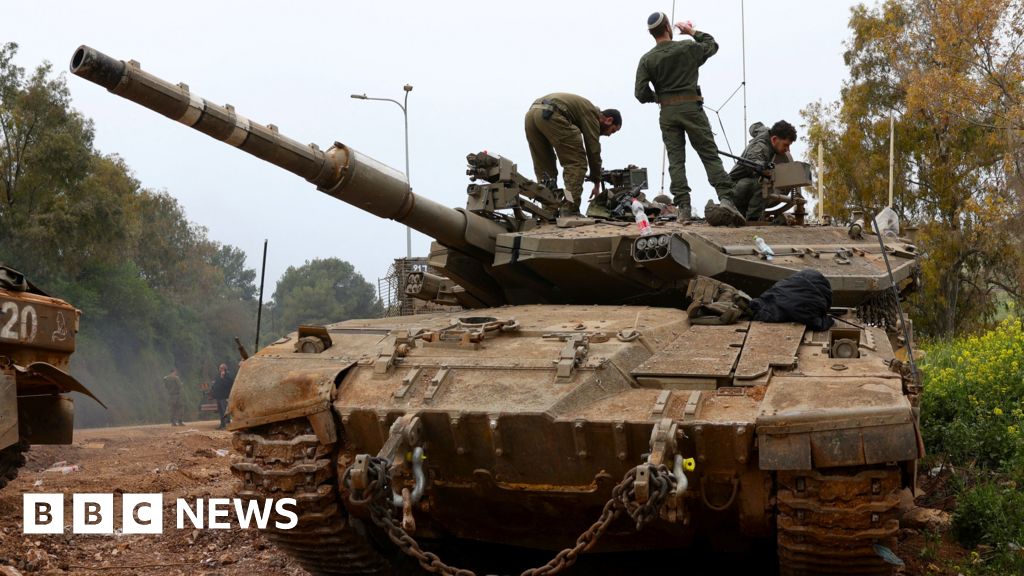
The past six weeks have witnessed a brutal resurgence of conflict in southern Lebanon, stemming from Hezbollah’s stated retaliation for the assassination of Iran’s Supreme Leader Ayatollah Ali Khamenei. While the specific details surrounding this monumental event remain regionally contested, Hezbollah’s actions swiftly plunged the region into a fresh cycle of violence. Israeli forces, citing persistent attacks from Lebanese territory, re-entered southern Lebanon in early March, establishing a buffer zone they deemed essential to protect their northern communities. This move ignited a fierce response from Hezbollah, leading to a tit-for-tat escalation involving artillery exchanges, aerial strikes, and ground engagements.
The humanitarian consequences of this latest conflict have been catastrophic for Lebanon. Over 2,000 people have been killed in Israeli attacks, with the Lebanese health ministry reporting 260 women and 172 children among the casualties, though official figures do not differentiate between civilians and combatants. The fighting has also triggered a massive displacement crisis, with more than a million people – roughly a fifth of Lebanon’s entire population – forced to flee their homes. The scale of destruction is equally staggering, with an estimated 37,000 homes either destroyed or significantly damaged, particularly in southern Lebanon and parts of the capital, Beirut, which endured deadly air strikes. On the Israeli side, authorities report that Hezbollah attacks have resulted in the deaths of two Israeli civilians, alongside 13 Israeli soldiers killed in combat operations within Lebanon.
Diplomatic Breakthroughs Amidst Regional Tensions
The ceasefire announcement emerges from a complex web of diplomatic efforts, including ongoing US-Iran peace talks in Pakistan. President Trump revealed that the US and Iran had already reached significant understandings, including a commitment from Tehran regarding its nuclear weapons program, stating it would not possess them "beyond 20 years." However, he issued a stark warning: "if there is no deal, fighting resumes." Iran’s foreign ministry welcomed the Israel-Lebanon ceasefire, having previously insisted that its own two-week ceasefire with the US should encompass the Lebanese theatre – a demand initially resisted by both Washington and Jerusalem. This intricate linkage underscores the broader regional power dynamics and the profound influence of the Iran-US relationship on various flashpoints.
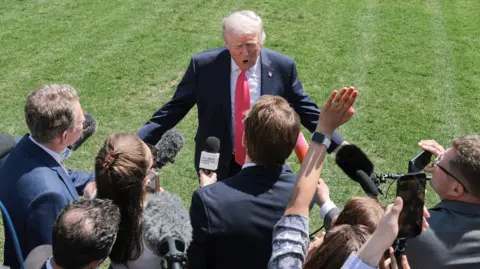
The US-brokered truce represents a significant diplomatic feat, particularly given the historical animosity and lack of formal diplomatic ties between Israel and Lebanon. Rare direct talks aimed at easing the war were held in Washington earlier this week, laying the groundwork for this ceasefire. President Trump, speaking on Truth Social, declared his intention to invite Prime Minister Netanyahu and Lebanese President Joseph Aoun to the White House for what he termed "the first meaningful talks between Israel and Lebanon since 1983," referencing the period during the Lebanese Civil War. This summit, expected within the next "week or two," aims to initiate a more comprehensive peace process. Trump expressed optimism, telling reporters that he believed Lebanon would "take care" of Hezbollah, an assertion that immediately raises questions about the practicalities of internal Lebanese politics and the armed group’s deeply entrenched position.
Contentious Conditions and the "Security Zone"
The immediate terms of the ceasefire, as outlined by the US State Department and statements from the involved parties, reveal crucial points of contention that will dominate future negotiations. Israel’s insistence on maintaining a 10km-deep "security zone" inside southern Lebanon is a direct echo of its past military strategies in the region. Prime Minister Netanyahu explicitly stated that Israeli forces needed to remain to "block the danger of invasion" and reiterated that disarming Hezbollah would be one of Israel’s fundamental demands in any further talks with the Lebanese government. This position, while framed as defensive by Israel, is likely to be viewed by Lebanon as an infringement on its sovereignty and a continued occupation.
Hezbollah’s counter-demands for a "comprehensive halt to attacks" and "no freedom of movement for Israeli forces" directly challenge Israel’s stated intent for the security zone. Netanyahu, in his televised address, unequivocally rejected Hezbollah’s prior conditions for joining the truce – a complete Israeli withdrawal from Lebanese territory and a "quiet for quiet" format. "I agreed to neither the former nor the latter. And indeed, these two conditions are not being met," he stated, highlighting the profound chasm that still exists between the parties.
The US State Department’s statement indicated that the Lebanese government had committed to taking "meaningful steps to prevent Hezbollah and all other rogue non-state armed groups from carrying out any attacks, operations or hostile activities against Israeli targets." This commitment places immense pressure on the fragile Lebanese state, which has long grappled with Hezbollah’s dual role as a political force and an independent armed entity largely outside state control. The question of disarming Hezbollah is not new; Lebanese authorities have consistently argued that it cannot be imposed by force and would necessitate intricate negotiations with the group itself, a process fraught with political complexity and potential for internal strife.
Historical Precedents and Future Challenges
The current ceasefire evokes memories of previous attempts to stabilize the volatile Israel-Lebanon border. A prior ceasefire agreement between Israel and Hezbollah, which ended 13 months of conflict in an unspecified earlier period, notoriously failed to prevent near-daily cross-border strikes, underscoring the deep-seated nature of the conflict and the difficulty in enforcing a lasting peace. The underlying issue of Hezbollah’s weaponry and its operational independence remains the most formidable obstacle to any comprehensive resolution. Hezbollah maintains a substantial arsenal, including an estimated 150,000 rockets and missiles, which it views as a critical deterrent against Israel and a key component of its "resistance" agenda.
For Israel, the presence of such a heavily armed non-state actor on its northern border represents an intolerable security threat. The concept of a buffer zone, whether maintained by Israeli forces or an international contingent, has been a recurring theme in Israel’s security doctrine concerning Lebanon. However, any long-term Israeli presence on Lebanese soil is consistently denounced by Beirut as an occupation and a violation of international law.
The proposed White House summit between Netanyahu and Aoun, if it materializes, would be a truly historic event. Direct high-level talks between Israel and Lebanon have been virtually non-existent for decades, with relations primarily mediated through international channels or indirect communication. The symbolism alone could be powerful, potentially opening a direct diplomatic channel that has been closed for generations. However, the path to a comprehensive agreement is fraught with peril. Beyond the immediate ceasefire, a permanent resolution would require addressing core issues such as border demarcation, the Shebaa Farms dispute, and critically, the future status of Hezbollah.
Regional and International Implications
The conflict and subsequent ceasefire have significant regional and international ramifications. For Iran, the principal patron of Hezbollah, the situation in Lebanon is a crucial component of its regional influence and its broader confrontation with Israel and the United States. Iran’s welcome of the ceasefire, while conditioned on its own nuclear talks, signals its recognition of the need to manage escalations while preserving its strategic interests. Other regional powers, such as Saudi Arabia and Egypt, have likely observed the developments with a mixture of concern and cautious optimism, as any prolonged conflict in Lebanon threatens to destabilize an already volatile Middle East.
The international community, including the United Nations and the European Union, has consistently called for de-escalation and adherence to international law. Any sustained peace effort will likely require robust international monitoring and potentially a strengthened UN peacekeeping force (UNIFIL) in southern Lebanon to ensure compliance with a broader agreement. The massive humanitarian crisis also necessitates continued international aid and reconstruction efforts, which will be critical for Lebanon’s recovery.
Ultimately, this 10-day ceasefire is a critical first step, offering a glimmer of hope amidst widespread destruction and suffering. However, it merely pauses the fighting, leaving the fundamental questions of regional security, national sovereignty, and the disarmament of non-state actors largely unanswered. The success of the upcoming White House summit and the long-term prospects for peace will hinge on the willingness of all parties to engage in genuine dialogue, compromise on deeply held positions, and navigate the complex interplay of internal Lebanese politics and broader regional power struggles. The warning from President Trump remains stark: "if there is no deal, fighting resumes," a prospect that no one in the region wishes to contemplate given the recent devastating experience.