

The enduring legacy of Alexander von Humboldt, a name etched across the American landscape, serves as the inspiration for G. Anthony Svatek’s debut feature, Humboldt USA. This documentary embarks on a journey across the United States, tracing the naturalist’s profound influence and exploring humanity’s evolving relationship with the natural world. From the ancient grandeur of redwood forests to the bustling arteries of New York City and the stark beauty of Nevada, Svatek weaves together the threads of contemporary lives, Humboldt’s prescient observations, and his own contemplative reflections. The resulting tapestry is a nuanced and captivating exploration, a "kaleidoscopic result" that is both a playful homage and a sober examination of our ecological present.
The film is set to make its world premiere in the prestigious international feature film competition of the 57th edition of the Visions du Réel documentary festival in Nyon, Switzerland, on Wednesday, April 22. This esteemed festival, renowned for its commitment to showcasing "adventurous new cinema," provides a fitting platform for Svatek’s ambitious work. Following its European debut, Humboldt USA will receive its U.S. and North American premiere on May 2 at the Museum of the Moving Image’s First Look program, a festival dedicated to emerging and innovative cinematic voices.
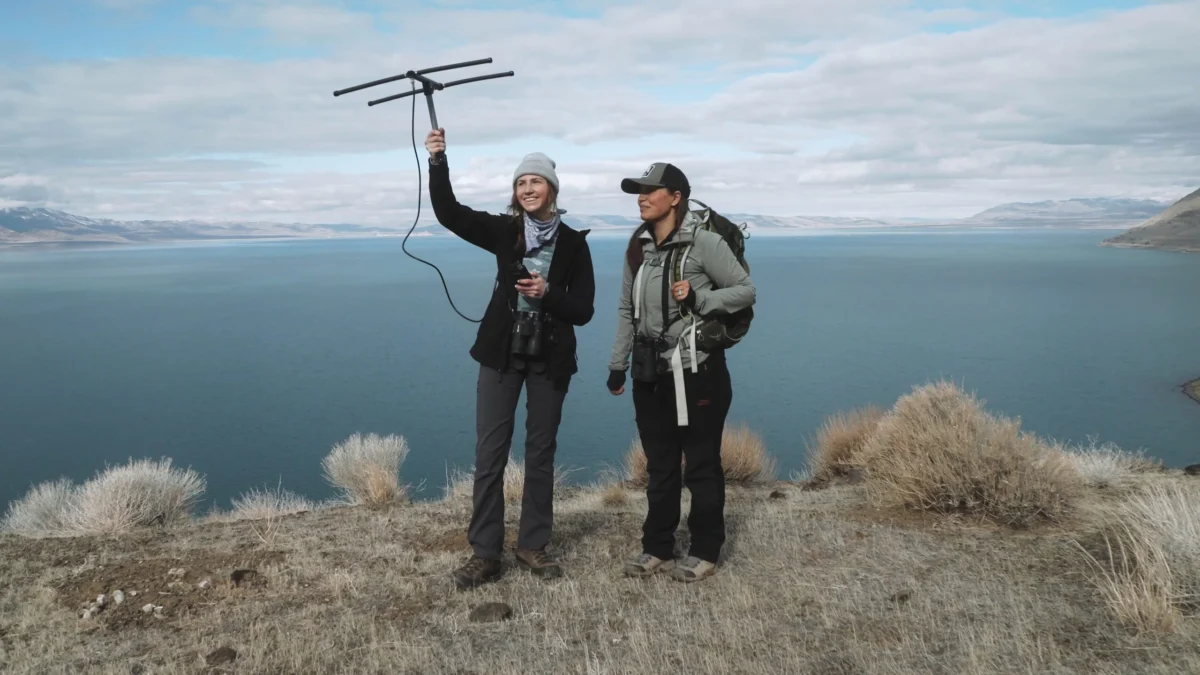
The press notes for Humboldt USA poignantly highlight the enduring presence of Alexander von Humboldt’s name across the American consciousness, describing him as a "queer naturalist, visionary ecologist, now largely forgotten." The film’s synopsis further elaborates on its central premise: "The longing filmmaker uses three of them [Humboldt place names] as unlikely common ground, weaving through present-day lives: urban activists greening neglected neighborhoods, scientists scanning redwood forests, hunters returning bighorn sheep to protected land. Across generations and landscapes, Humboldt USA asks what remains of a vision of ‘interconnectedness’." This framing immediately signals the documentary’s intent to bridge the historical and the contemporary, the theoretical and the tangible, through the lens of Humboldt’s groundbreaking ecological insights.
The Genesis of a Visionary Exploration
G. Anthony Svatek, the director and writer behind Humboldt USA, has a cinematic oeuvre marked by a deep engagement with humanity’s often fractured relationship with the natural world. His previous short, Some Thoughts on the Common Toad (2023), a "cine-collage manifesto in defense of beauty amidst political cynicism and environmental alienation," was inspired by an essay from George Orwell and featured narration by Tilda Swinton, demonstrating a commitment to philosophical and aesthetic depth. Raised in the Austrian Alps, Svatek’s personal background imbues his work with an intimate understanding of natural landscapes and their significance.
The genesis of Humboldt USA can be traced back to Svatek’s encounter with Andrea Wulf’s 2015 bestselling biography, The Invention of Nature. This book, which presented Humboldt as a "gay proto-environmentalist who predicted man-made climate change 200 years ago," resonated deeply with Svatek. He found personal parallels in Humboldt’s life, noting their shared "half-American, half-German" identity (Svatek is half-Austrian, half-American), identical birthdays, and queer identities. These biographical connections provided an initial hook, but it was the sheer pervasiveness of Humboldt’s fame and its tangible imprint on the American landscape that truly ignited the film’s conceptual framework.
"He became the anchor, an interesting figure, to think about how environmentalism and our relationship to the natural world have changed over the past 200 years," Svatek explained in a pre-premiere interview. "His approach to the natural world was either this romanticized approach or a very scientific one. And he encapsulates both of those." This duality within Humboldt’s own worldview, Svatek argues, reflects a persistent tension within Western thought regarding nature.
Nature’s Network: Humboldt’s Enduring Philosophy
Alexander von Humboldt, a German naturalist and polymath of the late 18th and early 19th centuries, is credited with a revolutionary concept: viewing nature not as a collection of isolated entities but as a "network of interconnected lives." This holistic perspective, proposed at the dawn of the 19th century, has found a powerful resurgence in contemporary discussions surrounding climate change and ecological interdependence. The sheer volume of species and geographical locations bearing his name – from penguins and monkeys to orchids and entire mountain ranges – stands as a testament to his monumental impact on scientific exploration and public consciousness.

Svatek’s film draws directly from this core tenet of Humboldt’s philosophy. He elaborates on the dichotomy within Western paradigms: "Nature’s either fenced in at a national park or it is the domain of science. Both of them are very abstract visions and understandings of the natural world. But then Humboldt talked about how everything was interconnected." Svatek’s own interest in how technology has reshaped our connection to nature made Humboldt an ideal figure through which to explore the modern meaning of interconnectedness.
"I didn’t want to make a biographical film," Svatek stated, "but I saw his name all over the country, and that felt like an invitation to explore this idea of interconnectedness 200 years later and how it manifests itself." This directorial approach allows Humboldt USA to transcend a simple historical tribute, instead using Humboldt’s foundational ideas as a springboard for contemporary inquiry.
Navigating Complexity: The Pros and Cons of Interconnectedness
The film does not shy away from the inherent complexities and potential drawbacks of viewing the world solely through a lens of interconnectedness. Svatek acknowledges this nuance, stating, "I’m so glad you picked up on that, because I wanted the film to reflect that complexity. Humboldt, as a person, is also a very complicated, complex figure, so I wanted the subjects and the people I was filming to reflect that as well, both in their personal stories, but also as a conceptual thing."
This intentional exploration of multifaceted realities is particularly relevant in the current era, where the concept of interconnectedness is frequently invoked in both ecological and technological contexts. Svatek expresses a degree of "techno-skepticism," a sentiment that has informed much of his prior work, focusing on how technological advancement impacts our relationship with the natural world. For many, especially urban dwellers, nature has become an increasingly "abstract, mediated experience," a reality that Svatek’s film aims to confront.
The documentary’s press notes further emphasize this thematic exploration: "Across generations and landscapes, Humboldt USA asks what remains of a vision of ‘interconnectedness’." This question is not posed with a simple answer in mind, but rather as an invitation to consider the evolving implications of such a worldview in the face of rapid environmental and technological change.
A Tapestry of Locations and Lives
The selection of filming locations and the individuals featured in Humboldt USA was a deliberate process aimed at reflecting the diverse environments and societal landscapes across the United States. Svatek sought to represent a broad spectrum, encompassing urban, rural, and technologically driven settings.
"I started to pick Humboldt place names and tried to keep in mind the spectrum of environments, both social and landscape-wise, to represent the U.S. So I wanted something that felt very urban, I wanted something that felt very rural, and I wanted something that felt very techno utopia with AI people in California," Svatek explained. This method of "intuitive casting" involved spending time in various locations, engaging with people, and seeking out individuals whose stories and work resonated with the film’s overarching themes.

One notable example of this process involved Svatek’s discovery of "ecological archivists" in California. These individuals, who "try to scan redwoods and bring all this gear into nature to try and make organic algorithms," represent a cutting-edge, and perhaps paradoxical, attempt to digitally capture and understand the natural world. This narrative thread, exploring the intersection of advanced technology and ecological preservation, became particularly relevant with the subsequent explosion of interest in Artificial Intelligence.
The Long Arc of Creation: A Multi-Year Endeavor
The production of Humboldt USA was a significant undertaking, spanning nearly seven years from its initial research shoot at the end of 2019. The project experienced an inevitable pause due to the COVID-19 pandemic, which disrupted global filming schedules and necessitated a period of recalibration. Svatek recalls starting in Nevada with a "sheep relocation shoot," an experience that predated the widespread lockdowns and underscored the unpredictable nature of documentary filmmaking.
The extended timeline allowed for a deep immersion into the subject matter and a gradual unfolding of the film’s narrative. This patient approach is reflected in the film’s rich texture and the depth of its explorations, allowing Svatek to meticulously craft a cinematic experience that is both intellectually stimulating and emotionally resonant.
A Voice of Reflection and Love
A distinctive element of Humboldt USA is Svatek’s own voiceover, which functions as a narrative thread, weaving together the various strands of the film. This directorial presence transforms the documentary into a deeply personal reflection, akin to a "love letter to Humboldt," as described by the filmmaker. However, this epistolary tone is also tinged with "disappointments and concerns," mirroring the complexities of any deep relationship.
Writing the voiceover proved to be the most challenging aspect of the production. Svatek described the process as an ongoing negotiation with his initial feelings of admiration for Humboldt. "I really did feel like I was falling in love with him over time," he shared. "But then, as it happens when you fall in love or have a crush on someone, eventually, there is some disappointment. And the more time you spend with them, the more nuanced they become, the more complex they become."
This recognition of human complexity is central to Svatek’s interpretation of Humboldt and, by extension, to the film’s critique of simplistic heroification. "People are complex. People aren’t these heroified figures the way that Humboldt has often been made out to be, or the villain, as he has sometimes also been cast. He’s just this complicated, complex figure." The voiceover, therefore, serves not only as a narrative device but also as a critical tool, prompting viewers to consider the rapid transformations of the past two centuries and to question the contemporary manifestations of the interconnectedness Humboldt envisioned.
"This is what interconnectedness looks like now," Svatek posits through his narration, "And you embodied this, too! You would have been enthusiastic about the technological advances in infrastructure and all this stuff. But look at the consequences of that now!" This direct address to Humboldt, bridging time and perspective, encapsulates the film’s central dialogue between historical insight and present-day realities.

AI and the Future: Contemporary Echoes
The inclusion of Artificial Intelligence as a theme within Humboldt USA reflects the rapidly evolving technological landscape and its profound implications for our relationship with the natural world. Svatek began exploring the AI storyline in California in 2021 and 2022, predating the widespread public awareness of generative AI tools like ChatGPT. The subsequent explosion of AI technology only served to underscore the prescience of his chosen narratives.
"I was at times thinking: ‘What are these people talking about?! I don’t understand this at all’," Svatek recalled. "And then ChatGPT came out, and AI exploded. It just underscored the relevance of all these storylines." This serendipitous timing highlights how Humboldt USA captures a pivotal moment in human history, where the very definition of intelligence and consciousness is being reshaped, with potentially far-reaching ecological consequences.
Future Directions: Art, Activism, and Provocation
Looking ahead, Svatek is engaged in projects that continue to explore the intersection of societal issues and creative expression. He has been commissioned to work on projects centered around the New York art world, a departure from his previous focus on natural landscapes. However, this new direction aligns with his ongoing contemplation of how critical issues, such as the climate crisis, are communicated and addressed in contemporary society.
Svatek is particularly intrigued by the strategies employed by environmental activists who utilize direct action within art museums, often targeting iconic artworks to draw attention to the climate emergency. He describes this as a "narrative, or maybe hybrid, project" that delves into the complexities of such provocative tactics.
"In our media landscape, scandal and outrage are modes through which we get attention," Svatek observed. "So, I think their tactic is super interesting. I don’t necessarily agree with everything they’re doing, but I think this idea of intentional provocation, and then turning it around to talk about a topic, is interesting." The act of "throwing a can of soup against a protected Van Gogh painting," while "desperate," is also seen as a "radical" and "totally polarizing" tactic that forces public discourse.
Svatek’s approach to these complex issues remains consistent: to explore them with nuance and to avoid taking a prescriptive stance. His future work, like Humboldt USA, will likely delve into the "complexities" of human behavior and societal responses to pressing global challenges, mirroring the multifaceted legacy of Alexander von Humboldt himself. The film’s release marks a significant moment, offering a timely and thought-provoking reflection on our interconnected world and the enduring wisdom of those who first sought to understand its intricate web of life.