

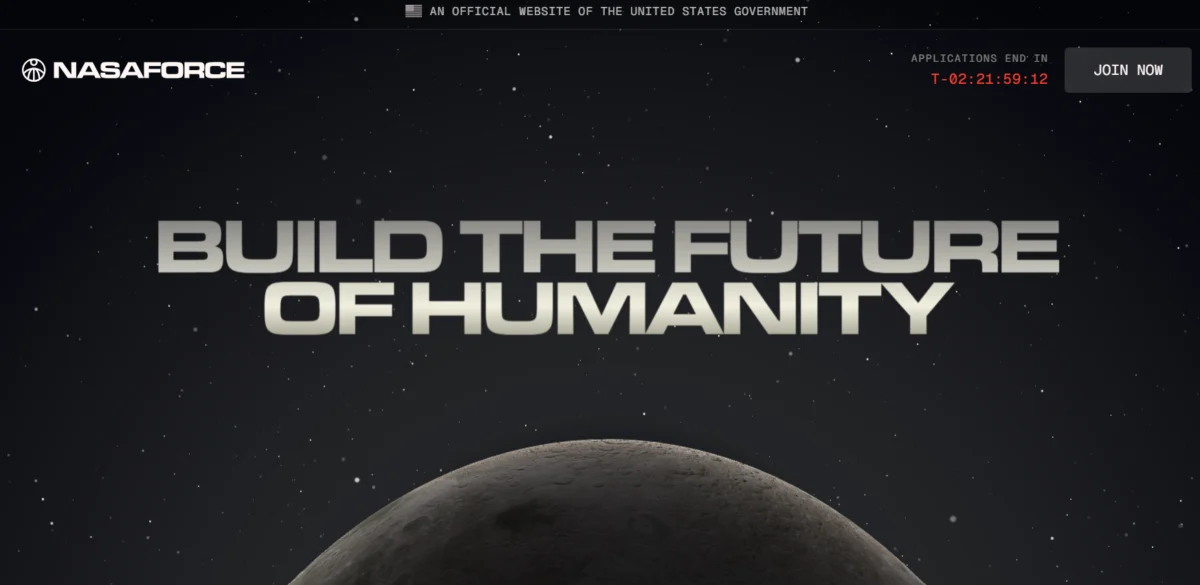
The National Aeronautics and Space Administration (NASA), in a strategic collaboration with the U.S. Office of Personnel Management (OPM), officially launched the NASA Force website on Friday, initiating a critical recruitment drive for highly skilled engineers and technologists. This landmark initiative aims to infuse the nation’s premier space agency with cutting-edge expertise, ensuring the United States maintains its unparalleled leadership in both air and space exploration, research, and innovation. The launch marks a pivotal moment in the federal government’s broader effort to modernize its technical workforce and tackle the complex challenges of the 21st century.
A Strategic Imperative: Securing the Future of U.S. Space Dominance
NASA Force represents more than just a hiring campaign; it is a direct response to a growing national imperative to secure and cultivate top-tier technical talent for mission-critical roles. Developed as a bespoke hiring initiative in partnership with OPM, its primary objective is to identify, recruit, and strategically place high-impact technical professionals into positions vital for advancing NASA’s ambitious exploration goals, pioneering research, and developing advanced technologies. This focused approach is designed to counteract the challenges of an evolving workforce landscape, where competition for STEM talent is fierce, both domestically and internationally.
The strategic significance of this initiative cannot be overstated. With an aging federal workforce and an increasingly competitive global arena for scientific and technological prowess, agencies like NASA are at the forefront of a talent acquisition battle. The United States’ preeminence in space, a cornerstone of its national security, economic prosperity, and scientific advancement, hinges directly on its ability to attract and retain the brightest minds. NASA Force is engineered to streamline the often-complex federal hiring process, making it more agile and appealing to a new generation of innovators eager to contribute to groundbreaking missions.
NASA Administrator Jared Isaacman underscored the transformative potential of the initiative, stating, "NASA Force is bringing highly skilled early- to mid-career engineers, technologists, and innovators to help us achieve our world-changing missions." He further emphasized the inspiring impact of recent achievements, noting, "Our successful Artemis II mission has inspired the world and generated tremendous interest to join our workforce to be part of the Golden Age of innovation and exploration." This sentiment reflects a broader recognition within NASA that public enthusiasm for space exploration, particularly human missions to the Moon and beyond, provides a powerful recruitment magnet.
The Broader Context: US Tech Force and Federal Workforce Modernization
NASA Force operates as a specialized component of the broader US Tech Force initiative, a comprehensive program established by OPM. This overarching federal effort is designed to recruit elite technical professionals across multiple government agencies, with the collective goal of modernizing critical systems, accelerating innovation, and strengthening the delivery of essential government missions. The US Tech Force initiative acknowledges that technological literacy and innovation are not merely desirable but absolutely essential for effective governance and national competitiveness in the digital age.
OPM Director Scott Kupor articulated the vision behind these interconnected initiatives, remarking, "NASA has always shown the world what American talent can achieve when it’s pointed at a bold mission." He elaborated on the strategic intent of NASA Force, asserting, "NASA Force is about making sure the agency has access to the next generation of innovation and strong partnerships with private sector talent to drive its very ambitious agenda." This perspective highlights OPM’s commitment to facilitating talent acquisition that not only fills immediate needs but also fosters long-term strategic capabilities, potentially leveraging expertise from the burgeoning private space sector.
The need for initiatives like US Tech Force and NASA Force is rooted in several critical data points regarding the federal workforce. According to OPM reports, a significant portion of the federal workforce, particularly in STEM fields, is eligible for retirement in the coming years. This demographic shift, coupled with intense competition from the private sector—which often offers higher salaries and more flexible work environments—has created a talent gap that traditional federal hiring mechanisms have struggled to fill efficiently. By creating specialized pathways like NASA Force, the government aims to present a more compelling value proposition to top talent, emphasizing the unique impact and mission-driven nature of public service.
Targeting Talent: Early- to Mid-Career Professionals for High-Impact Roles
The initial focus of NASA Force is on attracting early- to mid-career professionals. This demographic is crucial for building a sustainable talent pipeline, ensuring that new ideas and modern technical skills are continually integrated into NASA’s operations. These individuals bring fresh perspectives, recent academic training, and often, early professional experience that can be quickly leveraged for high-impact projects. The initiative seeks to identify individuals with strong foundational knowledge in STEM fields, coupled with an innovative mindset and a passion for pushing the boundaries of scientific and technological possibility.
The very first job application posted under the NASA Force banner is for aerospace engineer positions. These roles are offered as two-year term appointments, with the potential for additional extensions, providing both flexibility for the agency and a clear career path for successful candidates. Aerospace engineers are the backbone of NASA’s endeavors, designing, developing, and testing aircraft, spacecraft, satellites, and missiles. Their expertise is fundamental to every aspect of space exploration, from propulsion systems and structural integrity to navigation and communication.
Future openings, anticipated in the coming weeks and months, are expected to broaden the scope of recruitment, encompassing a diverse array of technical disciplines essential for NASA’s multifaceted missions. This could include, but is not limited to, software engineers specializing in artificial intelligence and machine learning for autonomous systems, data scientists to interpret vast datasets from Earth observation and planetary missions, materials scientists for advanced spacecraft components, robotics engineers for lunar and Martian surface operations, and experts in life support systems for long-duration human spaceflight. The breadth of NASA’s mission portfolio necessitates a wide spectrum of specialized technical skills, and NASA Force is designed to be agile enough to address these evolving needs.
The Artemis Program: A Driving Force for Recruitment
The launch of NASA Force is inextricably linked to the agency’s ambitious Artemis program, which aims to return humans to the Moon and establish a sustainable lunar presence as a stepping stone for future human missions to Mars. The Artemis program is a monumental undertaking, demanding unprecedented levels of engineering ingenuity, technological innovation, and scientific collaboration. Each phase of the program, from the development of the Space Launch System (SLS) rocket and the Orion spacecraft to the Lunar Gateway and human landing systems, requires a robust and highly skilled workforce.
The recent success of the uncrewed Artemis I mission, which orbited the Moon, and the palpable excitement surrounding the upcoming crewed Artemis II mission, have reinvigorated public interest in space exploration. This renewed enthusiasm serves as a powerful catalyst for recruitment, inspiring a new generation to consider careers at NASA. The "Golden Age of innovation and exploration" referenced by Administrator Isaacman is not merely a rhetorical flourish; it reflects the tangible progress being made and the ambitious goals set for the coming decades. These goals necessitate a continuous influx of talent capable of tackling challenges such as developing closed-loop life support systems for extended lunar stays, designing radiation-hardened electronics for deep space, and engineering advanced robotics for resource utilization on other celestial bodies.
Beyond Hiring: Nurturing a Resilient Talent Pipeline
While NASA Force focuses on external recruitment, it is part of a broader, holistic strategy by NASA to bolster its internal talent pipeline, strengthen its technical core competencies, and foster an enduring culture of technical resilience. This multi-pronged approach recognizes that attracting talent is only half the battle; retaining and developing that talent is equally crucial for long-term success.
NASA’s internal strategies include robust professional development programs, mentorship initiatives, and opportunities for cross-functional collaboration, ensuring that existing employees continue to grow and adapt to new technological demands. By integrating new talent through NASA Force, the agency aims to create a dynamic environment where seasoned experts can mentor new recruits, and fresh perspectives can challenge established norms, leading to continuous improvement and innovation. This culture of resilience is vital for an agency that operates at the cutting edge of human knowledge and faces inherent risks and unknowns in its pursuit of scientific discovery and exploration.
The agency’s commitment to maintaining "unrivaled U.S. leadership in air and space exploration" requires not just filling vacancies but strategically building and sustaining capabilities that will define the next era of discovery. This includes investing in research and development, fostering public-private partnerships, and ensuring that the workforce possesses the necessary skills to navigate an increasingly complex technological landscape, from advanced propulsion systems to quantum computing and artificial intelligence applications in space.
Implications for U.S. National Security and Economic Prosperity
The success of initiatives like NASA Force carries profound implications beyond the confines of space exploration. From a national security perspective, maintaining a robust and technically superior space program is paramount. Space assets are critical for intelligence gathering, communication, navigation, and military operations. A strong NASA workforce directly contributes to the technological superiority that underpins the U.S.’s strategic advantage in these domains, particularly in an era of renewed geopolitical competition in space.
Economically, investments in STEM talent and space exploration have a well-documented multiplier effect. NASA programs historically drive innovation that spills over into various commercial sectors, creating new industries, products, and jobs. Technologies developed for space, such as advanced materials, miniaturized electronics, and communication systems, often find terrestrial applications, boosting economic productivity and competitiveness. The recruitment of thousands of highly skilled professionals into high-paying STEM jobs through initiatives like NASA Force also directly contributes to economic growth and strengthens the nation’s innovation ecosystem.
Furthermore, by inspiring young people to pursue STEM education and careers, NASA and OPM are investing in the long-term human capital development of the nation. The "Apollo effect" of the 1960s, which saw a surge in scientific and engineering graduates, serves as a historical precedent for the potential impact of ambitious space programs on educational and career choices. The "Golden Age of innovation and exploration" that Administrator Isaacman envisions aims to rekindle this inspiration, ensuring a continuous supply of talent for not just NASA, but the broader U.S. economy.
Looking Ahead: Challenges and Continuous Evolution
While the launch of NASA Force is a significant step forward, the path to fully realizing its potential will involve ongoing challenges. Maintaining competitive salaries and benefits in comparison to the private sector, navigating evolving bureaucratic hurdles, and ensuring consistent, long-term funding for these initiatives will be critical. The federal government will need to continuously adapt its recruitment strategies to remain attractive to the most sought-after technical professionals.
The long-term vision for NASA Force and the broader US Tech Force initiative is one of continuous evolution, adapting to new technological advancements and shifting national priorities. As space exploration becomes increasingly collaborative with international partners and the private sector, the ability to integrate diverse talent and foster innovation will be more important than ever. The initiative represents a proactive and necessary investment in the intellectual capital that will define America’s future in the cosmos and on Earth.
For individuals inspired by the prospect of contributing to humanity’s next great leaps in exploration and scientific discovery, the NASA Force website offers a direct pathway. This strategic hiring initiative is poised to shape the future of space exploration, reinforce U.S. leadership, and inspire a new generation of technical trailblazers.
To learn more about NASA Force and apply for jobs, visit: https://www.nasaforce.gov
For broader federal job opportunities, including those beyond NASA Force, interested candidates can explore: https://www.usajobs.gov
-end-
Camille Gallo / Jennifer Dooren
Headquarters, Washington
202-358-1600
[email protected] / [email protected]