


The integrity and clarity of the County Championship’s injury replacement regulations have been called into question once more, following Lancashire County Cricket Club’s unsuccessful bid to bring in seam bowler Tom Bailey as a like-for-like replacement for the injured Ajeet Singh Dale. The decision, which saw Lancashire ultimately draft in all-rounder Ollie Sutton from their second team, has ignited debate within the county game regarding the application and interpretation of the rules designed to ensure fair competition.
The Incident and Lancashire’s Frustration
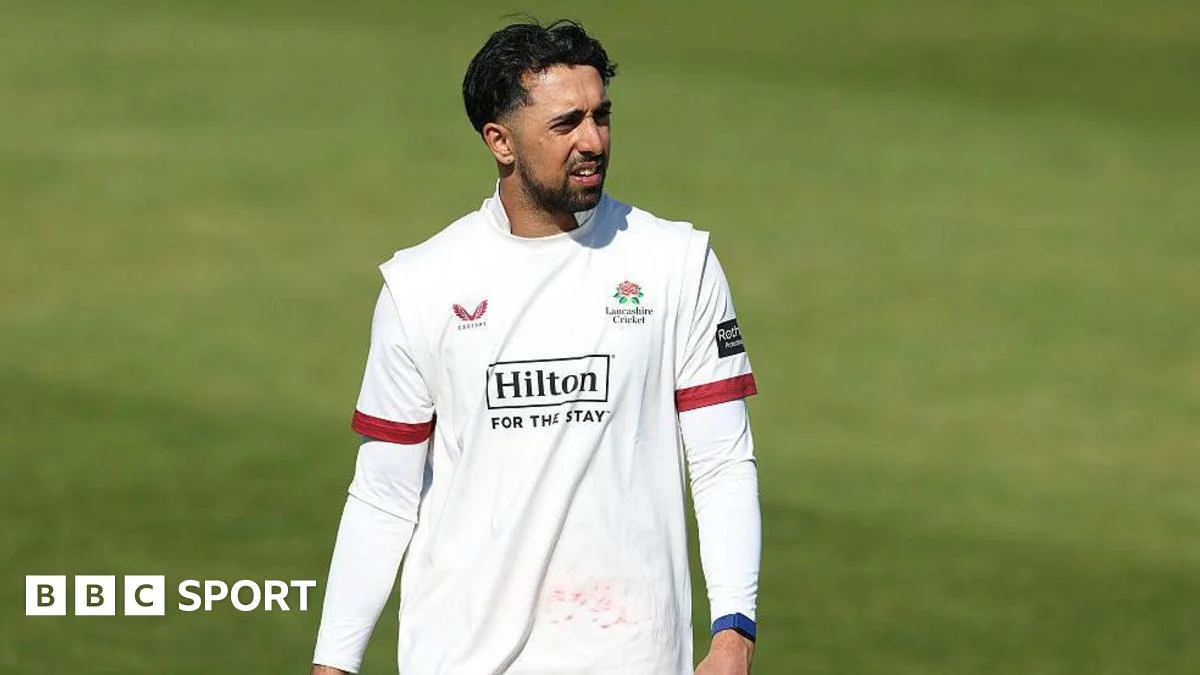
The incident occurred during Lancashire’s ongoing County Championship fixture against Gloucestershire. Ajeet Singh Dale, a right-arm fast bowler, sustained a hamstring injury in just his second over of the day. The injury forced him from the field, leaving Lancashire’s bowling attack depleted. In response, the Lancashire management, led by head coach Steven Croft, sought to bring Tom Bailey into the playing XI. Bailey, also a right-arm fast bowler, was already part of the matchday squad, meaning his inclusion would not necessitate any changes to the overall playing eleven beyond replacing the injured Dale.
However, Lancashire’s request was formally denied by the governing body, reportedly on the grounds that Tom Bailey was deemed to possess superior experience compared to the injured bowler. This reasoning has been met with considerable frustration from Lancashire, who maintain that Bailey was precisely the kind of replacement they had in mind – a bowler with a similar skillset and role within the team.
Steven Croft articulated his disappointment in an interview with BBC Radio Lancashire, stating, "In our eyes, Tom is deemed to be a like-for-like replacement. It’s not like someone is coming in and bowling 10mph quicker." He further elaborated on the perceived inconsistency of the decision: "Instead, we’ve had to call up a left-arm seaming all-rounder and that doesn’t sit right with us really. I don’t know how it’s come to that conclusion but we’ve got to crack on with it." Croft also expressed surprise at the basis for the denial, suggesting that the criteria used – believed to be related to statistics and experience – were not clearly communicated when the regulations were initially disseminated.
Timeline of Events
The sequence of events leading to the controversy can be broadly outlined:
- Day 1 of Match: Lancashire versus Gloucestershire County Championship fixture commences.
- Early Stages of Match: Lancashire seamer Ajeet Singh Dale sustains a hamstring injury while bowling his second over.
- Lancashire’s Request: Lancashire management formally requests to replace the injured Dale with Tom Bailey, a bowler already within the matchday squad.
- Governing Body’s Decision: The request is denied, with the rationale cited as Bailey’s greater experience.
- Alternative Solution: Lancashire is compelled to call up Ollie Sutton, a left-arm seaming all-rounder from their second team, as a replacement.
- Public Statement: Lancashire head coach Steven Croft expresses his dissatisfaction with the ruling to the media.
The County Championship Injury Replacement Framework
The County Championship, the premier domestic first-class cricket competition in England and Wales, operates under a set of regulations designed to ensure a competitive and fair playing field. Injury replacement rules are a crucial component of this framework, allowing teams to continue with a balanced side in the event of a player being incapacitated during a match.
Typically, such regulations aim to permit a "like-for-like" replacement. This generally means a bowler replacing a bowler, a batter replacing a batter, or a specialist all-rounder replacing a similar specialist all-rounder. The principle behind this is to prevent teams from gaining an unfair advantage or suffering undue disadvantage due to unforeseen circumstances.
However, the interpretation of "like-for-like" can become a point of contention. Factors such as bowling style (pace, swing, spin), handedness (left-arm vs. right-arm), batting ability, and overall role within the team can all be considered. The specific nuances of the County Championship rules, as administered by the England and Wales Cricket Board (ECB), are not always transparent to the public or even to the counties themselves, leading to potential ambiguities.
Supporting Data and Context
To understand the implications, it’s useful to consider the roles of the players involved. Ajeet Singh Dale and Tom Bailey are both established right-arm fast bowlers for Lancashire. Their primary contribution to the team would be to spearhead the pace attack, generate early breakthroughs, and provide sustained pressure on opposition batsmen. While individual statistics vary, their fundamental function within the team’s strategy is largely congruent.
Ollie Sutton, on the other hand, is described as a left-arm seaming all-rounder. While he offers bowling support, his profile suggests a potentially different tactical approach. Left-arm seam bowling can offer unique angles and challenges to batsmen, and his all-round capabilities might mean he is batting higher up the order or provides a different dimension to the tail end of the batting lineup. The fact that Lancashire felt compelled to bring in a left-arm option, rather than a direct replacement for a right-arm pace bowler, highlights the compromise they were forced into.
This incident is not an isolated case of questioning regulations. Throughout the history of professional cricket, similar debates have arisen regarding player eligibility, substitution rules, and the interpretation of playing conditions, particularly when they impact a team’s strategic options. The County Championship, with its long history and tradition, often finds itself at the centre of such discussions.
Official Responses and ECB Stance
The England and Wales Cricket Board (ECB), the governing body for cricket in England and Wales, has declined to comment on the specific case involving Lancashire and the denied replacement. This official silence, while common in such situations to avoid pre-empting any formal appeals or further discussions, does little to assuage the concerns raised by Lancashire and potentially other counties.
The ECB is responsible for setting and enforcing the regulations of the County Championship. Their interpretation and application of these rules are paramount. The lack of a clear public explanation for the denial, or a statement clarifying the criteria for "like-for-like" replacements, leaves room for ambiguity and can lead to perceptions of inconsistent application.
Broader Impact and Implications
The implications of this incident extend beyond Lancashire’s immediate situation:
- Fairness and Competitive Balance: The core principle of sports is fair competition. If injury replacement rules are perceived as being inconsistently applied or favouring certain interpretations, it can undermine this principle. Teams might feel they are being unfairly penalised by circumstances beyond their control.
- Clarity of Regulations: This event underscores the need for crystal-clear and transparent regulations. When rules are open to subjective interpretation, it creates opportunities for disputes and can lead to frustration among participants. A definitive set of guidelines, perhaps with examples, would be beneficial.
- Impact on Team Strategy: The inability to bring in a direct replacement can force a team to alter its strategy mid-game. This could involve over-bowling certain bowlers, altering batting orders, or changing tactical approaches, all of which can have a significant impact on the outcome of the match and the season.
- Player Welfare: While not directly addressed in this instance, injury replacement rules also have a bearing on player welfare. If a team cannot adequately cover an injured player, other players might be pushed beyond their limits, increasing the risk of further injuries.
- Precedent Setting: The ECB’s decision, even if not publicly explained, sets a precedent. Future cases of similar nature will likely be measured against this outcome, potentially influencing how other counties approach injury replacements.
The incident involving Lancashire’s denied replacement request for Ajeet Singh Dale highlights a recurring challenge in professional sports: ensuring that the rules governing play are both robust and consistently applied. As the County Championship season progresses, the focus will remain on how such regulations are interpreted and whether the ECB provides further clarity to avoid future controversies that could detract from the sporting spectacle. The desire for a level playing field remains paramount, and the interpretation of injury replacement rules is a critical component in achieving that objective.