


Ariel Motor Company, the Somerset-based manufacturer renowned for its minimalist, high-performance vehicles, is preparing for a significant transition as it moves toward a new, purpose-built headquarters near Yeovil. This expansion marks a pivotal moment for a firm that has spent a quarter-century redefining the specialist automotive sector through a philosophy of extreme lightweighting, engineering transparency, and a unique direct-to-consumer business model. Under the continued leadership of founder Simon Saunders, the company is scaling its operations to accommodate the development of its most ambitious project to date: the 1,180bhp electric "Hipercar." This strategic growth signifies more than just a physical relocation; it represents the maturation of a business that began as a university design experiment and has since become a global benchmark for driver-centric engineering.
The Foundation of a Modern Specialist Manufacturer
The trajectory of Ariel Motor Company is inextricably linked to the vision of Simon Saunders, an experienced designer whose career included stints at major automotive firms and consultancies before he transitioned into academia. While serving as a senior lecturer at Coventry University’s transport design school in the mid-1990s, Saunders sought to bridge the gap between theoretical design and the practicalities of industrial production. In 1996, he spearheaded a design competition, supported by industry publications, which challenged students to envision a lightweight sports car that eschewed traditional bodywork in favor of functional aesthetics.
Among the entries, a concept titled the Lightweight Sports Car (LSC), designed by student Niki Smart, emerged as the most viable candidate for commercial realization. The LSC featured a skeletal, tubular steel chassis that served as both the structural backbone and the primary visual element of the vehicle. Recognizing the potential for a niche product in a market increasingly dominated by heavy, electronically assisted sports cars, Saunders acquired the rights to the Ariel name—a historic British marque dating back to the 19th century—and established the business infrastructure necessary to bring the concept to market.
Chronology of Development: From Barns to High-Tech Facilities
The evolution of Ariel has been characterized by deliberate, incremental growth rather than rapid, debt-fueled expansion. The company’s timeline reflects a commitment to perfecting its core products while diversifying into new segments of the enthusiast market.
- 1996–1999: The Prototype Phase. Following the debut of the LSC at the British Motor Show, Saunders refined the design to meet road-legal requirements and industrial standards. This period involved securing suppliers, establishing a build process, and setting up the initial production site in converted barns at Saunders’ home in Crewkerne, Somerset.
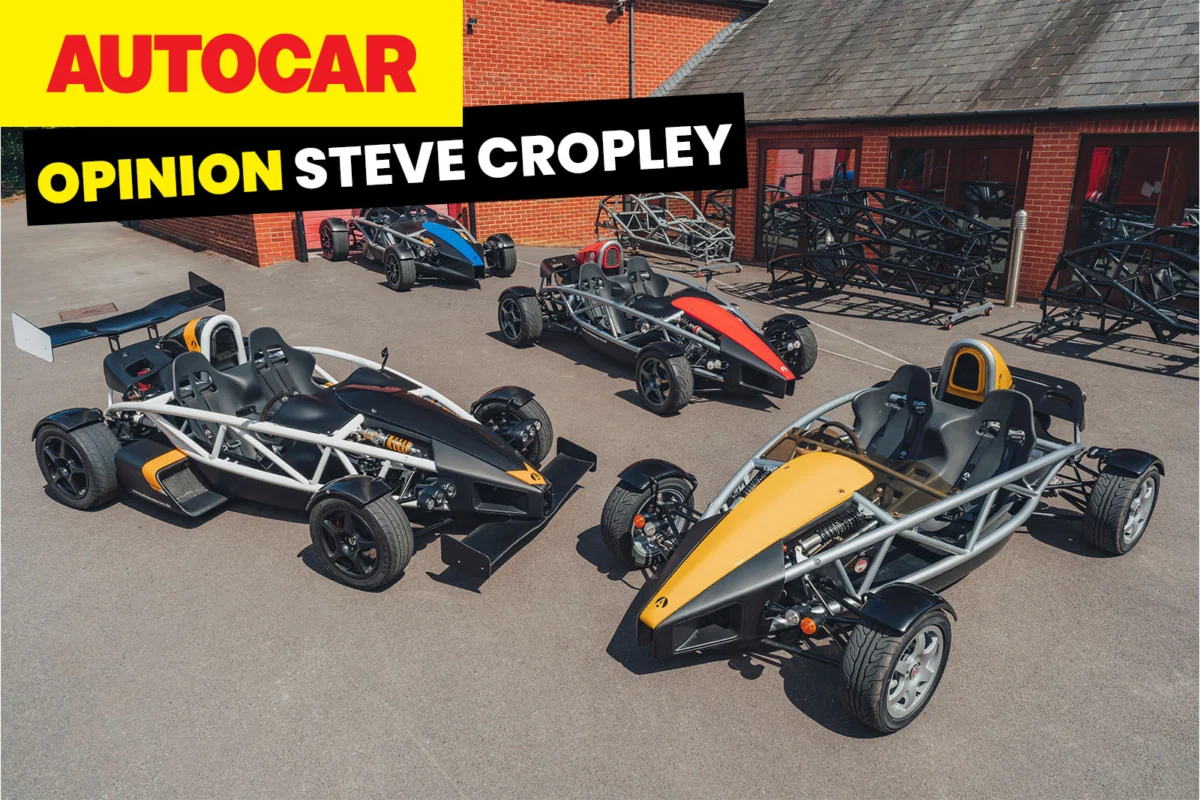
- 1999–2000: Launch of the Atom. The vehicle was officially rebranded as the Ariel Atom and entered production. Its lack of doors, roof, and traditional body panels made it an immediate sensation in the automotive press, lauded for its power-to-weight ratio and purity of feedback.
- 2003–2014: The Honda Partnership and Global Recognition. A critical turning point occurred when Ariel switched to Honda’s i-VTEC engines, specifically the high-revving units from the Civic Type R. This partnership provided Ariel with world-class reliability and performance. During this era, the Atom 2 and Atom 3 were released, with the latter gaining worldwide fame through high-profile media coverage and record-breaking track performances.
- 2014–2015: Diversification with the Ace and Nomad. Ariel expanded beyond four-wheeled track cars. The Ace, a bespoke motorcycle featuring a trellis frame and a Honda V4 engine, was launched in 2014. It was followed in 2015 by the Nomad, an "all-terrain" buggy that applied the Atom’s skeletal philosophy to off-road environments.
- 2018–Present: The Atom 4 and Electrification. The Atom 4 was introduced in 2018, featuring a completely new chassis and the turbocharged K20C1 engine. Concurrently, the company began public development of the "Hipercar," a high-performance EV technology demonstrator.
Technical Specifications and Engineering Philosophy
The success of Ariel is rooted in its "less is more" engineering philosophy. By eliminating weight, the company reduces the load on every other component, including tires, brakes, and suspension, resulting in a vehicle that is more responsive and efficient than traditional supercars.
The current flagship internal combustion model, the Atom 4, exemplifies this approach. It utilizes a 2.0-liter turbocharged Honda engine producing 320bhp and 420Nm of torque. Given the vehicle’s curb weight of approximately 595kg, it achieves a power-to-weight ratio of over 500bhp per tonne, allowing for a 0-60 mph acceleration time of 2.8 seconds.
The upcoming Hipercar represents a radical shift in technical complexity. Designed as a closed-cockpit coupe, it features four electric motors (one for each wheel) and a 62kWh battery pack. To address the weight and range concerns typical of EVs, Ariel has integrated a 35kW micro-turbine range extender. The total system output is targeted at 1,180bhp, with a staggering 1,800Nm of torque. This project demonstrates Ariel’s ability to compete at the cutting edge of automotive technology while maintaining its boutique identity.
Strategic Business Model and Market Position
Ariel operates on a business model that is increasingly rare in the modern automotive landscape. The company produces approximately 100 to 120 cars per year, with an additional 50 motorcycles. This low-volume approach allows for a "one technician, one car" build process, where a single engineer is responsible for the assembly of a vehicle from start to finish. This method ensures high build quality and fosters a personal connection between the manufacturer and the customer.
Furthermore, Ariel maintains a direct-to-consumer sales model. By bypassing traditional dealership networks, the company retains higher margins and maintains a direct line of communication with its client base. This strategy has also allowed Ariel to exert significant influence over the secondary market. Because the company handles its own servicing and factory refreshes, Ariel vehicles historically maintain exceptionally high residual values, often selling for close to their original purchase price years after delivery.
The demand for Ariel products consistently outstrips supply. Even during the global economic disruptions caused by the COVID-19 pandemic, the company reported waiting lists exceeding 12 months. This backlog serves as a buffer against market volatility and underscores the brand’s desirability among enthusiasts.
The Move to Yeovil: Scaling for the Future
The planned move to a new facility near Yeovil is a response to the logistical constraints of the current Somerset premises. The new headquarters will provide the space necessary for several key initiatives:
- Increased Production Capacity: While Ariel intends to remain a low-volume manufacturer, the new facility will allow for more efficient assembly lines and the ability to produce more units of the Atom, Nomad, and Ace simultaneously.
- Specialized EV Infrastructure: The Hipercar requires specialized high-voltage assembly and testing areas that the current barns cannot accommodate.
- The Ariel Museum: Simon Saunders has long expressed a desire to showcase the company’s history and the various prototypes developed over the last 25 years. The new site will include a dedicated space for the public and owners to view the evolution of the brand.
- Enhanced Service Facilities: As the global fleet of Ariel vehicles grows, the demand for factory-certified servicing and upgrades has increased. The new workshops will expand the company’s ability to maintain and restore older models.
Industry Analysis and Broader Implications
Ariel’s growth is emblematic of the resilience of the UK’s specialist automotive sector, often referred to as "Motorsport Valley." While mass-market manufacturers struggle with the transition to electrification and shifting consumer habits, boutique firms like Ariel, Caterham, and Morgan continue to find success by catering to a dedicated niche of driving purists.
The development of the Hipercar is particularly significant. It serves as a proof of concept that small-volume manufacturers can innovate in the EV space without the multi-billion-dollar R&D budgets of major OEMs. By utilizing a range-extending turbine, Ariel is exploring alternative solutions to the "weight vs. range" dilemma that plagues performance EVs.
Industry analysts suggest that Ariel’s move to a larger facility indicates a shift in the specialist market toward more sophisticated, high-value products. As emissions regulations tighten globally, the survival of these firms depends on their ability to integrate clean energy technologies without sacrificing the visceral experience that defines their brand. Ariel’s proactive approach to electrification, combined with its disciplined business management, positions it as a leader in this transition.
Conclusion
From its origins as a design school project to its future as a manufacturer of 1,000-plus horsepower electric hypercars, Ariel Motor Company has maintained a remarkably consistent identity. Simon Saunders’ decision to prioritize engineering integrity and sustainable growth over rapid expansion has created a brand that commands immense respect within the industry.
The upcoming relocation to Yeovil is not merely a change of address but a strategic scaling of a proven philosophy. By expanding its capacity while remaining "tiny" by traditional standards, Ariel ensures that it can meet the challenges of a changing automotive landscape while continuing to deliver the radical, uncompromising machines that have defined its first 25 years. As the company prepares to enter the electric era, its journey remains a testament to the enduring appeal of specialized, hand-crafted automotive engineering.