


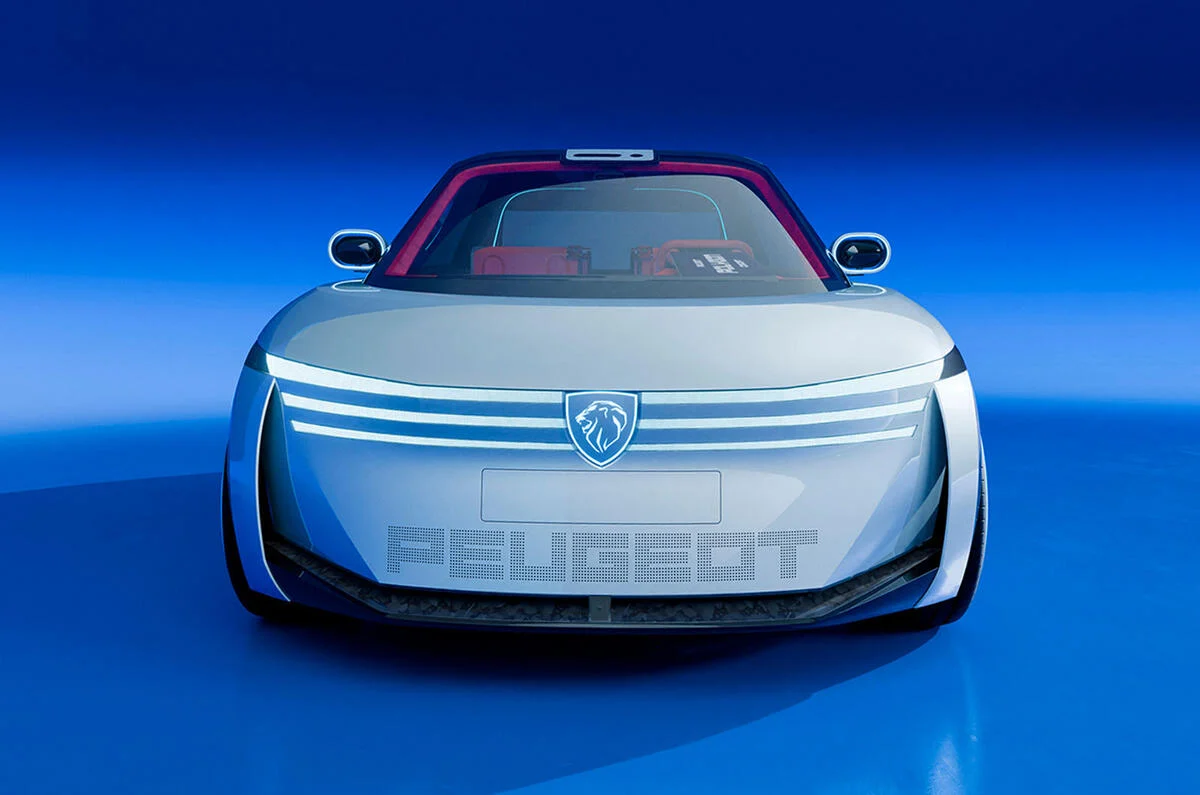
Peugeot will reveal two "striking" new concept cars at the Paris Motor Show in October, serving as a comprehensive preview of the design language and technological innovations that will define its next generation of production vehicles. Speaking to a group of European journalists on July 7, Peugeot CEO Alain Favey confirmed the upcoming unveilings, stating that the show cars are intended to "show a lot about the future of the Peugeot brand." While specific technical specifications and names for the concepts remain under wraps, Favey emphasized that these vehicles will "show the way" for the evolution of the brand’s aesthetic identity, drawing significant inspiration from Peugeot’s extensive historical lineage.
The announcement comes at a pivotal moment for the French automaker as it navigates a rapidly shifting automotive landscape defined by electrification, software-defined platforms, and intensifying global competition. By utilizing the 90th edition of the Mondial de l’Auto—the Paris Motor Show—Peugeot is positioning itself at the center of the European automotive conversation, signaling a commitment to its heritage while aggressively pursuing a modernized, tech-centric future.
Bridging Heritage and Innovation: The Peugeot Design Philosophy
Peugeot’s strategy of looking backward to move forward has become a hallmark of its recent concept development. Alain Favey noted that the brand’s heritage is not merely a retrospective tool but a functional asset. "Our heritage is very important to us, but it’s important in the sense that it gives us ideas for the future, which we will express again at the Paris Motor Show," Favey remarked.
This philosophy has been successfully demonstrated in previous years. The 2018 E-Legend concept, a retro-futuristic homage to the 1960s 504 Coupé, garnered international acclaim for its ability to blend nostalgic styling with an all-electric powertrain and autonomous driving capabilities. More recently, the "Polygon" concept served as a stylistic bridge to the upcoming e-208, channeling the spirit and compact proportions of the legendary 205 hatchback from the 1980s.
Industry analysts suggest that by anchoring new designs in recognizable historical silhouettes, Peugeot is attempting to maintain brand loyalty during the jarring transition to electric vehicles (EVs). The two new concepts expected in October are anticipated to follow this trajectory, potentially offering a modern interpretation of classic grand tourers or compact city cars, while integrating the latest advancements in lighting signatures and aerodynamic efficiency.
Strategic Roadmap: The Path to 1.5 Million Annual Sales
The debut of these concept cars is more than a stylistic exercise; it is a critical component of Peugeot’s "Dare Forward 2030" objectives under the Stellantis umbrella. The brand has set an ambitious target to achieve 1.5 million annual vehicle sales worldwide by 2030. This represents a significant increase from the 1.1 million units delivered in the previous calendar year.
To support this growth, Peugeot has outlined a rigorous product offensive. Over the next four years, the manufacturer plans to launch seven new models. According to company data, the majority of these will be next-generation iterations of existing successful nameplates, ensuring continuity in high-volume segments while upgrading the underlying technology to meet stringent emissions standards and consumer demand for digital integration.
The scheduled rollout includes:
- The New e-208: A fully electric version of Peugeot’s best-selling supermini.
- Next-Generation 308: A revitalization of the brand’s core C-segment hatchback.
- C-Segment Trio: Three distinct models produced in France, likely targeting the crossover and SUV markets which currently dominate European sales.
- D-Segment Flagships: A pair of premium models engineered in collaboration with China’s Dongfeng. These flagship vehicles are currently designated for the Chinese market and are not planned for European distribution, reflecting Peugeot’s strategy to localize products for specific regional demands.
The e-208 Launch Strategy and the Shift in Debut Logistics
One notable clarification provided by Favey was the absence of the new e-208 from the Paris Motor Show floor. Despite widespread industry speculation that the second-generation supermini would make its world debut in Paris, Favey confirmed that the vehicle will be launched in the second half of next year.
Peugeot has opted for a "dedicated event" to unveil the e-208 shortly before its market launch. This decision reflects a growing trend among major automotive manufacturers to move away from traditional motor shows for their high-volume production reveals. By hosting standalone events, brands can ensure undivided media attention and create a more controlled environment for digital storytelling, rather than competing for headlines against dozens of other manufacturers in a crowded exhibition hall.
Consequently, the Paris Motor Show will remain a venue for "visionary" displays—such as the two new concepts—allowing Peugeot to showcase its high-level engineering and design prowess without the immediate pressure of production-ready sales metrics.
Technical Foundations: The STLA Platform and Future Integration
While the upcoming concepts are primarily design-focused, they will likely sit atop the STLA modular platforms developed by Stellantis. These platforms (Small, Medium, Large, and Frame) are designed to support a variety of wheelbases and battery sizes, offering ranges of up to 500 miles (800 km) and rapid-charging capabilities.
The "striking" nature of the concepts mentioned by Favey is expected to involve the integration of the "Peugeot Inception" philosophy. Revealed earlier as a standalone study, the Inception concept introduced the "Hypersquare" control system—a rectangular steering wheel inspired by video games that utilizes steer-by-wire technology. By removing the mechanical steering column, Peugeot designers can reclaim interior space, a theme that is expected to be a major focus of the two new Paris concepts.
Furthermore, the concepts are expected to showcase the brand’s progress in sustainable materials. Recent trends in Peugeot’s R&D suggest a move toward recycled textiles, bio-based polymers, and the elimination of chrome, aligning with the broader corporate goal of achieving carbon net zero by 2038.
Competitive Analysis: Navigating the European and Global Markets
Peugeot’s push for 1.5 million sales comes amid a challenging economic environment in Europe. The brand faces stiff competition from traditional rivals like Volkswagen and Renault, the latter of which has also been leveraging heritage (with the new Renault 5 and Renault 4 EVs) to capture market share.
Additionally, the influx of Chinese EV manufacturers into the European market—offering high-tech features at competitive price points—has forced European stalwarts to accelerate their innovation cycles. Analysts believe Peugeot’s focus on "striking" design and a premium-feeling interior (the i-Cockpit) is its primary defense against being commoditized in the transition to electric power.
The decision to develop D-segment flagships with Dongfeng highlights the importance of the Chinese market in Peugeot’s 2030 vision. Although Peugeot has faced headwinds in China in recent years, the partnership with Dongfeng allows for shared development costs and localized manufacturing, which is essential for competing in the world’s largest automotive market.
Historical Context of Peugeot’s "Vision" Concepts
To understand the potential impact of the upcoming Paris reveals, one must look at the lineage of Peugeot’s non-production concepts. Unlike "preview" concepts that are 90% production-ready, Peugeot often releases "vision" cars that explore radical ideas:
- Onyx (2012): Explored the use of raw materials like copper, felt, and compressed newspaper (Wood Spectane) in a supercar silhouette.
- Instinct (2017): Focused on the "Active Footman" concept, an augmented reality system that learned driver habits to switch seamlessly between autonomous and manual modes.
- Inception (2023): Previewed a "skyspace" panoramic glass roof and a minimalist interior aesthetic that will likely appear in the 2025-2030 production cycle.
The two cars slated for the October show are expected to occupy the space between the radical Inception and the production-ready 308, offering a tangible look at what customers can expect in showrooms by 2027.
Implications for the Paris Motor Show and the Industry
The confirmation of Peugeot’s participation with two major reveals provides a significant boost to the Paris Motor Show itself. In recent years, many international motor shows have struggled to retain major manufacturers. Peugeot’s commitment, as a pillar of the French automotive industry, ensures the event remains a premier destination for global automotive journalism.
For the industry, Peugeot’s dual-concept strategy signals a shift toward a "two-tier" design language: one that honors the mechanical soul of the brand’s past while embracing a digital, software-heavy future. As the brand prepares for the October reveal, the focus remains on whether these "striking" designs can successfully translate into the sales volume required to meet the 1.5 million unit target.
The upcoming months will likely see a series of teaser images and technical "leaks" as Peugeot builds momentum toward the October event. For now, the automotive world waits to see how the brand will balance its 214-year history with the demands of a zero-emission future. The Paris Motor Show will provide the first definitive answer to that question, setting the tone for Peugeot’s evolution through the end of the decade.