


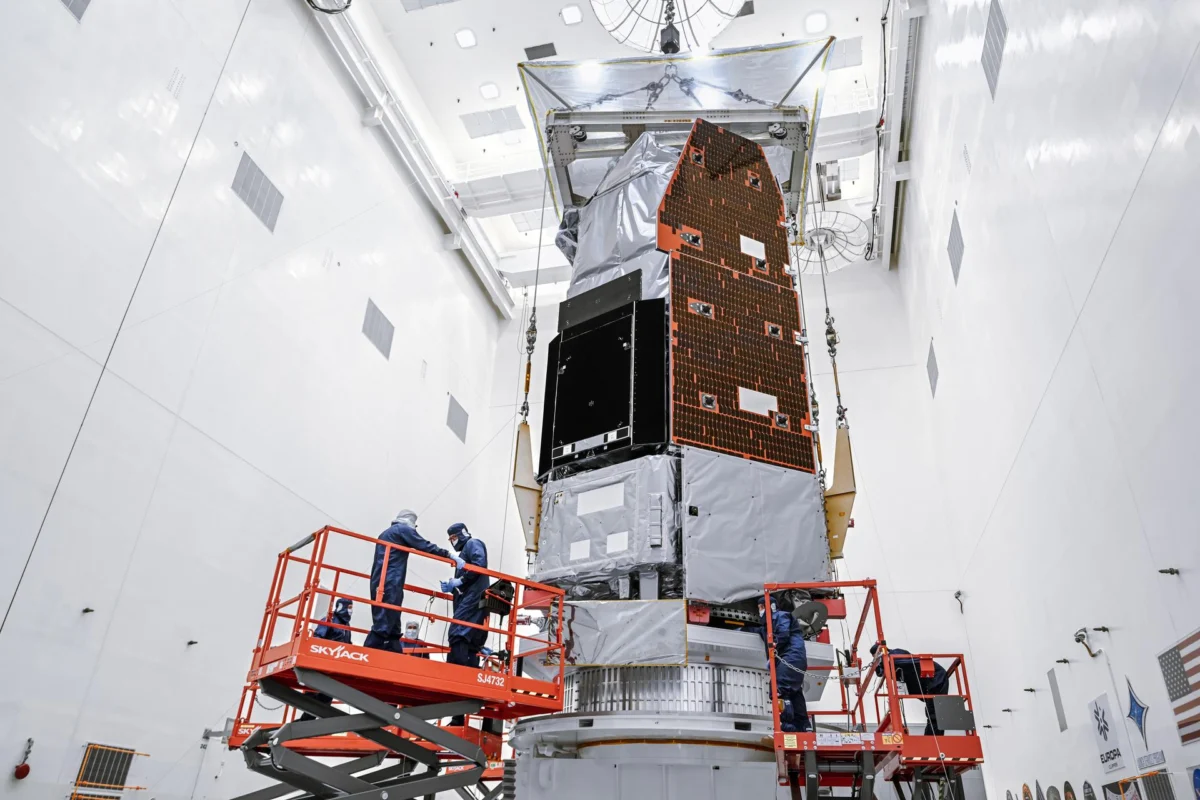
NASA is gearing up for a landmark event in space exploration with the scheduled launch of the Nancy Grace Roman Space Telescope from the agency’s Kennedy Space Center in Florida on Sunday, August 30. This next-generation observatory, named in honor of NASA’s first chief astronomer, is poised to revolutionize humanity’s understanding of the universe by providing a deep, panoramic view of the cosmos, generating never-before-seen images, and tackling some of the most profound mysteries of astrophysics. Ahead of its deployment, NASA will host a virtual news conference on Wednesday, July 29, at 2 p.m. EDT, inviting media to a comprehensive preview of the mission and its current status.
A New Era of Cosmic Exploration Unveiled
The Roman Space Telescope represents a significant leap forward in astronomical observation, designed to conduct wide-field surveys with unprecedented detail. Its primary mission objectives are multifaceted, focusing on unraveling the enigma of dark energy and dark matter, discovering and characterizing exoplanets, and exploring the infrared universe with a field of view 100 times larger than that of the Hubble Space Telescope. This vast field of view, coupled with its advanced instrumentation, will enable Roman to capture immense swathes of the sky in single observations, collecting a staggering volume of data that will reshape our cosmic understanding.
The virtual news conference on July 29 will serve as a crucial platform for NASA officials and mission scientists to provide an in-depth overview of the Roman mission. Participants will detail the telescope’s scientific goals, its innovative technological capabilities, and the final preparations leading up to its highly anticipated launch. Media interested in participating by phone must RSVP to Rob Garner at [email protected] no later than two hours prior to the briefing. The event will be streamed live across various NASA platforms, ensuring broad public access to this pivotal discussion.
Chronology of a Groundbreaking Mission
The journey of the Nancy Grace Roman Space Telescope, initially known as the Wide Field Infrared Survey Telescope (WFIRST), began over a decade ago with recommendations from the National Research Council’s Decadal Survey for Astronomy and Astrophysics. Its development has been a testament to international collaboration and technological innovation.
- Early 2010s: The concept for a wide-field infrared observatory gains traction, identifying key scientific objectives related to dark energy and exoplanets.
- 2016: NASA officially names the mission WFIRST and moves it into the formulation phase, leveraging a 2.4-meter primary mirror originally designed for a spy satellite, which significantly accelerates its development.
- 2020: The mission is formally renamed the Nancy Grace Roman Space Telescope, honoring the "Mother of Hubble" for her pivotal role in advancing space astronomy. This renaming underscored the mission’s lineage and its commitment to fundamental discoveries.
- Mid-2020s: Extensive testing and integration phases are completed, ensuring the observatory’s readiness for the harsh environment of space.
- July 29, 2026: Virtual news conference for media to preview the mission and its status.
- August 30, 2026: Scheduled launch from Kennedy Space Center, Florida, marking the beginning of its operational life.
Following its launch, the Roman Space Telescope is expected to undergo a commissioning period of several months, during which its instruments will be calibrated and its systems brought fully online. Science operations are anticipated to commence shortly thereafter, with an initial mission lifetime projected for five years, with the potential for extensions.
Technical Prowess: The Heart of Roman’s Capabilities
The Roman Space Telescope is equipped with two primary instruments that underpin its revolutionary capabilities: the Wide Field Instrument (WFI) and the Coronagraph Instrument (CGI).
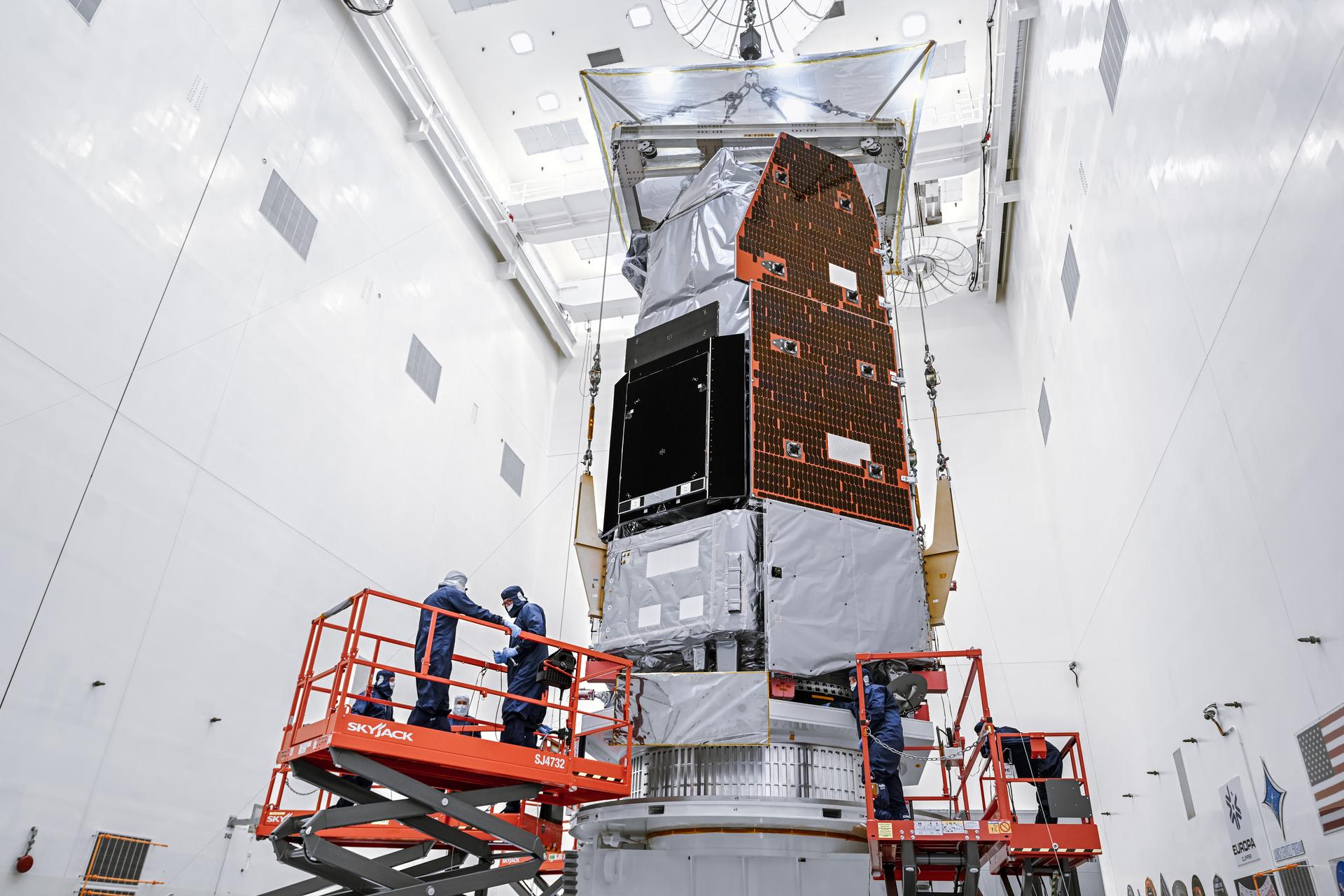
- Wide Field Instrument (WFI): This instrument is the cornerstone of Roman’s survey capabilities. It features a 300-megapixel camera, providing a panoramic view that is 100 times larger than Hubble’s infrared instrument. This expansive field of view will allow Roman to map vast regions of the sky efficiently, observing billions of galaxies and stars over its mission lifetime. The WFI operates across a broad range of infrared wavelengths, crucial for observing distant, redshifted galaxies and penetrating cosmic dust clouds to reveal hidden celestial objects. Its ability to capture such large areas of the sky with high resolution is unprecedented, enabling statistical studies of cosmic phenomena that were previously impossible.
- Coronagraph Instrument (CGI): The CGI is a groundbreaking technology demonstration designed to directly image exoplanets and characterize their atmospheres. It uses a series of masks and deformable mirrors to block out the overwhelming glare of a host star, allowing the faint light from orbiting planets to be detected. This is the most advanced technology ever flown in space for directly imaging exoplanets. While the CGI is a technology demonstration, its success will pave the way for future missions specifically designed to search for biosignatures in the atmospheres of Earth-like exoplanets, a key step in humanity’s quest to find life beyond our solar system.
The telescope’s 2.4-meter primary mirror, identical in size to Hubble’s, provides exceptional angular resolution. However, Roman’s wide-field capability, combined with its advanced detectors and stable thermal environment, allows it to survey the cosmos at a speed and scale unmatched by any previous observatory.
Deciphering the Universe’s Deepest Secrets
The scientific objectives of the Roman Space Telescope are aligned with some of the most pressing questions in modern astrophysics and cosmology:
- Dark Energy and Dark Matter: Roman will conduct extensive surveys to precisely measure the expansion history of the universe. By observing thousands of Type Ia supernovae across vast cosmic distances and employing techniques like weak gravitational lensing and baryon acoustic oscillations, Roman will gather critical data to constrain the properties of dark energy – the mysterious force accelerating the universe’s expansion. Understanding dark energy is paramount to predicting the ultimate fate of the cosmos. Similarly, its detailed mapping of galaxy clusters and large-scale structures will shed light on the distribution and nature of dark matter, the unseen scaffolding that holds galaxies together.
- Exoplanet Exploration: Utilizing the gravitational microlensing technique with its WFI, Roman will be exceptionally adept at discovering exoplanets, particularly those orbiting their stars at distances comparable to or greater than Earth’s orbit around the Sun. This method relies on the gravitational field of a foreground star bending the light from a background star, creating a temporary brightening effect that can reveal the presence of orbiting planets. This approach is highly sensitive to planets in the "cold, outer" regions of planetary systems, complementing the discoveries made by missions like Kepler and TESS, which primarily find planets closer to their stars. The Coronagraph Instrument will push the boundaries further by attempting to directly image large exoplanets, offering an unprecedented opportunity to study their atmospheres and potentially identify key chemical signatures.
- General Astrophysics and Cosmic Surveys: Beyond its primary objectives, Roman’s wide-field imaging capabilities will enable a wealth of general astrophysical investigations. It will provide unparalleled data for studies of galaxy evolution, the formation of stars in dusty environments, the structure of the Milky Way, and the discovery of transient events like supernovae and gamma-ray bursts. Its deep infrared surveys will allow astronomers to peer back further in time, observing the very first galaxies that formed in the early universe, providing crucial insights into cosmic reionization and the assembly of galactic structures.
A Global Collaboration for Cosmic Discovery
The development and operation of the Roman Space Telescope are a testament to vast collaborative efforts across scientific institutions and international partners. The mission is managed at NASA Goddard Space Flight Center in Greenbelt, Maryland, with significant participation from the Jet Propulsion Laboratory in Southern California, Caltech/IPAC in Pasadena, California, and the Space Telescope Science Institute in Baltimore, which will handle science operations and data archiving.
Industrial partners, including BAE Systems Inc., L3Harris Technologies, and Teledyne Scientific & Imaging, have played critical roles in developing and manufacturing the sophisticated components of the observatory. Furthermore, the mission benefits from strong international contributions, including ESA (European Space Agency), JAXA (Japan Aerospace Exploration Agency), the French space agency CNES (Centre National d’Études Spatiales), and the Max Planck Institute for Astronomy in Germany. This global synergy underscores the universal human endeavor to explore and understand our place in the cosmos.
Implications and Future Outlook
The launch of the Nancy Grace Roman Space Telescope is more than just another mission; it represents a paradigm shift in how astronomers will conduct cosmic surveys. The sheer volume and quality of data it will collect are expected to fuel thousands of scientific papers and inspire new generations of researchers. The observatory’s contributions to dark energy research will be vital for future cosmological models, potentially narrowing down the possibilities for this elusive cosmic force. Its exoplanet discoveries, especially those made through microlensing, will provide crucial statistics on planetary populations, helping to refine theories of planet formation and evolution. The direct imaging capabilities of the CGI, if successful, will lay the groundwork for future dedicated exoplanet imaging missions, bringing humanity closer to the ultimate goal of finding habitable worlds and extraterrestrial life.
As stated by NASA officials, the Roman Space Telescope is poised to be a "discovery machine," providing a treasure trove of information that will shape astrophysics for decades to come. Its wide-field infrared vision will complement the deep, narrow-field observations of the James Webb Space Telescope and the precise visible-light imaging of the Hubble Space Telescope, creating a powerful trifecta of space observatories that collectively offer an unprecedented view of the universe. The insights gained from Roman will not only advance our scientific knowledge but also inspire awe and wonder, reminding us of the vastness and complexity of the cosmos we inhabit.
For more detailed information about the mission, the public and media are encouraged to visit the official NASA Roman Space Telescope website at https://nasa.gov/roman. The upcoming virtual news conference on July 29 will be a crucial step in sharing the excitement and scientific promise of this truly historic mission with the world.