

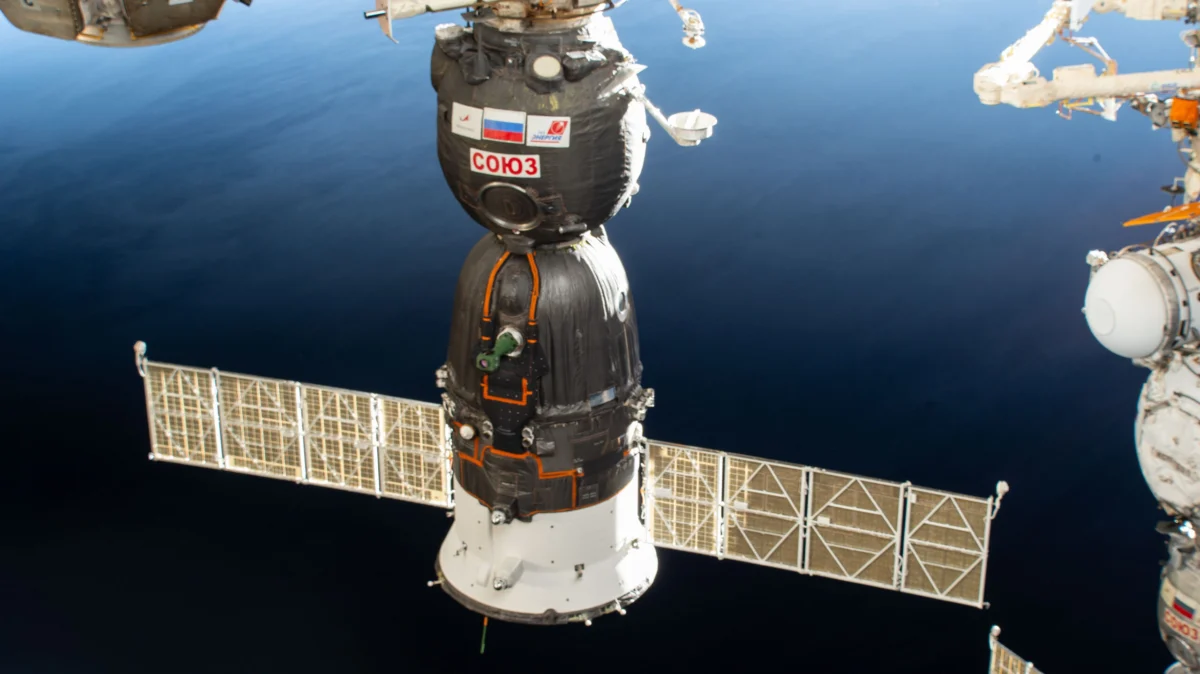
The International Space Station (ISS) is preparing for a significant crew rotation as NASA astronaut Chris Williams and Roscosmos cosmonauts Sergey Kud-Sverchkov and Sergei Mikaev conclude their 241-day Expedition 74 mission. Their return journey aboard the Soyuz MS-28 spacecraft is scheduled for Sunday, July 26, culminating in a parachute-assisted landing on the vast steppes of Kazakhstan. This mission marks a considerable duration for the crew, contributing to the continuous human presence in low Earth orbit and advancing critical scientific research. The upcoming undocking and landing sequence represents a culmination of months of dedicated work, intricate orbital maneuvers, and seamless international collaboration between space agencies.
Mission Conclusion and Imminent Return
The trio, comprising one American astronaut and two Russian cosmonauts, will depart the orbiting laboratory’s Rassvet module at precisely 3:02 a.m. EDT on Sunday, July 26. Their journey back to Earth is expected to last approximately three hours and twenty-four minutes, with the Soyuz MS-28 spacecraft targeting a soft landing at 6:26 a.m. EDT (which will be 3:26 p.m. local time) southeast of Dzhezkazgan in Kazakhstan. This region, known for its flat and expansive terrain, has historically served as the primary landing zone for Soyuz capsules returning from the ISS, providing optimal conditions for recovery operations. The landing is a meticulously planned and highly complex procedure, involving a series of deorbit burns, atmospheric re-entry, and the deployment of a multi-stage parachute system, culminating in the firing of retro-rockets just meters above the ground to ensure a cushioned touchdown.
During their extensive 241 days in space, Williams, Kud-Sverchkov, and Mikaev have circled the Earth an astonishing 3,856 times, traversing an immense distance of more than 102 million miles. This incredible journey underscores the capabilities of modern spaceflight and the enduring commitment to space exploration by participating nations. The mission has been a testament to the crew’s resilience, the robust engineering of the ISS, and the reliability of the Soyuz spacecraft system, which has been a cornerstone of human space transportation for decades.
The Crew: A Blend of Experience and First Flights
The returning crew is a mix of seasoned experience and first-time spaceflight endeavors. For NASA astronaut Chris Williams, this mission represents his inaugural journey into space. A highly accomplished individual, Williams’s selection for this long-duration mission highlights his extensive training and preparation for the rigorous demands of life and work aboard the ISS. Similarly, Roscosmos cosmonaut Sergei Mikaev is also completing his first mission, an experience that will undoubtedly shape his future contributions to space exploration.
In contrast, Roscosmos cosmonaut Sergey Kud-Sverchkov is returning from his second mission to the International Space Station. His prior experience provides an invaluable layer of expertise and mentorship within the crew, particularly during critical phases of the mission such as docking, undocking, and emergency procedures. The blend of fresh perspectives and seasoned wisdom within the crew is characteristic of international space missions, fostering a rich environment for knowledge transfer and operational efficiency. Each crew member contributes unique skills and perspectives to the overall success of the expedition, from conducting intricate scientific experiments to performing essential maintenance on the orbital complex.
A Journey of 102 Million Miles: Mission Statistics
The statistical achievements of Expedition 74 are noteworthy and indicative of the sheer scale of operations involved in maintaining a human presence in space. The 241-day duration places it among the standard long-duration missions designed to maximize scientific output and study the effects of microgravity on the human body over an extended period. The 3,856 orbits completed mean that the crew witnessed approximately 3,856 sunrises and sunsets, a unique perspective on Earth’s rotation and atmosphere that only astronauts and cosmonauts experience.
The cumulative distance of over 102 million miles traveled is equivalent to roughly 4,000 times the circumference of the Earth, or more than halfway to the Sun. These figures not only highlight the continuous motion of the ISS at approximately 17,500 miles per hour but also underscore the immense engineering feat required to sustain such a platform and its crew safely in the harsh environment of low Earth orbit. Each mile traveled is a testament to the thousands of engineers, scientists, and support personnel on the ground who ensure the smooth operation of the station and the safety of its inhabitants.
The Soyuz MS-28: A Reliable Spacecraft for Earth Return
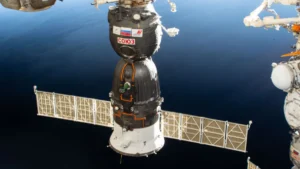
The Soyuz spacecraft, a design that traces its heritage back to the early days of human spaceflight, remains the reliable "workhorse" for transporting crews to and from the International Space Station. The Soyuz MS-28, a modernized variant, incorporates advanced digital avionics and improved safety features while retaining the core principles of its robust and proven design. It consists of three primary modules: the orbital module, the descent module, and the instrument/service module. Only the descent module, which houses the crew, is designed to withstand the fiery re-entry through Earth’s atmosphere.
The re-entry sequence is a precisely orchestrated ballet of physics and engineering. After undocking, the Soyuz spacecraft performs a deorbit burn, firing its engines to slow down and begin its descent. As it plunges into the denser layers of the atmosphere, friction generates intense heat, requiring the spacecraft’s heat shield to protect the crew. At a specific altitude, a series of drogue and main parachutes deploy, progressively slowing the capsule’s descent. Finally, just seconds before touchdown, small solid-propellant retro-rockets fire, reducing the impact speed to a mere few miles per hour, ensuring a relatively soft landing for the weary crew members. The successful execution of this sequence is a testament to decades of Russian aerospace engineering and operational expertise.
Chronology of Return: From Undocking to Touchdown
The return sequence is a carefully choreographed series of events, with critical milestones broadcast live by NASA to a global audience. All times are Eastern Daylight Time (EDT) and are subject to real-time operational adjustments:
- Saturday, July 25, 9:40 a.m. EDT – Space Station Expedition 74/75 Change of Command Ceremony: This traditional ceremony marks the formal transfer of leadership of the orbital complex. Sergey Kud-Sverchkov will officially hand over command of the International Space Station to NASA astronaut Jessica Meir. This symbolic act signifies the continuity of operations and leadership aboard the station. Expedition 75 will officially commence upon the undocking of the Soyuz MS-28.
- Saturday, July 25, 11:10 p.m. EDT – Crew Farewells and Hatch Closing Coverage Begins: This emotional moment sees the departing crew say their goodbyes to their remaining station colleagues, securing the hatch between the Soyuz spacecraft and the Rassvet module. This final separation readies the spacecraft for its independent journey.
- Saturday, July 25, 11:30 p.m. EDT – Hatch Closing: The physical sealing of the hatch signifies the complete isolation of the Soyuz MS-28 from the ISS, pressurization checks are performed, and the crew prepares for undocking.
- Sunday, July 26, 2:30 a.m. EDT – Coverage of Undocking Begins: NASA’s live coverage provides real-time updates and commentary as the Soyuz prepares to detach.
- Sunday, July 26, 3:02 a.m. EDT – Undocking: The Soyuz MS-28, with its three-person crew, autonomously separates from the Rassvet module, initiating its free flight trajectory back to Earth. Small thruster firings gently push the spacecraft away from the station.
- Sunday, July 26, 5:15 a.m. EDT – Coverage of Deorbit and Landing Begins: The final and most critical phase of the return journey commences, focusing on the deorbit burn and subsequent atmospheric re-entry.
- Sunday, July 26, 5:32 a.m. EDT – Deorbit Burn: The Soyuz engines fire for several minutes, slowing the spacecraft sufficiently to drop it out of orbit and begin its descent towards Earth. This burn is precisely calculated to target the landing zone in Kazakhstan.
- Sunday, July 26, 6:26 a.m. EDT – Landing: The Soyuz MS-28 capsule makes its final touchdown on the Kazakhstan steppe, marking the safe return of the crew.
The Crucial Role of Recovery Operations in Kazakhstan
Upon landing, a sophisticated and extensive recovery operation springs into action. Joint teams from Roscosmos, NASA, and other support agencies are strategically positioned near the anticipated landing site, often including helicopters, all-terrain vehicles, and specialized medical personnel. The recovery crews typically reach the capsule within minutes of touchdown, assisting the astronauts and cosmonauts as they emerge from the cramped Soyuz descent module.
After initial medical checks at the landing site, the crew will be flown by helicopter to Karaganda, a major city in Kazakhstan that serves as a central hub for post-landing processing. Here, more comprehensive medical evaluations are conducted, and the crew begins their initial re-adaptation to Earth’s gravity. The seamless coordination between international recovery teams underscores the robust framework of cooperation that underpins all aspects of ISS operations, from launch to landing. This well-rehearsed procedure ensures the immediate safety and well-being of the returning spacefarers.
Life After Space: Post-Landing Adaptation
Returning to Earth after an extended period in microgravity presents unique challenges for the human body. Astronauts and cosmonauts typically experience a range of physiological adjustments as their bodies re-adapt to gravity. These can include issues with balance and coordination due to changes in the vestibular system, muscle atrophy, and bone density loss, despite rigorous exercise regimes on the ISS. Cardiovascular systems also undergo changes in space, requiring re-adjustment to Earth’s gravitational pull.
Following their initial medical assessments in Karaganda, the crew members will embark on their respective journeys home. Chris Williams will return to NASA’s Johnson Space Center in Houston, Texas, where he will undergo extensive post-flight medical examinations, rehabilitation, and debriefings to contribute to ongoing research on human health in space. Meanwhile, Sergey Kud-Sverchkov and Sergei Mikaev will head back to their training base in Star City, Russia, near Moscow, for similar post-flight protocols. These post-mission analyses are vital for understanding the long-term effects of spaceflight and for developing countermeasures to protect future explorers on longer missions to the Moon and Mars.
The International Space Station: A Legacy of Collaboration and Discovery
For more than 25 years, the International Space Station has been a beacon of international cooperation and scientific advancement. It represents an unprecedented partnership between five space agencies: NASA (United States), Roscosmos (Russia), ESA (Europe), JAXA (Japan), and CSA (Canada). Since November 2, 2000, people have lived and worked continuously aboard the ISS, making it the longest continuous human presence in space. This continuous occupation has allowed for the conduct of thousands of scientific experiments across a multitude of disciplines, ranging from fundamental physics and biology to advanced materials science and Earth observation.
The ISS is more than just an orbiting laboratory; it is a proving ground for future space exploration. It helps NASA and its partners understand and overcome the myriad challenges of long-duration human spaceflight, including radiation exposure, psychological effects of isolation, and the physiological impacts of microgravity. The research conducted on the station is directly contributing to the development of technologies and medical protocols necessary for expanding commercial opportunities in low Earth orbit and for laying the foundation for ambitious long-duration missions to the Moon, as part of the Artemis program, and eventually to Mars. The station’s unique environment allows scientists to observe phenomena impossible to replicate on Earth, providing insights that benefit humanity in countless ways, from developing new medicines to improving agricultural practices.
Scientific Endeavors and Future Space Exploration
The 241-day mission of Williams, Kud-Sverchkov, and Mikaev undoubtedly contributed significantly to the vast body of knowledge accumulated aboard the ISS. During their time, they would have participated in experiments ranging from human research to investigate how the human body adapts to space, to physical sciences exploring material properties in microgravity, and biological studies on cell growth and plant cultivation. These experiments are crucial for ensuring the safety and productivity of astronauts on future deep-space missions.
For example, understanding bone density loss and muscle atrophy in space is paramount for designing effective countermeasures for a multi-year journey to Mars. Research into closed-loop life support systems, conducted on the ISS, is essential for minimizing resource reliance on Earth for distant outposts. Furthermore, the ISS serves as a platform for testing new technologies, such as advanced robotics, navigation systems, and in-space manufacturing techniques, all of which are critical for sustainable human exploration beyond low Earth orbit. The data collected from missions like Expedition 74 directly informs the planning and execution of future endeavors under the Artemis program, which aims to return humans to the Moon and establish a long-term lunar presence.
Looking Ahead: Sustaining Human Presence in Space
As one crew returns, another remains, ensuring the uninterrupted operation of the International Space Station. The transfer of command to Jessica Meir signifies the ongoing commitment to this orbiting outpost. The ISS continues to be a vital asset, demonstrating the power of international collaboration in scientific discovery and technological advancement. As the world looks towards establishing a permanent human presence on the Moon and eventually Mars, the lessons learned and the technologies developed aboard the ISS will be indispensable. The routine yet complex nature of crew rotations and returns underscores the maturity of human spaceflight capabilities, even as agencies push the boundaries of exploration further into the solar system.
Live Coverage Details
NASA’s live return coverage for the Soyuz MS-28 mission will be streamed through a variety of platforms, ensuring global access to this significant event. Interested viewers can watch online at https://www.nasa.gov/live, as well as on NASA Television, the NASA app, and the agency’s website. Further details on ISS research, operations, and its crews can be found at www.nasa.gov/station. All broadcast times are Eastern Daylight Time and are subject to change based on real-time mission operations.
Further Information and Official Contacts
For media inquiries and additional information, please contact:
Joshua Finch / Jimi Russell
Headquarters, Washington
202-358-1100
[email protected] / [email protected]
Leah Cheshier / Anna Schneider
Johnson Space Center, Houston
281-483-5111
[email protected] / [email protected]