
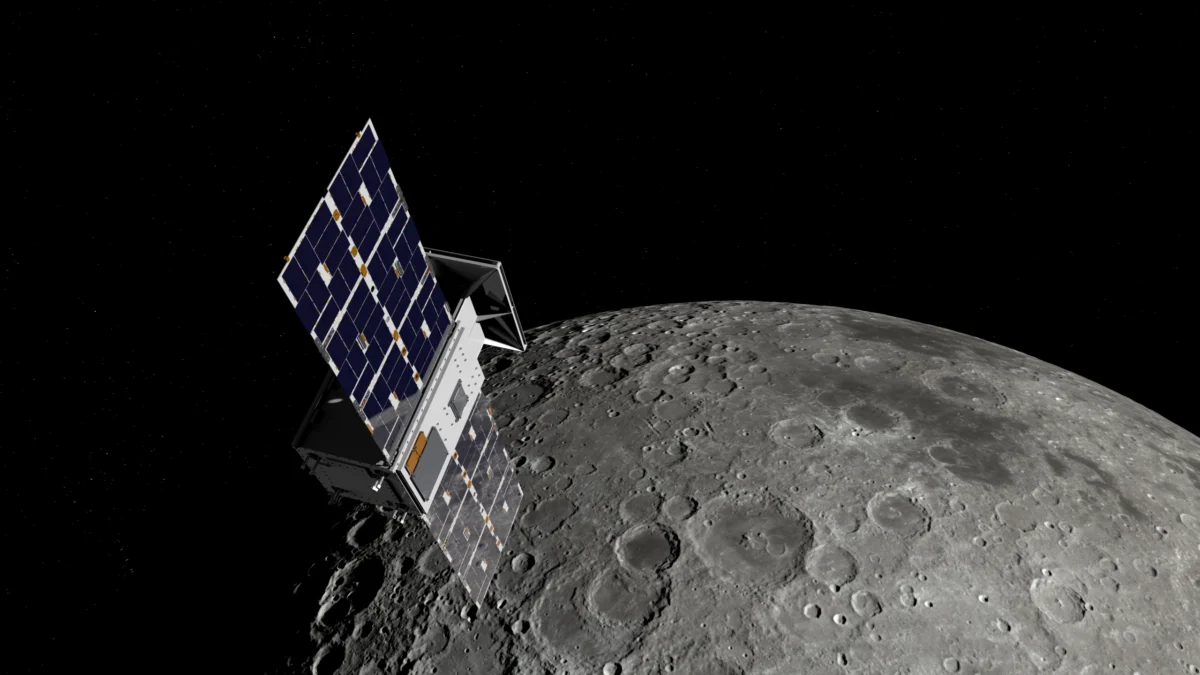
NASA is actively collaborating with industry partners to propel the next crucial phase of cislunar infrastructure, a cornerstone for the agency’s ambitious Artemis program and the envisioned Moon Base. This strategic advancement, encompassing orbital assets and critical technology demonstrations, is underscored by a new contract awarded to Advanced Space for the CAPSTONE 02 mission. Slated for launch in 2027, CAPSTONE 02 will utilize two small spacecraft in lunar orbit to rigorously demonstrate advanced rendezvous and proximity operations (RPO), autonomous navigation capabilities, and robust cislunar communication, while concurrently characterizing the challenging radiation environment surrounding the Moon. These demonstrations are indispensable for informing future lunar and deep space missions, ensuring the safety and efficiency of human and robotic exploration beyond Earth’s immediate vicinity.
Laying the Foundation for Lunar Operations: The Imperative of Cislunar Infrastructure
The development of a robust cislunar infrastructure is not merely an aspiration but a fundamental requirement for sustained human presence on and around the Moon. This ecosystem, spanning the region between Earth and the Moon, is envisioned to include elements such as the Lunar Gateway – a multi-purpose outpost orbiting the Moon – lunar landers, communication and navigation relays, resource depots, and sophisticated scientific platforms. Each component necessitates a profound understanding and mastery of operating in the unique cislunar environment, distinct from the relatively well-understood dynamics of Low Earth Orbit (LEO). NASA’s Artemis program aims to return humans to the Moon, establish a sustainable lunar presence, and use this as a stepping stone for future human missions to Mars. Achieving these goals hinges on the ability to reliably transport crew, equipment, and resources across vast distances and complex gravitational fields. CAPSTONE 02 represents a vital step in de-risking and validating the technologies essential for this endeavor.
The cislunar domain presents a complex operational landscape. Unlike LEO, where Earth’s gravity is dominant and GPS signals are readily available, cislunar space is influenced by the gravitational pulls of both Earth and the Moon, creating intricate "three-body problem" trajectories that are notoriously difficult to predict and control. Communication latency and bandwidth limitations increase significantly with distance, making autonomous systems and robust inter-satellite links critical. Furthermore, venturing beyond Earth’s protective magnetic field exposes spacecraft and future astronauts to higher levels of solar and galactic cosmic radiation, necessitating detailed environmental characterization and mitigation strategies.
Building on a Legacy: From CAPSTONE’s Pioneering Orbit to CAPSTONE 02’s Advanced Demonstrations
The CAPSTONE 02 mission is designed to significantly expand upon the groundbreaking achievements of its predecessor, the original CAPSTONE (Cislunar Autonomous Positioning System Technology Operations and Navigation Experiment) mission. Launched in June 2022 and completing its primary mission in 2023, the first CAPSTONE spacecraft made history as the first U.S. commercial mission to the Moon and the first spacecraft to successfully operate in a near rectilinear halo orbit (NRHO) around the Moon. This unique, nearly stable orbit, strategically located at a gravitational sweet spot influenced by both Earth and the Moon, is the planned orbital path for the Lunar Gateway.
The original CAPSTONE mission successfully validated critical communication, networking, and autonomous navigation capabilities, gathering invaluable operational experience in the cislunar environment. It proved the viability of using a NRHO for future lunar infrastructure and demonstrated the Cislunar Autonomous Positioning System (CAPS) software, which allows a spacecraft to determine its position relative to other celestial bodies or spacecraft without constant reliance on Earth-based tracking. This initial success was a testament to the power of small spacecraft and commercial partnerships in accelerating space exploration.
Christopher Baker, Lead of the In-Space Infrastructure portfolio within the Research and Technology Mission Directorate at NASA Headquarters, emphasizes the strategic evolution. "The first CAPSTONE mission validated the orbital dynamics and basic navigation in the NRHO," Baker noted. "CAPSTONE 02 moves beyond orbit validation to rigorous demonstrations that will directly inform the design and operations of future lunar exploration architecture and infrastructure development, including crewed missions."
Unpacking CAPSTONE 02: Advanced Rendezvous and Proximity Operations
At the heart of CAPSTONE 02’s mission are its advanced relative navigation technologies for rendezvous and proximity operations in cislunar space. These techniques are far more sophisticated than those typically employed in LEO, such as for docking with the International Space Station. The cislunar environment introduces greater navigational challenges due to the complex gravitational field, longer communication delays, and the absence of a dense atmosphere for drag effects. The ability to precisely guide spacecraft to meet and interact in this dynamic environment is paramount for NASA astronauts as they will need to dock with lunar landers or transfer between different orbital modules in cislunar orbit, enabling safe and efficient crew transfers to and from the lunar surface.
The mission will deploy two identical spacecraft, each approximately 400 kilograms (882 pounds), manufactured by Terran Orbital Systems, Inc. These compact yet capable satellites will serve as active participants in a series of complex RPO maneuvers. Mission operators will orchestrate various rendezvous, proximity operations, and "loitering" or formation flying techniques within lunar orbit. This will provide critical data on how spacecraft trajectories behave under the simultaneous, interactive gravitational pulls of both Earth and the Moon – the aforementioned "three-body orbits." Understanding and predicting these trajectories with high fidelity is crucial for mission planning and execution, especially for safety-critical crewed operations.
Precision Navigation in Deep Space
CAPSTONE 02 will leverage a multi-faceted approach to navigation, integrating ground tracking measurements, advanced optical sensors, and celestial bodies as navigational aids. This hybrid strategy will enable one spacecraft to accurately locate and rendezvous with another in the vastness of cislunar space. The mission will specifically apply navigation strategies akin to those planned for the Orion spacecraft’s approach to a lunar lander during deep space missions. By demonstrating these techniques in a real-world cislunar environment, NASA aims to build high confidence in their performance and reliability, mitigating risks for future crewed missions like Artemis III, which plans to land astronauts on the Moon.
A key innovation of CAPSTONE 02 is the design flexibility of its spacecraft. Each satellite will possess the ability to switch between "chaser" and "target" roles, allowing for the testing of a broad spectrum of operational scenarios under varying environmental conditions in cislunar space. This bidirectional capability maximizes the data collected and provides a comprehensive understanding of how navigation systems perform during dynamic operations such as approach, docking, and station-keeping. Since the extreme conditions and intricate gravitational dynamics of cislunar space cannot be fully replicated in ground-based simulations, these in-space tests are absolutely essential for validating system performance and astronaut safety.
An Operational Testbed for Autonomous Systems and Radiation Mapping
Beyond RPO demonstrations, CAPSTONE 02 will function as a vital operational testbed for advanced software. It will enable the in-space testing of three distinct NASA-developed navigation software suites. Each application will collect extensive data during CAPSTONE 02’s low-energy transfer trajectory, a fuel-efficient path that guides the spacecraft from Earth, well beyond the Moon, before it settles into its designated lunar orbit. These low-energy transfers, while fuel-efficient, are also time-consuming and require exceptionally precise navigation, making them an ideal proving ground for autonomous systems.
Each spacecraft will also carry an optical imaging payload developed by Lawrence Livermore National Laboratory. This payload will not only support the navigation demonstrations by providing visual tracking data but will also capture imagery of the Moon, contributing to scientific understanding and mission planning. Crucially, the mission will further mature the Cislunar Autonomous Positioning System (CAPS) navigation software. First demonstrated on the original CAPSTONE, CAPS provides a method for spacecraft to determine their position relative to other spacecraft without constant reliance on Earth-based tracking, enhancing autonomy and resilience against communication outages or delays. This is analogous to a "cislunar GPS" system, offering independent navigation capabilities.
Another critical aspect of the mission is the continued characterization of the radiation environment at the Moon. Understanding the levels and types of radiation (solar particle events, galactic cosmic rays) in cislunar space is paramount for designing radiation-hardened electronics for spacecraft and for protecting astronauts during long-duration missions. The data collected by CAPSTONE 02 will augment existing knowledge, contributing to more accurate radiation models and improved shielding strategies for future lunar habitats and crewed vehicles.
Strategic Implications for Artemis and Commercial Space
The suite of technologies aboard CAPSTONE 02 is meticulously designed to automate routine navigation tasks, significantly reduce reliance on traditional space-to-ground data links, and enable new mission concepts that capitalize on increased inter-satellite coordination. This shift towards greater autonomy and inter-satellite networking is a key enabler for building a scalable and sustainable lunar infrastructure. It allows for more complex operations with fewer ground control resources and enhances mission resilience.
Furthermore, the CAPSTONE 02 spacecraft themselves are designed for cost-effective, rapid deployment, demonstrating a scalable and repeatable mission model. This emphasis on affordability and efficiency is central to NASA’s strategy for fostering a vibrant commercial space economy around the Moon. By demonstrating these advanced capabilities with smaller, more agile platforms, NASA is not only advancing its own exploration goals but also stimulating innovation and opening new markets for commercial lunar services.
Sean Fuller, Moon Base CAPSTONE manager, underscored the profound significance of the mission. "This mission represents an important step in the maturation of cislunar capabilities," Fuller stated. "By expanding on the lessons learned from CAPSTONE to demonstrate increasingly sophisticated operational concepts, CAPSTONE 02 lays the foundation for lunar infrastructure and commercial services that support Artemis, Moon Base, and future missions to deep space. It’s about building the highways and signposts for the future of lunar exploration."
The CAPSTONE 02 mission receives its funding from NASA’s Human Spaceflight Mission Directorate, with crucial support from the Research and Technology Mission Directorate. The mission is expertly managed by the Small Spacecraft & Distributed Systems group, based at NASA’s Ames Research Center in California’s Silicon Valley, operating within the Research and Technology Mission Directorate. NASA leveraged a Small Business Innovation Research (SBIR) Phase III contract to fund the mission, highlighting the agency’s commitment to fostering innovation within the small business sector and integrating cutting-edge commercial solutions into its exploration architecture. The SBIR program plays a vital role in enabling smaller companies like Advanced Space and Terran Orbital to contribute significantly to national space goals, proving that size does not limit impact when it comes to groundbreaking technology development.
As the Artemis program progresses towards its ambitious goals of returning humans to the Moon and establishing a sustained lunar presence, missions like CAPSTONE 02 are critical pathfinders. They provide the practical, in-space validation necessary to transform conceptual designs into operational realities, ensuring that the next giant leaps for humanity are taken with confidence, precision, and an unwavering commitment to safety and innovation. The insights gleaned from CAPSTONE 02 will not only enable the Moon Base but will also inform future crewed missions to Mars, leveraging the cislunar domain as an essential proving ground for the technologies and operational expertise required for interstellar travel.
To learn more about NASA’s CAPSTONE mission and its successor, please visit: https://www.nasa.gov/mission/capstone02/