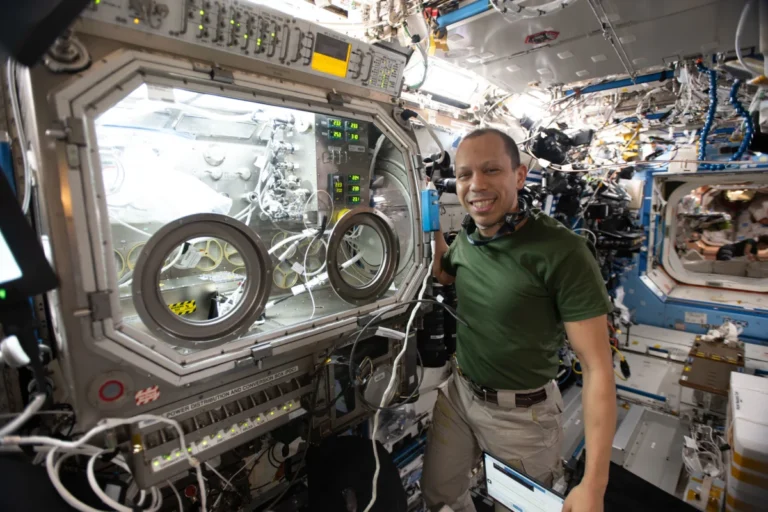


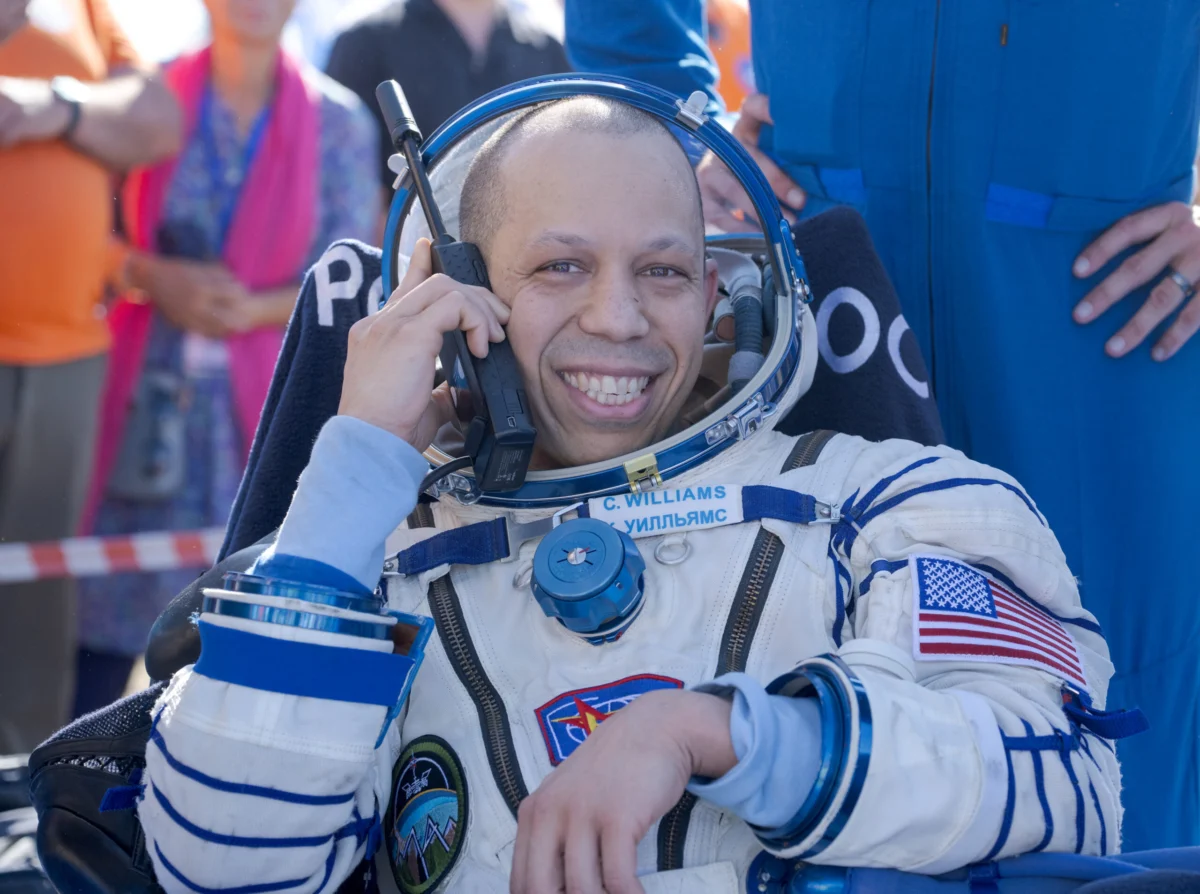
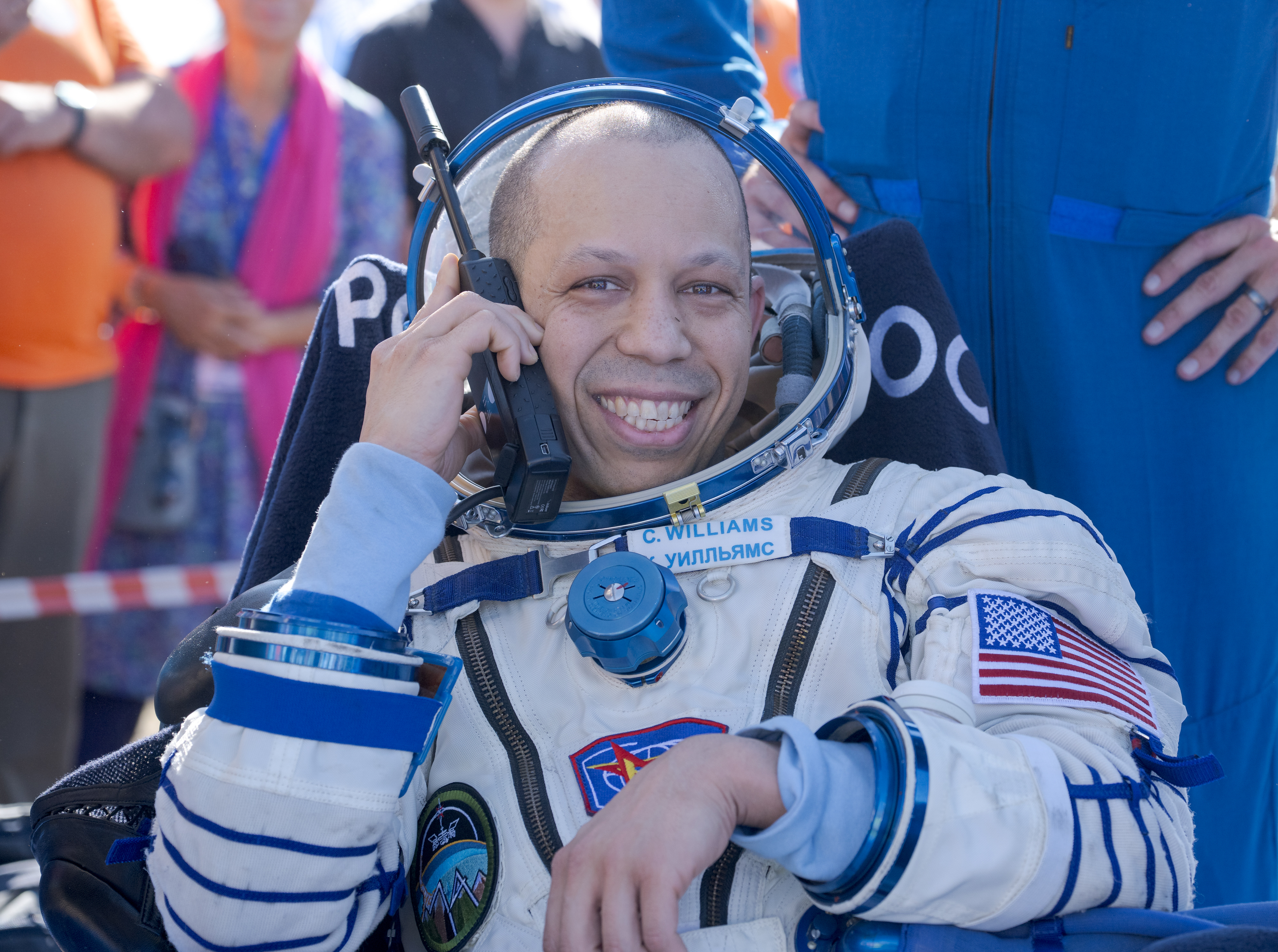
NASA astronaut Chris Williams concluded his inaugural mission to the International Space Station (ISS) on July 26, 2026, returning to Earth alongside Roscosmos cosmonauts Sergey Kud-Sverchkov and Sergei Mikaev. The trio’s Soyuz MS-25 spacecraft executed a precision landing on the steppe of Kazakhstan, marking the successful completion of Expedition 74 and Williams’ eight months of dedicated service in low Earth orbit. A radiant smile was captured on Williams’ face shortly after exiting the capsule, a testament to the triumphant end of his first spaceflight.
A Successful Maiden Voyage Concludes
For Chris Williams, a member of NASA’s 2020 astronaut class, this mission represented the culmination of years of rigorous training and preparation. His tenure aboard the orbiting laboratory was characterized by an extensive array of responsibilities, ranging from critical scientific research to complex extravehicular activities (EVAs) vital for the station’s ongoing maintenance and upgrades. His safe return to Earth not only signifies a personal milestone but also underscores the enduring success of international collaboration in human spaceflight.
Upon landing, Williams and his crewmates were met by medical and recovery teams who conducted immediate post-flight health assessments. The initial checks confirmed the astronauts were in good condition, albeit undergoing the natural physiological adjustments associated with returning to Earth’s gravity after an extended period in microgravity. The journey from the landing site to medical facilities for more comprehensive examinations and rehabilitation protocols commenced swiftly, initiating the critical phase of readaptation for the returning spacefarers.
Eight Months of Orbital Research and Discovery
During his 243 days aboard the International Space Station, Williams played a pivotal role in advancing a wide spectrum of scientific investigations and technology demonstrations. The ISS serves as a unique microgravity laboratory, enabling research impossible to conduct on Earth. Williams contributed to studies spanning multiple disciplines, including human physiology, materials science, biology, and Earth observation.
In the realm of human physiology, Williams participated in experiments designed to understand the long-term effects of microgravity on the human body. These included studies on bone density loss, muscle atrophy, cardiovascular deconditioning, and neurological changes, all crucial for preparing for future long-duration missions to the Moon and Mars. Data collected from Williams and his crewmates will help develop countermeasures to mitigate these effects, ensuring astronaut health and performance on extended journeys. He also assisted with research into radiation exposure, a primary concern for deep-space exploration, and tested advanced life support systems vital for sustainable human presence beyond Earth orbit.
Materials science experiments conducted during Expedition 74 involved investigating the properties of new alloys and composites in microgravity, which can lead to the development of stronger, lighter materials for aerospace and terrestrial applications. Biological research included plant growth experiments, exploring methods for sustainable food production in space, and studies on microbial behavior in the unique environment of the ISS, contributing to both space medicine and our understanding of life itself. Williams also contributed to Earth observation efforts, capturing imagery and data that aid in monitoring climate change, natural disasters, and ecological shifts, providing valuable insights for scientists on the ground.
Critical Spacewalks and ISS Maintenance
A significant highlight of Williams’ mission included the execution of two complex spacewalks, or Extravehicular Activities (EVAs), both critical for maintaining and enhancing the operational capabilities of the International Space Station. These spacewalks underscore the physically demanding and technically intricate nature of orbital maintenance, requiring meticulous planning, extensive training, and precise execution.
His first spacewalk focused on preparing the station for ongoing power system upgrades. This involved configuring cabling and mounting hardware in anticipation of the installation of new International Space Station Roll-Out Solar Arrays (iROSAs). The ISS power grid relies heavily on its solar arrays, and with the original arrays aging, the iROSAs are essential for ensuring the station has sufficient power to support its expanding scientific research and operational needs well into the next decade. Williams’ work during this EVA was foundational, laying the groundwork for subsequent spacewalks by other crews dedicated to the full deployment of these advanced solar arrays.
The second spacewalk was dedicated to a critical repair: replacing a faulty joint on the Canadarm2 robotic arm. The Canadarm2, a 17.6-meter (57.7-foot) robotic arm, is an indispensable asset for the ISS, used for tasks such as grappling visiting spacecraft (like the Dragon and Cygnus cargo vehicles), moving modules, assisting spacewalkers, and inspecting the station’s exterior. A malfunction in one of its critical joints could severely impede the station’s operational flexibility and safety. Williams, alongside a Roscosmos cosmonaut, meticulously worked to isolate and replace the faulty component, restoring the Canadarm2 to full functionality. This repair was vital not only for current operations but also for ensuring the station’s long-term capability to receive and process external payloads and spacecraft. Each spacewalk typically lasts between six and eight hours, requiring immense physical endurance, mental focus, and precise coordination between the spacewalkers and mission control. Williams’ successful completion of these tasks highlights his technical proficiency and resilience as an astronaut.
A Chronicle of Expedition 74
Chris Williams’ journey to space began long before his launch. Selected by NASA in 2020 as part of a highly competitive class of astronaut candidates, he underwent a rigorous two-year training program at the Johnson Space Center in Houston, Texas. This included intensive instruction in ISS systems, spacewalking techniques, robotics, Russian language proficiency, and wilderness survival training.
Following his graduation as a fully qualified astronaut, Williams was assigned to Expedition 74, a long-duration mission to the ISS. His launch occurred in late 2025 aboard a Soyuz spacecraft from the Baikonur Cosmodrome in Kazakhstan, marking the official start of his orbital tenure. Upon arrival, he joined the existing Expedition 73 crew, transitioning into Expedition 74 as crew members rotated.
Throughout his eight months in orbit, Williams maintained a demanding schedule. His daily routine included executing scientific protocols, performing station maintenance, conducting fitness exercises to counteract microgravity’s effects, and communicating with ground control. Key milestones included the two aforementioned spacewalks, participation in numerous public outreach events via live video links, and the arrival and departure of several cargo resupply missions, which brought fresh supplies, scientific equipment, and personal items to the crew. His mission culminated with the departure from the ISS on July 26, 2026, aboard the Soyuz MS-25, bringing him back to Earth.
International Collaboration at its Core
The successful return of Chris Williams alongside his Roscosmos crewmates serves as a powerful testament to the enduring spirit of international cooperation in space exploration. The International Space Station itself is a marvel of global partnership, built and operated by five space agencies: NASA (United States), Roscosmos (Russia), ESA (Europe), JAXA (Japan), and CSA (Canada). This collaborative model has allowed for achievements far beyond what any single nation could accomplish alone.
The joint missions, such as Expedition 74, involve shared training protocols, integrated mission control operations, and a unified approach to scientific research and station maintenance. Despite geopolitical complexities on Earth, the space agencies have largely maintained their operational collaboration, recognizing the mutual benefits and the shared human endeavor of exploring the cosmos. The synergy between American astronauts and Russian cosmonauts, working side-by-side in the challenging environment of space, remains a cornerstone of the ISS program. This cooperation extends to the launch and landing services provided by Roscosmos’s Soyuz vehicles, which have reliably transported astronauts and cosmonauts to and from the station for decades, ensuring crew rotation and access to space for all partners.
The Journey Home: A Technical Descent
The return journey from the ISS is a precisely choreographed sequence of events, culminating in the Soyuz spacecraft’s fiery re-entry and parachute-assisted landing. On July 26, 2026, the Soyuz MS-25, carrying Williams, Kud-Sverchkov, and Mikaev, undocked from the Rassvet module of the ISS. After a brief period of separation, the spacecraft executed a deorbit burn, firing its engines to slow its velocity and initiate the descent into Earth’s atmosphere.
The Soyuz capsule, designed to withstand extreme temperatures, plunged through the atmosphere at thousands of miles per hour. Friction with the air created a brilliant plasma trail visible from the ground, briefly transforming the spacecraft into a meteor-like object. As it decelerated, a series of parachutes deployed – first a drogue chute, followed by a larger main parachute – to slow the capsule’s descent to a manageable speed. Just moments before touchdown, small soft-landing engines at the base of the capsule fired, providing a final burst of thrust to cushion the impact on the Kazakh steppe. This intricate process, honed over decades of Russian spaceflight experience, ensures the safe return of crews.
Post-Flight Reintegration and Analysis
Upon arrival at a medical facility, Williams immediately began a comprehensive post-flight rehabilitation program. This process is critical for allowing the astronaut’s body to readapt to Earth’s gravity after months in microgravity. It typically involves physical therapy, exercise regimens, and a carefully monitored diet to rebuild muscle mass, strengthen bones, and re-establish balance and coordination. NASA also conducts extensive medical tests and collects physiological data from returning astronauts, contributing invaluable information to ongoing research on human adaptation to spaceflight.
The data gathered from Williams’ mission, both from his personal physiological responses and the scientific experiments he conducted, will be meticulously analyzed by researchers worldwide. This analysis will not only enhance our understanding of space biology and physics but also directly inform the design of future spacecraft, life support systems, and astronaut training protocols for missions venturing deeper into the solar system, such as NASA’s Artemis program to the Moon and eventual human missions to Mars.
Statements from Leadership and the Astronaut
Following the successful landing, NASA Administrator Bill Nelson was expected to issue a statement congratulating Williams and his crewmates. "The safe return of Chris Williams, Sergey Kud-Sverchkov, and Sergei Mikaev marks another triumphant chapter in human space exploration," the Administrator’s office was anticipated to convey. "Chris’s dedication to scientific discovery and his invaluable contributions to station maintenance, including critical spacewalks, exemplify the spirit of NASA. His mission, carried out in strong partnership with Roscosmos, reinforces the importance of international collaboration as we push humanity’s boundaries further into the cosmos."
Similarly, officials from Roscosmos were expected to acknowledge the successful joint mission. "We congratulate our cosmonauts and our NASA colleague on a flawless mission and a safe return," a Roscosmos spokesperson might state. "The work performed by Expedition 74 has furthered our collective knowledge and strengthened the bonds that make the International Space Station a beacon of international cooperation and scientific progress."
Chris Williams, after initial medical checks and rest, was expected to convey his profound gratitude and awe for the experience. "Landing back on Earth after eight months aboard the ISS is an incredible feeling," Williams might express. "My first mission was everything I could have imagined and more. It was an immense privilege to contribute to the groundbreaking science happening on station and to perform vital spacewalks. I’m incredibly proud of what Expedition 74 accomplished and deeply thankful for the support from my crewmates, mission control, and the global teams that made this mission a success. The view of Earth from space truly changes your perspective, and I’m excited to share what we’ve learned to benefit humanity."
Looking Ahead: The Future of Space Exploration
Chris Williams’ return not only concludes a successful mission but also serves as a poignant reminder of the continuous cycle of human spaceflight and the ambitious goals that lie ahead. The research conducted during Expedition 74, particularly in human health and advanced materials, is directly applicable to NASA’s Artemis program, which aims to return humans to the Moon and establish a sustainable lunar presence. The lessons learned about long-duration missions on the ISS are critical for preparing astronauts for the even longer and more challenging journey to Mars.
The maintenance and upgrades performed on the ISS, including the power system preparations and Canadarm2 repair, ensure the station’s longevity as a vital platform for science and technology development. The International Space Station is currently approved for operations until at least 2030, and missions like Williams’ are instrumental in ensuring its continued capability. As new commercial space stations are developed, the expertise gained from ISS operations and the physiological data from astronauts like Williams will be invaluable for the next generation of orbital outposts.
In essence, Williams’ eight-month journey encapsulates the multifaceted nature of modern space exploration: a blend of scientific pursuit, technological innovation, daring human endeavor, and profound international partnership. His successful mission has not only added to humanity’s growing body of knowledge but has also inspired countless individuals, reaffirming the boundless potential of human ingenuity when directed towards the stars.