


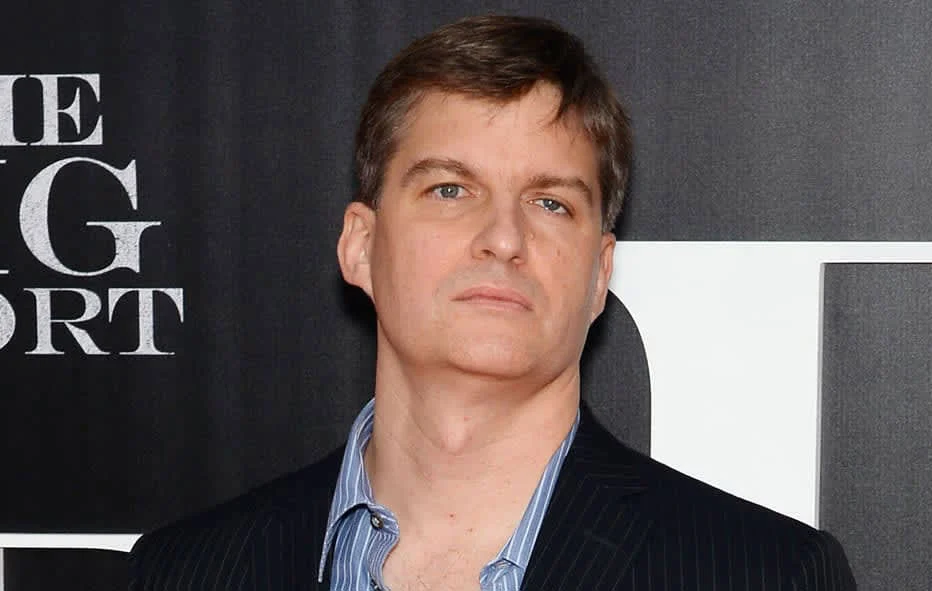
Michael Burry, the renowned investor immortalized in "The Big Short" for his prescient wager against the 2008 housing market collapse, is steadfastly maintaining his bearish market positions even as the S&P 500 surges to unprecedented highs. His latest pronouncements, shared in a recent Substack post, carry a stark warning: the current market rally, while seemingly robust, harbors the potential for a severe downturn reminiscent of the dramatic 1987 stock-market crash. This contrarian stance places Burry firmly against the prevailing market optimism, which has been fueled by strong corporate earnings and a booming interest in artificial intelligence technologies.
Burry’s Persistent Bearish Outlook Amid Market Euphoria
In his Tuesday Substack post, Burry articulated his concerns, stating, "I continue to believe it is possible we are near a major top, and possible a 1987-type fall, but the S&P 500 making new highs likely will bring new money into the market." This observation underscores a key aspect of market psychology: record highs often attract fresh capital from investors fearful of missing out, potentially creating a self-fulfilling prophecy of further ascent before an eventual, perhaps abrupt, reversal. His analysis extends beyond mere price action, delving into the underlying mechanics and investor behavior that he believes are creating an unstable environment.
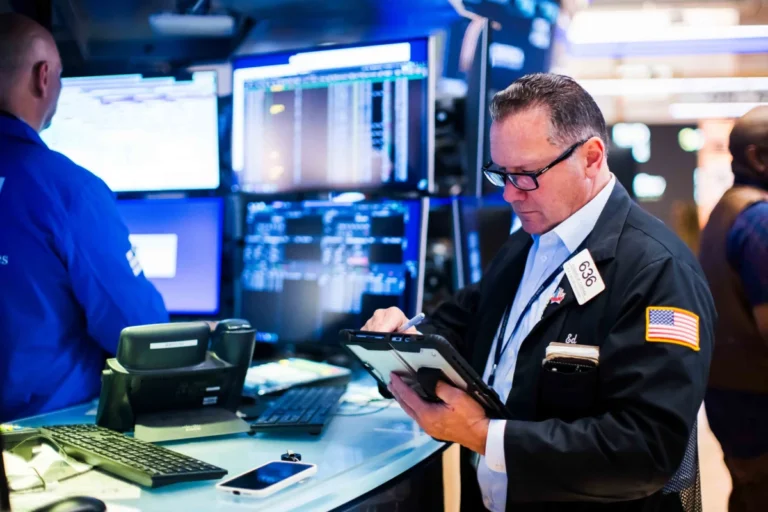
The market’s recent performance has indeed been remarkable. The S&P 500 jumped 1.9% on Tuesday, marking its first record close since June. This ascent was bolstered by a confluence of factors, including better-than-expected corporate earnings reports from several bellwether companies and a notable drop in oil prices, partly on renewed hopes for the unhindered flow of maritime traffic through the Strait of Hormuz. Concurrently, the tech-heavy Nasdaq Composite soared by 2.7% on the same day, extending its gain over just the first two trading days of the week to nearly 5%. These gains reflect a broad-based enthusiasm, particularly in the technology sector, which has become synonymous with the current market cycle.
Burry, however, remains unconvinced by the narrative of sustainable growth underpinning these rallies. He has been a vocal skeptic of the artificial intelligence boom, arguing that the demand for AI infrastructure is being propelled by financing arrangements that may ultimately prove unsustainable. This concern points to potential vulnerabilities within the capital structure supporting the AI industry, suggesting that the current growth might be more dependent on readily available, perhaps cheap, capital rather than robust, organic demand or long-term profitability.
Furthermore, Burry highlights a crucial technical dynamic at play: the self-reinforcing cycle created by declining market volatility. "Remember, the market going up on falling volatility forces vol-targeting funds to leverage up, and brings leverage from other momentum strategies into play," he wrote. This mechanism implies that as market fluctuations decrease, quantitative funds designed to maintain a certain level of risk exposure are compelled to increase their leverage, effectively amplifying their positions. This increased leverage, combined with momentum strategies that chase rising prices, can create an illusion of stability and strength while simultaneously building up systemic risk that could unravel rapidly if market conditions shift.
A Deep Dive into Burry’s Current Short Positions
In a stark demonstration of his conviction, Burry confirmed his continued holding of significant short positions against a basket of prominent assets. These include the iShares Semiconductor ETF (SOXX), Micron Technology (MU), Nvidia (NVDA), Caterpillar (CAT), Palantir Technologies (PLTR), Tesla (TSLA), and Applied Materials (AMAT). This portfolio of shorts reflects a broad bet against what he perceives as overvalued segments of the market, particularly those at the forefront of the technology and industrial sectors.
The iShares Semiconductor ETF (SOXX) and individual semiconductor giants like Nvidia and Micron are direct targets for an investor wary of the AI boom’s sustainability. Nvidia, in particular, has been a darling of the current market cycle, with its GPUs being essential to AI development. Its valuation has soared, making it a prime candidate for a short seller who believes the excitement has outpaced fundamentals. Micron, a memory chip manufacturer, is also tied to the broader tech cycle. Applied Materials, a supplier to the semiconductor industry, similarly falls within this sphere.
Tesla (TSLA), a perennial favorite among growth investors but often scrutinized for its high valuation, represents another typical target for a bearish wager. Its stock has experienced significant volatility and has been the subject of numerous short bets over the years, some of which have been highly painful for bears. Palantir Technologies (PLTR), a data analytics company, also embodies the speculative tech stock category that Burry often eyes. Caterpillar (CAT), while an industrial stalwart, could be seen as a proxy for broader economic health, and a short position against it might signal concerns about global industrial demand or a potential recession.
Burry acknowledged the inherent risks and challenges of his strategy, particularly in a surging market. He noted that all of his current short positions remain profitable, with the singular exception of his bet against Nvidia. This detail highlights the extreme difficulty and potential for significant losses when shorting a stock that is experiencing meteoric growth, even for an investor with Burry’s track record. His concluding remark, "Again, shorting is not for everyone. I must short. Most should not," serves as a potent reminder of the high-risk, high-reward nature of short selling, a strategy that requires deep conviction, extensive research, and an iron will to withstand potential drawdowns.
Historical Context: The Shadow of Black Monday 1987
Burry’s invocation of the 1987 stock market crash, commonly known as "Black Monday," provides critical historical context for his warning. On October 19, 1987, the Dow Jones Industrial Average plummeted by 22.6% in a single trading day, marking the largest one-day percentage drop in its history. The speed and severity of the crash sent shockwaves through global financial markets and economies.
Several factors were identified as contributing to the 1987 crash. Program trading, particularly "portfolio insurance," played a significant role. Portfolio insurance was a strategy employed by institutional investors to hedge against market declines by automatically selling futures contracts as prices fell. While designed to protect portfolios, the widespread use of this strategy created a cascading effect: as the market started to drop, automatic sell orders flooded the market, driving prices down further and triggering more sell orders in a vicious cycle. Other contributing factors included growing concerns about inflation, rising interest rates, and trade deficits, as well as an overvalued market following a prolonged bull run. The lack of robust circuit breakers and coordinated international regulatory responses at the time exacerbated the panic.
While the market structure and regulatory landscape have evolved significantly since 1987, Burry’s warning draws attention to the underlying psychological and mechanical vulnerabilities that can still exist. The concept of "vol-targeting funds" and "momentum strategies" that he references, while different in form, share a similar characteristic with portfolio insurance: they are systematic strategies that can amplify market movements, potentially leading to rapid and severe corrections if conditions turn. Modern markets benefit from circuit breakers, which temporarily halt trading during extreme price drops, and enhanced communication among global regulators. However, the sheer volume and speed of algorithmic trading today introduce new complexities and potential flashpoints.
Burry’s Track Record and Investment Philosophy
Michael Burry’s reputation as a prescient contrarian investor stems primarily from his monumental bet against the U.S. housing market in the mid-2000s. Operating through his hedge fund, Scion Capital, Burry meticulously analyzed subprime mortgage-backed securities, uncovering the rampant fraud and unsustainable lending practices that underpinned the housing bubble. His fund famously bought credit default swaps against these securities, a highly unconventional move at the time. When the housing market collapsed in 2008, his daring bet paid off spectacularly, generating immense profits for his investors and cementing his legend, which was later chronicled in Michael Lewis’s book "The Big Short" and its subsequent film adaptation.
This history demonstrates Burry’s characteristic approach: deep, independent research, a willingness to challenge consensus, and the courage to take high-conviction, often contrarian, positions, even in the face of widespread skepticism and initial losses. He often focuses on identifying "mispricings" or "bubbles" where market enthusiasm or structural flaws have led to valuations he deems unsustainable. His current focus on the AI boom and specific tech stocks aligns with this long-standing philosophy. He is not merely predicting a downturn; he is actively positioning his portfolio to profit from it, a testament to his conviction.
Beyond the 2008 crisis, Burry has made other notable calls, including his significant involvement in the GameStop saga of early 2021. He had invested in GameStop years prior, identifying it as an undervalued asset, before the Reddit-fueled short squeeze phenomenon. While his influence in that specific event was indirect, it further underscored his ability to spot opportunities in overlooked or maligned sectors.
Broader Market Sentiment and Counterarguments
Burry’s stark warnings stand in contrast to a generally optimistic, albeit cautiously so, market sentiment among many mainstream analysts and investors. The prevailing bullish arguments often center on the resilience of the U.S. economy, which has defied recession predictions; the potential for the Federal Reserve to pivot towards interest rate cuts later in the year, providing a tailwind for asset prices; and the genuine, transformative potential of artificial intelligence.
Many strategists point to strong corporate earnings as evidence that companies are fundamentally healthy, able to navigate higher interest rates and inflationary pressures. They argue that the AI boom is not just hype but a paradigm shift that will drive productivity gains and new revenue streams across industries for years to come. While valuations in the tech sector are high, proponents suggest that these are justified by the expected growth trajectory of these innovative companies. Furthermore, some believe that the lessons of 1987, 2000, and 2008 have led to more robust financial regulations and market safeguards, making a crash of similar magnitude less likely. For instance, the implementation of market-wide circuit breakers, which automatically halt trading if indices fall by certain percentages, is designed to prevent runaway selling and allow for a cooling-off period.
However, even within the bullish camp, there are acknowledgments of potential headwinds, such as persistent inflation, geopolitical uncertainties, and the still-elevated interest rate environment. The debate, therefore, is not merely between optimists and pessimists but often revolves around the timing and magnitude of potential market shifts.
Implications for Investors
For the average investor, Burry’s pronouncements create a dilemma. On one hand, his track record commands respect and caution. Ignoring such a stark warning from a proven contrarian could be perilous. On the other hand, acting on bearish predictions in a strong bull market can lead to significant opportunity costs and potential losses, as evidenced by his current Nvidia short.
The situation underscores the importance of diversification, understanding one’s own risk tolerance, and avoiding impulsive decisions based solely on the pronouncements of any single market guru, no matter how famous. Investors are often advised to conduct their own due diligence, consult a range of expert opinions, and align their portfolios with their long-term financial goals rather than reacting to short-term market noise or speculative calls.
Ultimately, Michael Burry’s continued bearish stance serves as a powerful reminder of the inherent uncertainties and cyclical nature of financial markets. While the S&P 500 celebrates new record highs, his voice echoes a historical warning, urging vigilance and questioning the sustainability of the current rally. Whether his prediction of a 1987-style fall comes to pass remains to be seen, but his perspective undeniably adds a crucial layer of critical analysis to the ongoing market narrative.