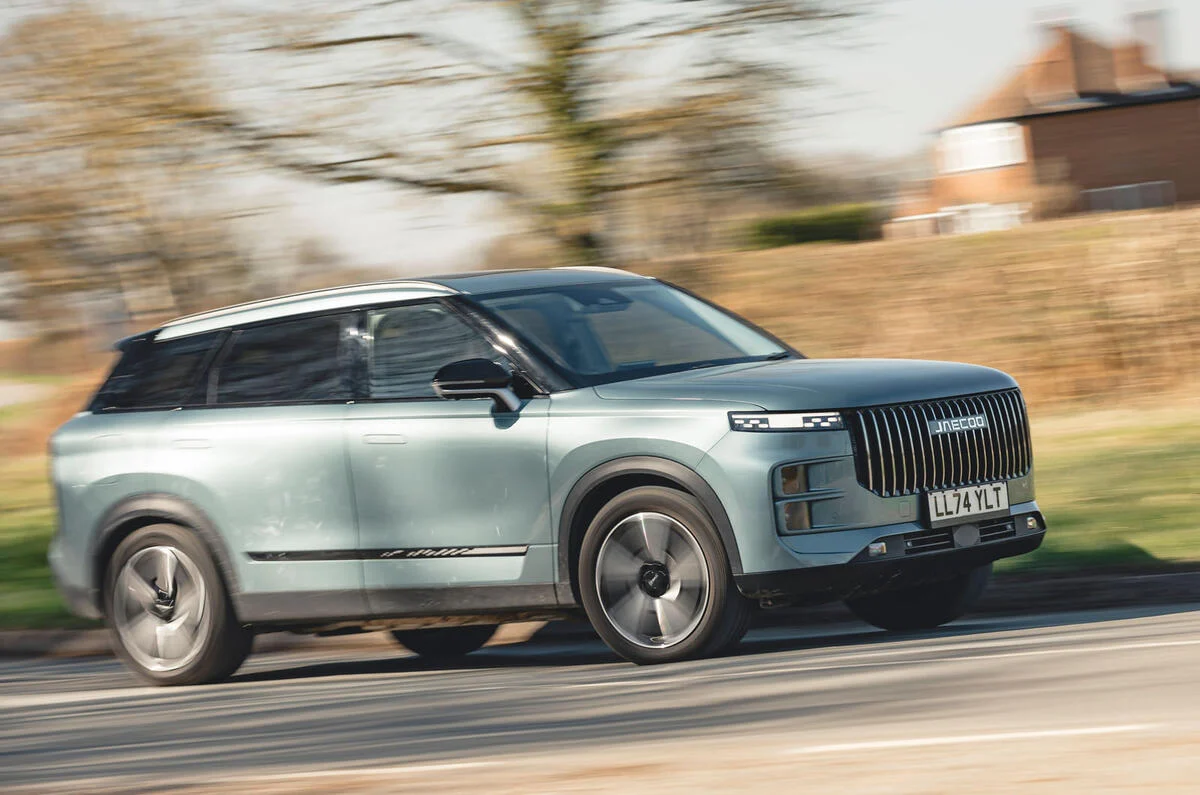
The UK new car market currently presents a facade of robust health, characterized by a significant year-on-year growth rate of nearly 10%. On the surface, this suggests a "land of milk and honey" for automotive manufacturers, with sales rebounding from the supply chain constraints and semiconductor shortages that plagued the industry during the early 2020s. However, a deeper analysis of registration data reveals a more complex and disruptive reality. The influx of new entrants from China is not merely expanding the market; it is actively cannibalizing the market share of established players. Contrary to the initial assumptions that these new brands would target the "easy prey" at the budget-conscious bottom end of the market, the data suggests that the real victims are the mid-market stalwarts—the brands that have defined the British motoring landscape for decades.
The Illusion of Universal Growth
According to the latest figures from the Society of Motor Manufacturers and Traders (SMMT), the UK car market saw its best July performance since the pandemic, driven largely by the fleet sector and a growing appetite for electrified vehicles. While a 10% increase in volume would typically signal a rising tide that lifts all boats, the current climate is one of extreme fragmentation. The "volume" growth is being heavily influenced by the aggressive expansion of Chinese-owned brands, which are entering the UK at a rate and scale never seen before in the history of the domestic automotive trade.
For decades, the UK market was dominated by a predictable hierarchy: premium German brands at the top, a solid middle ground occupied by the likes of Ford, Volkswagen, and Vauxhall, and a budget tier served by brands like Dacia or used car alternatives. The entry of Chinese manufacturers—most notably MG (owned by SAIC), BYD, Great Wall Motor (GWM), and more recently, Chery’s Omoda and Jaecoo brands—has shattered this hierarchy. These brands are not content with the low-margin, high-volume "bargain basement" segment. Instead, they are positioning their products directly against the core offerings of Europe’s most established manufacturers.
A Chronology of the Chinese Incursion
The rise of Chinese influence in the UK automotive sector did not happen overnight, but its acceleration in the last 36 months has been unprecedented.
- The MG Rebirth (2011–2019): After the collapse of MG Rover, the brand was acquired by SAIC Motor. Initially, MG struggled with perception and product quality. However, by the late 2010s, it pivotally shifted toward affordable electrification. The launch of the MG ZS EV in 2019 marked the first time a Chinese-made electric vehicle offered a compelling range at a price point significantly lower than its European rivals.
- The EV Catalyst (2020–2022): The UK government’s commitment to banning the sale of new petrol and diesel cars by 2030 (later moved to 2035) created a vacuum. While European manufacturers were grappling with high R&D costs for electric platforms, Chinese firms, backed by state-subsidized battery supply chains, were already producing third- and fourth-generation EVs.
- The Floodgates Open (2023–Present): BYD, the world’s largest manufacturer of "new energy vehicles," entered the UK market with the Atto 3, followed by the Dolphin and Seal. Simultaneously, GWM launched the Ora 03 (formerly Funky Cat). This period marked a shift from "budget alternatives" to "technology leaders," with Chinese brands offering infotainment systems, battery tech, and standard equipment lists that surpassed legacy mid-market rivals.
Supporting Data: Identifying the Losers
When examining who is losing sales, the data points away from the extreme ends of the spectrum. Luxury brands like Porsche and BMW continue to maintain strong margins and loyal customer bases. At the other end, Dacia continues to thrive by offering the absolute lowest price point in the market—a niche the Chinese brands have largely bypassed in favor of higher-specification models.
The "losers" are found in the middle. Brands like Ford, Volkswagen, Vauxhall, Renault, and Nissan are seeing their traditional territory encroached upon. For example, the MG4 EV has consistently outperformed several European electric hatchbacks in monthly registration figures. While Ford has discontinued the Fiesta and shifted its focus toward higher-margin SUVs, it has left a void in the affordable mid-market that brands like BYD are more than happy to fill.
In July, while the overall market rose by 10%, certain legacy models saw stagnant growth or slight declines in market share when adjusted for fleet versus private registrations. Chinese brands, conversely, are seeing triple-digit percentage growth in some sub-sectors. The MG4, for instance, has become a fixture in the UK’s top-ten best-selling EVs, often competing directly with the Volkswagen ID.3 and the Tesla Model 3.

Why the Mid-Market is Vulnerable
The vulnerability of mid-market stalwarts stems from a "perfect storm" of economic and technological factors.
1. Pricing Parity and Value Proposition
Historically, European mid-market brands relied on brand equity and a vast dealer network to justify a price premium over budget brands. However, Chinese manufacturers have reached pricing parity with European internal combustion engine (ICE) cars while offering full electric drivetrains. A consumer looking at a high-spec petrol Volkswagen Golf may find that a fully electric MG4 or BYD Dolphin is available for a similar monthly finance payment, often with more standard technology and a longer warranty.
2. The Battery Advantage
China controls approximately 75% of the world’s lithium-ion battery production capacity. This vertical integration allows brands like BYD to produce EVs at a cost base that European manufacturers simply cannot match. While a European brand must source cells from external suppliers and navigate complex logistics, Chinese firms often own the entire value chain from the mine to the dashboard.
3. The Tech-First Consumer
The modern car buyer, particularly in the EV segment, prioritizes software, connectivity, and rapid charging over traditional metrics like "handling" or "engine soul." Chinese manufacturers have treated cars like consumer electronics, iterating software rapidly and offering large, responsive screens and advanced driver-assistance systems (ADAS) as standard. Legacy brands, hindered by older "legacy" software architectures, have struggled to keep pace.
Official Responses and Industry Reactions
The reaction from established industry players has been a mix of diplomatic concern and urgent strategic pivots.
The SMMT Perspective: Mike Hawes, SMMT Chief Executive, has consistently highlighted the need for the UK to remain an open and competitive market while urging the government to provide more support for domestic manufacturing. The SMMT’s stance is that competition is good for the consumer, but it must be "fair" competition.
European Manufacturers: Carlos Tavares, CEO of Stellantis (which owns Vauxhall, Peugeot, and Fiat), has been one of the most vocal critics of the "asymmetric" competition from China. He has warned that without protective measures or significant subsidies for European production, the "middle class" of the European car industry could be decimated.
Governmental Intervention: The UK government, following the lead of the European Union and the United States, has begun investigating the impact of Chinese subsidies. While the UK has not yet matched the aggressive tariffs proposed by the EU, the shadow of trade barriers looms large. However, industry analysts suggest that even with 20-30% tariffs, Chinese EVs would still be price-competitive due to their inherent manufacturing cost advantages.

Broader Impact and Implications for the UK
The shift in market share from European stalwarts to Chinese newcomers has profound implications for the UK’s economic and social landscape.
The Retail and Service Network
Traditional brands have vast, expensive physical dealership networks. Chinese brands are experimenting with leaner models, including direct-to-consumer sales and "experience centers" in shopping malls. This puts pressure on traditional UK dealer groups to modernize or risk obsolescence. Furthermore, the simplicity of EVs means less revenue from traditional aftersales and servicing, a core profit center for legacy mid-market dealers.
The ZEV Mandate Pressure
The UK’s Zero Emission Vehicle (ZEV) mandate requires manufacturers to ensure a certain percentage of their sales are zero-emission, with heavy fines for non-compliance. Legacy brands with high volumes of petrol and diesel sales are struggling to meet these quotas without discounting their EVs heavily. Chinese brands, being almost exclusively EV-focused, are not only meeting these targets with ease but are also in a position to sell "carbon credits" to their struggling European rivals, effectively being subsidized by the very companies they are displacing.
The Death of Brand Loyalty
Perhaps the most significant impact is the erosion of brand loyalty. For decades, a "Ford family" or a "Volkswagen family" was a common phenomenon. However, the transition to electric power has acted as a "reset button" for consumer psychology. Buyers who are forced to change their fueling habits (from petrol to plug) are more willing to change their brand habits simultaneously. If a Chinese brand offers a better digital experience and a lower monthly payment, the "heritage" of a European badge is proving to be a less effective shield than it once was.
Conclusion: A New Competitive Reality
The UK car market is no longer a battle of nations, but a battle of ecosystems. The "stalwarts" of the mid-market are finding that their traditional strengths—mechanical engineering, brand history, and expansive showrooms—are less relevant in an age of software-defined, battery-powered mobility.
China is not stealing sales from the bottom; it is hollowing out the middle. As MG, BYD, and others continue to refine their products and expand their presence, the pressure on brands like Ford and Volkswagen will only intensify. The 10% growth in the market is a sign of a sector in transition, but for the traditional giants of the industry, that growth is increasingly bittersweet. The challenge for the next decade will be whether the mid-market stalwarts can reinvent themselves fast enough to survive the most significant disruption in the history of the automobile.