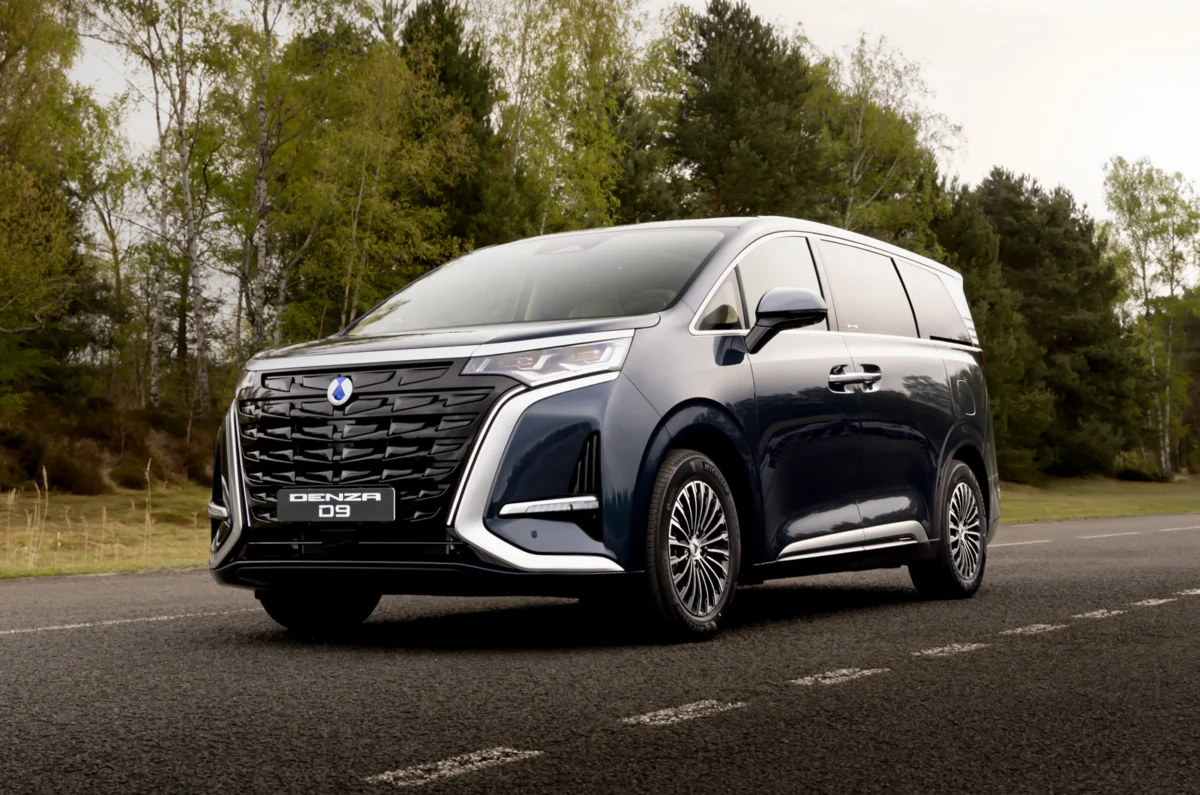
Denza, the high-end luxury subsidiary of the global electric vehicle giant BYD, has officially commenced the order process for its fourth and most ambitious model to date, the Denza D9. Positioned as a direct competitor to established luxury multi-purpose vehicles (MPVs) such as the Lexus LM and the Mercedes-Benz V-Class, the D9 represents a strategic pivot for the brand as it seeks to capture the burgeoning market for executive transport and high-end family mobility. With a starting price of £75,000, the D9 enters the market with a significant pricing advantage, undercutting the Lexus LM by approximately £23,000 while positioning itself competitively against the upcoming Mercedes-Benz VLE, which is slated for a 2025 release. This aggressive pricing strategy, combined with a sophisticated plug-in hybrid (PHEV) architecture, signals Denza’s intent to disrupt the premium segment traditionally dominated by European and Japanese manufacturers.
The introduction of the D9 follows the recent expansion of the Denza portfolio, which now includes the Z9 GT shooting brake, the Bao 5 rugged SUV, and the high-performance Z supercar. This rapid diversification of the lineup illustrates BYD’s broader strategy to utilize Denza as its primary vehicle for global luxury expansion, leveraging advanced proprietary technologies to compete with the industry’s "premium stalwarts."
Technical Engineering and Powertrain Dynamics
At the core of the Denza D9 is a sophisticated plug-in hybrid powertrain designed to balance long-distance cruising capability with urban efficiency. The vehicle utilizes a dual-motor all-wheel-drive configuration, featuring a 228bhp electric motor on the front axle and a 60bhp motor on the rear axle. These electric units are paired with a 1.5-litre four-cylinder turbocharged petrol engine that produces 119bhp. While Denza has not officially released a combined system power output, the synergy between the internal combustion engine and the dual-motor setup allows the seven-seat MPV to accelerate from 0-62mph in a respectable 8.6 seconds—a performance figure that rivals many executive sedans despite the vehicle’s substantial dimensions and weight.
Perhaps the most significant technical achievement of the D9 is its energy storage system. The vehicle is equipped with a 58.5kWh battery pack housed beneath the floorpan. For context, this battery capacity is nearly double that of many contemporary plug-in hybrids and is comparable to the batteries found in entry-level fully electric vehicles. This allows the D9 to achieve an electric-only range of up to 130 miles, a figure that significantly reduces the reliance on the petrol engine for daily commuting and short-haul executive shuttling.
Furthermore, the D9 is compatible with BYD’s latest generation of "Flash" ultra-rapid chargers. This charging infrastructure is capable of replenishing the battery from 10% to 70% in just five minutes, effectively mitigating the "range anxiety" often associated with large, heavy luxury vehicles. This capability is expected to be a major selling point for fleet operators and high-net-worth individuals who require high vehicle uptime.
Ride Quality and the DiSus Active Suspension System
To meet the comfort expectations of the luxury MPV segment, Denza has equipped the D9 with the proprietary DiSus active suspension system. This technology, which is also featured in the Z9 and Bao 5, represents BYD’s most advanced chassis control solution. The system utilizes a suite of sensors to monitor road conditions and vehicle dynamics in real-time, adjusting compression and rebound rates on the fly.
The primary objective of the DiSus system in the D9 is to decouple the cabin from road imperfections while maintaining stability. According to Denza, the system is engineered to deliver "assured body control through corners with a supple ride on rougher road surfaces." By managing the pitch and roll inherent in high-roof vehicles, the DiSus system aims to provide a "magic carpet" ride quality that is essential for competing with the Lexus LM’s renowned refinement.
Interior Architecture and Trim Specifications
The Denza D9 is designed from the inside out, focusing on the "mobile office" and "first-class lounge" concepts. Even in its base specification, the D9 offers a high level of standard equipment. The cabin features extensive use of leather upholstery, a panoramic glass roof, and electric sliding doors on both sides. Climate-controlled storage compartments—capable of both heating and cooling—are integrated into the center console, catering to the needs of rear-seat passengers.
The second row, often considered the most important area of a luxury MPV, features individual captain’s chairs. Each passenger in this row is provided with a dedicated LCD control panel integrated into the armrest, allowing for independent adjustment of climate, lighting, and seat positions.
For customers seeking the pinnacle of luxury, the £85,000 Ultimate trim introduces "zero-gravity" seats in the middle row. These seats are engineered to mimic the neutral body posture researched by NASA, distributing body weight evenly to reduce pressure points during long journeys. The Ultimate trim seats feature 14-way power adjustment and a 16-point massaging system. They also possess the ability to recline to a near-horizontal position. Entertainment is provided via dual 12.8-inch high-definition screens mounted on the back of the front headrests, allowing for independent media consumption or video conferencing.
Historical Context and the Evolution of Denza
The launch of the D9 is the culmination of a decade-long evolution for the Denza brand. Established in 2010 as a 50/50 joint venture between BYD and Daimler (the parent company of Mercedes-Benz), Denza was originally intended to combine Mercedes-Benz’s expertise in luxury and vehicle design with BYD’s leadership in battery technology.
However, the brand’s early years were marked by modest sales and a limited product range. In 2021, the partnership underwent a significant restructuring, with Daimler reducing its stake to 10% and BYD taking a 90% controlling interest. More recently, in late 2024, BYD acquired the remaining 10% stake, making Denza a fully-owned subsidiary. This shift has allowed BYD to integrate its most advanced vertical supply chain benefits into Denza, resulting in the rapid-fire launch of the D9, Z9 GT, and Bao 5. The D9, in particular, represents the brand’s newfound autonomy and its ability to challenge the very German luxury standards that originally helped birth the brand.
Market Analysis and Competitive Implications
The entry of the Denza D9 into the global market comes at a time when the luxury MPV segment is experiencing a renaissance. While SUVs have long dominated the luxury landscape, there is a growing demand in Asian and European markets for high-end "people movers" that offer more interior volume and easier ingress/egress than traditional limousines.
The D9’s primary rival, the Lexus LM, has established a foothold as the gold standard for MPV luxury, but its high entry price (often exceeding £100,000 with options) leaves a gap in the market. The Mercedes-Benz V-Class, while popular, is often criticized for its van-based origins. By offering a bespoke, luxury-first platform with a state-of-the-art hybrid system at a £75,000 price point, Denza is positioning itself as the "value-luxury" choice—a strategy reminiscent of Lexus’s own entry into the US market in the 1980s.
Industry analysts suggest that the D9’s success will hinge on brand perception. While BYD is a household name in battery technology and affordable EVs, Denza must convince traditional luxury buyers that a Chinese brand can match the heritage and craftsmanship of Mercedes-Benz or Lexus. The inclusion of high-end materials and the DiSus suspension system are critical components of this persuasion strategy.
Future Outlook and Delivery Timeline
As Denza begins taking orders for the D9, the company is also preparing its service and retail infrastructure to support a premium ownership experience. Deliveries are scheduled to begin in the coming months, with the first wave of vehicles expected to reach customers by the end of the current fiscal quarter.
The D9 is more than just a new model; it is a proof of concept for BYD’s high-end ambitions. If the D9 succeeds in gaining market share from the Lexus LM and Mercedes V-Class, it will pave the way for the Z9 GT and the Z supercar to further cement Denza’s status as a legitimate player in the global premium automotive sector. With its combination of class-leading EV range, rapid charging, and "zero-gravity" luxury, the D9 stands as a formidable challenger in a segment that is no longer the exclusive playground of the European elite.