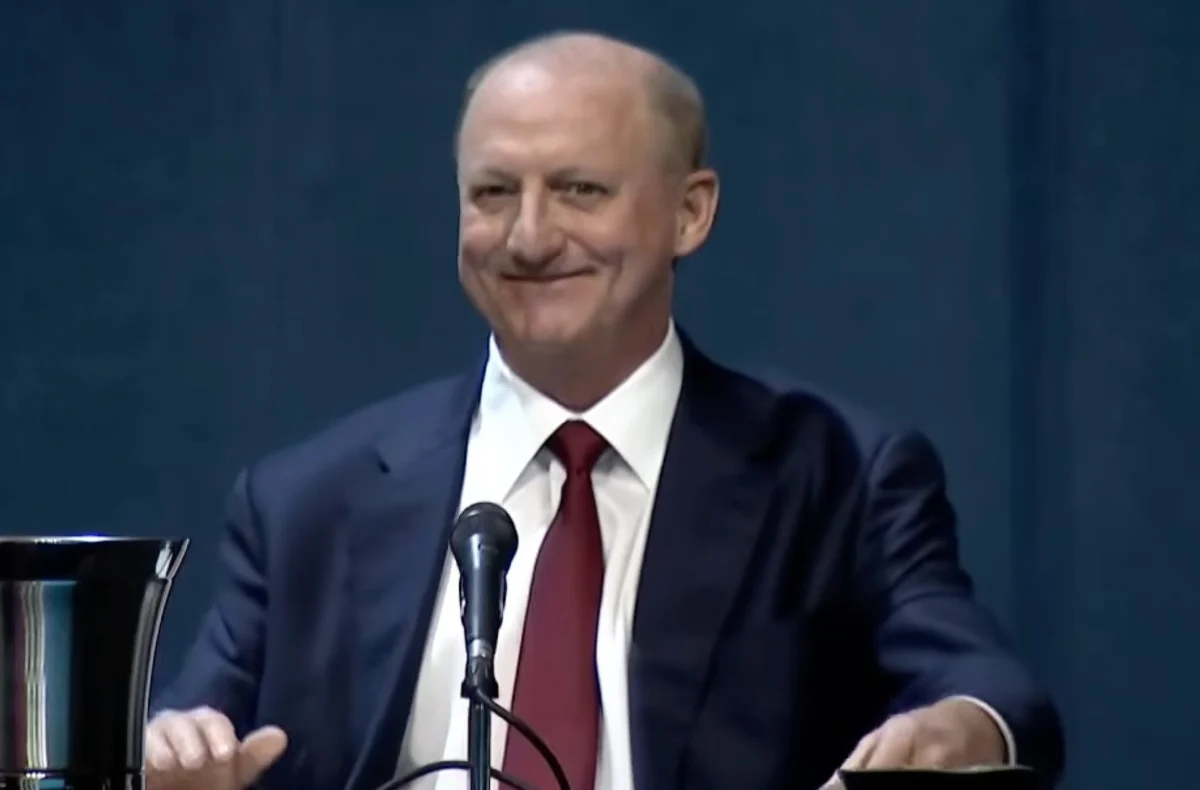
OMAHA, NE – Berkshire Hathaway, the sprawling conglomerate helmed by CEO Greg Abel, delivered a robust performance in the second quarter of 2026, with operating earnings climbing an impressive 16% to $12.98 billion. This significant increase from $11.16 billion a year earlier was primarily fueled by strong results across its diverse energy, railroad, and manufacturing segments, effectively offsetting a challenging period for its insurance operations. However, beyond the headline financial figures, the quarter’s most profound takeaway is the clear indication that Abel, 64, is actively deploying Berkshire’s formidable cash reserves, marking a notable strategic shift from the more conservative, patient approach characteristic of the Warren Buffett era. This proactive capital allocation is evidenced by a substantial increase in share repurchases and a decisive return to being a net buyer of equities.
The second quarter’s financial disclosure revealed a pivotal moment for the Omaha-based titan. Under Abel’s leadership, which began at the start of 2026, Berkshire Hathaway repurchased approximately $4.5 billion of its own shares. This figure represents a dramatic acceleration compared to the mere $235 million spent on buybacks in the first three months of the year, signaling a more aggressive stance on returning capital to shareholders when the stock is deemed undervalued. Simultaneously, the company reversed a 14-quarter streak of being a net seller of stocks, becoming a net buyer of equities with nearly $20 billion in net purchases during the period. This dual deployment strategy led to a reduction in Berkshire’s colossal cash pile, which declined from a record $397.4 billion at the end of March to $365.5 billion by the close of June. This strategic pivot underscores Abel’s willingness to put the firm’s vast financial resources to work in a dynamic market environment.
A Deep Dive into Segment Performance
Berkshire’s diverse operational tapestry showcased varying degrees of strength during the quarter. The conglomerate’s manufacturing, service, and retailing segment emerged as a significant growth driver, with earnings jumping an impressive 24% to $4.47 billion. This segment encompasses a vast array of businesses, from consumer products like Duracell batteries and See’s Candies to industrial manufacturers under the Marmon Group, and service providers such as NetJets and McLane Company. The robust growth here reflects resilience in consumer spending, strategic operational efficiencies, and potentially the benefits of post-pandemic economic normalization and targeted investments within these varied enterprises.
The energy sector, represented by Berkshire Hathaway Energy (BHE), also contributed substantially to the overall growth, with its profit surging 27% to $891 million. BHE is a diversified utility and energy company that owns regulated electricity and natural gas utilities, pipelines, and renewable energy assets. Its strong performance can be attributed to increased demand, favorable regulatory environments for infrastructure investments, and continued expansion in its renewable energy portfolio, aligning with broader energy transition trends.
BNSF Railway, Berkshire’s crucial freight railroad, reported a respectable 6% increase in earnings, reaching $1.56 billion. As one of the largest freight railroad networks in North America, BNSF plays a vital role in the supply chain, transporting goods ranging from agricultural products to industrial materials. Its steady growth points to continued economic activity and effective management of logistics, despite potential headwinds from fluctuating fuel prices and labor costs that often impact the transportation sector.
However, the insurance segment, traditionally a cornerstone of Berkshire’s operations, proved to be a weak spot. Underwriting earnings declined by 13% to $1.73 billion from $1.99 billion a year earlier. This reduction was likely influenced by a combination of factors, including increased catastrophe losses from severe weather events, competitive pricing pressures in certain insurance lines, and potentially adverse prior-year reserve development. Concurrently, insurance investment income, derived from the vast float generated by its insurance subsidiaries like GEICO and General Re, also experienced a downturn, falling 9% to $3.06 billion. While still substantial, this decline suggests a challenging fixed-income environment or shifts in portfolio allocation that impacted income generation, possibly in anticipation of future interest rate movements or changes in investment strategy.
The Abel Era: Navigating a New Course
The second quarter of 2026 marks a significant period in the leadership transition at Berkshire Hathaway. Greg Abel’s ascent to CEO at the beginning of the year, following Warren Buffett’s relinquishing of the chief executive role while retaining the chairmanship, has been closely watched by investors and market analysts worldwide. Abel, a seasoned executive with a long history at Berkshire, previously oversaw all of the company’s non-insurance operations, earning a reputation as a highly capable and disciplined operator. His formal transition to the top executive role has ushered in an era where he is increasingly shaping the conglomerate’s capital allocation strategy.
For years, Warren Buffett, the legendary 95-year-old investor, had openly expressed challenges in finding "elephants"—large, value-generating acquisitions—in an equity market he often characterized as overvalued. This cautious approach led to the accumulation of an unprecedented "cash fortress," a massive liquidity position that, while providing immense financial security, also drew criticism from some shareholders eager for capital deployment. Buffett’s philosophy prioritized patience and risk aversion, often preferring to hold cash rather than invest in opportunities that didn’t meet his stringent valuation criteria.
With Abel at the helm, and Buffett remaining as a key advisor and chairman, the pressure to deploy this capital effectively has intensified. Shareholders, accustomed to Buffett’s methodical, long-term approach, have keenly anticipated how Abel would navigate this challenge. The second quarter results provide a tangible answer: a more active, yet still prudent, approach to capital deployment. The substantial increase in share buybacks signals management’s belief that Berkshire’s stock itself represents compelling value, a strategy often favored by Buffett when external opportunities are scarce and the internal value is clear. The dramatic shift to becoming a net buyer of equities, after 14 consecutive quarters of net selling, further underscores a renewed confidence in market opportunities and potentially a more opportunistic stance on market valuations.
Strategic Investments and Portfolio Evolution
A significant component of Berkshire’s capital deployment in Q2 was its strategic investment activity. The quarter included the closing of Berkshire’s acquisition of Taylor Morrison, a prominent homebuilder. This move reflects Berkshire’s continued interest in the housing sector, an area where the company already has significant exposure through its diverse portfolio of building materials, real estate brokerage, and other related businesses. The housing market, while subject to cyclical fluctuations, offers long-term growth potential, and the Taylor Morrison acquisition aligns with Berkshire’s history of investing in foundational, tangible assets.
Beyond direct acquisitions, Berkshire’s equity portfolio saw notable shifts. The filing indicated that Alphabet (GOOGL), the parent company of Google, has now ascended to become one of Berkshire’s five largest equity holdings by market value at the end of June. This follows Berkshire’s disclosure earlier in the year of a substantial $10 billion investment in the technology giant, specifically aimed at supporting its artificial intelligence development. This investment is particularly noteworthy as it marks a significant foray into a leading-edge technology sector, a departure from some of Berkshire’s more traditional holdings. Warren Buffett himself confirmed to CNBC that he initiated the Alphabet investment after consulting with Greg Abel, signaling a collaborative approach to major strategic decisions and a willingness to embrace new growth areas within established, high-quality companies.
The other long-time pillars of Berkshire’s equity portfolio remain firmly in place: American Express (AXP), Apple (AAPL), Bank of America (BAC), and Coca-Cola (KO). These holdings exemplify Buffett’s long-standing preference for companies with strong brands, durable competitive advantages ("moats"), and consistent earnings power. The inclusion of Alphabet alongside these stalwarts suggests an evolution in Berkshire’s strategic thinking, integrating high-growth technology plays that leverage a strong existing business model, while still adhering to principles of value and quality.
Market Reaction and Broader Implications
Despite the robust operational performance and strategic capital deployment, shares of Berkshire Hathaway have seen a somewhat muted reaction year-to-date, climbing just 3% through June. This performance has lagged behind the broader S&P 500 index, which recorded a more substantial 13% gain over the same period. However, there has been a noticeable shift in momentum more recently, with Berkshire’s stock rising 9% over the last three months, suggesting a growing appreciation among investors for the strategic moves initiated by Abel.
Market analysts are keenly observing these developments, viewing the second quarter’s results as a significant indicator of Abel’s leadership style and his vision for Berkshire’s future. The acceleration in buybacks and the return to net equity purchases are being interpreted by many as a clear signal that Abel is committed to optimizing shareholder value and is not content to let the cash pile sit idly. Some observers suggest this marks a more proactive and dynamic capital allocation strategy, one that is more responsive to current market conditions while still embodying the core principles of value investing.
The implications of this quarter extend beyond Berkshire Hathaway itself. The conglomerate’s actions, particularly its return to being a net buyer of equities, can be seen as a bellwether for broader market sentiment among sophisticated investors. If Berkshire, known for its deep analysis and long-term perspective, is finding compelling value in the equity market after an extended period of caution, it could signal a more positive outlook for general market conditions. Furthermore, the substantial investment in Alphabet’s AI initiatives highlights the growing importance of technological leadership even for traditional value investors, underscoring the pervasive influence of innovation across all sectors of the economy.
Looking ahead, investors will continue to monitor Abel’s capital deployment strategy closely. The substantial reduction in the cash hoard suggests that this quarter’s activity may be the beginning of a sustained effort to put Berkshire’s immense financial power to work. Future quarters will reveal whether this trend continues, how new investments perform, and how the evolving leadership dynamic between Abel and Buffett shapes the trajectory of one of the world’s most iconic and influential companies. The second quarter of 2026 unequivocally marks a new chapter for Berkshire Hathaway, one defined by strategic action and a renewed focus on growth and capital efficiency under the stewardship of Greg Abel.