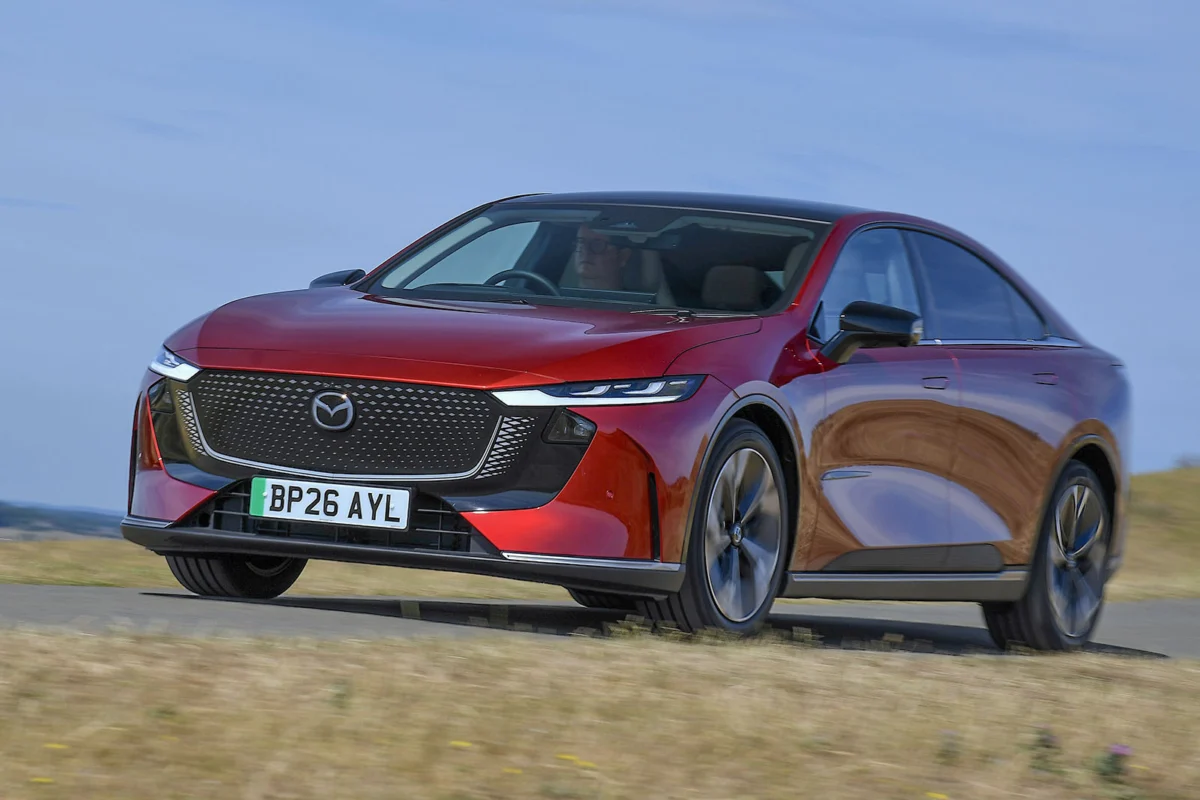
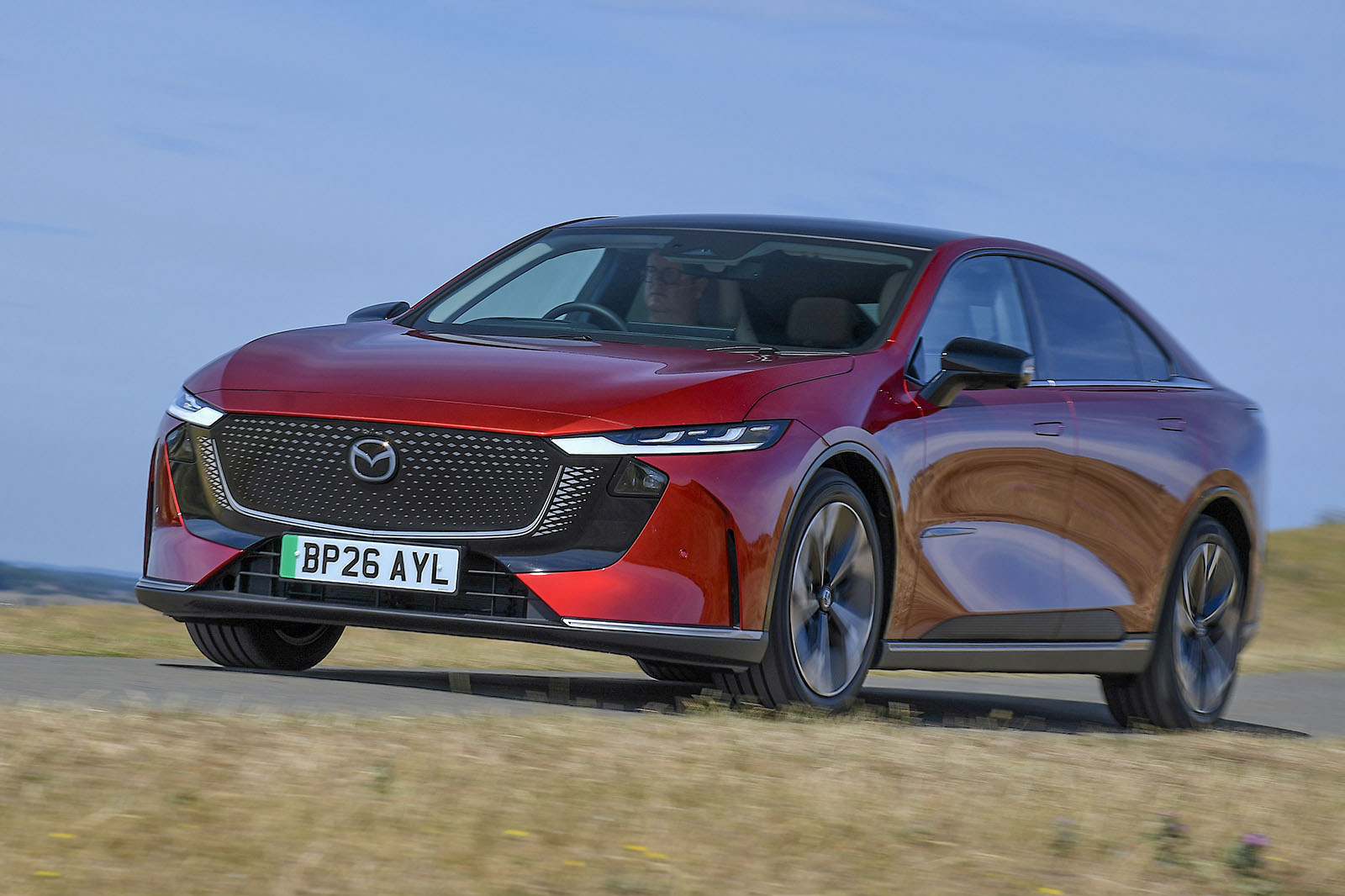
The automotive landscape is currently witnessing a profound transformation as traditional manufacturers pivot toward electrification, often forging new alliances to accelerate development cycles. The Mazda 6e stands as a primary example of this evolution, representing a significant departure from the Hiroshima-based company’s established design and ergonomic philosophies. While the exterior of the 6e remains recognizably part of the Mazda family—retaining the sleek, athletic "Kodo" design language that allows it to stand out in a supermarket car park or a congested urban traffic queue—the interior tells a remarkably different story. For long-term enthusiasts of the brand, entering the cabin of the 6e offers a sensory experience that feels largely disconnected from the tactile, driver-centric environments that have defined Mazda for the past decade.
A Departure from the Jinba Ittai Philosophy
For years, Mazda has marketed its vehicles under the banner of "Jinba Ittai," a Japanese phrase meaning "horse and rider as one." This philosophy has traditionally manifested in meticulous attention to the driving position, pedal placement, and the haptic feedback of physical controls. However, in the Mazda 6e, this connection appears to have been diluted. Upon sitting in the driver’s seat, the initial impression is one of unfamiliarity. The seating position is notably high, resulting in a "bent-legged" posture that feels somewhat awkward compared to the low-slung, natural ergonomics of the outgoing Mazda 6 or the current Mazda 3.
This shift is particularly surprising given Mazda’s historical reputation for refining driving positions to near-perfection. Industry analysts suggest that this ergonomic shift may be a byproduct of the vehicle’s platform architecture, which must accommodate a sizable battery floor. This often forces a higher hip-point for passengers, a common challenge in sedans adapted for electric powertrains. The result is a cabin that surveys a landscape very sparsely populated with traditional secondary controls, marking the beginning of a radical minimalist approach.
The Minimalist Cabin and the Erasure of Physical Controls
The center console of the Mazda 6e is almost entirely vacant, a design choice facilitated by the relocation of the drive selector to a "wand" on the steering column. This leaves the area between the front seats dedicated almost exclusively to a pair of cupholders and dual wireless phone charging pads. While this creates a sense of openness, it comes at the cost of physical interaction.
In a move that deviates sharply from Mazda’s recent history, the 6e lacks fixed physical controls for several essential functions. There are no dedicated buttons or dials for mirror adjustment, headlight settings, or wiper controls, save for a solitary wash-wipe button. Furthermore, the car lacks a manual override for the automatic handbrake, and perhaps most significantly, it abandons the signature rotary cursor controller for the multimedia display.
This transition represents a total "volte-face" for Mazda. Not long ago, the company’s engineers were vocal advocates against the use of touchscreens while driving, citing driver distraction as a primary safety concern. In certain previous models, Mazda went as far as deactivating touchscreen functionality entirely when the vehicle was in motion, forcing users to rely on the tactile rotary commander. In the 6e, this conviction has been replaced by a system where nearly all interaction is carried out directly via a 14.6-inch touchscreen. This shift aligns Mazda more closely with the design trends popularized by Tesla and various Chinese EV manufacturers, but it risks alienating a core customer base that values intuitive, tactile interfaces.
Material Quality and Tactile Examination
Mazda has spent the last several years moving upmarket, positioning itself as a "Mazda Premium" brand. Models like the Mazda 3 and CX-30 earned critical acclaim for their interior materials, which shunned "glitzy" or "chintzy" finishes in favor of solid, hefty-feeling buttons and consistent grain patterns across all plastic surfaces. The 6e, however, seems to belong to a different world of material standards.
The Takumi trim, which serves as a mid-to-lower tier in the 6e lineup, utilizes synthetic leather for the seats and dashboard upholstery. While the higher-tier Takumi Plus offers Nappa leather and suede, the general build quality of the interior components has come under scrutiny. The cabin is adorned with glossy black plastic and satin chrome trims on the steering wheel and door consoles. While visually striking in photographs, these materials do not always stand up to close tactile examination.
Observers have noted that the air vents feel relatively flimsy, and certain plastic mouldings lack the "substance" found in Mazda’s combustion-engine lineup. The prevalence of "piano black" plastic, while modern, is prone to smudging and micro-scratching, potentially detracting from the long-term premium feel of the vehicle. This change in material direction raises questions about the influence of Mazda’s manufacturing partners and the cost-pressures associated with high-capacity EV batteries.
Spatial Dynamics and Practicality
Despite the ergonomic concerns, the Mazda 6e offers a bright and airy cabin ambience, largely thanks to a panoramic glass roof that extends behind the heads of the rear passengers. However, there is a functional caveat: the roller blind for this roof is only included in the Takumi Plus models. In the standard Takumi trim, the lack of a sunshade can make the glass feel uncomfortably close to the heads of taller occupants, particularly on sunny days where heat soak might become an issue.
In terms of cargo capacity, the 6e utilizes a hatchback rear end. On paper, the boot space is rated at 337 liters to the window line. While this figure may seem modest for a car of this size, the hatchback design allows for easier loading to the roofline, which significantly enhances its practical utility. Additionally, the 6e features a 72-liter front trunk (frunk). This deep compartment is ideal for storing charging cables or dirty footwear, keeping them separate from the main luggage area. One minor oversight noted by early testers is the absence of a remote release for the frunk on the key fob, requiring the driver to use the internal release or the touchscreen.
The Multimedia Experience and Software Integration
The centerpiece of the 6e’s interior is the 14.6-inch touchscreen. The layout and software structure bear a striking resemblance to systems found in the Changan Deepal S07, a result of Mazda’s collaboration with the Chinese automotive giant Changan Automobile. While the screen is large and high-resolution, its usability has been described as distracting.
The system relies heavily on nested menus. To adjust vehicle settings or disable Advanced Driver Assistance Systems (ADAS)—such as the often-intrusive lane-keep assist or speed limit warnings—the driver must navigate through multiple layers of the interface. While Mazda claims that the shortcut bar at the bottom of the screen is user-customizable, early evaluations suggest that the process is not intuitive.
Furthermore, the steering wheel features "star-marked" shortcut keys, but the range of functions that can be assigned to them is limited. Unlike its sister car, the Deepal S07, the 6e does not currently support separate functions for "short-press" and "long-press" operations on these buttons, which limits the driver’s ability to bypass the touchscreen for frequent tasks. This software-heavy approach marks a significant shift in Mazda’s brand identity, moving away from mechanical simplicity toward a "software-defined vehicle" model.
Background: The Mazda-Changan Partnership
To understand the 6e, one must look at the strategic partnership between Mazda and Changan. In 2023, Mazda announced an accelerated electrification plan, acknowledging that it needed to leverage local expertise to remain competitive in the rapidly evolving Chinese and global EV markets. The 6e is a product of this joint venture, utilizing a platform that shares significant DNA with Changan’s Deepal (Shenlan) brand.
Chronology of Development:
- 2021: Mazda announces its "Sustainable Zoom-Zoom 2030" update, focusing on a multi-solution approach to electrification.
- 2023: Mazda and Changan finalize agreements to co-develop electric models specifically for the Chinese market, with potential for global export.
- 2024: The Mazda 6e (and its sedan counterparts) is unveiled, showcasing a departure from traditional Mazda architectures.
- 2025-2026: Expected full-scale market rollout and international reviews.
Industry Implications and Market Reaction
The Mazda 6e represents a calculated risk. By partnering with Changan, Mazda has been able to bring a competitive electric sedan to market much faster than if it had developed a bespoke EV platform in-house. However, the trade-off is a car that feels less like a traditional Mazda and more like a high-end Chinese EV with a Mazda aesthetic.
Industry analysts suggest that this "volte-face" on interior design and ergonomics is a response to the "Tesla-fication" of the global auto market. Younger consumers, particularly in Asia and North America, often prioritize large screens and minimalist aesthetics over tactile buttons and traditional driving positions. Mazda appears to be betting that it can attract a new demographic of tech-focused buyers, even if it risks confusing its traditional "driving enthusiast" base.
The official response from Mazda representatives has emphasized that the 6e is designed to meet the specific needs of the "new era" of mobility, where digital integration and spatial openness are paramount. While they acknowledge the shift in control philosophy, they maintain that the vehicle still embodies the brand’s core values through its exterior design and chassis tuning.
As the 6e prepares for a wider global presence, it will serve as a litmus test for the brand. Can Mazda retain its soul while adopting the standardized, screen-heavy templates of the modern electric vehicle? For now, the 6e stands as a stylish, albeit ergonomically radical, entry into the electric sedan segment, signaling that the era of the rotary controller and the analog-feeling cockpit may be drawing to a close at Mazda.