The 79th edition of the Locarno Film Festival, a venerable institution celebrating cinematic artistry and emerging voices, has become the global stage for the world premiere of Ann Oren’s highly anticipated feature film, Objet a. This mind-bending and visceral work, a stylized cinematic exploration of the intricate relationships between humans and their environment, delves into the complex interplay of control, desire, intimacy, and identity, offering audiences a fresh and thought-provoking perspective on themes often relegated to the subconscious, including kleptomania. The film, which made its debut in the international competition on Tuesday, August 11th, marks the return of Berlin-based visual artist and filmmaker Ann Oren to Locarno, following the critical acclaim of her previous feature, Piaffe.
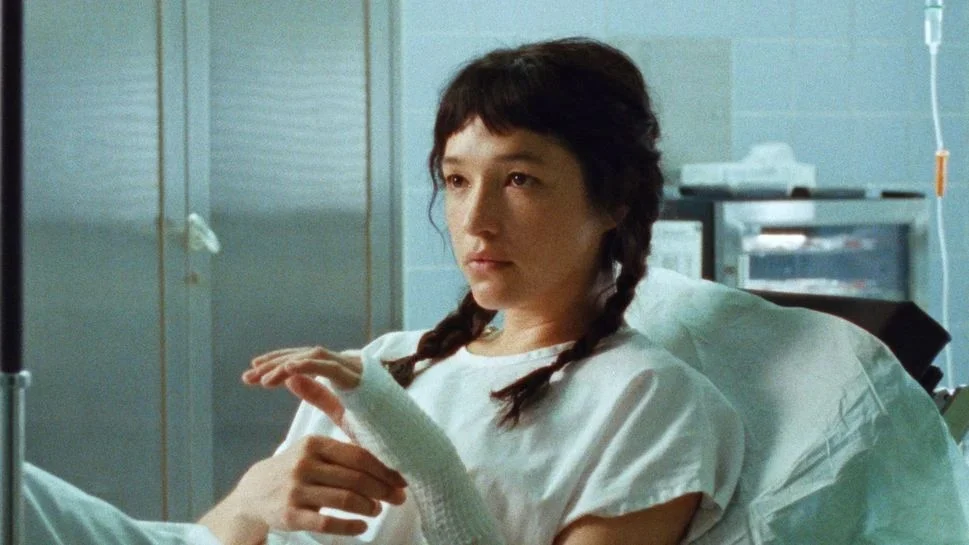
Objet a centers on the lives of Ingeborg and Adam, a pair of visionary hand surgeons whose profound connection is woven from threads of love, an insatiable need for control, and deeply ingrained fixations. Ingeborg finds herself compelled by an irresistible urge to steal objects, a compulsion that becomes a central facet of her character. Adam, on the other hand, harbors a profound longing to embody the role of an object himself, to be the desired entity. Their meticulously choreographed existence, a testament to their shared dedication to order and precision, is abruptly disrupted by an unforeseen force: the enigmatic Gaia. Her arrival acts as a catalyst, stirring dormant desires and threatening to unravel the delicate balance that has long defined Ingeborg and Adam’s relationship.
The film stars Aenne Schwarz, known for her roles in All Is Well and Every You Every Me, as Ingeborg. Louis Hofmann, a familiar face from All the Light We Cannot See, The Forger, and the hit series Dark, portrays Adam. Simone Bucio, who previously collaborated with Oren on Piaffe and also appeared in The Ivy, takes on the role of Gaia. The ensemble cast is further enriched by the presence of Georg Friedrich, celebrated for his performance in Great Freedom, and Sofia Kokkali from Our Wildest Days.
Artistic Vision: A Deep Dive into Human Longing
In a director’s note, Ann Oren articulated the core of her artistic inquiry: "I’m interested in human desire and how it connects us to other species. The human body is the starting point for my cinematic language: the more control we have over it, the more we separate ourselves from the natural world." This foundational philosophy permeates Objet a, which uses the human form and its interactions—or lack thereof—as a lens through which to examine contemporary anxieties and primal urges.
Oren’s approach to filmmaking is inherently tactile and experiential. Her debut feature, Piaffe, explored the sense of sound as a gateway to understanding the human condition. With Objet a, she turns her attention to the sense of touch, questioning the impact of our increasingly digitized lives. "The human body is the starting point for my cinematic language," Oren stated in a press conference. "The more control we have over it, the more we separate ourselves from the natural world. I was thinking about the sense of touch today and what happens when we touch flat screens more than we touch our lover’s skin. A lot of experiences have flattened down to touching this plexiglass most of the day, so what is happening to our fingertips? I think they’re really deprived, and I was imagining zombie-like, hungry fingers—hungry to touch something. And then I had this idea of a couple that is living a very bubbled life and communicating emotionally through objects." This conceptual framework underscores the film’s exploration of disconnect and the yearning for authentic sensory experience.
The screenplay for Objet a was co-written by Oren and Geoffroy Grison. The film’s visual aesthetic is a testament to the collaborative efforts of cinematographer Juan Sarmiento G. (The Voice of Hind Rajab, A Poet) and editor Hansjörg Weißenbrich (Rose, Late Shift). Schuldenberg Films produced the feature in co-production with Tarantula, asterisk*, and ERT.

Navigating the Intricacies of Performance and Character
The unique demands of Oren’s directorial style were a topic of much discussion during the press event. Actors Aenne Schwarz and Louis Hofmann shared their experiences of embodying characters driven by unspoken desires and intricate physical performances.
Schwarz described her initial reaction to the script: "When I read the script, I felt a real longing to become part of this genuinely faraway world, which, at the same time, felt somehow familiar. What was very intense was when Ann talked us through the script. I remember when we all met, she had such a precise and full vision of what she wanted. And then, yes, it was a very physical experience. I experienced it like diving in, and at the same time, you had to hold the line and be very straight because they’re such delicate characters."
Hofmann echoed this sentiment, emphasizing the film’s physicality and the deliberate exploration of distance and tension between characters. "I remember that in our first rehearsal, the term dance popped up quite a few times. The way we moved around one another was, I guess, testing out how near you could be to one another and what distance you could create. I remember that there were only a few moments where the characters would actually touch. But most of the time, it was about playing with the distance between them, creating tension, and playing with that tension."
Schwarz further elaborated on this dynamic, noting the significance of unspoken communication: "Yes. The gaze was part of the tension between us. You never lose each other. But sometimes, you are very far and sometimes much closer. It’s always a thin line holding us together." Hofmann added, "And that longing for the touch is, I think, omnipresent, and that created the tension."
The actors’ descriptions of their performances, akin to carefully choreographed movements or "marionettes," resonated with Oren’s directorial intent. "Absolutely, because this is exactly the type of work that I’m doing," Oren affirmed. "I see working with actors as being about a very physical performance. There is also the psychology, but what I’m actually interested in is how the characters make decisions, not rationally, but rather through gut feeling. I look at human beings as the species that they are. In everyday life, it happens to everybody that we are compelled to do something, although we don’t really understand why. And I think it’s very exciting for a viewer to see that in a character and see that things are charged with this kind of tension."
The Psychoanalytic Undercurrent: "Objet a" and the Nature of Desire
The film’s title, Objet a, immediately evokes the psychoanalytic concept of Jacques Lacan, referring to an unattainable object of desire. The actors revealed their engagement with this theoretical undercurrent. Hofmann shared, "My girlfriend mentioned it to me. I wasn’t aware of it, but she was. And then during rehearsals, we touched on it a little bit. My character Adam has this desire of wanting to be a desired object for someone else. But then through his journey, he is also developing a sense of what he wants to be for himself. For me, that was a very beautiful journey to go on."
Schwarz’s connection to the concept was more deeply rooted in her academic background. "I saw the title and remembered that a long time ago I studied literature, and Lacan was a topic in one seminar. I remember that I was very excited about it, and so I got a little bit into it. A close friend of mine is a Lacanian psychoanalyst. I felt I had a very intense meeting with this ‘objet a’ myself during filming. The film became this object, in a way. I also wanted to touch it. I also wanted to have it, to own it, and it was also slipping away. So for me, it was a very personal experience with the theme."

Despite the theoretical underpinnings, the creative process remained remarkably playful and collaborative. Hofmann recounted an anecdote about his vocal performance: "When I tried to find the character, I very much went through voice. It was an impulse. I’d read somewhere that the soul of a character is placed in the voice, and I’ve never really gone through that, using the voice in particular to create the character. During rehearsals, I was reading Georg [Friedrich]’s part with Aenne, and I was mimicking, for fun, Georg’s [Austrian] accent and dialect. And then Ann was like: ‘Wait, I love this voice for you.’ And I said: ‘Hang on, I can’t really have Georg’s voice when being in a film with Georg.’ But I then took that placement of the voice, where his voice sits. That’s just an example of how playful we were with one another while being in that very safe and secure environment of Ann’s vision."
A Palette of Meaning: Color and Symbolism in Objet a
Ann Oren’s directorial vision extends to the meticulous use of color, which she describes as integral to her cinematic language. "This is the bread and butter of my language," she stated. "I don’t even have to sketch it out. It just comes to me. What would be the color palette of the film, and how does that support the mood that I would like to bring across? For this film, I wanted to reduce colors. Actually, we only have natural colors in the film until, slowly, green becomes the guest and the star color in the film. You have to work very hard to reduce color, actually, especially when you’re shooting outside, and then you slowly introduce it. So when you have a sequence in the end, it’s really ecstatic."
The film’s color palette begins with a reduction to natural hues, emphasizing whites, beiges, and deep browns in the production design and costumes. Red is used sparingly, primarily in the bedroom and in background elements, amplifying its symbolic weight. Oren explained, "When I see Adam and Ingeborg within these natural colors, it really makes me think of them a little bit more like animals." This deliberate chromatic choice serves to underscore the film’s exploration of primal instincts and the characters’ connection to a more elemental existence, even as they strive for control.
The Embodiment of Desire: Objects as Extensions of Self
The film’s narrative hinges on how characters connect with and through objects, transforming them into extensions of their desires and vulnerabilities. Aenne Schwarz detailed her approach to Ingeborg’s sensuality: "With Ingeborg, what I thought was very exciting about her was that her fingertips and her eyes are her sensual organs. And I really tried to dive into these sensations. The crutch she [gets for one of her legs as the film unfolds] became part of my body. It was exciting for me to really open to the world that an object can become so strong. And with Gaia, she also has a sense she never had before, and she can’t control it. That is like an earthquake for her. She goes into a direction she never went before, and she can’t understand it."
Hofmann elaborated on the profound impact of the props: "I remember that the objects, the crutch, as well as a corset I use, had an immense effect—not only on us but on the whole team. There was a fascination with the beauty of how they were built, and maybe how we got attached to them. We treated them as extended parts of ourselves, and there was this fascination coming from the team as well." He further noted the transformative effect of these objects on their performances: "I also remember us, as actors, acting differently when we had our objects with us. There was more to us, and it was also kind of between us. This film is about these two people who are symbiotic and living their life in a very symbiotic way, doing everything with one another—working together, living together, loving each other—and then there are these new elements popping up that are so disturbing at first, and so irritating, and so frightening. And then they slowly but surely start to go with those impulses, and they don’t really know where they’re coming from."
Despite the thematic intensity, both actors highlighted the film’s unexpected levity. "One thing that was very special was that this was very playful, and also funny in a way. And that gave us also a lot of freedom. We were having fun. We were laughing," Schwarz remarked. Hofmann added, "At first, I wondered, ‘Is this going to become not body horror, but is it all going to be really dark, scary and just full of doom?’ But I felt it was quite endearing, and so sweet, no matter how strange these desires might appear to other people. At the end of the day, they are very endearing, sweet desires. And I found the characters so endearing." Schwarz concluded, "Yes, there’s a tenderness."
Ritual, Control, and the Contemporary Condition
Oren’s exploration of rituals is deeply intertwined with her examination of control and the human need for order in a chaotic world. "That has a lot to do with obsessions with control," she explained. "You see that with both of them, especially with Adam’s character. He’s obsessed with controlling his body, developing his body, and then he wants his body to also get attention. But the more control we have over our bodies, the more we are disconnected from the natural world that we are a part of. And I think this is a very contemporary condition."

She elaborated on the function of rituals: "The need for rituals, historically, first of all, is that they are relaxing. It doesn’t have to be a religious ritual, but it can be about the things that you have to do in the morning or the things that you have to do before you leave the house. I think that the need for it also has to do with forgetting ourselves and connecting with something larger than ourselves." Oren sees a parallel between the film’s narrative arc and a contemporary resurgence of interest in altered states of consciousness. "If in the beginning, the characters are connected to controlling their lives and to objects, towards the end, it opens up to a psychedelic experience that is like ecstasy. And ecstasy has always been a need for humankind. Today, there is a renaissance of psychedelics in the world because we’re so controlled—the need to forget ourselves, to have a moment of ego loss, and to connect to something larger than ourselves."
The Unraveling of Intimacy and the Human Condition
The film’s portrayal of intimacy is deliberately unconventional, reflecting Oren’s critique of modern, controlled relationships. "I built the sexuality between the couple so that they were canceling parts of their bodies; they’re not including their genitals," Oren revealed. "It’s all about this exchange of the experience of touching and being touched, but in the most clinical way, which makes it absurd and interesting and a very particular choice for the two of them, which makes them suit each other very well. I think we live so bubbled today, and we’re trying to control everything, and it’s becoming about maximizing the length of your life, but you forget to live your life."
Oren emphasized the film’s relevance to contemporary global anxieties. "The film starts with thinking about the human condition, our bubbled life, and what, in a way, leads us to the disaster that we are in right now. We’re living in times of war, climate catastrophe and tech fascism, and it starts from that. So, the film is something very fantastical, and I have very particular characters. But it touches on living in the world right now, and I hope that it’s going to resonate and be absorbed this way. I like to work with ambiguity, so I don’t want a person to come out of the film and be able to describe it with one sentence. That would make it rather boring."
Distribution and Future Prospects
Objet a is poised for a significant theatrical release in Germany in the first quarter of 2027 through Grandfilm. Oscilloscope Laboratories has secured the North American distribution rights, signaling strong interest from key international markets. Bendita Film Sales is currently handling international sales, further expanding the film’s global reach. The film’s premiere at Locarno, a festival renowned for its discerning audience and critical eye, suggests a promising trajectory for Ann Oren’s latest work, which challenges conventions and invites profound reflection on the very nature of human connection and desire in the 21st century.