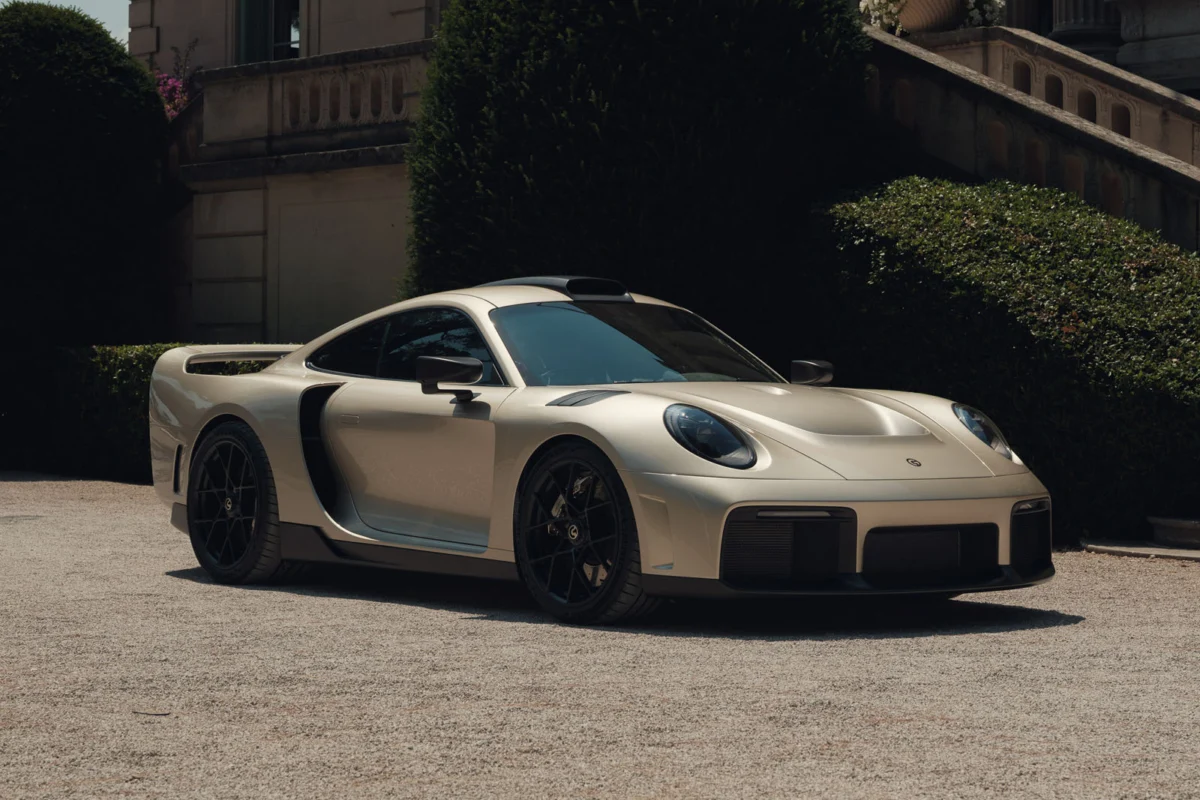
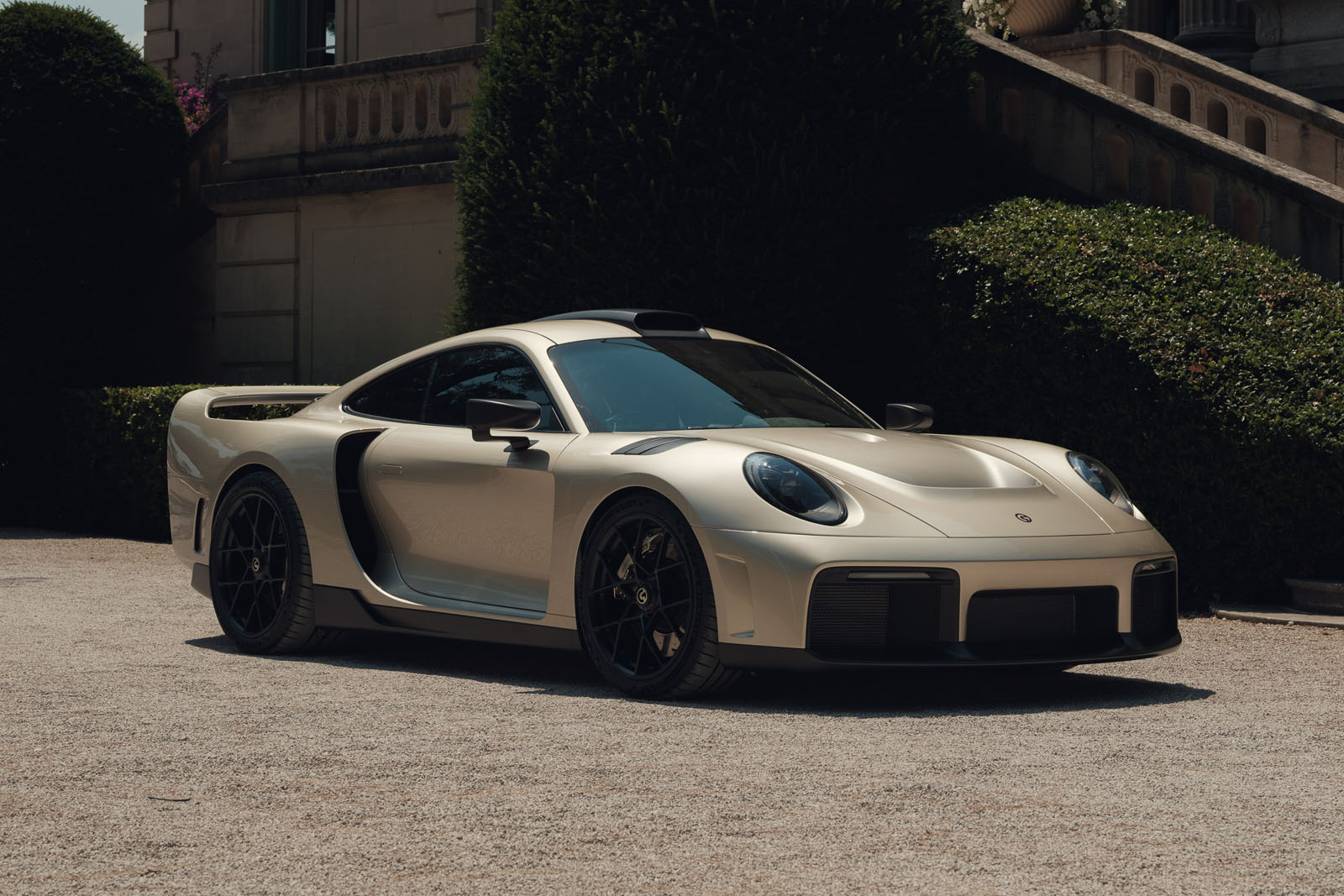
The automotive landscape of the 21st century is increasingly defined by a tension between mass-market electrification and the highly specialized world of ultra-limited, bespoke internal combustion machines. Into this high-stakes environment steps Marc Philipp Gemballa, the son of the legendary 1980s tuning pioneer Uwe Gemballa, with the global debut of the Marsien GT. This new vehicle represents a significant strategic pivot for the young company, shifting away from the all-terrain capabilities of its predecessor toward a refined, road-focused philosophy that seeks to bridge the gap between track-ready performance and grand-touring usability. Unveiled at the prestigious Pebble Beach Concours d’Elegance during Monterey Car Week, the Marsien GT is more than a mere tribute; it is a meticulously engineered statement of intent that utilizes the Porsche 911 Turbo S as its foundation while elevating it to the echelons of hypercar exclusivity.
Engineering a Modern Homage to the Porsche 959
The aesthetic and mechanical inspiration for the Marsien GT is undeniably the Porsche 959, the technological marvel of the mid-1980s that redefined what a supercar could achieve. While the 959 was famous for its Group B rally roots and its dominance at the Paris-Dakar Rally, it was equally lauded for its sophisticated road manners. The Marsien GT seeks to replicate this duality. Where the original "Marsien"—named after the French word for "Martian" due to its development in the red sands of the United Arab Emirates—was designed to traverse dunes at high velocity, the "GT" variant is calibrated for the precision of the asphalt.
To achieve this, the vehicle features a completely bespoke exterior constructed entirely from lightweight carbon fiber. This bodywork is not merely a cosmetic enhancement; it has been aerodynamically optimized to handle the extreme speeds the vehicle is capable of reaching. The design language incorporates the iconic wrap-around rear wing and the wide-body stance of the 959, but updates these cues with modern surfacing and cooling ducts necessary for high-performance turbocharged engines. The transition from the off-road Marsien to the GT version involves a significant reduction in ride height and a revision of the vehicle’s aerodynamic profile to maximize downforce on paved surfaces.
Technical Specifications and Power Output
At the heart of the Marsien GT lies a power unit developed in collaboration with Ruf Automobile, a name synonymous with Porsche performance for decades. The donor vehicle, a 992-generation Porsche 911 Turbo S, provides the structural and mechanical baseline, but the engine undergoes a comprehensive transformation. In its standard configuration, the Ruf-tuned twin-turbocharged flat-six engine produces a formidable 819 brake horsepower (bhp) and 686 lb-ft of torque.
For those seeking even more extreme performance, Marc Philipp Gemballa offers an optional engine upgrade that pushes the output beyond the 900bhp threshold. This level of power places the Marsien GT in direct competition with the most capable offerings from established hypercar manufacturers. The integration of Ruf’s engineering ensures that despite the massive increase in power, the engine retains the reliability and thermal management necessary for "everyday usability," a core pillar of the project’s mission statement.
The power is delivered to all four wheels through Porsche’s eight-speed dual-clutch transmission (PDK), which has been recalibrated to handle the increased torque loads. While official performance figures for the 0-60 mph sprint have not been finalized, the standard 911 Turbo S completes the task in 2.7 seconds; with over 800bhp and a lighter carbon fiber shell, the Marsien GT is expected to challenge the 2.4-second mark, with a top speed well in excess of 200 mph.
Advanced Suspension and Driving Dynamics
One of the most critical departures from the standard 911 Turbo S is the implementation of a completely redesigned suspension system. The Marsien GT utilizes a double-wishbone front suspension setup, a departure from the MacPherson struts found on the donor car. This change allows for greater control over camber gain and roll centers, providing the mechanical grip required for high-speed cornering.
The suspension hardware is provided by KW Automotive, featuring an active damping system that responds to road surface changes in real-time. This system is designed to offer a "Jekyll and Hyde" personality: it can be stiffened for track work or high-speed autobahn runs, yet remains compliant enough to absorb the imperfections of urban roads. This adaptability is central to the "GT" designation, ensuring that the car is not a compromised track toy but a versatile grand tourer capable of long-distance travel.
Interior Craftsmanship and Bespoke Customization
The interior of the Marsien GT is a blend of Porsche’s modern ergonomics and bespoke luxury. One of the most striking features is the elevated center console, which houses a gear lever inspired by the legendary Porsche Carrera GT. This tactile element serves as a bridge between the digital interface of the 992 platform and the analog heritage of Porsche’s past.
Buyers are granted an extensive degree of personalization. The company offers several interior packages that utilize premium materials including hand-stitched leather, Alcantara, and exposed carbon fiber detailing. Every surface is subject to customization, ensuring that no two of the 30 planned units are identical. This level of craftsmanship reflects the vehicle’s price point and its positioning as a collector’s item rather than a production-line supercar.
Chronology of Development and Production
The journey to the Marsien GT began shortly after the launch of the original all-terrain Marsien in 2021. Following the successful delivery and reception of the first model, the engineering team began exploring a variant that would cater to clients who preferred the Alpine passes and coastal highways of Europe over the deserts of the Middle East.
- 2021: Launch of the original Marsien, limited to 40 units.
- 2022-2023: Extensive testing and development of the road-focused GT suspension and Ruf engine mapping.
- 2024 (August): Global debut of the Marsien GT at Monterey Car Week.
- Late 2024: Production of the 30-unit run begins at the company’s facility in Germany.
The production volume of 30 units is a deliberate choice. It was selected to commemorate what would have been Uwe Gemballa’s 70th year, serving as a symbolic link between the father’s legacy and the son’s contemporary vision. Combined with the 40 units of the original Marsien, the total production for this platform remains strictly limited to 70 vehicles worldwide.
Financial Considerations and Market Positioning
The Marsien GT occupies a unique space in the "restomod" and bespoke supercar market. Unlike companies that rebuild vintage air-cooled Porsches, Marc Philipp Gemballa utilizes a modern, liquid-cooled chassis, offering contemporary safety, connectivity, and performance.
The pricing reflects this exclusivity. The conversion package starts at €770,000 (approximately £658,000). Crucially, this price does not include the donor Porsche 911 Turbo S, which currently retails for roughly £205,000. When factoring in the donor car and common options, the total investment for a Marsien GT owner likely exceeds £900,000.
This puts the Marsien GT in competition with vehicles like the Singer Turbo Study or the Gunther Werks Turbo, though the Gemballa offering differentiates itself by being based on a brand-new vehicle platform. The market for such vehicles remains robust, as ultra-high-net-worth individuals increasingly seek unique, coach-built alternatives to the standard offerings from Ferrari, Lamborghini, or McLaren.
The Significance of Monterey Car Week
Choosing the Pebble Beach Concours d’Elegance for the reveal is a strategic move. Monterey Car Week has evolved from a vintage car show into the most important global stage for boutique manufacturers and high-end automotive brands. By debuting the Marsien GT here, Marc Philipp Gemballa places his brand alongside the world’s most significant automotive history and its most expensive future prospects.
Industry analysts suggest that the presence of the Marsien GT at Pebble Beach validates the brand’s standing in the eyes of global collectors. The event provides direct access to the exact demographic required to sell out a 30-unit production run, many of whom are already owners of the original 959 or other "holy trinity" hypercars.
Implications for the Gemballa Legacy and the Supercar Industry
The launch of the Marsien GT is a pivotal moment for Marc Philipp Gemballa’s eponymous firm. It is important to note that this company is entirely independent of the original Gemballa GmbH tuning house. While the name carries significant historical weight, Marc Philipp has sought to distance his projects from the "outlandish" and often controversial aesthetics of his father’s era, focusing instead on sophisticated engineering and timeless design.
The Marsien GT proves that there is a sustainable business model in "re-imagining" modern supercars through the lens of historical icons. By combining the reliability of a modern Porsche with the soul of a 1980s legend and the power of a modern hypercar, the Marsien GT addresses a specific desire in the market: the craving for a vehicle that feels special and rare without the temperamental nature of a vintage machine.
As the automotive world moves toward a future dominated by electric motors and autonomous systems, vehicles like the Marsien GT serve as a high-octane farewell to the era of internal combustion. It represents a peak in mechanical engineering, where carbon fiber, active aerodynamics, and extreme turbocharging converge to create an experience that is both a tribute to the past and a benchmark for the future of bespoke automotive manufacturing. The successful delivery of these 30 units will likely cement Marc Philipp Gemballa’s reputation as a serious manufacturer in his own right, continuing a family tradition of speed while forging a distinct and refined path for the next generation of enthusiasts.