The night sky of August 12, 2026, delivered a truly exceptional astronomical spectacle, treating observers across specific swathes of the Northern Hemisphere to a rare celestial double-feature: the annual peak of the Perseid Meteor Shower, perfectly synchronized with optimal viewing conditions following a highly anticipated total solar eclipse earlier in the day. This unique alignment of cosmic events provided a profound experience for millions, underscored by stunning imagery, including a composite photograph from Grisslehamn, Sweden, featured by NASA’s Astronomy Picture of the Day (APOD). The convergence of these two magnificent phenomena not only captivated the public but also offered invaluable opportunities for scientific observation and public engagement in astronomy.
The Perseid Meteor Shower: A Fiery Annual Tradition
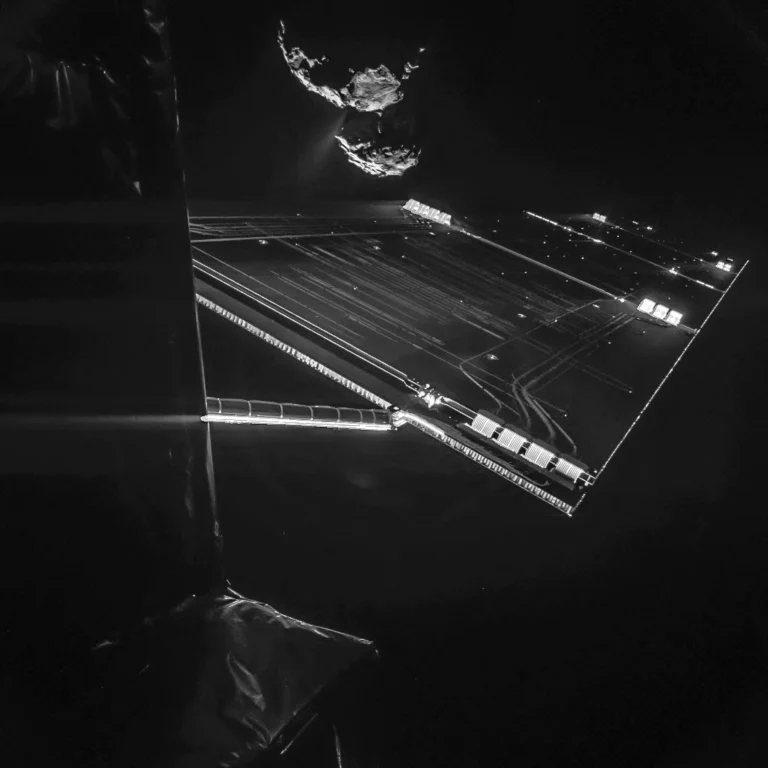
The Perseid Meteor Shower is renowned as one of the most reliable and spectacular annual meteor displays, captivating skywatchers every summer. Its moniker derives from its radiant point, the area in the sky from which the meteors appear to emanate, located within the constellation Perseus. This celestial event is not merely a random scattering of light; it is a predictable and scientifically understood phenomenon resulting from Earth’s passage through a trail of debris left by Comet 109P/Swift-Tuttle.
Comet Swift-Tuttle is a large periodic comet, approximately 26 kilometers (16 miles) in diameter, which completes an orbit around the Sun roughly every 133 years. As the comet journeys through the inner solar system, solar radiation causes volatile materials on its surface to sublimate, releasing vast quantities of dust and ice particles into space. These particles, ranging in size from grains of sand to small pebbles, form a diffuse stream along the comet’s orbital path. When Earth intersects this stream each year, these tiny remnants, known as meteoroids, plunge into our planet’s dense atmosphere at incredibly high velocities, often exceeding 59 kilometers per second (132,000 miles per hour).
The intense friction generated by their hypersonic entry causes these meteoroids to heat up rapidly, vaporizing and ionizing the air molecules along their trajectory. This process creates the characteristic luminous streaks of light that we perceive as meteors, or "shooting stars." The Perseids are particularly noted for their brightness and speed, often leaving persistent trains of glowing, ionized gas that can linger in the sky for a few seconds after the main flash. At its peak, under ideal dark-sky conditions, the Perseid shower can produce between 50 and 100 meteors per hour, a rate that makes it a consistently popular event for both casual observers and dedicated astrophotographers.
Historically, the Perseids have been observed for at least two millennia, with the earliest records dating back to ancient China in 36 AD. They are sometimes referred to as the "Tears of St. Lawrence" due to their peak coinciding with the feast day of the Christian martyr Saint Lawrence, celebrated on August 10. Over centuries, these annual celestial fireworks have inspired awe, folklore, and scientific inquiry, serving as a powerful reminder of our planet’s dynamic interaction with the broader cosmic environment.
The Total Solar Eclipse of August 12, 2026: A Daytime Spectacle
Preceding the Perseid display, the daytime hours of August 12, 2026, were dominated by another extraordinary event: a total solar eclipse. This rare phenomenon occurs when the Moon passes directly between the Sun and Earth, completely obscuring the Sun’s disk from the perspective of observers located within the Moon’s narrow shadow, known as the path of totality. The 2026 total solar eclipse was particularly significant, offering a path of totality that traversed parts of Greenland, Iceland, and Spain, providing a breathtaking experience for those fortunate enough to be within this precise geographical corridor.
During a total solar eclipse, the sky darkens dramatically, stars and planets become visible, and the Sun’s ethereal corona—its outermost atmosphere, usually hidden by the bright solar disk—becomes spectacularly visible. This pearly white halo of plasma extends millions of kilometers into space and is a sight of profound beauty and scientific interest. Scientists utilize total solar eclipses to study the corona’s structure, temperature, and dynamics, as well as to search for hypothetical intra-Mercurial planets or asteroids that might orbit closer to the Sun than Mercury.
The anticipation for the 2026 eclipse was immense, drawing thousands of "eclipse chasers" and tourists to the path of totality. Hotels, flights, and local services in prime viewing locations experienced significant bookings years in advance. Public education campaigns were widespread, emphasizing eye safety protocols—such as the use of certified solar filters or indirect viewing methods—to prevent retinal damage from viewing the partial phases of the eclipse. The event itself lasted only a few minutes at any given location, with totality reaching its maximum duration in certain areas, yet its impact on observers was often described as deeply moving and unforgettable. For many, witnessing the totality, experiencing the sudden drop in temperature, and observing the unique behaviors of animals, constituted a once-in-a-lifetime experience.
A Night of Dual Wonders: The Rare Alignment
What made August 12, 2026, truly unique was the precise astronomical alignment that allowed skywatchers to witness both the dramatic total solar eclipse during the day and the peak of the Perseid Meteor Shower under optimal conditions that very night. The critical factor enabling this exceptional dual observation was the phase of the Moon. The total solar eclipse inherently requires a New Moon, as this is the only lunar phase where the Moon is positioned between the Sun and Earth, creating the alignment necessary for the Moon to completely cover the solar disk.
Crucially, a New Moon also means a virtually moonless night sky. The absence of bright moonlight significantly reduces sky glow, allowing fainter celestial objects to be more easily observed. For meteor showers like the Perseids, a dark sky is paramount. Even a thin crescent moon can diminish the visibility of all but the brightest meteors. Therefore, the coincidence of the Perseids’ peak activity with a New Moon phase meant that observers were afforded the darkest possible conditions, maximizing their chances of witnessing the shower’s full glory. This was a rare gift for amateur astronomers and casual observers alike, enhancing the visual impact of every streaking meteor.
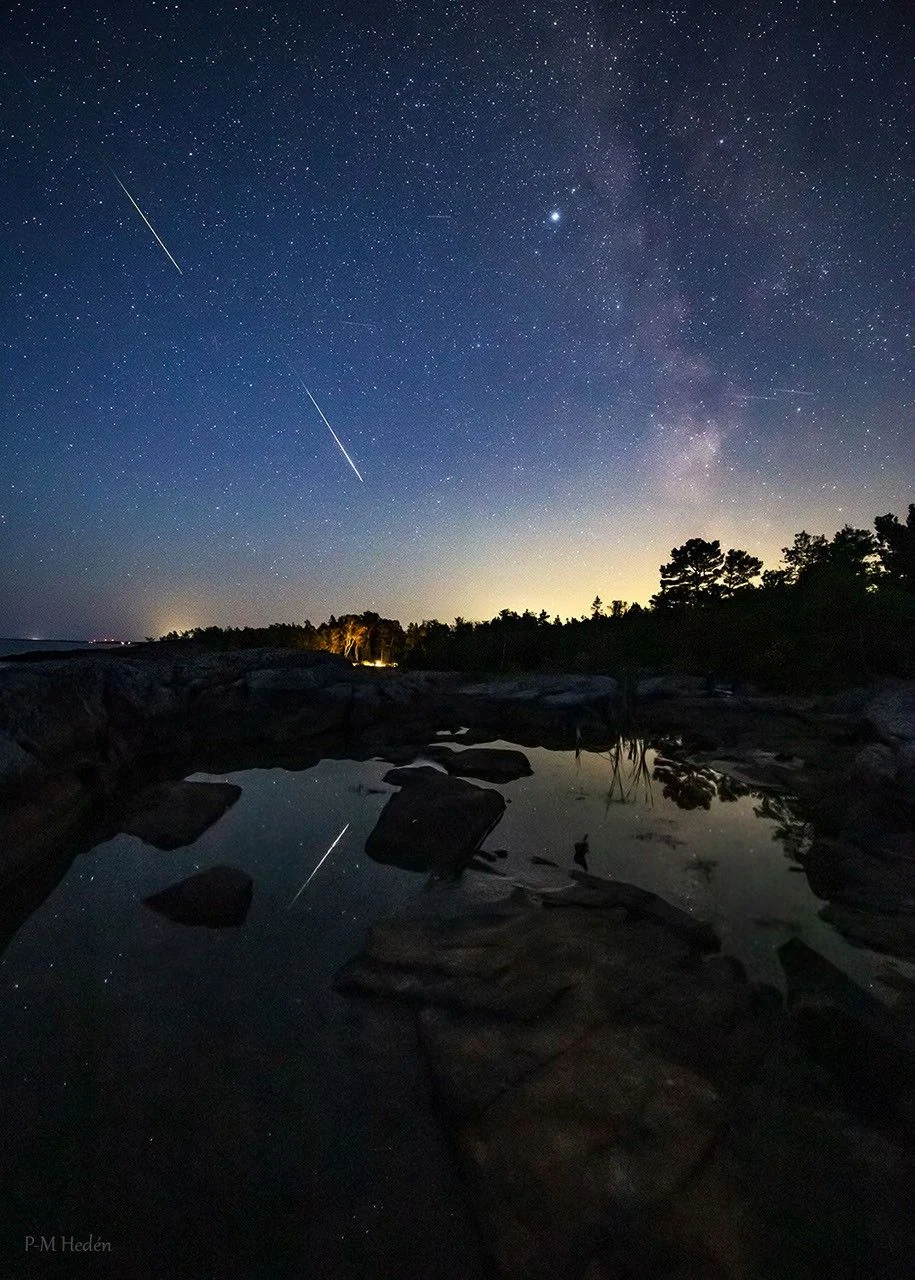
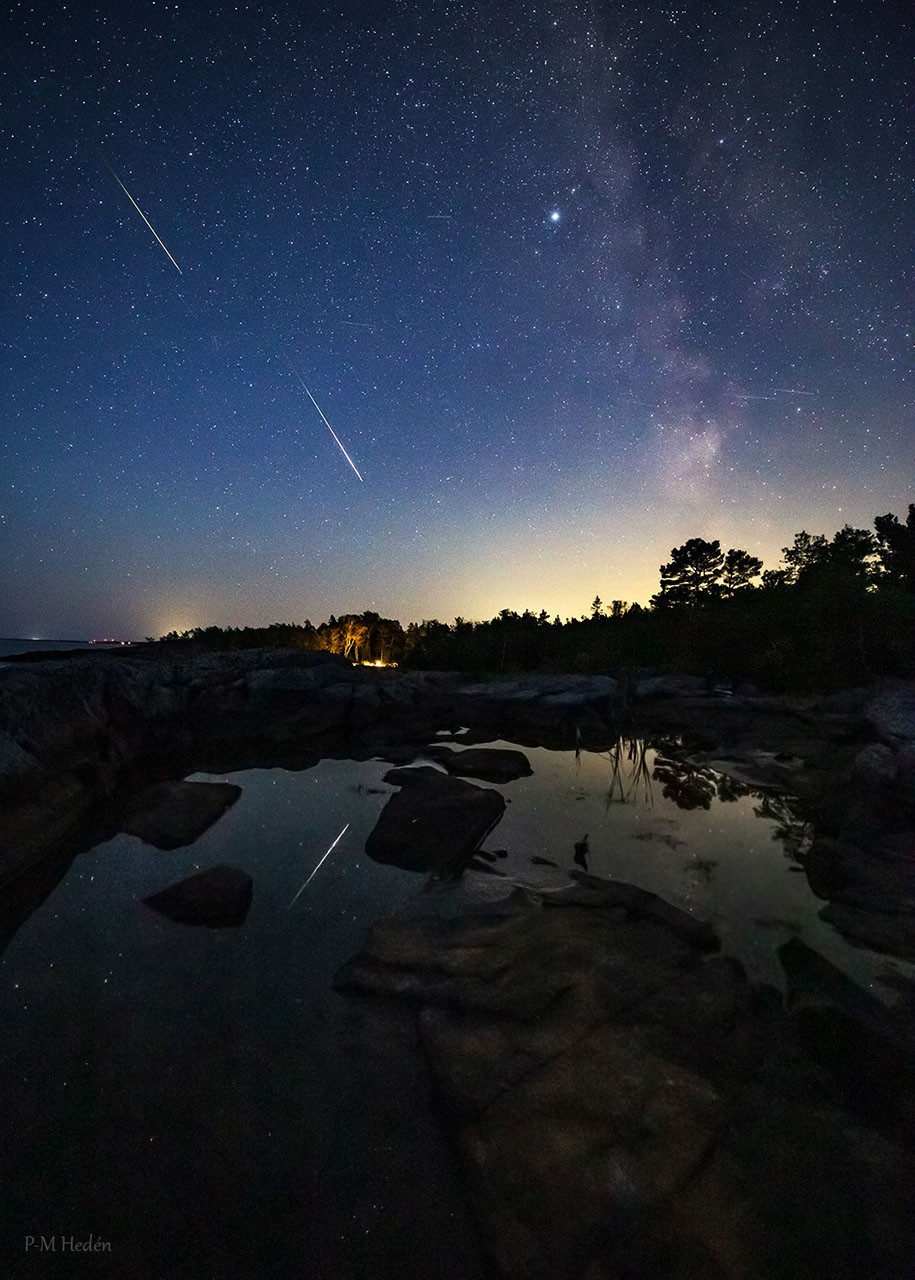
The composite image captured near Grisslehamn, a coastal village in Sweden, perfectly encapsulates this dual wonder. Sweden, while not in the path of totality for the solar eclipse, was close enough to observe a significant partial eclipse, and its northern latitude offered excellent dark-sky conditions for the Perseids. The photograph strikingly shows two bright Perseid meteors cutting across the night sky, one of which is beautifully reflected in the calm waters below. The meteors are depicted against the faint, diffuse backdrop of the Milky Way, our home galaxy, which becomes visible only under truly dark skies. The description notes that these meteors were almost as bright as Altair, one of the brightest stars in the night sky, further emphasizing the intensity of the display observed that night. For the "many skywatchers" mentioned in the APOD explanation, this night of brilliant Perseids served as a perfect nocturnal encore to the daytime spectacle of the solar eclipse, solidifying August 12, 2026, as a truly monumental day in their astronomical calendars.
Scientific Context and Public Engagement
Events like the 2026 celestial convergence play a vital role in both scientific research and public education. For scientists, total solar eclipses provide unique windows into the Sun’s corona, an area still not fully understood. Data collected during such eclipses, combined with observations from space-based solar observatories like NASA’s Solar Dynamics Observatory (SDO) and Parker Solar Probe, contribute to a more complete picture of solar activity and its impact on Earth, including space weather phenomena. Meteor showers, while seemingly less impactful than eclipses, also offer scientific value. By studying the number, brightness, and trajectory of meteors, astronomers can gain insights into the composition and distribution of cometary debris streams, refining models of cometary evolution and the dynamics of our solar system’s smaller bodies.
From a public engagement perspective, these events are unparalleled. NASA’s Astronomy Picture of the Day (APOD), from which this image and explanation originate, serves as a prime example of effective science communication. Since its inception in 1995, APOD has provided a daily dose of cosmic wonder, featuring a different image or photograph of the universe each day, accompanied by a brief explanation written by a professional astronomer. This initiative, jointly sponsored by NASA and Michigan Technological University, aims to foster scientific literacy and inspire curiosity about the cosmos. The inclusion of the Grisslehamn Perseids image, along with a link to a "Growing Gallery" of the 2026 solar eclipse, highlights APOD’s commitment to documenting and explaining significant astronomical occurrences to a global audience. Such initiatives transform complex scientific concepts into accessible, visually stunning narratives, encouraging individuals of all ages to "Discover the cosmos!" as APOD’s tagline suggests.
The collective experience of millions watching an eclipse or a meteor shower also has broader societal implications. It fosters a sense of global community, as people worldwide share in the wonder of the universe. It can inspire future generations of scientists, engineers, and explorers. The economic impact of "eclipse tourism" can also be substantial, providing a boost to local economies in the path of totality. Furthermore, the emphasis on dark skies for meteor viewing raises awareness about light pollution, a growing environmental concern that obscures our view of the stars and can disrupt ecosystems.
Looking Ahead: The Legacy of August 12, 2026
The events of August 12, 2026, will undoubtedly be remembered as a landmark day in modern astronomy. The rare combination of a total solar eclipse and the peak of the Perseid Meteor Shower, under the perfect conditions provided by a New Moon, created an unforgettable experience for those who witnessed it. This celestial convergence served as a powerful reminder of the dynamic and ever-evolving nature of our solar system and the universe beyond.
While total solar eclipses are relatively frequent on a global scale (occurring every 18 months or so), the path of totality for any given eclipse covers only a small fraction of the Earth’s surface. The next total solar eclipse visible from North America, for instance, is not until 2044. Similarly, while the Perseids return annually, the coincidence of their peak with a New Moon, ensuring optimal dark-sky viewing, is not guaranteed every year. Such ideal conditions for the Perseids will next occur in 2029 and 2032. Thus, the 2026 event was a truly special alignment, a convergence of optimal conditions that amplified the beauty and scientific significance of both phenomena.
As humanity continues its exploration of space, from robotic missions to distant planets to the development of next-generation telescopes, the profound awe inspired by events like the 2026 celestial showcase remains a fundamental driver. It reminds us of our place in the vast cosmos, encouraging us to look up, wonder, and strive to understand the mysteries that unfold above us every day. The images and memories from August 12, 2026, will continue to inspire for years to come, a testament to the enduring power of the universe to captivate and educate.