

Dozens of individuals are feared dead or critically injured following an air strike on a prominent drug treatment center in Afghanistan’s capital, Kabul, an incident that the Taliban government swiftly attributed to Pakistan. The attack, which occurred on Monday evening, sparked a rapid exchange of accusations and denials between the two neighboring nations, further exacerbating an already volatile regional dynamic. Officials at the rehabilitation facility estimate that the casualty count could be in the hundreds, given the large number of patients housed there, prompting grave humanitarian concerns.
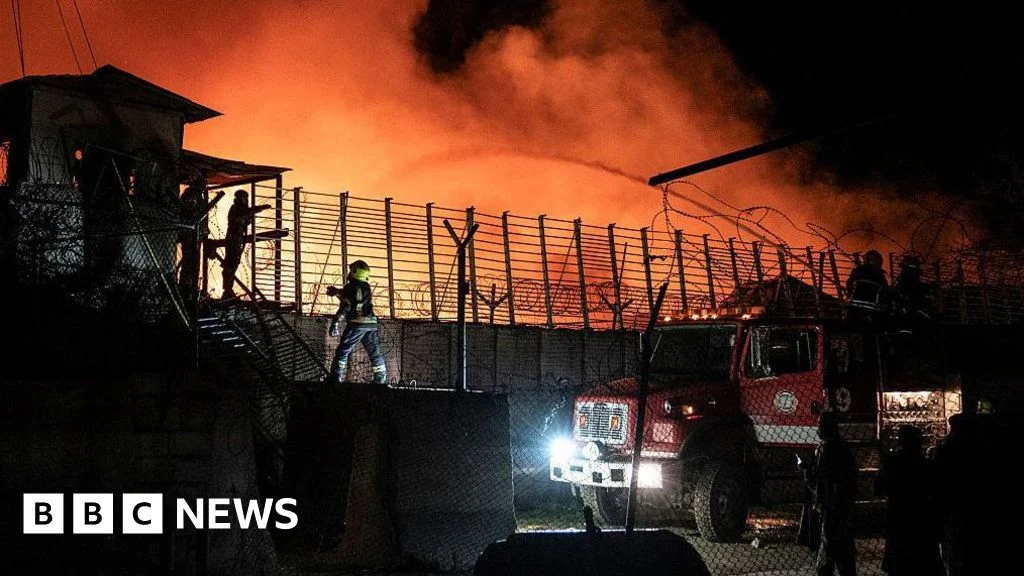
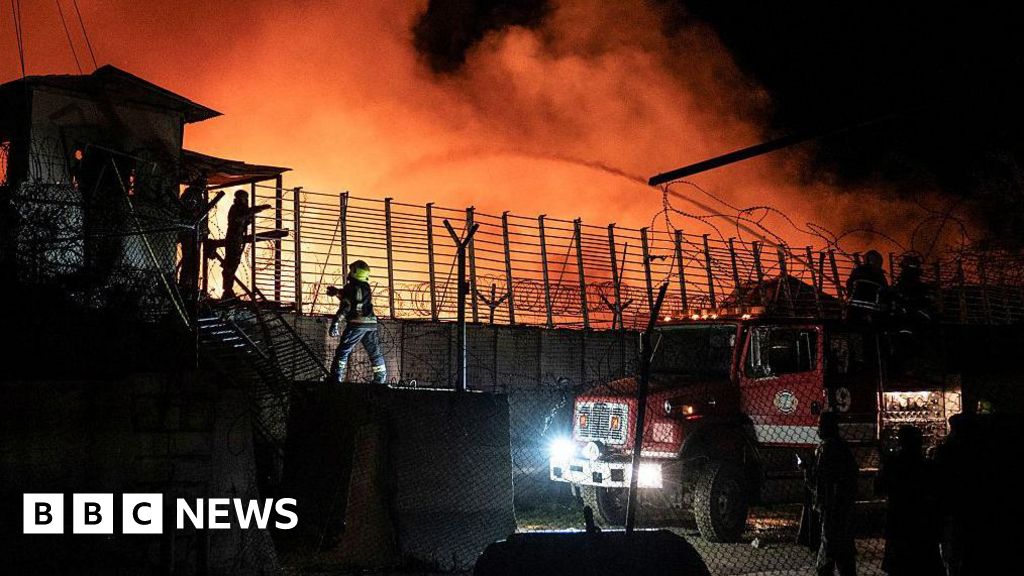
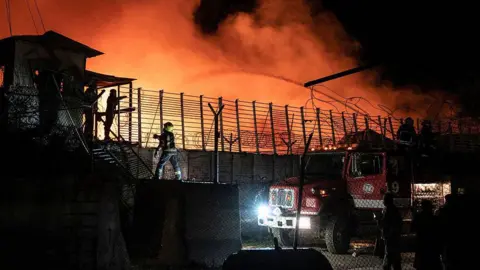
The harrowing incident unfolded around 20:50 local time (16:20 GMT) when loud explosions reverberated across Kabul, followed by the distinctive sounds of aircraft and air defense systems. The targeted facility, a substantial drug rehabilitation center, was engulfed in flames, leading to a desperate rescue effort amidst the chaos. A spokesperson for the Taliban government confirmed the strike on X (formerly Twitter), stating that it resulted in fatalities and injuries.
Scene of Devastation and Mounting Casualties
Journalists from the BBC who visited the site hours after the strike reported a scene of profound devastation. Parts of the sprawling complex were still ablaze, with smoke billowing into the night sky. Eyewitnesses observed more than 30 bodies being carefully carried out on stretchers, a grim testament to the immediate impact of the attack. According to officials managing the facility, approximately 2,000 individuals were undergoing treatment for drug addiction at the center at the time of the strike. The sheer scale of the patient population has led to fears that the final death toll could be significantly higher, potentially reaching into the hundreds. The Afghan health ministry’s spokesman, Sharafat Zaman Amarkhail, vehemently asserted to the BBC that there were no military installations or strategic assets in the vicinity of the rehabilitation center, directly contradicting potential justifications for the strike.
Outside the cordoned-off facility, a heart-wrenching scene unfolded as family members, gripped by anxiety and despair, gathered en masse. Their desperate pleas for information about their loved ones, who were undergoing rehabilitation inside, underscored the profound human tragedy unfolding. Each passing minute without news compounded their anguish, reflecting the immense personal cost of the escalating conflict. While a spokesperson for the Taliban government subsequently claimed the death toll had reached at least 400, this figure remains unverified by independent sources, highlighting the challenges of accurate reporting in a rapidly developing crisis zone.
Pakistan’s Denial and Counter-Claims
In response to the accusations from the Taliban government, Pakistan issued a robust denial, refuting claims that its forces had targeted any health facility. The Pakistani Ministry of Information released a statement asserting that its operations were "precise and carefully undertaken to ensure no collateral damage is inflicted." The statement emphasized that the strikes had "precisely targeted military installations and terrorist support infrastructure" located in Kabul and the eastern province of Nangarhar.
Pakistan further dismissed Afghanistan’s accusations as a "misreporting of facts," suggesting they were an attempt to "stir sentiments" and "cover illegitimate support to cross-border terrorism." This rebuttal highlights the deep-seated mistrust and conflicting narratives that define the relationship between the two nations, each accusing the other of harboring militant groups responsible for attacks on their respective territories.
Historical Context: The Rehabilitation Center’s Transformation
The targeted facility itself carries a significant history, adding another layer of complexity to the tragedy. It was formerly a US military base, and in the years preceding the Taliban’s return to power in August 2021, the area around it had become a notorious gathering point for drug users, particularly those struggling with opioid addiction, a widespread public health crisis in Afghanistan.
Upon regaining control, the Taliban launched an aggressive campaign to address the country’s pervasive drug problem. This initiative included rounding up thousands of drug users from across Kabul and other major cities and forcibly relocating them to centers like the one struck. The former US military base was repurposed into a large-scale drug rehabilitation center, reflecting the Taliban’s unique and often harsh approach to social issues. While controversial in its methods, these centers represented the primary avenue for treatment and containment for a significant portion of Afghanistan’s addicted population. The destruction of such a facility, regardless of intent, represents a severe blow to the country’s already strained public health infrastructure and its efforts, however unorthodox, to manage a critical social challenge.
Escalating Cross-Border Tensions: A Dangerous Chronology
The air strike on the Kabul rehabilitation center is not an isolated incident but rather the latest and most devastating manifestation of a rapidly deteriorating security situation between Afghanistan and Pakistan. The ongoing conflict between the neighboring countries re-erupted with renewed intensity in February, following a period of heightened cross-border skirmishes and diplomatic friction.
Pakistan has consistently accused the Taliban government in Afghanistan of failing to curb the activities of militant groups, particularly the Tehrik-i-Taliban Pakistan (TTP), also known as the Pakistani Taliban. Islamabad alleges that the TTP, a group responsible for numerous deadly attacks within Pakistan, operates from sanctuaries within Afghan territory, exploiting the porous border and the Taliban’s perceived inability or unwillingness to take decisive action against them. The Taliban government, in turn, staunchly denies these allegations, maintaining that it does not harbor any groups hostile to Pakistan and that it is committed to securing its borders.
Since February 26th, the United Nations Assistance Mission in Afghanistan (UNAMA) has recorded a significant escalation in cross-border fighting. Their data indicates a dire humanitarian toll, with at least 75 people killed and 193 injured in Afghanistan alone as a direct result of these hostilities. These figures underscore the severe human cost of the ongoing dispute, with civilians frequently caught in the crossfire. The increasing frequency and intensity of these incidents mark a dangerous trend, pushing the two nations closer to a more open and destructive conflict. The targeting of what appears to be a civilian facility, irrespective of the conflicting claims, represents a significant escalation in this already perilous trajectory.
International Reactions and Calls for De-escalation
The escalating tensions and the tragic incident in Kabul have drawn immediate concern from the international community. China, a significant regional player with vested interests in stability, has actively engaged in diplomatic efforts to de-escalate the situation. Chinese Foreign Minister Wang Yi reportedly held separate phone conversations with his Afghan and Pakistani counterparts in the past week, underscoring Beijing’s alarm over the deteriorating relations.
On Monday, following the Kabul strike, Beijing issued a public call for an immediate ceasefire "at the earliest opportunity." China urged both Afghanistan and Pakistan to "remain calm and exercise restraint," emphasizing the critical need for direct communication and engagement "face to face ASAP." This diplomatic intervention reflects a broader international anxiety regarding the potential for wider regional instability, particularly given Afghanistan’s already fragile state and Pakistan’s significant strategic importance.
Beyond China, humanitarian organizations and international bodies are expected to voice strong condemnations regarding the targeting of a civilian facility, especially one dedicated to public health and rehabilitation. Calls for independent investigations into the incident are likely to mount, aimed at clarifying the facts and ensuring accountability. The United Nations and other international aid agencies, already grappling with Afghanistan’s severe humanitarian crisis, will undoubtedly highlight the additional burden placed upon the country’s beleaguered social services by such attacks. Protection of civilians and civilian infrastructure, under international humanitarian law, is paramount in any conflict, and any perceived violation is met with serious concern.
Broader Impact and Regional Implications
The strike on the Kabul drug treatment center carries profound broader implications, both for Afghanistan’s internal stability and for regional security. The immediate humanitarian crisis caused by the large number of potential casualties at a rehabilitation facility is immense. Afghanistan already faces one of the world’s most severe humanitarian crises, with millions dependent on aid, and its healthcare system is in tatters. The destruction of a large-scale treatment center not only exacerbates the suffering of those directly affected but also diminishes the country’s capacity to address its widespread addiction problem, potentially pushing more vulnerable individuals back onto the streets.
The incident also threatens to further destabilize an already volatile region. The deepening animosity between Afghanistan and Pakistan could lead to increased cross-border violence, more significant refugee flows, and heightened security risks for neighboring countries. For Pakistan, the continued alleged presence of militant groups along its border with Afghanistan represents a significant national security threat, fueling its justification for preemptive strikes. For the Taliban government, such attacks undermine its claims of providing security and stability, potentially eroding its limited international legitimacy and further isolating the country.
Moreover, the conflicting narratives surrounding the strike – Pakistan’s claim of targeting military infrastructure versus Afghanistan’s assertion of a civilian target – create a dangerous information vacuum that can be exploited for propaganda and further fuel hostility. The lack of independent verification in such conflict zones often means that the truth becomes a casualty, replaced by competing government narratives.
The international community faces a daunting challenge in mediating this deeply entrenched conflict. China’s efforts are a start, but sustained diplomatic engagement from multiple global powers will be essential to prevent a full-blown regional crisis. The incident underscores the urgent need for a cessation of hostilities, a commitment to dialogue, and a strict adherence to international humanitarian law to protect innocent lives and prevent further suffering in an already devastated nation. The fate of countless vulnerable Afghans, including those striving for recovery from addiction, now hangs precariously in the balance as tensions between these two nuclear-armed neighbors continue to escalate.