



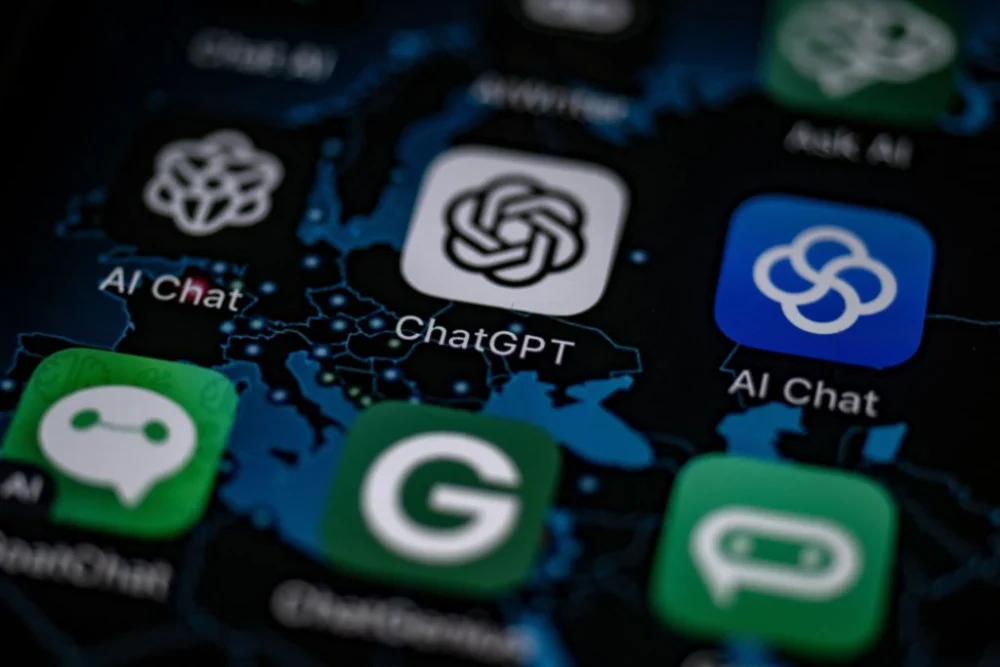
A groundbreaking new study focusing on the burgeoning subscription app ecosystem across iOS, Android, and web platforms is challenging a widely held assumption among developers: that integrating artificial intelligence technology is a surefire path to sustained profitability. The 2026 State of Subscription Apps Report, published by RevenueCat, a leading provider of subscription management tools utilized by over 75,000 app developers globally, indicates that while AI can drive impressive initial user acquisition and monetization, it often fails to guarantee long-term subscriber retention. This finding suggests a critical re-evaluation for developers navigating the increasingly crowded and AI-saturated app stores.
Unpacking the Data: AI Apps Lag in Retention
RevenueCat’s comprehensive report, which draws on an extensive dataset encompassing over 1 billion in-app transactions and an annual revenue generation exceeding $11 billion for developers, offers a robust statistical foundation for its conclusions. The sheer scale of data analyzed positions RevenueCat’s findings as a significant indicator of current trends in the subscription app market. The report reveals a stark contrast in retention metrics: AI-powered applications, at the median, experience annual subscription cancellations—a metric known as churn—30% faster than their non-AI counterparts. This translates to a notable struggle in maintaining user engagement and value over extended periods.
Specifically, the annual retention rate for AI apps stood at a modest 21.1%, significantly lower than the 30.7% observed for non-AI apps. Monthly retention figures also painted a similar picture, with AI apps retaining only 6.1% of subscribers compared to 9.5% for non-AI apps, marking a 3.4 percentage point deficit. The only area where AI apps demonstrated a lead in retention was on a weekly basis, showing 2.5% retention rates against 1.7% for non-AI apps. However, the report cautions that weekly subscriptions are not the most prevalent model for AI applications, limiting the overall impact of this particular advantage.

The Rapid Rise of AI in the App Ecosystem
The context for these findings is the explosive growth of AI integration within the app development sphere. Following the widespread public introduction of powerful generative AI models in late 2022 and throughout 2023, developers rushed to incorporate AI capabilities into new and existing products. This period saw an "AI gold rush," with venture capital pouring into AI-first startups and established companies quickly pivoting to highlight their AI functionalities. The assumption was that AI would offer an unparalleled competitive edge, enhancing user experience, automating tasks, and creating novel functionalities that would naturally lead to sticky user bases and robust subscription revenues.
RevenueCat’s report underscores this rapid adoption, noting that AI-powered apps now constitute 27.1% of all applications across various categories on their platform, a substantial figure compared to 72.9% for non-AI apps. This indicates that roughly one in four subscription apps today leverages or markets itself as being AI-powered. It is crucial to clarify that this category extends beyond popular AI chatbots like ChatGPT and Gemini, encompassing any application that prominently features AI capabilities in its marketing and core functionality, ranging from sophisticated image generators to smart productivity tools.
Category-Specific AI Penetration and Performance
The report also dissects AI adoption and performance across different app categories. Photo & Video applications lead the charge, with 61.4% of apps in this segment identifying as AI-powered. This high penetration is likely driven by the transformative potential of AI in tasks such as image editing, video enhancement, content generation, and stylistic transformations. In contrast, sectors like Gaming (6.2%), Travel (12.3%), and Business (19.1%) show considerably lower AI integration. This disparity suggests varying levels of perceived utility or ease of integration for AI within different user experiences. Gaming, for instance, often relies more on intricate mechanics, narrative, and social interaction rather than AI augmentation of core gameplay loops, though AI is increasingly used for NPC behavior and content generation behind the scenes.

The Paradox of High Engagement and High Refunds
Further complicating the picture of AI app performance are the contrasting trends in initial engagement versus user satisfaction reflected in refund rates. While AI apps demonstrate strong initial monetization, they also exhibit a higher propensity for refunds. The report highlights that AI apps have a 20% higher refund rate than non-AI apps, with a median of 4.2% compared to 3.5%. More tellingly, the upper bound of refund rates for AI apps reaches 15.6%, significantly higher than the 12.5% for non-AI apps. RevenueCat interprets this as indicative of "greater volatility in realized revenue and deeper issues in user value, experience, and long-term quality."
This paradox suggests that users are drawn to the promise of AI, converting from trials at a higher rate and demonstrating stronger early monetization. However, the initial excitement may not translate into sustained satisfaction, leading to eventual cancellations and refund requests. This could be attributed to several factors: the novelty factor wearing off, unmet expectations regarding AI capabilities, the rapid pace of AI development leading users to constantly seek newer, more advanced alternatives, or simply a lack of truly indispensable long-term utility in many AI-powered offerings.
Early Monetization Strengths: A Double-Edged Sword
Despite the retention challenges, the report identifies several areas where AI apps excel in initial monetization. RevenueCat found that AI apps convert users from trials to paid subscriptions 52% more effectively than non-AI apps, boasting a median conversion rate of 8.5% compared to 5.6%. Furthermore, AI apps monetize their downloads approximately 20% better, with a median rate of 2.4% against 2.0% for non-AI apps.

Perhaps most notably, AI apps generate significantly higher Realized Lifetime Value (RLTV), a crucial metric measuring the actual net value of an average paying user over time. AI apps exhibit a 39% higher monthly median RLTV, standing at $18.92 compared to $13.59 for non-AI apps. This advantage extends annually, with AI apps sustaining a 41% higher RLTV at $30.16 versus $21.37. These figures underscore AI’s potent ability to attract users and generate revenue in the short term, hinting at a market that is eager to experiment with AI functionalities and willing to pay for perceived innovation.
Inferred Industry Perspectives and Analysis
The findings from RevenueCat’s 2026 State of Subscription Apps Report paint a nuanced picture of the AI app market, prompting crucial questions for developers, investors, and consumers alike. Shrayas Varma, a Senior Data Analyst at RevenueCat, commented on the report’s implications: "Our data clearly shows that the initial allure of AI is powerful for user acquisition and immediate monetization. However, the true test lies in sustained value delivery. The higher churn and refund rates suggest that many AI apps struggle to evolve beyond a ‘wow’ factor into indispensable tools. Developers must shift their focus from merely integrating AI to deeply understanding how AI can solve persistent user problems and provide continuous, evolving value."
Industry analysts concur, suggesting that the current landscape reflects the early, experimental phase of AI integration. "We’re seeing a classic ‘honeymoon period’ for many AI apps," explains Dr. Anya Sharma, a tech industry consultant specializing in digital product strategy. "Users are curious, they subscribe, and they’re willing to pay to try out the latest AI capabilities. But the rapid pace of technological advancement means that what’s cutting-edge today might feel rudimentary tomorrow. This creates a challenging environment for retention, as users are constantly evaluating if a newer, perhaps free, alternative offers more advanced features."
Furthermore, the quality and depth of AI integration vary wildly. Some apps genuinely leverage sophisticated models to provide unique, robust functionalities, while others merely add superficial AI features as a marketing ploy. "The market is becoming more discerning," adds Sharma. "Users are quickly learning to differentiate between truly transformative AI and token AI features. Those apps that integrate AI to fundamentally enhance user workflow or creativity in a stable, reliable, and continuously improving manner will be the ones that eventually win on retention."

Implications for the Future of App Development and Investment
The report’s overall takeaway is unambiguous: while AI offers a powerful engine for initial user acquisition and monetization, app developers cannot rely on AI novelty alone to sustain long-term growth. The findings necessitate a strategic shift, compelling developers to prioritize genuine user value, continuous improvement, and robust user experience design alongside AI integration.
For developers, this means moving beyond simply "adding AI" to their products. The focus must be on identifying core user problems that AI can uniquely and effectively solve, and then relentlessly iterating on that solution. Building a strong community, providing excellent customer support, and offering clear, tangible benefits that evolve with user needs will be paramount. The pressure to innovate will remain high, but it will be innovation geared towards deepening utility rather than just chasing the latest AI trend.
For investors, the report signals a need to look beyond flashy user growth metrics and initial revenue spikes in AI startups. Long-term viability will increasingly hinge on retention rates, churn reduction strategies, and the ability of AI-powered products to demonstrate enduring value. This could lead to a more mature investment landscape where sustainable business models are valued over sheer technological novelty.
For consumers, this trend suggests a future where the initial wave of experimental AI apps gives way to more refined, valuable, and user-centric offerings. As the market consolidates and users become more sophisticated in their understanding of AI capabilities, they will demand more than just buzzwords—they will demand true utility, reliability, and continuous enhancement from their subscription services. The era of "AI for AI’s sake" appears to be drawing to a close, ushering in a new phase where thoughtful, impactful AI integration will define success in the competitive app ecosystem.