

An Amazon employee tragically passed away last week at the company’s fulfillment center in Troutdale, Oregon, identified as the PDX9 warehouse, a development confirmed by an Amazon spokesperson to TechCrunch. The incident has cast a renewed spotlight on Amazon’s workplace safety practices, particularly at facilities known for demanding conditions and a history of scrutiny. The death occurred amidst reports of high temperatures within the facility, prompting immediate questions from fellow workers and igniting a broader discussion about occupational safety standards in the e-commerce giant’s vast logistics network.
Details of the Incident and Immediate Aftermath
The worker, whose identity has not been publicly released, collapsed on the floor of the PDX9 warehouse. According to an initial report from The Western Edge, an independent investigative outlet focusing on the Pacific Northwest, the employee lay deceased for a period while other workers continued their duties around him. This particular detail, if corroborated, raises significant concerns about emergency protocols, employee awareness, and the operational environment within the facility during a critical incident. The exact time and circumstances leading to the collapse are still under review, though initial reports suggest it occurred during a regular shift.
Following the tragic event, Amazon issued a statement through spokesperson Sam Stephenson, conveying profound sorrow. "We’re deeply saddened by the passing of a member of our team, and our thoughts and deepest sympathies are with their loved ones during this difficult time," Stephenson told TechCrunch. The company confirmed it has been in communication with the deceased’s family, offering resources for support. Additionally, Amazon stated that grief counselors and supplementary support services have been made available to employees at the PDX9 facility. The company also acknowledged and expressed gratitude for the efforts of the Multnomah County Sheriff’s Department and local emergency medical services who responded to the scene.
Worker Concerns: The Role of Facility Conditions
The incident quickly sparked a wave of discussion and speculation among Amazon fulfillment center employees, particularly on online forums like Reddit. Several individuals claiming to work at the PDX9 warehouse reported that the building had been experiencing unusually high temperatures in the days leading up to the death. These employees specifically pointed to the recent installation of soundproof curtains within the facility as a potential contributing factor, suggesting that the curtains might have inadvertently restricted airflow, exacerbating the heat.
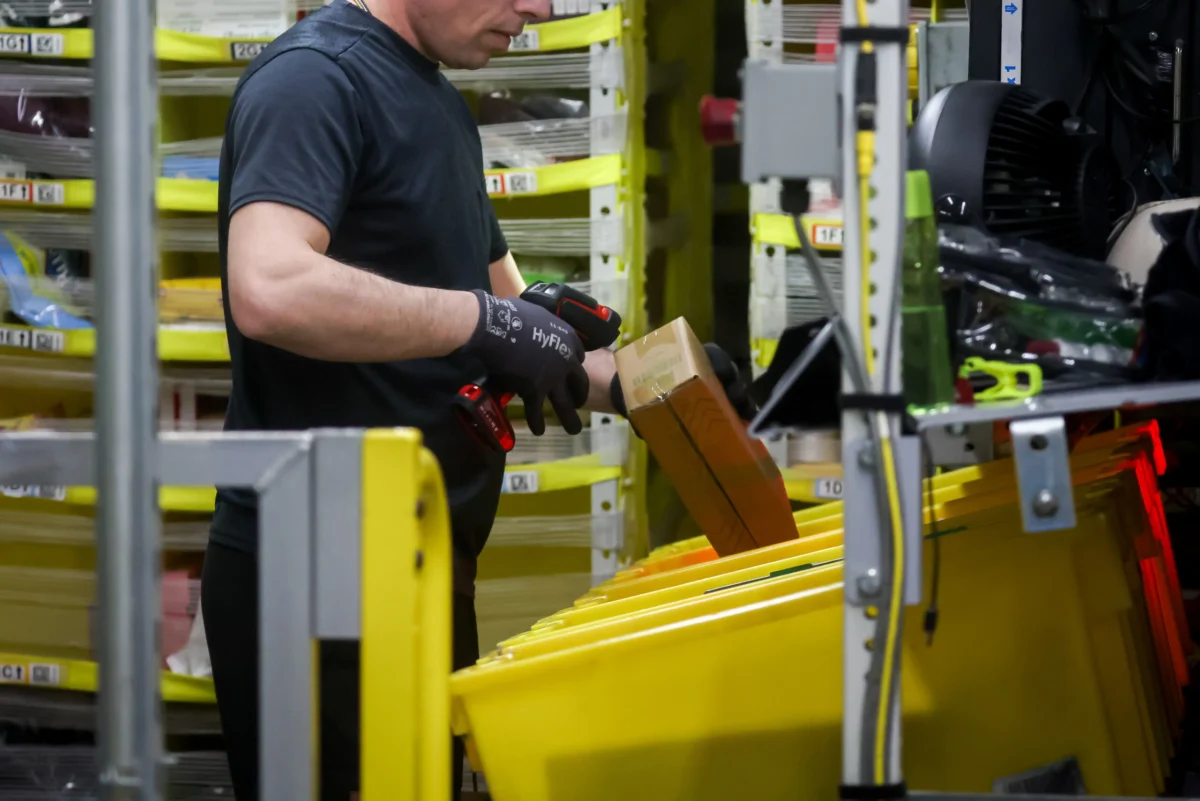
The physical demands inherent in fulfillment center work—which often involves strenuous lifting, repetitive motions, and rapid pacing—are well-documented. Workers on the Reddit forum speculated that the combination of these physically taxing tasks and elevated indoor temperatures could have significantly compounded the strain on the deceased employee, potentially contributing to their collapse. Adding to these observations, some employees noted a tangible change in the facility’s environment the day after the incident, reporting that the building felt noticeably cooler upon their return to work, further fueling suspicions about the role of temperature in the tragedy.
Despite these employee observations and concerns, Amazon maintained that Oregon’s Occupational Safety and Health Administration (OSHA) had determined the incident to be "non-work related." This classification is crucial, as it impacts how the event is officially recorded, investigated, and whether it contributes to Amazon’s workplace injury statistics. Following the incident, employees on the shift were sent home early and compensated for the remainder of their scheduled hours. The subsequent night shift was also canceled, with scheduled employees receiving pay, indicating a temporary disruption to operations in the immediate aftermath.
A History of Safety Scrutiny at PDX9 and Beyond
The Troutdale PDX9 warehouse has long been associated with a reputation for challenging and, at times, hazardous working conditions. This recent death is not an isolated incident in the context of the facility’s history of scrutiny. In 2018, an investigation published by The Portland Mercury detailed the experiences of workers at the Troutdale site, highlighting reports of high injury rates and intense productivity pressures. Complementing this, a deeper dive by Reveal, an investigative journalism outlet, revealed a startling statistic: 26% of employees at the PDX9 warehouse had sustained injuries during their employment, a rate significantly higher than industry averages.
These localized concerns at PDX9 mirror a broader, systemic issue identified across Amazon’s vast network of fulfillment centers. A comprehensive report published in 2024 by the Strategic Organizing Center (SOC), which analyzed 2023 OSHA data, starkly illustrated the disparity. The report found that Amazon’s fulfillment centers recorded serious injuries at a rate more than double the warehouse industry average. Specifically, Amazon reported 6.3 serious injuries per 100 workers in 2023, compared to the industry average of 3.2 per 100 workers. This consistent trend suggests that the issues observed at individual facilities like PDX9 are indicative of a company-wide challenge in maintaining optimal safety standards in an environment driven by speed and efficiency.
The disproportionately high injury rates have not gone unnoticed by federal authorities. Amazon’s fulfillment centers have been the subject of multiple investigations by federal agencies and prosecutors. These probes have often centered on allegations that the company has not only failed to adequately address workplace hazards but has also, in some instances, manipulated injury data and failed to properly document workplace injuries. For example, the United States Attorney’s Office for the Southern District of New York is currently conducting an ongoing investigation into workplace safety practices at Amazon warehouses nationwide, examining potential criminal violations related to worker safety. This ongoing federal scrutiny underscores the seriousness with which these allegations are being treated at the highest levels of government.
Amazon’s Counter-Narrative: Investments in Safety
In response to persistent criticism and regulatory pressure, Amazon has actively sought to highlight its commitment to improving workplace safety. The company informed TechCrunch that it has achieved a 43% reduction in its global recordable incident rate since 2019. This metric tracks any work-related injury that necessitates more than basic first aid, serving as a key indicator of overall safety performance.
To support this claim, Amazon stated that it has invested substantially in safety improvements, allocating more than $2.5 billion towards these initiatives since 2019. This includes a significant commitment of hundreds of millions of dollars in 2024 alone, demonstrating an ongoing financial dedication to enhancing worker protections. These investments are reported to cover a range of areas, including ergonomic equipment, advanced safety training programs, process redesigns to minimize risks, and the implementation of technology aimed at preventing injuries. The company often points to these figures as evidence of its proactive approach to creating a safer working environment, contrasting its efforts with the narrative presented by critics and investigative reports.
Analysis and Broader Implications
The tragic death at the Troutdale PDX9 warehouse, coupled with the conflicting narratives surrounding its cause and Amazon’s broader safety record, encapsulates a complex and evolving challenge for the e-commerce giant. On one hand, the company presents data indicating a significant reduction in injury rates and substantial investments in safety, suggesting a concerted effort to improve conditions. On the other hand, reports from independent outlets, worker testimonials, and federal investigations consistently paint a picture of physically demanding environments, high injury rates, and a perceived prioritization of productivity over worker well-being.
The classification of the incident as "non-work related" by Oregon OSHA, while legally significant, does little to assuage the concerns of employees who believe environmental factors within the warehouse played a role. This divergence highlights a critical tension: the legal and statistical definitions of workplace incidents versus the lived experiences and perceptions of those on the ground. The physical demands of warehouse work, exacerbated by potential environmental stressors like heat, underscore the fine line between an employee’s personal health and the impact of their working conditions.
This incident is likely to intensify scrutiny from worker advocacy groups, policymakers, and the public. It reinforces calls for greater transparency in how Amazon reports and addresses workplace injuries and deaths, and may lead to renewed pressure for stronger regulatory oversight. The ongoing investigation by the U.S. Attorney’s Office for the Southern District of New York, examining potential criminal implications, looms large over Amazon’s operations, indicating that the consequences of perceived safety failures could extend beyond civil penalties.
Ultimately, the death at PDX9 serves as a sobering reminder of the human cost associated with the relentless pace of modern logistics and the imperative for corporations to ensure that efficiency does not come at the expense of worker safety and dignity. The path forward for Amazon will likely involve navigating this complex landscape, balancing its operational demands with an undeniable responsibility to its vast workforce, under the watchful eye of both its employees and external regulators.