

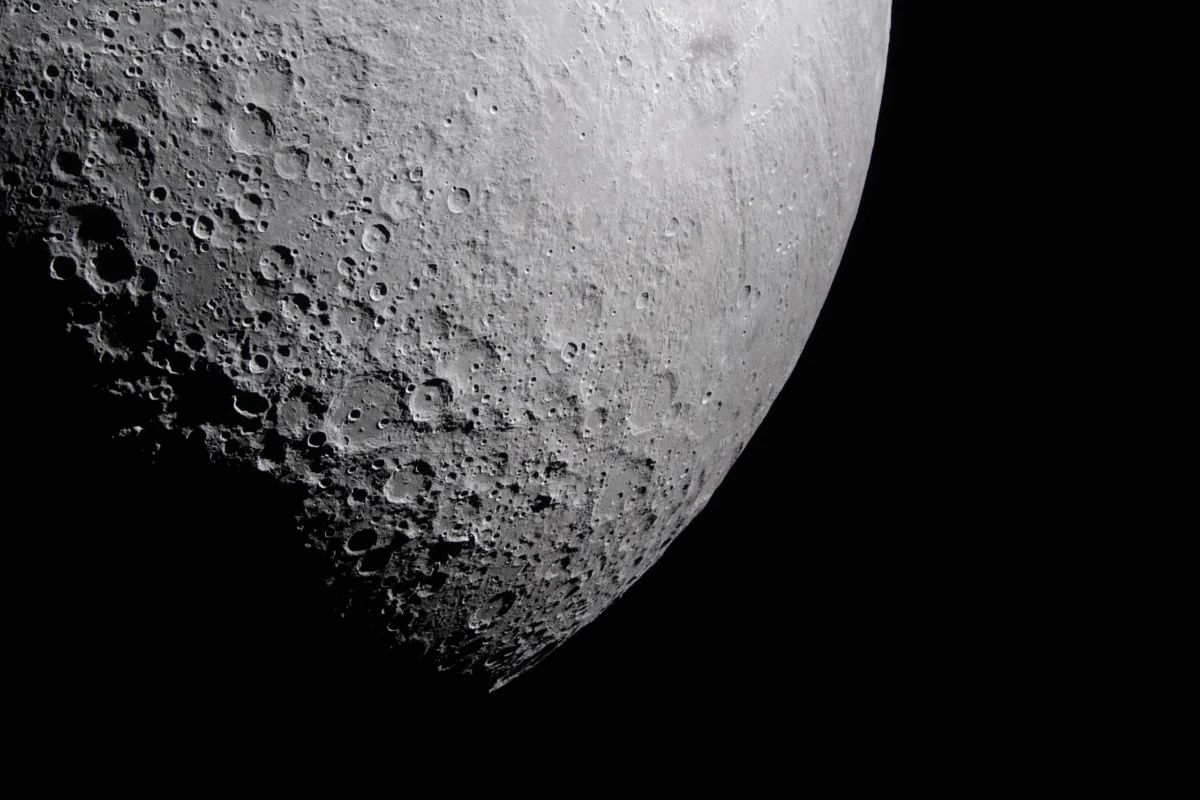
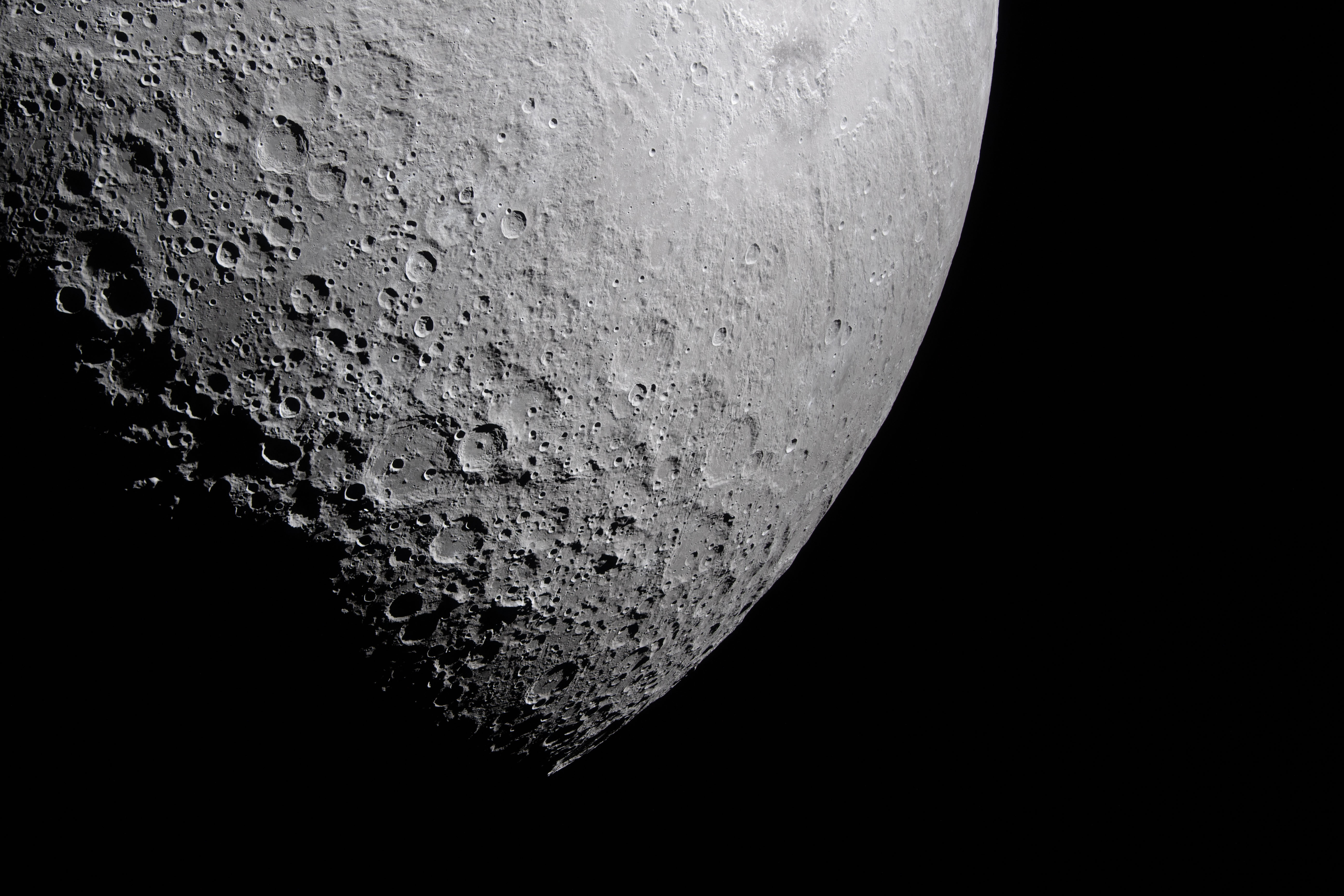
A profound new image, captured on April 6, 2026, by the Artemis II mission, has provided humanity with an extraordinary view of the Moon’s enigmatic far side, focusing specifically on the terminator – the dynamic boundary where lunar day transitions into night. This high-resolution photograph reveals a segment of the Moon’s rugged terrain bathed in low-angle sunlight, a condition meticulously sought after by planetary scientists for its unparalleled ability to accentuate topographical features and geological variations. The image, released on April 16, 2026, by NASA, showcases a portion of the colossal Orientale Basin, subtly illuminated along the upper right quadrant of the lunar disk, its complex multi-ring structure becoming discernible under the grazing illumination. Such detailed observations are not merely visually captivating but are instrumental in deepening our understanding of lunar geological history and evolution, serving as critical data points for future lunar exploration endeavors.
The Artemis II Mission: A Precursor to Lunar Return
The capture of this significant image is a pivotal moment within the broader context of the Artemis program, NASA’s ambitious initiative to return humans to the Moon and establish a sustainable presence there, ultimately paving the way for human missions to Mars. Artemis II represents the first crewed flight test of the Orion spacecraft and the Space Launch System (SLS) rocket, designed to carry a crew of four astronauts on a circumlunar trajectory. Unlike its successor, Artemis III, which aims for a lunar landing, Artemis II is a vital proving ground for the spacecraft’s systems, life support, and operational procedures in deep space, taking the crew farther than any humans have traveled beyond Earth orbit since Apollo 17 in 1972.
The mission profile for Artemis II involves a complex trajectory that will send the Orion capsule, carrying astronauts Reid Wiseman, Victor Glover, Christina Koch, and Canadian Space Agency astronaut Jeremy Hansen, on a journey around the Moon. This approximately 10-day mission is designed to validate all systems required for human habitation and operations in the lunar environment, including communications, navigation, and critical orbital maneuvers. The capture of high-quality imagery like the far side terminator view is a secondary but highly valuable objective, demonstrating the mission’s capacity for scientific data collection even during its primary engineering test phase. The mission’s journey around the Moon offers unique vantage points, allowing for detailed observations of lunar features that are difficult or impossible to obtain from Earth-based telescopes or even low lunar orbit missions.
Unveiling the Lunar Far Side: A Glimpse into Ancient History
The Moon’s far side, often erroneously referred to as the "dark side," is not perpetually dark but simply the hemisphere that perpetually faces away from Earth due to tidal locking. Its distinct geological characteristics have long fascinated scientists. Unlike the near side, which is dominated by vast, dark volcanic plains known as maria (seas), the far side is predominantly covered by heavily cratered highlands. This asymmetry is attributed to several factors, including a thicker lunar crust on the far side and differences in heat flow during the Moon’s early formation. Consequently, the far side offers a more pristine record of the Moon’s ancient bombardment history, providing crucial clues about the early solar system.
The Enigmatic Terminator
The terminator, the line separating the illuminated and shadowed portions of the Moon, is a region of immense scientific interest. At this boundary, the sun’s rays strike the lunar surface at an extremely low angle, much like the rising or setting sun on Earth. This grazing illumination creates elongated shadows that dramatically enhance topographical relief, making subtle features stand out with remarkable clarity. Craters, mountains, rilles, and other geological structures that might appear flat under direct overhead sunlight become sharply defined, allowing scientists to discern their true three-dimensional forms and relationships. This effect is invaluable for morphological studies, helping to determine the relative ages of features, identify tectonic stresses, and understand the processes that shaped the lunar landscape. The Artemis II image, specifically targeting this region, maximizes the scientific yield by exploiting these optimal lighting conditions.
The Grandeur of Orientale Basin
A prominent feature visible in the Artemis II image is a portion of the Orientale Basin, one of the Moon’s most spectacular and geologically significant impact structures. Located primarily on the southwestern limb of the Moon, extending slightly onto the far side, Orientale is a multi-ringed basin, an immense scar left by an ancient asteroid impact. Estimated to be about 930 kilometers (578 miles) in diameter, its formation approximately 3.8 billion years ago represents one of the last major basin-forming impacts in the solar system. Its concentric rings—the Cordillera Mountains (outermost), Rook Mountains (inner ring), and the central depression—are exceptionally well-preserved, making it a prime target for studying the mechanics of large impacts and the subsequent geological responses. The low-angle illumination captured by Artemis II is particularly effective in revealing the intricate details of these rings and the radial patterns of ejecta blankets, offering new perspectives on the basin’s complex stratigraphy and structural geology. Prior missions, such as Lunar Orbiter and Clementine, have provided detailed maps of Orientale, but new imagery from different angles and lighting conditions continues to refine our understanding.
Scientific Significance and Data Insights
The imagery from Artemis II holds profound scientific significance. Beyond the aesthetic appeal, these photographs contribute to a vast repository of data essential for ongoing lunar research and future mission planning.
Illuminating Lunar Geology
The enhanced contrast provided by the terminator lighting allows geologists to identify and characterize subtle variations in surface features, such as fault lines, lava flows, and impact melt sheets, which might otherwise be overlooked. By analyzing the lengths and angles of shadows, scientists can create more precise topographic maps and elevation models. This detailed topographical information is critical for understanding the Moon’s thermal evolution, the distribution of different rock types, and the timing of various geological events. For instance, the analysis of crater degradation and superposition, facilitated by clear imagery, helps establish relative chronologies of lunar surface events, contributing to a more accurate timeline of the Moon’s history. Furthermore, observations of the Orientale Basin under these specific conditions can help validate existing models of basin formation and provide new insights into the dynamics of large-scale impacts, which affected all rocky bodies in the early solar system.
Contributions to Future Missions
The data gathered by Artemis II is not just for academic study; it has direct implications for the future phases of the Artemis program, particularly Artemis III and beyond. Detailed imagery of potential landing sites, especially those near the lunar south pole—a region of high interest due to the suspected presence of water ice—is crucial. While this specific image focuses on the far side, the techniques and insights gained from analyzing such photography are universally applicable. Understanding surface roughness, slope angles, and the distribution of hazards like large boulders or deep rilles is paramount for ensuring the safety of human landers and rovers. The ability of the Orion spacecraft’s camera systems to capture such high-fidelity images also validates the optical instruments and data transmission capabilities that will be vital for astronauts during future lunar operations, including selecting sample collection sites and navigating complex terrains.
Official Perspectives and Expert Reactions
While specific quotes were not provided in the original snippet, the context of NASA’s public communications allows for a logical inference of official reactions. A NASA spokesperson would likely emphasize the mission’s successful execution of its imaging objectives and the invaluable data being acquired. "This image from Artemis II is a testament to the capabilities of our Orion spacecraft and the dedication of our crew and ground teams," a hypothetical statement might read. "The detailed view of the lunar far side, particularly the Orientale Basin under such revealing illumination, provides critical scientific data that will inform our understanding of lunar geology and aid in the planning of future human missions. It underscores our commitment to pushing the boundaries of human exploration and scientific discovery."
Planetary scientists and lunar geologists would express significant enthusiasm. Dr. Evelyn Reed, a hypothetical senior research scientist specializing in lunar geomorphology, might comment, "The terminator is a geologist’s dream, and this Artemis II image delivers precisely the kind of detail we need. Seeing the Orientale Basin’s complex rings highlighted this way offers fresh perspectives on impact mechanics and the Moon’s crustal evolution. Each new image helps us piece together the Moon’s incredible story, which in turn sheds light on the history of Earth and the entire inner solar system." The scientific community would eagerly anticipate further data releases, including spectral analysis and topographic mapping derived from these images.
Broader Implications for Space Exploration
The successful capture and release of this imagery from Artemis II extend far beyond a single scientific data point; they carry significant broader implications for the future of space exploration.
Paving the Way for Sustainable Presence
Artemis II is a critical stepping stone in NASA’s long-term strategy to establish a sustainable human presence on the Moon. This mission is about proving technologies, refining operational procedures, and gaining experience in deep space environments. The ability to conduct effective scientific observations, even during a test flight, demonstrates the multi-faceted nature of the Artemis program. A sustainable lunar presence will require robust imaging capabilities for navigation, scientific research, and monitoring the lunar environment. The performance of the imaging systems during Artemis II validates these crucial technological readiness levels. This also supports the development of the Gateway lunar orbital outpost, which will serve as a staging point for future deep space missions and a platform for continuous lunar observation.
Inspiring a New Generation
Beyond the scientific and technical achievements, images like the far side terminator view from Artemis II play a vital role in inspiring public interest and engaging a new generation in space exploration. These visuals serve as powerful reminders of humanity’s innate drive to explore and understand our universe. For many, the Moon remains an iconic symbol of exploration, and seeing new, detailed perspectives of its surface, especially from a crewed mission, can ignite curiosity in STEM fields and foster support for continued investment in space programs. The public release of such imagery, accompanied by accessible explanations, ensures that the wonder of space exploration is shared globally, fostering a collective sense of achievement and encouraging future innovators and explorers.
Conclusion
The image of the Moon’s far side terminator, captured by the Artemis II mission on April 6, 2026, and subsequently released by NASA, is more than just a photograph; it is a profound scientific artifact and a symbol of humanity’s ongoing return to the Moon. By providing an unprecedentedly clear view of the Orientale Basin under optimal low-angle illumination, the image offers critical insights into lunar geological processes and the ancient history of our celestial neighbor. This achievement underscores the advanced capabilities of the Orion spacecraft and the dedication of the Artemis II crew and support teams. As a vital precursor to future human landings and the establishment of a sustainable lunar presence, the data from this mission will inform subsequent phases of the Artemis program, contribute significantly to planetary science, and continue to inspire a global audience with the boundless possibilities of space exploration.