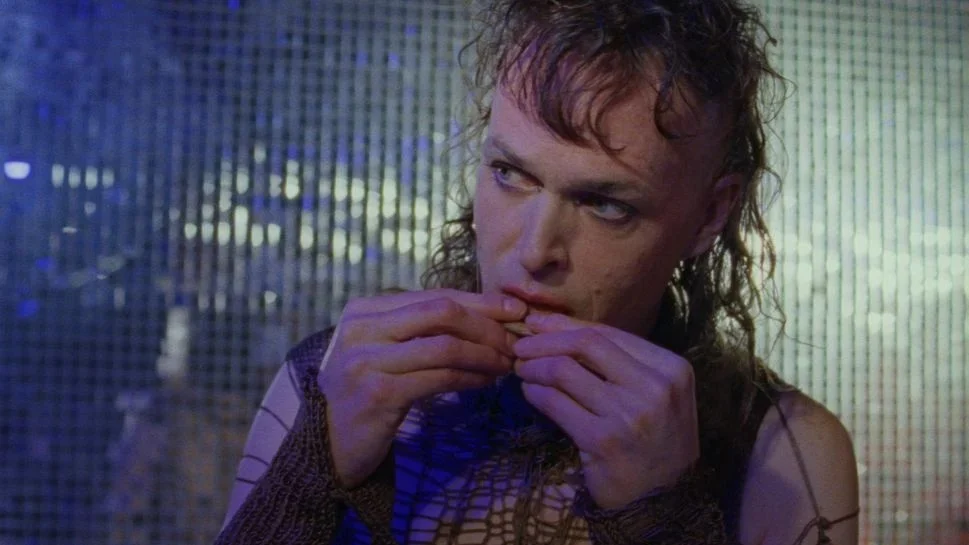
The 79th edition of the Locarno Film Festival, a prestigious cinematic event known for championing bold and independent filmmaking, is set to premiere Beatrice Gibson’s debut feature-length film, At Night. This experimental and autofictional work, set against the evocative nocturnal soundscape of Paris, delves into the intimate lives of six women. Their conversations and inner monologues weave together a tapestry of hopes, dreams, desires, and anxieties about the future, creating a deeply resonant exploration of female friendship and shared experience.
A Nocturnal Symphony of Parisian Life
At Night distinguishes itself through its unique emphasis on rhythm and mood, drawing viewers into a contemplative and immersive cinematic experience. The film’s artistic director, Giona A. Nazzaro, described it as a "nocturnal, ambient film where you can almost hear music that makes you think of Brian Eno. If At Night were a record, it could be music for lonely people at night." This evocative comparison highlights the film’s atmospheric quality and its potential to resonate with a sense of introspective solitude.
The film is the brainchild of British filmmaker and artist Beatrice Gibson, who penned and directed the project. Her long-time collaborator Ben Rivers, renowned for his distinctive visual style, helmed the cinematography, while Liyo Gong, an editor with a keen ear for musicality, shaped the film’s pacing and flow.
The Sonic Architecture of Elvin Brandhi
While Brian Eno’s influence is evoked, the film’s sonic landscape is the original creation of experimental musician Elvin Brandhi. For those unfamiliar with the avant-garde music scene, Elvin Brandhi is the artistic pseudonym of Freya Edmondes, a Welsh-born vocalist and sound artist whose work has gained international recognition. Edmondes’ sonic palette is rich and eclectic, drawing from field recordings, her own vocal explorations, tape manipulation, vinyl textures, and a diverse array of instruments. Her musical output is characterized by its improvisational nature and its often unconventional rhythmic structures.
Brandhi is a prolific collaborator, actively involved in numerous musical projects. She is a member of the "noise-improv berserkers" known as Yeah You, alongside her father. She has also collaborated with Nadah El Shazly on Pollution Opera, formed the duo Avril Spleen with Joseph Jadam, and is part of the band PFL with Peter Kutin and Lukas König. Additionally, she is involved in the project Bahk with Daniel Blumberg, a connection that has, perhaps inadvertently, fostered a bridge between the experimental music scene and mainstream cinema.
A Soundtrack Born from Intimate Collaboration

At Night marks a significant milestone for Elvin Brandhi, representing her first-ever feature film soundtrack. The film features a cast of Gibson’s non-professional actor friends and influences, who engage in candid discussions about sexuality, finances, motherhood, and mental health. The press notes for the film describe it as "a love letter to friendships, relationships, and the quiet yet poignant stories women share together but rarely to an audience," a sentiment that underscores the deeply personal nature of the project.
In an interview with The Hollywood Reporter, Brandhi elaborated on the creative process behind the soundtrack, her broader musical endeavors, and her potential future involvement in cinematic projects.
The Genesis of a Feature Film Soundtrack
"It’s the first time I’ve done a soundtrack for a feature film," Brandhi confirmed to THR. She elaborated on her previous experience with shorter film projects and self-produced music videos, describing herself as an "audiovisual artist" who thinks in both realms. Her involvement with Daniel Blumberg on films like The Brutalist and The Testament of Ann Lee provided her with some exposure to the scoring process, where she contributed vocal elements alongside avant-garde vocalists Phil Minton and Maggie Nicols. "Daniel has been creating this nice bridge between the experimental scene in London and Hollywood cinema," she noted.
Brandhi acknowledged the valuable learning experience of composing for a feature film. "It was probably helpful for me to get involved in the experience of how to make a soundtrack," she stated. However, she emphasized the distinct creative demands of this role. "It was quite a unique experience, and I had to adjust a little bit how I think about composing. A lot of my music is quite in your face and trying to be as present as possible. But with a soundtrack, you have to almost make it sneak in from the sides, or be somehow invisible, coming out of the background." This adjustment in approach highlights the subtle yet crucial difference between creating standalone music and composing for a visual narrative.
Paris as a Sonic Muse
The film’s Parisian setting provided fertile ground for Brandhi’s practice of incorporating field recordings into her music. "What was really nice about this film was that the metro is such a big center of the narrative, and that’s already quite a noisy place," she explained. "It has a lot of the kind of frequencies and ambient noise and things that I might feel like field recording and be inspired by anyway. So it was this perfect entry point for coming into that film world." The inherent sonic richness of the Parisian metro system provided an immediate and natural source of inspiration, seamlessly integrating into her artistic process.
A Serendipitous Encounter and a Deepening Collaboration
The creative partnership between Gibson and Brandhi began serendipitously. "I met Beatrice for the first time at [the experimental music festival] Borealis [in Bergen, Norway], but only very briefly," Brandhi recalled. "We were in the same taxi going somewhere, and I was playing, and she was screening something." A subsequent connection through a mutual friend, Leonardo Ruvolo, solidified their artistic bond. Ruvolo, who had also participated in a residency with Brandhi in Alcamo, Sicily, facilitated contact, particularly as Gibson had recently relocated to Palermo, Sicily. These coincidences fostered a natural progression towards collaboration.
"When we started working together, we became very good friends immediately," Brandhi shared, underscoring the immediate rapport between the artists. "And working on At Night was a very intimate and special process." This close working relationship proved crucial in shaping the film’s unique sound.
Early Sound Design and Evolving Visions
The development of the soundtrack for At Night began early in the production process, even before principal photography commenced. "Beatrice wanted to have as much sound as possible before even starting to shoot," Brandhi stated. She received an initial draft of the script, which, as is common in filmmaking, underwent revisions throughout the production. The collaboration involved an intensive week of idea exploration prior to shooting. Brandhi presented Gibson with various sonic drafts, and Gibson referenced a track from Brandhi’s collaboration with Palestinian producer/MC Bashar Suleiman, titled "Kidney Spears" from their project Insin. This track, described as "a little bit more dreamy," provided a sonic touchstone for the film’s mood. Brandhi then aimed to create other pieces within a similar atmospheric dynamic.
During the shooting period in Paris, Brandhi was actively involved, even capturing recordings within the metro system as scenes were being filmed. "I was taking some recordings when they were going into the metro," she told THR. There was even an initial plan for a scene featuring Brandhi performing in Paris, though this element may have evolved or been omitted in the final cut.

The Collaborative Weave of Sound
The soundtrack of At Night emerged from an ongoing, iterative collaboration. "There were some core themes that we developed, and then little bits that needed a very specific kind of mood or dynamic," Brandhi explained. The editor, Liyo Gong, also played a vital role in this process. "She is really amazing," Brandhi said of Gong, who is also a DJ. "She’s also a DJ, so she has a very strong sense of the musicality in film and in how she edits." Gong’s expertise in rhythm and flow undoubtedly contributed to the seamless integration of Brandhi’s score with the film’s visual narrative.
Further contributing to the sonic tapestry was Crystabel Riley, who provided drum sounds for the soundtrack. Riley, who also worked as a makeup artist on the film, was approached by Brandhi for her drumming contributions. "I asked her if she would contribute some drumming that I could weave into different parts of it," Brandhi recalled. This multi-faceted involvement of individuals like Riley highlights the interconnected nature of the film’s creative team.
Future Cinematic Horizons
The success of her first feature film soundtrack has ignited Brandhi’s interest in further exploring cinematic soundscapes. "I definitely would like to," she expressed enthusiastically. "I would be really up for it; it was really interesting entering the story and composing from a different perspective." She also spoke about the inspiration drawn from witnessing other artists’ performances, noting the powerful stage presence of a performer whose energy evoked the emotional states of the women depicted in At Night. "It was really special for me and Bea that she was part of it," she concluded, referring to this particular collaboration.
Brandhi’s engagement with At Night has also inspired her to revisit her own filmmaking and editing practices. "In the lockdown, I did a lot more filming and editing stuff, so I feel that this soundtrack world is also a nice potential way to get back into the editing of my own film material," she shared. This suggests a potential for future projects where her musical and visual artistic sensibilities might converge more directly.
Upcoming Musical Ventures
Beyond her work on At Night, Elvin Brandhi remains actively engaged in her diverse musical projects. A notable upcoming release is an album with Berlin-based Kenyan musician KMRU, under their collaborative name A|||oy. The album will be released on KMRU’s label, offnot. "He is associated a bit more with ambient music. But we have so much in common and are both fans of each other’s music, even though it might seem like we have quite contrasting dynamics," Brandhi explained. "There’s a strong similarity in the way we work with field recordings and sounds, textures and spaces."
This collaboration has been ongoing for three years, with the album born from residencies at EMS in Stockholm and the Richter Mahr studio in Oxfordshire. "We just listened to the test pressing, and it was really exciting. We’re both singing, and it’s completely different from both of our works," Brandhi revealed, hinting at a departure from their individual styles.
The premiere of At Night at the Locarno Film Festival signifies not only a significant debut for Beatrice Gibson but also a compelling new chapter for Elvin Brandhi’s multifaceted artistic career. The film’s unique blend of intimate narrative, evocative atmosphere, and innovative sound design promises to be a standout entry in the festival’s esteemed program.