



Shortly after Amazon CEO Andy Jassy announced AWS’s groundbreaking $50 billion investment deal with OpenAI, the tech giant offered an exclusive private tour of the chip development lab at the heart of this strategic alliance. This facility, primarily responsible for Amazon’s custom silicon, including the much-discussed Trainium chip, is seen by industry experts as a crucial component in Amazon’s bid to lower the cost of AI inference and potentially disrupt Nvidia’s near-monopoly in the burgeoning AI hardware market. The visit, largely facilitated by Amazon, provided an intimate look into the engineering prowess and strategic vision underpinning AWS’s ambitious play in the artificial intelligence arena.
The Strategic Imperative: Amazon’s AI Hardware Vision

The recent $50 billion commitment from Amazon Web Services (AWS) to OpenAI represents one of the largest private funding rounds in history and underscores a profound shift in the competitive landscape of artificial intelligence. This monumental deal solidifies AWS as the exclusive provider for OpenAI’s nascent AI agent builder, Frontier, a development poised to become a cornerstone of OpenAI’s future business if AI agents achieve the widespread adoption anticipated by Silicon Valley. This exclusivity, however, has already raised eyebrows, with reports from the Financial Times suggesting that Microsoft might view this arrangement as a violation of its own comprehensive agreement with OpenAI, which grants Redmond access to all of OpenAI’s models and technology. The unfolding implications of this multi-faceted partnership are being closely watched across the tech world.
At the core of AWS’s appeal to OpenAI is a massive computational commitment: the cloud giant has pledged to supply OpenAI with an unprecedented 2 gigawatts of Trainium computing capacity. To put this in perspective, 2 gigawatts is equivalent to the power output of two large nuclear reactors or a significant portion of a medium-sized city’s energy consumption, highlighting the immense scale of the AI workloads involved. This commitment is particularly striking given that existing AWS partners, notably Anthropic, and Amazon’s own Bedrock service, are already consuming Trainium chips at a rate that outpaces current production. The relentless demand for specialized AI hardware underscores the ongoing "AI arms race," where access to powerful and efficient processing units is a critical differentiator.
Amazon’s long-term strategy, mirroring its classic playbook, involves identifying high-demand components and developing in-house alternatives to compete on price and performance. This vertical integration approach, exemplified by its Graviton CPUs and Nitro virtualization system, aims to reduce reliance on third-party suppliers, optimize its cloud infrastructure from the ground up, and ultimately offer more cost-effective solutions to its vast customer base. The foray into custom AI chips with Trainium is a direct extension of this strategy, seeking to unseat Nvidia from its dominant position in the AI GPU market, where it currently holds an estimated 80-90% market share.

Inside the Innovation Hub: The Austin Lab Tour
The journey into Amazon’s custom silicon heartland began in Austin, Texas, specifically in the city’s upscale "The Domain" district, often dubbed "Austin’s Silicon Valley" due to its concentration of tech companies and vibrant urban amenities. It was here, within a modern, chrome-windowed building, that the chip development lab, the operational nucleus of AWS’s hardware innovation, resides. The origins of this prolific unit trace back to January 2015, when Amazon acquired Israeli chip designer Annapurna Labs for approximately $350 million. Over the past decade, this team has been instrumental in designing a suite of custom chips for AWS, retaining its Annapurna roots and displaying its distinctive logo prominently throughout the facility.
The tour was led by Kristopher King, the lab’s director, and Mark Carroll, the director of engineering, alongside PR representative Doron Aronson. While the general office areas presented a familiar tech corporate ambiance with cubicles, collaboration spaces, and conference rooms, the true marvel lay tucked away on a high floor: the actual lab. This industrial space, roughly the size of two large conference rooms, buzzed with the hum of equipment fans, creating a noisy environment. Far from the pristine, sterile imagery often associated with chip manufacturing, the lab exuded a practical, hands-on atmosphere, reminiscent of a sophisticated workshop rather than a pristine cleanroom. Engineers, clad in jeans rather than lab coats, worked amidst shelving units filled with components, all against a backdrop of sweeping city views. It’s crucial to note that this facility is not for chip manufacturing; the state-of-the-art 3-nanometer Trainium3 chips are produced by TSMC, a global leader in advanced semiconductor fabrication, while other chips leverage expertise from Marvell.

The lab is where the critical "bring-up" process unfolds—a period of intense activity and problem-solving. King vividly described the silicon bring-up as akin to a "big overnight party," where the team works 24/7 for three to four weeks to activate a newly manufactured chip for the first time. This painstaking process verifies that the chip functions precisely as designed after typically 18 months of development. The team even documented a segment of the Trainium3 bring-up, offering a rare glimpse into this intricate engineering challenge on YouTube. Unsurprisingly, the process is rarely problem-free. For Trainium3, an initial hurdle arose when the prototype, originally designed for air-cooling, faced a dimensional mismatch with its heat sink, preventing activation. Resourceful and undeterred, the team “immediately got a grinder and just started grinding off the metal,” King recounted, improvising a solution in a conference room to avoid disrupting the main lab’s "pizza party" atmosphere. This anecdote encapsulates the pragmatic, solution-oriented culture fostered within the lab.
Further illustrating the team’s comprehensive hardware capabilities, the lab features a specialized welding station. Here, hardware lab engineer and master welder Isaac Guevara demonstrated the incredibly precise task of welding tiny integrated circuit components under a microscope. The extreme difficulty of this work was underscored by Carroll’s candid admission that he himself could not perform it, drawing good-natured laughter from the engineers. Beyond custom modifications, the lab is equipped with an array of custom-made and commercial tools for rigorous testing and analysis. Signal engineer Arvind Srinivasan showcased the meticulous process of testing each minute component on a chip, ensuring optimal performance and reliability.
Trainium: Amazon’s Answer to the AI Chip Challenge

Amazon’s Trainium chips are central to its strategy of offering an alternative to Nvidia’s high-demand, often backlogged GPUs. Trainium was initially optimized for faster and more cost-effective model training, a priority a few years ago. However, its capabilities have evolved, and it is now extensively tuned and utilized for inference—the process of deploying and running an AI model to generate responses. Inference has rapidly become the industry’s most significant performance bottleneck, consuming vast amounts of computational resources as AI models become more ubiquitous.
The latest iteration, Trainium3, running on Amazon’s new specialty Trn3 UltraServers, promises significant advantages. Amazon claims these systems can reduce operational costs by up to 50% for comparable performance when pitted against traditional cloud servers. This cost efficiency is a critical factor in the hyperscale AI landscape, where trillions of tokens are processed daily, making every percentage point of optimization profoundly impactful. The AWS chip team also developed innovative Neuron switches, which, according to Carroll, are "something huge." These switches enable a mesh configuration where every Trainium3 chip can communicate directly with every other chip, drastically reducing latency and enhancing overall system performance. This advanced networking, combined with the chips, is why "Trainium3 is breaking all kinds of records," particularly in "price per power," as Carroll noted.
Trainium’s journey began with its predecessors, including Graviton, a low-power, ARM-based server CPU that marked the team’s first breakout success, and Inferentia, a chip specifically designed for inference workloads. Apple, a company notoriously secretive about its infrastructure, publicly lauded Amazon’s chip team in 2024, with its director of AI acknowledging their use of Graviton, Inferentia, and a nascent Trainium. This rare endorsement from a tech giant like Apple underscored the growing recognition of Amazon’s custom silicon prowess.

A historical challenge for custom chips has been the high switching costs associated with re-architecting applications designed for Nvidia’s CUDA platform. AWS addresses this by proudly announcing that Trainium now supports PyTorch, a widely adopted open-source framework for building AI models. This compatibility is a game-changer, as it means many models, including those hosted on vast libraries like Hugging Face, can be transitioned to Trainium with minimal effort. Carroll explained that the transition requires "basically a one-line change, and then recompile, and then run on Trainium." This ease of migration is a direct assault on Nvidia’s ecosystem lock-in, enabling developers to more readily leverage Trainium’s cost and performance benefits.
Beyond its own silicon, AWS is also fostering strategic partnerships. This month, it announced a collaboration with Cerebras Systems, integrating Cerebras’s inference chips onto servers running Trainium. This hybrid approach promises even more superpowered, low-latency AI performance, demonstrating AWS’s commitment to providing a diverse and highly optimized hardware portfolio.
Amazon’s ambitions extend far beyond the chips themselves. The team also designs the entire server ecosystem, including networking components, its proprietary "Nitro" hardware-software virtualization technology, state-of-the-art liquid cooling systems, and the server "sleds" that house these components. This holistic, full-stack approach allows Amazon to control every aspect of cost, performance, and power efficiency within its data centers, delivering tightly integrated and highly optimized solutions that are difficult for competitors to replicate. The introduction of liquid cooling for Trainium3, a significant engineering feat, not only boosts performance but also offers substantial energy advantages and contributes to a closed-loop system for reduced environmental impact.

The Broader Ecosystem: Anthropic, Bedrock, and Beyond
The impact of Trainium is already evident across AWS’s ecosystem. Currently, a substantial portion of Trainium2 chips—over 1 million out of 1.4 million deployed—are dedicated to Anthropic’s Claude models. This underscores the deep and long-standing relationship between AWS and Anthropic, a major AI lab that has relied on AWS as its primary cloud platform since its inception, even as it later diversified its cloud partnerships to include Microsoft. The sheer scale of this deployment is highlighted by Project Rainier, one of the world’s largest AI compute clusters, which went live in late 2025 with 500,000 Trainium2 chips, predominantly serving Anthropic.
Furthermore, Trainium2 handles the majority of inference traffic on Amazon’s Bedrock service. Bedrock is a foundational offering that allows enterprise customers to build AI applications and leverage multiple large language models. The rapid expansion of Bedrock’s customer base has created an insatiable demand for Trainium capacity. King expressed immense optimism about Bedrock’s future, stating, "Our customer base is just expanding as fast as we can get capacity out there," and boldly predicting that "Bedrock could be as big as EC2 one day," referencing AWS’s enormously successful Elastic Compute Cloud service, which forms the backbone of its cloud offerings. This comparison illustrates the profound long-term significance AWS attaches to its AI services and the underlying Trainium infrastructure.

The recent deal with OpenAI, securing 2 gigawatts of Trainium capacity and exclusive provision for the Frontier AI agent builder, further cements Trainium’s critical role in the broader AI ecosystem. While the engineers during the lab tour expressed more familiarity with Anthropic’s current usage, the strategic importance of the OpenAI partnership was not lost. A wall monitor in the main office proudly displayed a quote about OpenAI’s planned utilization of Trainium, indicating a quiet but firm sense of achievement within the team.
Navigating the Competitive Landscape and Market Dynamics
Amazon’s aggressive push with Trainium is a direct challenge to Nvidia’s formidable dominance in the AI chip market. For years, Nvidia’s GPUs, powered by its CUDA software platform, have been the de facto standard for AI training and inference. However, this dominance has led to supply bottlenecks, high costs, and a powerful ecosystem lock-in. Amazon’s strategy of offering a high-performance, cost-effective alternative with easier switching capabilities (via PyTorch support) aims to carve out a significant share of this rapidly expanding market. The ability to reduce operational costs by up to 50% for comparable performance is a compelling proposition for enterprises grappling with the escalating expenses of AI development and deployment.

The potential conflict with Microsoft over OpenAI’s exclusivity for Frontier agents highlights the intricate and often fraught relationships between major tech players and leading AI research labs. Microsoft has invested billions in OpenAI and views its comprehensive access to OpenAI’s models and technology as a cornerstone of its own AI strategy. Any perceived breach of this agreement could lead to legal disputes or a renegotiation of terms, underscoring the high stakes involved in securing prime positions in the AI value chain.
The market for AI infrastructure is characterized by intense competition, with other tech giants like Google developing their Tensor Processing Units (TPUs) and Meta building its MTIA chips. Amazon’s commitment to vertical integration—designing not just the chips but also the servers, networking, cooling, and virtualization layers—provides a competitive advantage by allowing for unprecedented optimization and cost control. This integrated approach ensures that Trainium chips are not merely components but are part of a meticulously engineered system designed for maximum efficiency and performance within the AWS cloud environment.
The Future of AI Infrastructure: Scale, Efficiency, and Sustainability

The implications of AWS’s Trainium strategy extend far beyond Amazon itself, potentially reshaping the future of AI infrastructure globally. By offering lower-cost AI inference and training, Trainium could democratize access to advanced AI capabilities, making them more accessible to a wider range of businesses and developers. This could accelerate AI innovation across industries, fostering a more competitive and dynamic ecosystem. The focus on efficiency, particularly the "price per power" metric, is crucial as AI workloads grow exponentially. The continuous drive for optimization helps manage the massive energy consumption associated with large-scale AI, contributing to more sustainable computing practices.
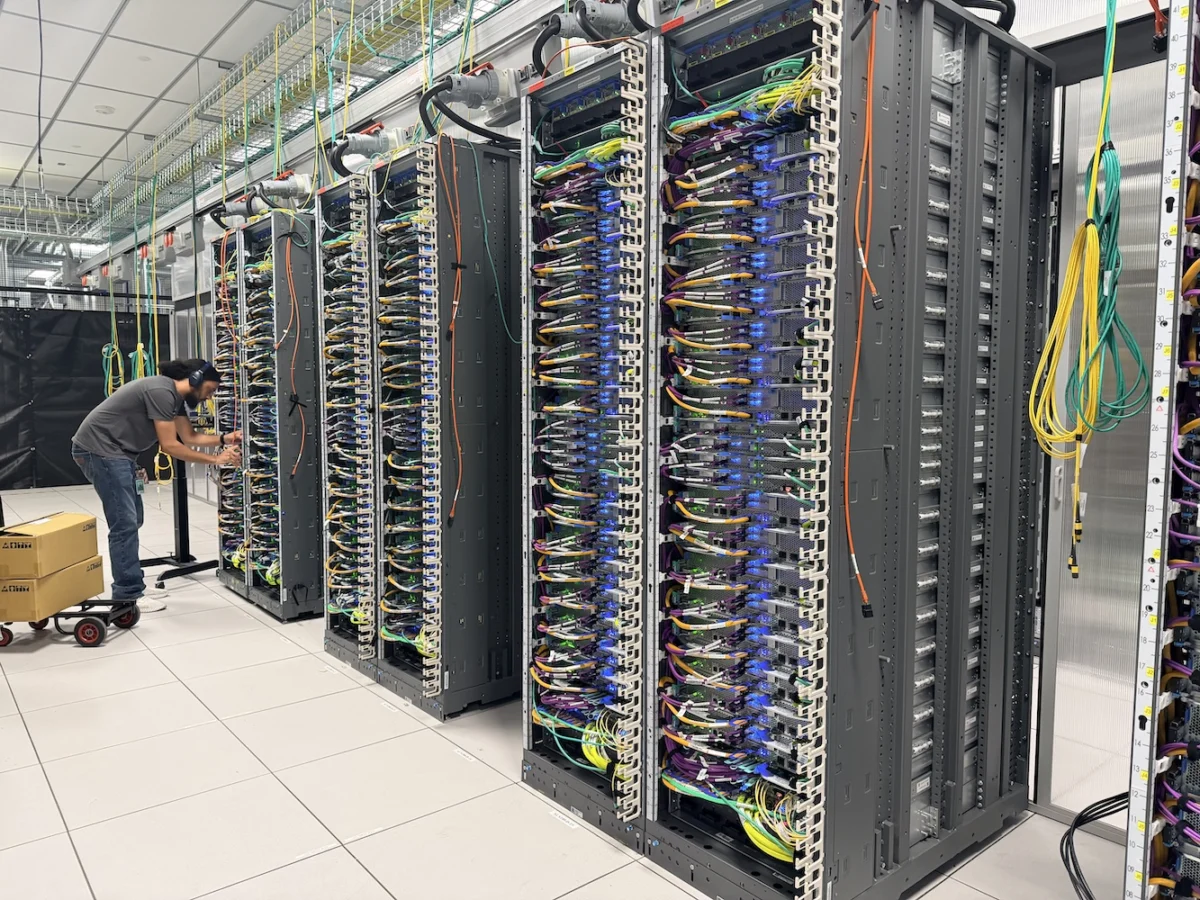
The team’s dedication to continuous improvement is evident in their ongoing work on Trainium4, the next generation of the chip. This iterative development cycle, combined with the rigorous testing and "bring-up" process in their private data center (a co-location facility with stringent security protocols, filled with rows of servers running liquid-cooled Trainium3 and Graviton chips), ensures that AWS remains at the forefront of AI hardware innovation. The closed-loop liquid cooling system, for instance, not only enhances performance but also offers environmental benefits by reusing the coolant.
Amazon CEO Andy Jassy consistently champions the work of this chip lab, publicly highlighting Trainium’s success. In December, he revealed that Trainium was already a multi-billion dollar business for AWS, signaling its rapid commercial traction. He frequently cites Trainium as one of the AWS technologies he is most enthusiastic about, underscoring its strategic importance to the company’s future growth. This high-level executive support, combined with the tireless efforts of the engineering teams, creates a powerful impetus for continued innovation. The engineers, working 24/7 during critical bring-up phases, are acutely aware of the pressure to deliver. "It’s very important that we get as fast as possible to prove that it’s actually going to work," Carroll stated, adding with a sense of quiet accomplishment, "So far, we’ve been doing really well."

The investment in custom silicon, the strategic partnerships, and the relentless pursuit of efficiency and performance position AWS as a formidable player in the AI hardware market. As the demand for AI capabilities continues to surge, Amazon’s Trainium chips, backed by its comprehensive infrastructure ecosystem, are poised to play a pivotal role in shaping the next generation of artificial intelligence, potentially altering the competitive dynamics of the entire industry.
Disclosure: Amazon provided airfare and covered the cost of one night at a local hotel. Honoring its Leadership Principle of Frugality, this was a back-of-the-plane middle seat and a modest room. TechCrunch picked up the other associated travel costs like Ubers and luggage fees.