


Azerbaijan has initiated the withdrawal of its diplomatic personnel from Iran, signaling a dramatic escalation in tensions after Baku accused Tehran of orchestrating a series of drone attacks on its isolated exclave of Nakhchivan. The alleged cross-border strikes, which Azerbaijan’s President Ilham Aliyev vehemently condemned as an "act of terror," have prompted a robust diplomatic and military response from Baku, placing its armed forces on maximum combat readiness. This volatile situation unfolds against a backdrop of regional instability, with the conflict in the Middle East threatening to draw new players into its widening embrace.
The Drone Strikes and Immediate Fallout
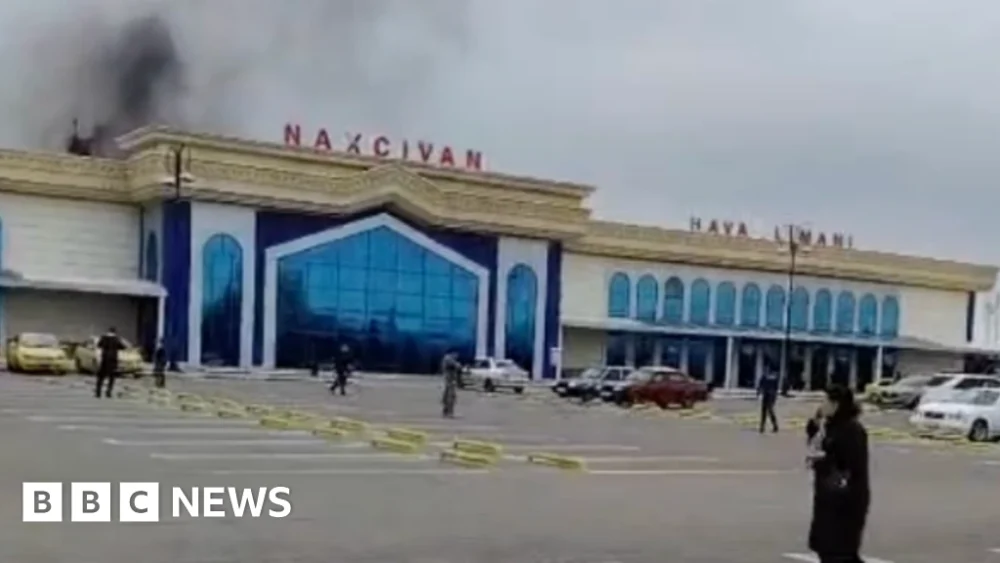
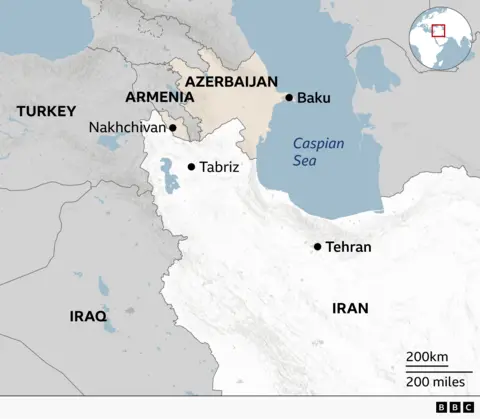
The unprecedented drone assault occurred on Thursday, targeting critical infrastructure and civilian areas within Nakhchivan, a strategically vital Azerbaijani territory bordering Iran, Turkey, and Armenia. According to Azerbaijani officials, four drones were launched across the Iranian border. One directly impacted the airport terminal, causing significant damage. Another drone detonated perilously close to a school, resulting in injuries to civilians and underscoring the indiscriminate nature of the attack. A third drone was reportedly intercepted and shot down by Azerbaijani air defenses, preventing further destruction and potential casualties. Details surrounding the fourth drone’s fate remain less clear, but its presence further cemented Baku’s accusations of a concerted and deliberate attack.
The visual evidence, including a screengrab from social media videos depicting smoke rising from the Nakhchivan airport, quickly circulated, amplifying the gravity of the incident. This overt act of aggression marked a critical turning point in the already strained relationship between the two nations, pushing diplomatic ties to a new low.
A Swift and Forceful Azerbaijani Response
President Ilham Aliyev wasted no time in publicly addressing the attacks. In his initial condemnation on Thursday, he branded the strikes as an "act of terror" and issued a stern demand for an immediate explanation and apology from Tehran. His rhetoric intensified on Friday, escalating the diplomatic confrontation. Citing the need for "their own safety," Aliyev announced the immediate withdrawal of all diplomatic staff from Azerbaijan’s embassy in Tehran and its consulate in Tabriz, effectively downgrading diplomatic relations. Concurrently, state media reported that the Azerbaijani military had been placed on maximum combat readiness, a clear signal of Baku’s resolve to defend its territory and interests.
The Azerbaijani government views these drone attacks not merely as isolated incidents but as a profound betrayal, especially in light of recent gestures of goodwill from Baku towards Tehran. Aliyev himself highlighted that he was the sole foreign leader to visit an Iranian embassy to express condolences following the killing of the late Ayatollah Ali Khamenei, whose demise was attributed to the opening salvo of US-Israeli strikes on Saturday, as reported within the context of this unfolding narrative. Furthermore, he noted his personal response to a request to assist in evacuating Iranian embassy staff from Lebanon during a period of heightened regional tension. Such actions, Aliyev contended, were repaid with drone strikes on Azerbaijani soil, deepening the sense of betrayal within Baku’s leadership.
Iran’s Denials and Counter-Allegations
In the face of Azerbaijan’s accusations, Iran has categorically denied any involvement in Thursday’s drone strikes. Tehran has suggested an alternative narrative, positing that the attack may have been an Israeli "false-flag operation" designed to sow discord between Iran and Azerbaijan. This counter-allegation reflects Iran’s deep-seated suspicion of Azerbaijan’s close defense partnership with Israel, which Tehran views as a significant security threat along its northern border. Iranian officials and state-controlled media have repeatedly accused Azerbaijan of facilitating Israeli intelligence operations from its territory, claims that Baku has consistently refuted. The suggestion of an Israeli false-flag operation, therefore, serves as a convenient deflection while simultaneously reinforcing Iran’s long-held grievances against Azerbaijan’s alliances.
Nakhchivan: A Geopolitical Flashpoint
The choice of Nakhchivan as the target for these alleged drone attacks is highly significant. This autonomous exclave of Azerbaijan is geographically isolated from the mainland, bordered by Iran to the south and west, Turkey to the northwest, and Armenia to the north and east. Its unique geopolitical position makes it particularly vulnerable and exposed during periods of regional conflict. Any disruption to Nakhchivan’s security or connectivity carries immense strategic implications for Azerbaijan, which has long sought to establish a secure land corridor connecting the exclave to its main territory.
The exclave’s strategic importance extends beyond its immediate borders. It serves as a critical junction in potential trade and transit routes, particularly the proposed Zangezur corridor, which aims to provide Azerbaijan with direct land access to Nakhchivan and, by extension, to Turkey. Iran has consistently opposed the establishment of such a corridor, viewing it as a Turkish and Azerbaijani encroachment on its regional influence and a potential threat to its own border with Armenia. This long-standing objection forms a crucial backdrop to the recent drone strikes, suggesting a potential motive rooted in broader geopolitical rivalries and fears of shifting regional power dynamics.
A History of Mistrust: Azerbaijan-Iran Relations
The recent escalation is not an isolated incident but rather the culmination of decades of complex and often strained relations between Azerbaijan and Iran. Despite sharing a predominantly Shia Muslim identity, the two nations have drifted apart politically. Iran, a theocratic state, has viewed secular Azerbaijan’s growing ties with Israel and Turkey with increasing alarm.
Azerbaijan’s military victories in the 2020 and 2023 Karabakh wars, achieved with significant assistance from Turkish and Israeli-made weaponry, further exacerbated Tehran’s concerns. These conflicts fundamentally reshaped the South Caucasus, enhancing Azerbaijan’s regional stature and deepening its strategic alliances, much to Iran’s discomfort. Tehran perceives Baku’s close defense collaboration with Israel as a direct threat to its national security, fearing the presence of an adversary’s intelligence assets along its northern frontier.
Conversely, Azerbaijan has long harbored resentment over Iran’s historical and ongoing political and military support for neighboring Armenia, particularly during the protracted conflict over Nagorno-Karabakh. Baku views this support as direct interference in a matter central to its own territorial integrity and national security, fostering a deep-seated mistrust that continues to shape bilateral relations. This intricate web of historical grievances, geopolitical competition, and diverging strategic interests provides an essential context for understanding the severity of the current diplomatic crisis.
President Aliyev’s Stern Warning: The Ethnic Dimension
Beyond the immediate condemnation of the drone strikes, President Aliyev’s response ventured into an even more sensitive territory: the issue of Iran’s ethnic Azerbaijani population. His assertion that the Iranian forces behind the strike were "ugly, cowardly and disgusting" was an unusually blunt personal insult from a head of state. However, his anger transcended mere rhetoric when he declared that "independent Azerbaijan is a place of hope for Azerbaijanis living in Iran." This statement represents a calculated and significant departure from Baku’s traditional diplomatic caution.
Iran is home to an estimated 20-25 million ethnic Azeris, making them the country’s largest minority group. They are primarily concentrated in Iran’s northwestern provinces, bordering Azerbaijan. For Tehran, the identity and political affiliations of its ethnic Azerbaijani population are issues of utmost sensitivity. The Islamic Republic has consistently regarded any notion of Azerbaijani identity extending beyond its borders as a potential challenge to its internal unity and territorial integrity. Historically, the Iranian government has suppressed expressions of Azerbaijani cultural autonomy, leading to widespread complaints about the denial of basic cultural rights, including education in their native language.
Several Azerbaijani activists, journalists, and language campaigners are currently imprisoned in Iran, facing charges ranging from "propaganda against the regime" to "conspiracy against national security." Aliyev’s deliberate decision to speak in explicitly aspirational terms about Iranian Azeris at this critical juncture appears to be a strategic move. It serves as a potent warning to Tehran: any attempt to pressure Azerbaijan militarily or diplomatically could provoke a response from Baku that directly impacts Iran’s internal stability by potentially galvanizing its large ethnic Azerbaijani minority.
The political significance of this community is underscored by recent events, including calls from the exiled Iranian Crown Prince, Reza Pahlavi, for Iranian Azerbaijanis, among other ethnic minorities, to rise up against the current regime. Furthermore, the historical influence of ethnic Azeris within Iran’s political landscape is considerable. Iran’s current President, Masoud Pezeshkian, is himself an ethnic Azerbaijani. Even the late Ayatollah Ali Khamenei, whose recent demise was a pivotal event in the narrative, was also claimed to have Azerbaijani roots. Over centuries, several of Iran’s shahs were ethnic Azerbaijanis, with figures like Shah Ismail Khatai of the Safavid dynasty even using Azerbaijani as the primary language of his palace in the 16th century, a testament to how profoundly Azerbaijani culture once shaped the Iranian state. Despite this deep historical connection and significant demographic presence, the struggle for linguistic and cultural rights for Azerbaijanis in Iran persists, fueling a latent discontent that Aliyev’s recent statements risk bringing to the forefront.
Energy Security and Global Stakes
The escalating tensions also carry significant implications for global energy security. Azerbaijan is a major energy supplier, with its crude oil reaching international markets primarily through the Baku-Tbilisi-Ceyhan (BTC) pipeline. This crucial 1,768-kilometer (1,100-mile) pipeline originates in Baku on the Caspian Sea, traverses Georgia, and terminates at Turkey’s Mediterranean coast. The BTC pipeline transports over a million barrels of oil daily, providing Europe with a vital supply route that bypasses both Russian and Iranian territory, thereby enhancing European energy independence and diversification. Critically, it also supplies a significant proportion of Israel’s oil requirements, further intertwining Azerbaijan’s energy infrastructure with the strategic interests of nations viewed as adversaries by Iran.
Given its strategic importance and the regional context, the BTC pipeline is considered a significant potential target in any broader conflict. Any credible threat of disruption to this pipeline could trigger widespread security concerns and send shockwaves through global energy markets, highlighting the far-reaching economic consequences of escalating tensions in the South Caucasus.
The Path Forward: De-escalation or Further Confrontation?
Despite the dramatic escalation, both Iran and Azerbaijan have publicly denied seeking further military confrontation. President Aliyev has explicitly stated that Azerbaijan "will not participate" in military operations against Iran, while Tehran continues to reject responsibility for the drone attack. However, Aliyev’s calculated decision to openly champion the cause of Iranian Azeris introduces a new and potentially unpredictable element into an already volatile equation.
This diplomatic gambit places immense pressure on Tehran, which is already grappling with internal unrest, political uncertainty, and the aftermath of the late Ayatollah Ali Khamenei’s demise. The Iranian leadership must now weigh its response carefully, balancing its security concerns and regional ambitions against the potential for internal destabilization.
The current crisis underscores how Azerbaijan, a small but strategically critical Caspian nation, is increasingly being pulled into the heart of a much larger regional confrontation. Its borders with Russia, Iran, Armenia, and Georgia place it at a geopolitical crossroads, making it highly susceptible to the ripple effects of conflicts in the wider Middle East. The drone strikes on Nakhchivan represent not just an attack on Azerbaijani territory, but a stark reminder of the fragile balance of power in a region fraught with historical grievances and competing geopolitical agendas. The international community watches closely, hoping that diplomatic channels can prevail to prevent a further unraveling of stability in this vital part of the world.