


BerriAI, the engineering team behind the widely adopted LiteLLM AI Gateway, has announced the open-source release of the LiteLLM Agent Platform, a purpose-built infrastructure layer designed to solve the complexities of deploying autonomous AI agents at scale. While running AI agents in a local script is a relatively simple task for developers, transitioning those agents into a stable, multi-team production environment has historically presented significant technical hurdles. The LiteLLM Agent Platform addresses these challenges by offering a self-hosted solution that provides isolated execution environments, persistent session management, and a unified management dashboard, effectively bridging the gap between experimental AI prototypes and enterprise-ready applications.
The Evolution of AI Agent Infrastructure
The release of the LiteLLM Agent Platform marks a significant milestone in the evolution of "AgentOps"—the emerging field focused on the operational requirements of AI agents. Since the rise of Large Language Models (LLMs), the industry has shifted from simple chat interfaces to complex, autonomous agents capable of using tools, browsing the web, and executing code. However, the infrastructure required to support these agents has often been an afterthought.
Prior to this release, developers attempting to move agents to production frequently encountered the "statefulness" problem. Unlike traditional stateless web services, AI agents carry extensive session history, intermediate reasoning steps, and the results of various tool calls. In a standard containerized environment, if a pod restarts or a deployment occurs, this ephemeral state is lost, causing the agent to fail its task or lose its context. Furthermore, as organizations scale, different teams require different runtime environments, unique sets of credentials, and varying levels of access to internal tools. Attempting to house these diverse needs within a single, shared container creates security risks and dependency conflicts.
By open-sourcing this platform, BerriAI is providing a standardized framework to handle these infrastructure primitives, allowing developers to focus on agent logic rather than the underlying orchestration and isolation layers.
Technical Architecture and System Design
The LiteLLM Agent Platform is built with a modern, scalable stack that prioritizes modularity and separation of concerns. The codebase is predominantly written in TypeScript (comprising 92.8% of the repository), ensuring type safety and high performance for asynchronous tasks.
The platform’s architecture is divided into four primary components:
- The Web Process: Running on port 3000, this Next.js-based dashboard serves as the administrative hub. It provides a user-friendly interface for managing agent CRUD (Create, Read, Update, Delete) operations, monitoring live status, and participating in session chats.
- The Worker Process: This background service handles the heavy lifting of asynchronous agent tasks. By decoupling the worker from the web server, the platform ensures that long-running agent processes do not interfere with the responsiveness of the management UI.
- PostgreSQL Backend: A persistent backing store is used to maintain session state, agent configurations, and metadata. To ensure reliability during updates, the platform utilizes an init container that runs schema migrations before the application boots, preventing database inconsistencies.
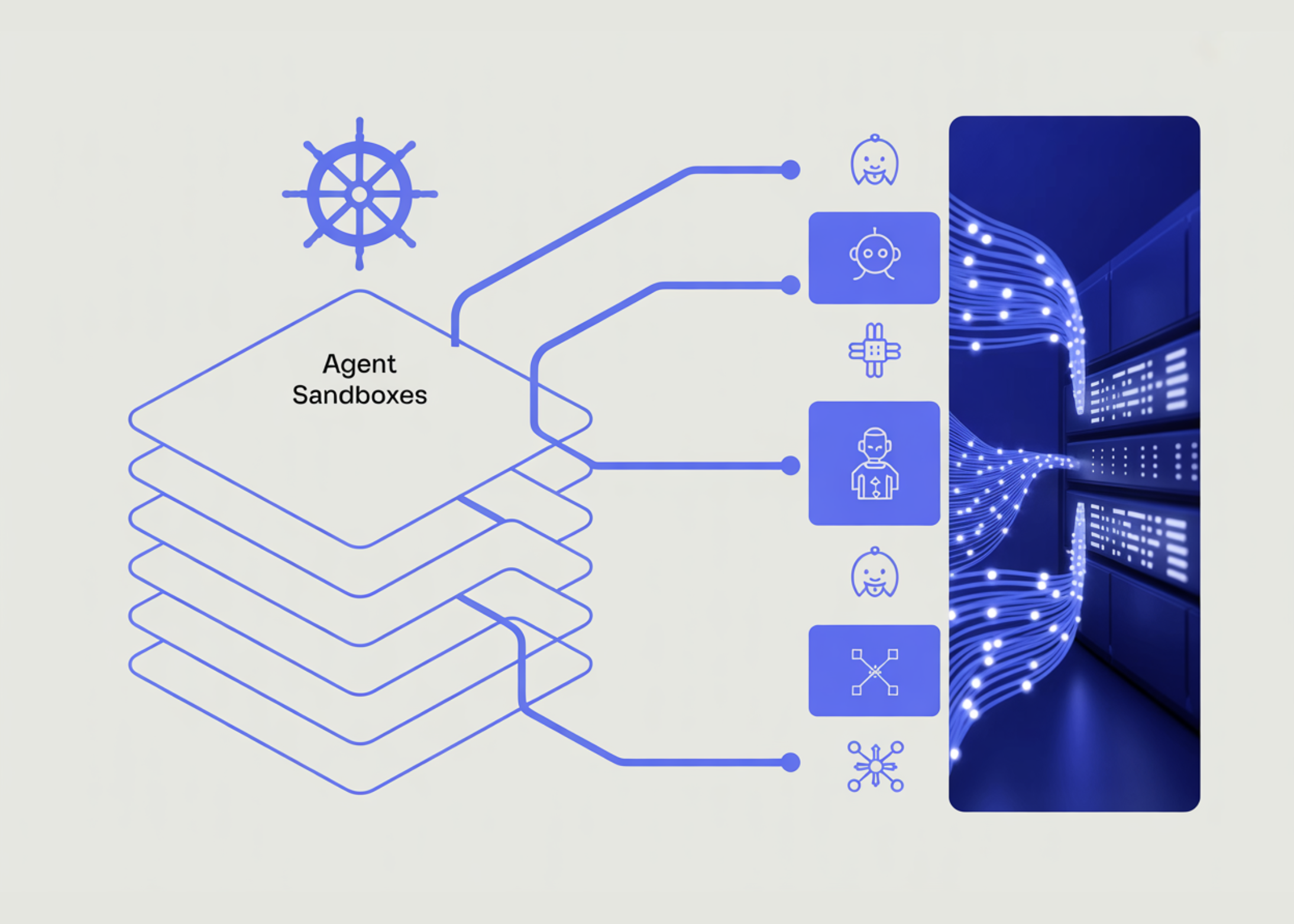
- The Sandbox Cluster: This is perhaps the most critical component of the platform. It utilizes Kubernetes to provide isolated runtime environments for each agent session. By leveraging the
kubernetes-sigs/agent-sandboxCustom Resource Definition (CRD), the platform can dynamically provision and decommission secure environments on demand.
For local development, the platform supports kind (Kubernetes in Docker), allowing engineers to simulate a full Kubernetes cluster on a local machine without incurring cloud costs. This lowering of the barrier to entry is expected to accelerate the development cycle for independent researchers and small engineering teams.
Solving the Isolation and Security Challenge
Security remains a primary concern for enterprises deploying AI agents, particularly those authorized to execute code or access sensitive APIs. The LiteLLM Agent Platform addresses this through a robust sandboxing mechanism. Each agent session is assigned its own isolated environment, ensuring that one agent cannot interfere with another or access unauthorized data.
A standout feature of the platform’s security model is its handling of environment variables and secrets. The platform implements a prefixing system where variables in a .env file labeled with CONTAINER_ENV_ are automatically injected into the sandbox containers with the prefix removed. For example, a variable defined as CONTAINER_ENV_GITHUB_TOKEN becomes GITHUB_TOKEN inside the agent’s runtime. This allows DevOps teams to manage secrets centrally while providing agents with the specific credentials they need for their assigned tasks, maintaining a "least privilege" security posture.
Additionally, the platform includes specialized harnesses, such as harnesses/opencode, which are pre-configured for coding agents like Claude Code or OpenAI Codex. These harnesses include vault proxies for credential management, further insulating the core infrastructure from potential vulnerabilities within the agent’s execution path.
Integration with the LiteLLM Ecosystem
The Agent Platform is designed to work in tandem with the existing LiteLLM AI Gateway, rather than replacing it. The LiteLLM Gateway acts as a universal adapter, allowing developers to call over 100 different LLM APIs—including those from OpenAI, Anthropic, Azure, and AWS Bedrock—using a standardized format.
In this ecosystem, the LiteLLM Gateway remains responsible for model routing, load balancing, cost tracking, and guardrails. The Agent Platform sits on top of this gateway, consuming its services to handle the higher-level logic of agent orchestration. This modular approach allows organizations to swap models or update routing policies at the gateway level without disrupting the persistent sessions managed by the Agent Platform.
Chronology and Development Timeline
The journey toward the LiteLLM Agent Platform began with the rapid growth of the LiteLLM Python SDK and Proxy Server. As the gateway became a standard tool for managing LLM costs and rate limits, the BerriAI team observed a recurring pattern among their users: they were building increasingly complex agents but struggling with the "day two" operations of keeping those agents running reliably in production.
- Early 2024: BerriAI solidifies its position as a leading AI gateway provider, supporting a wide array of models and enterprise features.
- Late 2024 – 2025: User feedback highlights the need for better session persistence and sandbox isolation as "coding agents" and "research agents" become more prevalent.
- Early 2026: Development begins on a dedicated infrastructure layer to manage the lifecycle of these agents.
- May 8, 2026: BerriAI officially open-sources the LiteLLM Agent Platform under the MIT license, inviting community contributions and public testing.
The platform is currently in its alpha public preview stage, with the development team actively seeking feedback via GitHub to refine the Kubernetes-based backend and expand the library of available agent harnesses.
Market Implications and Industry Reaction
The open-sourcing of this platform is likely to have a ripple effect across the AI development landscape. By providing a free, self-hosted alternative to proprietary agent orchestration platforms, BerriAI is empowering organizations to maintain full control over their data and infrastructure. This is particularly relevant for industries with strict regulatory requirements, such as finance, healthcare, and government, where third-party hosting of sensitive agent logic is often a non-starter.
Industry analysts suggest that the LiteLLM Agent Platform could become a foundational piece of the "AI stack." As companies move away from simple wrappers and toward deep integration of AI into their business processes, the demand for stable, persistent, and isolated agent runtimes will only grow.
"The challenge in the AI space has moved from ‘how do I get the model to answer?’ to ‘how do I keep the agent running when the server restarts?’" noted one industry observer. "BerriAI is tackling the unglamorous but essential plumbing that makes real-world AI possible."
Deployment and Accessibility
Reflecting its commitment to developer experience, BerriAI has made the platform’s deployment straightforward. For production environments, the recommended path involves using AWS Elastic Kubernetes Service (EKS) for the sandbox cluster and Render for the web and worker processes. The repository includes bin/eks-up.sh for automated cluster provisioning and a Render Blueprint for one-click deployment of the management interface.
The local quickstart process is equally streamlined, requiring only Docker, kind, kubectl, helm, and a LiteLLM gateway. With just two commands—bin/kind-up.sh and docker compose up—developers can have a fully functional agent orchestration environment running on their local hardware.
Broader Impact on the Open Source Community
By choosing the MIT license, BerriAI has ensured that the LiteLLM Agent Platform can be freely integrated into commercial products and internal enterprise tools. This move reinforces the trend of "open-core" or "open-infrastructure" models in the AI space, where the fundamental building blocks are shared publicly to drive innovation and standardization.
As the platform matures, the community is expected to contribute new harnesses for specialized agent types, such as agents focused on cybersecurity, data analysis, or automated customer support. The existence of a common infrastructure layer means that these specialized agents can be shared and deployed with greater ease, as they will all adhere to the same session management and sandbox standards.
In conclusion, the LiteLLM Agent Platform represents a strategic expansion for BerriAI. By addressing the critical needs of session continuity and environment isolation, the platform provides the necessary stability for the next generation of autonomous AI systems. As organizations continue to integrate AI more deeply into their operations, tools like the LiteLLM Agent Platform will be essential for ensuring that these systems are not only intelligent but also reliable, secure, and scalable.