



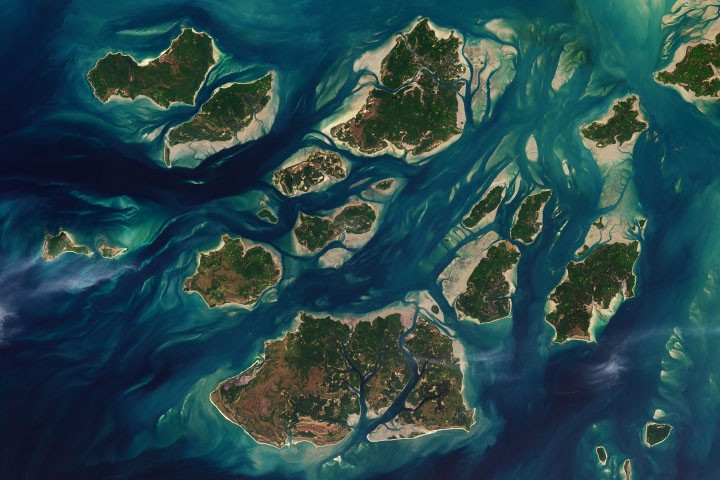
The Bijagós Archipelago, an ecological marvel off the coast of Guinea-Bissau, has been designated as a UNESCO World Heritage site, underscoring its unparalleled biodiversity and critical role in global marine and avian ecosystems. Recognized in 2025, this sprawling network of 88 islands and islets, characterized by vast mudflats, pristine sandy beaches, and dense mangrove forests, provides sanctuary to an extraordinary array of migratory shorebirds and hosts one of the most significant sea turtle nesting populations in the Atlantic. This recognition, highlighted by an "Image of the Day" released on July 17, 2026, draws global attention to the archipelago’s unique ecological dynamics and the urgent need for its continued preservation.
A Landscape Shaped by Perpetual Tides
Twice daily, the rhythm of the Atlantic Ocean orchestrates a dramatic transformation across the Bijagós. Tides ebb and flow through an intricate maze of sandy channels, exposing vast intertidal mudflats and sandflats that significantly alter the visible landmass of the islands. This continuous hydrological cycle is not merely a scenic phenomenon but the very engine driving the archipelago’s exceptional productivity. Satellite imagery, such as that captured by Landsat and utilized by the NASA Earth Observatory, vividly illustrates these stark landscape changes, revealing islands that appear to "grow" significantly at low tide before receding hours later. This dynamic environment, a result of the region’s unique geography, creates a nutrient-rich intertidal zone that serves as a vital feeding ground for countless species.
A comprehensive analysis conducted in 2025 shed light on why the Bijagós Archipelago experiences some of the most dramatic tidal ranges in West Africa. Researchers concluded that the confluence of the region’s wide, shallow continental shelf and the estuary’s specific geometry creates a remarkable tidal range of up to 7 meters (23 feet). This stands in stark contrast to many other parts of the West African coast, where tidal fluctuations typically average around 1 meter (3 feet). The study, which utilized advanced altimetry data from NASA/CNES satellites including TOPEX/Poseidon, Jason-1, and Jason-2, validated these findings, providing crucial scientific understanding of the physical processes that underpin the archipelago’s ecological richness. This deep understanding of tidal mechanics is essential for predicting environmental changes and informing conservation strategies.
UNESCO Recognition and Global Ecological Significance
The inscription of the Bijagós Archipelago as a UNESCO World Heritage site in 2025 was a culmination of decades of research, advocacy, and local conservation efforts. This designation acknowledges the site as the only active deltaic archipelago on Africa’s Atlantic coast, a place where the powerful forces of tides, river sediments, coastal upwelling, and coastal currents converge to sculpt unusually productive and biodiverse island ecosystems. The UNESCO committee cited the archipelago’s outstanding universal value, particularly its role as a critical habitat for threatened species and its representation of ongoing ecological and biological processes.
"The Bijagós Archipelago represents a rare confluence of marine and terrestrial ecological processes that are vital on a global scale," stated a UNESCO representative, speaking on the condition of anonymity due to ongoing diplomatic protocols, shortly after the inscription. "Its dynamic intertidal zones, pristine mangrove forests, and crucial nesting beaches are irreplaceable. This World Heritage status is not just an honor; it’s a call to action for the international community to support Guinea-Bissau in safeguarding this natural treasure for generations to come." This statement underscores the dual role of the UNESCO designation: recognizing intrinsic value while also catalyzing international support for conservation.
A Sanctuary for Migratory Birds and Marine Giants
The perpetual rhythm of the tides sustains an outpouring of marine life that forms the base of a complex food web. UNESCO estimates that the islands support an astonishing 870,000 migratory shorebirds, establishing the Bijagós as one of the most important feeding areas for birds in West Africa along the East Atlantic Flyway. This flyway is a critical migratory route stretching from the Arctic to Southern Africa, utilized by millions of birds annually. Species such as curlews, godwits, sanderlings, and various plovers flock to the Bijagós, feasting on the abundant marine worms, crustaceans, mollusks, and small fish exposed by the retreating tides. The sheer number of birds underlines the archipelago’s irreplaceable role in sustaining global avian populations, many of which face threats elsewhere along their migratory paths.
Beyond the avian spectacles, the Bijagós is a haven for marine giants. During high tides, manatees, dolphins, and vast schools of fish move closer to the islands, pushing deeper into the labyrinthine mangrove forests that ring them. These dense mangrove ecosystems are not just protective barriers against coastal erosion; they serve as vital nurseries for juvenile fish, crustaceans, and mollusks, providing shelter and abundant food resources. The intricate root systems of the mangroves also filter pollutants and sequester carbon, playing a critical role in the broader health of the coastal environment.
The archipelago is particularly renowned for its significant populations of sea turtles. Tens of thousands of sea turtles, primarily green sea turtles, swim inland to the sandy beaches of the Bijagós to hunt for nesting sites. The tiny island of Poilão, part of the João Vieira and Poilão Marine National Park, stands out as a critical nesting ground for a huge population of green sea turtles (Chelonia mydas). Each nesting season, female turtles undertake arduous journeys to lay their clutches of eggs in the warm sands.
The life cycle of these magnificent creatures is fraught with peril. After hatching, young turtles make perilous nighttime dashes to the water, a desperate race against time and predators. Crabs, lizards, and birds patrol the beaches, preying on the vulnerable hatchlings. Once they reach the water, baby sea turtles face an even wider array of predators, including jacks, barracudas, groupers, and snappers in shallow waters, as well as tuna, mackerel, sharks, and rays in deeper offshore areas. According to some estimates, a stark reality of marine life dictates that less than 1 percent of green sea turtle hatchlings survive to adulthood. This incredibly low survival rate underscores the critical importance of protecting every nesting site and minimizing human impact on these fragile ecosystems.
Conservation Challenges and the Role of Local Communities
Despite its protected status, the Bijagós Archipelago faces significant conservation challenges. Threats include illegal fishing, poaching of sea turtles and their eggs, unsustainable resource extraction, and the looming specter of climate change, which could lead to sea-level rise and altered tidal patterns. The archipelago’s remote nature, while contributing to its pristine state, also poses challenges for effective monitoring and enforcement of conservation laws.
The Bijagós people (or Bissagos), the indigenous inhabitants of the archipelago, have a profound and long-standing connection to their environment. Their traditional ecological knowledge and sustainable practices have historically played a crucial role in managing the islands’ resources. Many islands are considered sacred, and traditional laws and customs have often served as de facto conservation measures. Integrating this traditional knowledge with modern scientific conservation strategies is paramount for the long-term success of preservation efforts. Local communities are increasingly involved in ecotourism initiatives, which offer alternative livelihoods and incentivize conservation by directly linking economic benefits to the health of the natural environment. Organizations like the IUCN and local NGOs work closely with the Bijagós communities to develop sustainable fisheries, combat poaching, and raise environmental awareness.
The Broader Impact and Future Outlook
The July 17, 2026 "Image of the Day" serves as a timely reminder of the Bijagós Archipelago’s enduring beauty and ecological significance. The ongoing scientific research, particularly the use of satellite data from missions like TOPEX/Poseidon and Jason, highlights the indispensable role of space-based observation in understanding complex Earth systems and informing conservation policies. These satellites provide continuous, long-term data on sea levels and tidal dynamics, crucial for monitoring the impacts of climate change and for managing coastal resources effectively.
The UNESCO World Heritage designation is expected to further boost ecotourism, offering economic opportunities for the local population while raising global awareness about the archipelago. Carefully managed ecotourism can provide essential funding for conservation programs and create a powerful incentive for local communities to protect their natural heritage. However, balancing tourism development with environmental protection will require careful planning and stringent regulations to prevent adverse impacts on the delicate ecosystems.
Looking ahead, the Bijagós Archipelago stands as a beacon of biodiversity and a natural laboratory for studying the intricate interplay between marine and terrestrial environments. Its ongoing protection is not just a regional responsibility but a global imperative, contributing to the health of the East Atlantic Flyway, the survival of critically endangered sea turtle populations, and the broader understanding of how dynamic coastal ecosystems respond to both natural forces and anthropogenic pressures. The international community, in partnership with the government of Guinea-Bissau and the Bijagós people, must remain steadfast in its commitment to preserving this unique and invaluable natural wonder.