



A New Framework for Institutional Event Trading
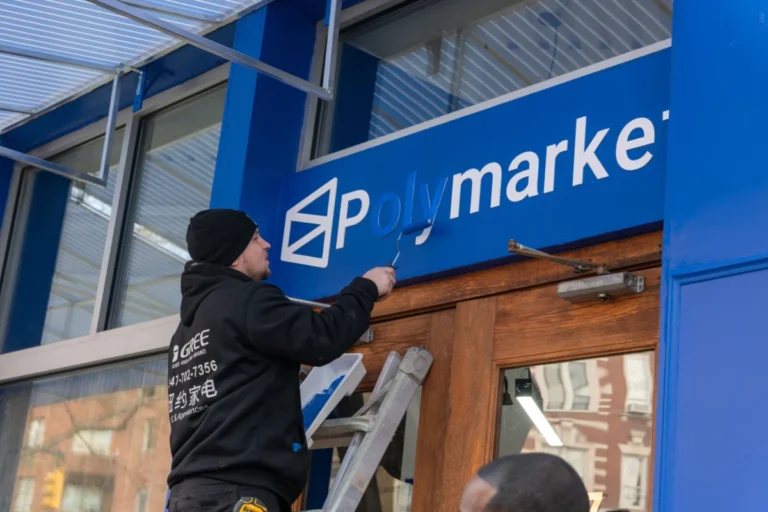
The partnership between BitGo Prime (BTGO) and Susquehanna Crypto, a subsidiary of the global quantitative trading powerhouse Susquehanna International Group (SIG), addresses a critical infrastructure deficit in the prediction market ecosystem. Historically, prediction markets—where participants bet on the outcome of future events ranging from political elections to macroeconomic indicators—have been dominated by retail users. These users typically utilize platforms like Polymarket or Kalshi, which often require full pre-funding of positions and offer limited integration with institutional-grade custody solutions.
Under the new arrangement, liquidity is provided by Susquehanna Crypto, while trades are executed bilaterally through BitGo’s over-the-counter (OTC) desk. This structure allows institutional clients to transact in large volumes without the price slippage often found on public order books. Furthermore, the use of standard derivatives documentation frameworks ensures that these transactions mirror the legal and operational workflows of traditional finance (TradFi), making it easier for compliance departments to approve participation in these emerging markets.
A central component of this offering is the collateral management system. Rather than converting digital holdings into cash or moving assets to a third-party exchange, investors can keep their crypto assets in BitGo’s regulated custody. These assets then serve as the collateral for the event contracts, maximizing capital efficiency and reducing counterparty risk. This "custody-first" approach is a familiar model for institutions accustomed to trading traditional derivatives, where positions are collateralized rather than fully funded upfront.
The Evolution of Prediction Markets: 2024–2026
The institutionalization of prediction markets is the culmination of a multi-year growth trajectory that saw these platforms move from niche crypto experiments to mainstream financial tools. The timeline of this expansion highlights the increasing sophistication of the market:
- Late 2024: The U.S. Presidential Election served as a watershed moment for prediction markets. Platforms like Polymarket saw billions of dollars in volume, often providing more accurate or faster price discovery than traditional polling or mainstream media outlets.
- Early 2025: Regulatory clarity began to emerge in the United States following several high-profile court cases involving the Commodity Futures Trading Commission (CFTC). This period saw the rise of regulated domestic platforms, though they remained limited in the scope of contracts they could offer compared to offshore counterparts.
- Mid-2025: Total trading volume in prediction markets surged past $30 billion. Financial institutions began to take notice of the "wisdom of the crowds" reflected in these markets, using them as data inputs for their proprietary trading models.
- Late 2025: Prediction markets hit a record $45 billion in annual volume. The entry of AI-driven trading agents accelerated liquidity, creating a more continuous and efficient market environment.
- March 2026: The BitGo and Susquehanna partnership is announced, signaling the transition from retail-led growth to institutional-grade infrastructure.
This chronology suggests that prediction markets are no longer viewed merely as gambling venues but as legitimate financial instruments for pricing discrete, real-world risks.
Supporting Data: The Surge in Event-Driven Finance
The decision by BitGo and Susquehanna to enter this space is backed by compelling market data. According to industry reports, prediction market volumes grew by over 400% between 2024 and 2025. While retail participation provided the initial momentum, the average trade size has increased steadily as sophisticated players entered the fray.
Institutional interest is driven by the unique hedging capabilities these markets offer. Traditional instruments like equities, interest rate swaps, or vanilla options are often correlated with broader market sentiment. In contrast, a prediction market contract on a specific policy decision—such as the passage of a tax bill or the outcome of a central bank meeting—provides a direct hedge against a specific event risk.
Internal data from OTC desks suggests that hedge funds are increasingly looking for "tail-risk" protection. In 2025, approximately 15% of institutional crypto desks reported inquiries regarding event contracts, up from nearly zero in 2023. The BitGo-Susquehanna offering aims to capture this demand by providing a seamless execution path that fits within the existing regulatory and operational silos of a modern hedge fund.
Official Responses and Strategic Alignment
In a joint statement, the companies emphasized that the new service is a response to direct client demand for more robust trading tools. A spokesperson for BitGo Prime noted that the firm’s clients have been seeking ways to put their "idle" crypto collateral to work in markets that offer non-correlated returns.

"Institutional investors operate under a different set of constraints than retail traders," the BitGo representative stated. "They require deep liquidity, bilateral execution, and, most importantly, the ability to keep their assets in a secure, regulated environment. By partnering with Susquehanna, we are providing the liquidity and the infrastructure necessary to make prediction markets a viable asset class for the world’s largest investors."
Susquehanna Crypto echoed these sentiments, highlighting their role as a market maker. "Our participation in this venture is a natural extension of our expertise in quantitative trading and liquidity provision. We see prediction markets as a vital component of the future financial landscape, offering a level of transparency and price discovery for real-world events that was previously unavailable to the broader market."
Market analysts suggest that the involvement of Susquehanna is particularly significant. As one of the world’s largest liquidity providers in traditional options and ETFs, Susquehanna’s entry into the prediction market OTC space provides a "seal of approval" that could encourage other major market makers to follow suit.
Broader Impact and Implications for the Financial Ecosystem
The launch of this institutional OTC offering has several far-reaching implications for the financial industry. First and foremost, it challenges the traditional dominance of polling and economic forecasting firms. As more capital flows into prediction markets, the prices of event contracts become more accurate indicators of likely outcomes. This creates a feedback loop where businesses and governments may eventually look to these markets for "ground truth" data when making strategic decisions.
Furthermore, the BitGo-Susquehanna model addresses the ongoing issue of regulatory fragmentation. In the United States, the regulatory status of prediction markets remains a patchwork of state and federal oversight. By using an OTC, bilateral derivatives framework, the partners are utilizing a well-trodden legal path that is familiar to regulators. This could provide a blueprint for how other firms can offer exposure to event-driven contracts without running afoul of existing commodity or securities laws.
The move also highlights the continuing convergence of digital assets and traditional finance. The fact that crypto assets are being used as collateral for contracts that track non-crypto events—such as elections or economic policy—demonstrates that the utility of digital assets is expanding far beyond simple currency or store-of-value use cases.
The Role of Technology and AI in Market Efficiency
While the BitGo-Susquehanna partnership focuses on the institutional "human" element of trading, it coincides with a broader technological shift in the sector. The rise of AI agents has quietly rewritten the rules of prediction market trading over the past year. These automated systems can process vast amounts of real-time data—from social media sentiment to news wires—and execute trades in milliseconds.
For institutional investors, the presence of AI-driven liquidity in the underlying retail markets is a double-edged sword. It ensures that prices are efficient, but it also makes it difficult for manual traders to find an edge. The OTC desk provided by BitGo and Susquehanna offers a sanctuary from this high-frequency environment, allowing large players to negotiate prices based on fundamental views rather than algorithmic speed.
Conclusion: A Maturing Asset Class
The introduction of institutional OTC access to prediction markets by BitGo and Susquehanna Crypto represents a milestone in the maturation of the digital asset industry. It moves the conversation away from speculative "memecoins" and toward the practical application of blockchain-based collateral and decentralized data.
As we move further into 2026, the success of this initiative will likely be measured by the diversity of contracts traded. If institutions begin to use these markets to hedge against climate change risks, regulatory shifts, and geopolitical instability, prediction markets could become as central to the global financial system as the futures or options markets are today. For now, BitGo and Susquehanna have laid the groundwork for a more efficient, transparent, and accessible way for the world’s most sophisticated investors to trade the future.