


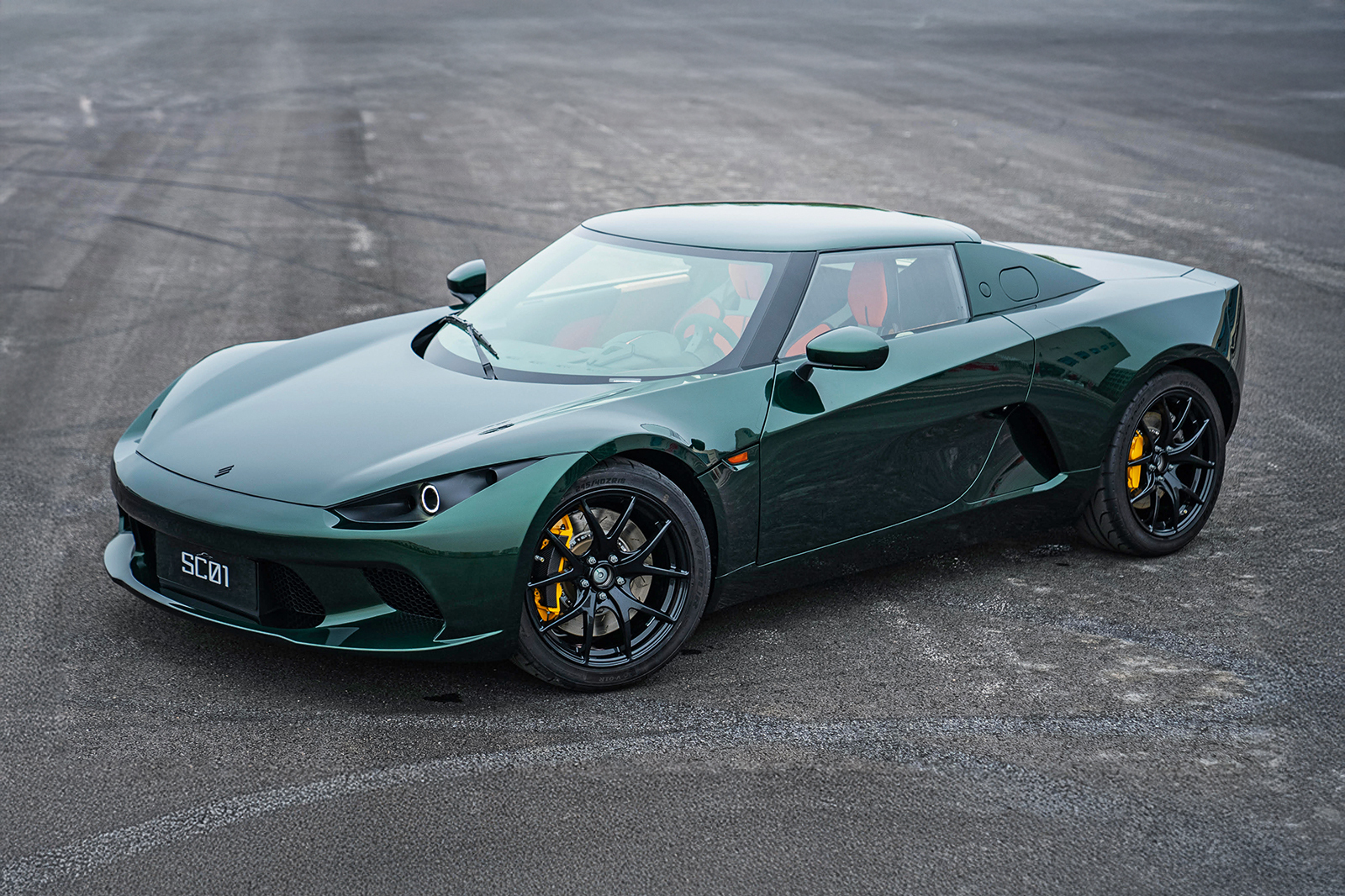
The automotive landscape in the United Kingdom is set for a significant disruption in April 2027 with the arrival of the SC-01, a vehicle being positioned by its importers as the spiritual successor to the lightweight, driver-focused machines historically produced by Lotus. As the global automotive industry shifts toward electrification, many enthusiasts have lamented the increasing weight and complexity of modern performance cars. The SC-01, however, seeks to reverse this trend by utilizing a dedicated spaceframe chassis and a unique battery configuration designed to mimic the balance and handling characteristics of a traditional mid-engined sports car.
Developed in China and already gaining traction in select international markets, the SC-01 represents a new wave of Chinese automotive engineering that prioritizes driving dynamics over raw straight-line speed or infotainment features. The vehicle’s entry into the UK market will be managed by the Small Sports Car Company (SSCC), a boutique firm led by industry veteran Mark Cotton. With a starting price targeted at approximately £50,000, the SC-01 aims to occupy a niche that has been largely vacated by established European manufacturers moving upmarket or focusing on heavy electric grand tourers.
Technical Architecture and the Mid-Engined Concept
The defining characteristic of the SC-01 is its unconventional mechanical layout. Unlike the majority of modern electric vehicles (EVs), which utilize a "skateboard" platform where the battery is housed in a flat pack beneath the floor, the SC-01 employs a "chest" battery layout. In this configuration, the battery pack is mounted vertically behind the two seats, occupying the space where a combustion engine would typically reside in a mid-engined car.
This design choice is central to the vehicle’s identity. By concentrating the mass of the battery behind the driver and ahead of the rear axle, the engineers have managed to keep the seating position low to the ground—a feat often impossible with floor-mounted batteries. This results in a center of gravity and polar moment of inertia that closely mimic those of legendary sports cars like the Lotus Elise or the Toyota MR2.
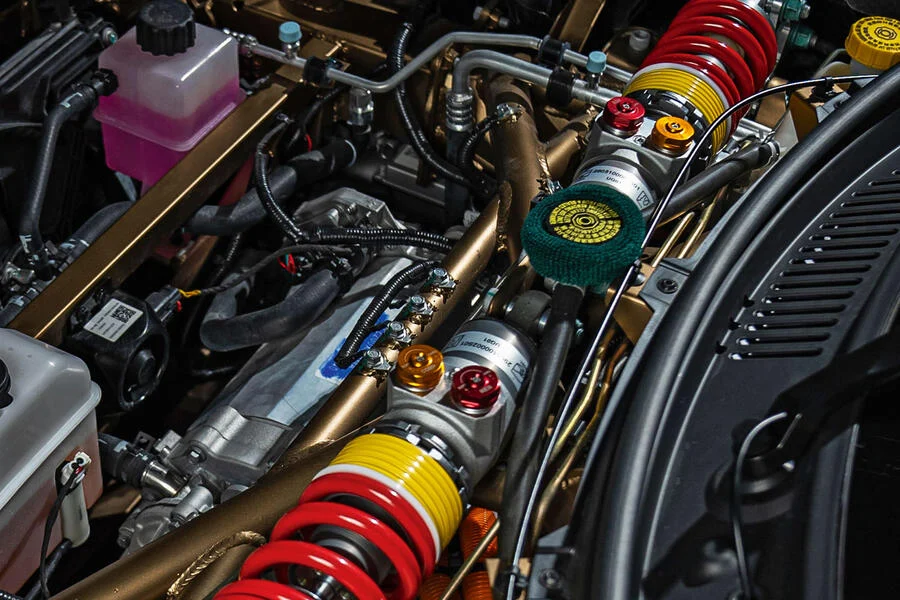
The structural integrity of the SC-01 is provided by a bespoke steel spaceframe chassis. This lightweight yet rigid skeleton is paired with a dual-motor powertrain, providing all-wheel-drive capabilities. Total power output is rated at 425bhp (429hp), which, when combined with the vehicle’s target weight of approximately 1,300kg, promises a power-to-weight ratio that rivals established high-performance sports cars. The suspension system utilizes a horizontal pushrod configuration, further emphasizing its track-inspired pedigree and commitment to handling precision.
The Origins of the SC-01: From Tuning to Production
The SC-01 is the brainchild of Feng Xiaotong, an entrepreneur and automotive enthusiast who founded Tianjin Gongjiangpai Automobile Technology Co, more commonly known as China Car Custom (CCC). Before venturing into original vehicle manufacturing, Feng’s firm established a reputation for restoring and upgrading modern classic cars, giving the team a deep understanding of the mechanical nuances that define a "driver’s car."
Feng’s vision was to create an electric vehicle that did not rely on gimmicks but rather on the fundamental principles of lightness and balance. This vision attracted significant attention and investment within China, most notably from the consumer electronics giant Xiaomi. Xiaomi’s involvement in the project provided the necessary capital and technological backing to move the SC-01 from a prototype concept to a production-ready reality.
In its domestic market, the vehicle is integrated into the lineup of JMEV (Jiangling Motors Electric Vehicle) and is marketed under the name Yichi 01. Its successful launch in China and subsequent introduction to the Italian market served as the proof of concept required for expansion into right-hand-drive territories, including the United Kingdom.
Market Entry Strategy and the Small Sports Car Company
The introduction of the SC-01 to the UK is being spearheaded by Mark Cotton, the founder and current managing director of the Small Sports Car Company (SSCC). Cotton brings a wealth of experience to the venture, having held executive and engineering roles at prestigious automotive brands including BMW, Bentley, McLaren, and RML. His background in both high-volume premium manufacturing and specialized low-volume engineering provides a unique perspective on the challenges of launching a niche brand.
Cotton’s business model for the SSCC is deliberately lean. Recognizing the volatility of the niche sports car market, he has opted to keep the company’s internal footprint small while leveraging strategic partnerships for logistics, financing, and aftersales support. The UK launch strategy involves:
- Dealer Network: The SSCC is in the final stages of securing three dedicated dealer partners across the UK. these hubs will serve as the primary points for sales and specialized servicing.
- Distribution and Support: Third-party partners will manage the complexities of vehicle distribution and provide a robust aftersales framework to ensure long-term reliability for owners.
- Modest Volume Targets: Unlike mass-market EV brands, the SSCC is focusing on exclusivity and sustainability. Initial sales targets are set at 160 units in the first year, with a projected increase to 360 units by the third year of operation.
Cotton has emphasized that the project does not require massive sales volumes to achieve financial viability. By targeting a specific demographic of driving enthusiasts, the company aims to build a sustainable business around a product that offers an "emotional connection and a soul," qualities often cited as missing in the current crop of performance EVs.
Chronology of Development and Launch
The journey of the SC-01 from an ambitious concept to a UK-bound production car has followed a steady timeline:
- 2022: Initial reveal of the SC-01 concept in China, highlighting its lightweight spaceframe and "mid-engined" battery layout.
- 2023: Global media attention increases as technical specifications are confirmed. Mark Cotton begins preliminary discussions with Feng Xiaotong regarding European distribution.
- 2024: Production begins in China. The vehicle enters the Italian market, marking its first foothold in Europe.
- 2025-2026: Engineering and development of the right-hand-drive (RHD) variant commence. This period involves rigorous testing to meet UK-specific Type Approval and safety standards.
- April 2027: Scheduled official launch of the SC-01 in the United Kingdom under the SSCC brand.
Competitive Landscape and Market Analysis
The SC-01 enters a UK market that is currently undergoing a transformation. While several manufacturers have announced electric sports cars, most are positioned at significantly higher price points or are substantially heavier.
- The Lotus Comparison: While the SC-01 is frequently compared to the Lotus Elise, Lotus itself has moved toward larger, more expensive models like the Eletre SUV and the Emeya sedan. The upcoming Lotus Type 135 electric sports car is expected to be a direct competitor but is likely to carry a much higher price tag than the SC-01’s £50,000 estimate.
- MG Cyberster: The MG Cyberster is perhaps the most prominent electric roadster currently available. However, the Cyberster is a larger, heavier "grand tourer" style convertible, whereas the SC-01 is a compact, fixed-roof coupe focused on raw agility.
- Caterham Project V: Another potential rival is the Caterham Project V, which also prioritizes lightness. However, the SC-01’s earlier development cycle and existing production infrastructure in China may give it a first-mover advantage in the sub-£60,000 electric sports car segment.
Industry analysts suggest that the SC-01’s success will depend heavily on its ability to deliver on its handling promises. In the enthusiast market, specifications on paper are often secondary to the subjective "feel" of the steering and chassis. By sourcing bespoke components and utilizing a spaceframe chassis, the SC-01 is taking a path more common in motorsport than in mass production, which could be its greatest selling point.
Broader Implications for the Automotive Industry
The arrival of the SC-01 in the UK is emblematic of a broader trend: the emergence of specialized Chinese manufacturers capable of producing high-quality, niche products. For decades, the Chinese auto industry was associated with mass-produced budget cars or joint ventures with Western firms. The SC-01, backed by tech giants like Xiaomi and developed by enthusiasts, represents a shift toward original design and engineering excellence.
Furthermore, the SC-01 challenges the narrative that electric vehicles must be heavy and disconnected. If the vehicle succeeds in capturing the "soul" of a traditional sports car, it could provide a blueprint for other manufacturers to follow. The use of a "chest" battery layout, in particular, may see wider adoption among brands looking to maintain low seating positions and classic proportions in the electric era.
For the UK, the SC-01 represents a test case for a new type of automotive retail. The Small Sports Car Company’s lean model—focusing on a single, high-quality product for a dedicated community—could offer a viable alternative to the traditional, high-overhead dealership networks that are currently struggling under the weight of industry-wide shifts.
Conclusion
As April 2027 approaches, the SC-01 stands as one of the most intriguing prospects in the performance EV sector. By combining the manufacturing efficiency and technological investment of the Chinese industry with a design philosophy rooted in British sports car heritage, it seeks to offer something truly unique. For the UK’s driving enthusiasts, the SC-01 is not just another electric car; it is a potential return to the fundamentals of driving pleasure, adapted for a new age of mobility. With a veteran leadership team at the helm of its UK operations and a clear focus on the "enthusiast driver," the SC-01 is poised to prove that in the world of electric vehicles, less can indeed be more.