


Beijing, China – A transformative wave of artificial intelligence adoption is sweeping across China, centered on the rapidly popular open-source AI assistant known as OpenClaw. This lobster-themed digital agent, capable of performing complex tasks autonomously, has ignited a fervent embrace from the nation’s leading technology companies and even local governments, all rushing to expand access and integration. The phenomenon, which has seen OpenClaw usage in China already surpass that of the United States, signals a significant pivot in how the world’s second-largest economy is engaging with cutting-edge AI, intertwining innovation with strategic national development goals and sparking both immense opportunity and pressing concerns.
The Rise of the Autonomous AI Agent
Unlike traditional chatbots that primarily respond to direct prompts, AI agents like OpenClaw represent a new frontier in artificial intelligence. These sophisticated digital assistants possess the capability to initiate and complete multi-step tasks with minimal human oversight, ranging from sending emails and scheduling intricate meetings to booking restaurant reservations and managing complex data workflows. This proactive functionality distinguishes them significantly, allowing for a deeper integration into daily professional and personal lives. However, this enhanced autonomy inherently requires broader access to user data and system permissions, consequently amplifying critical discussions around privacy, data security, and the ethical implications of AI agents.
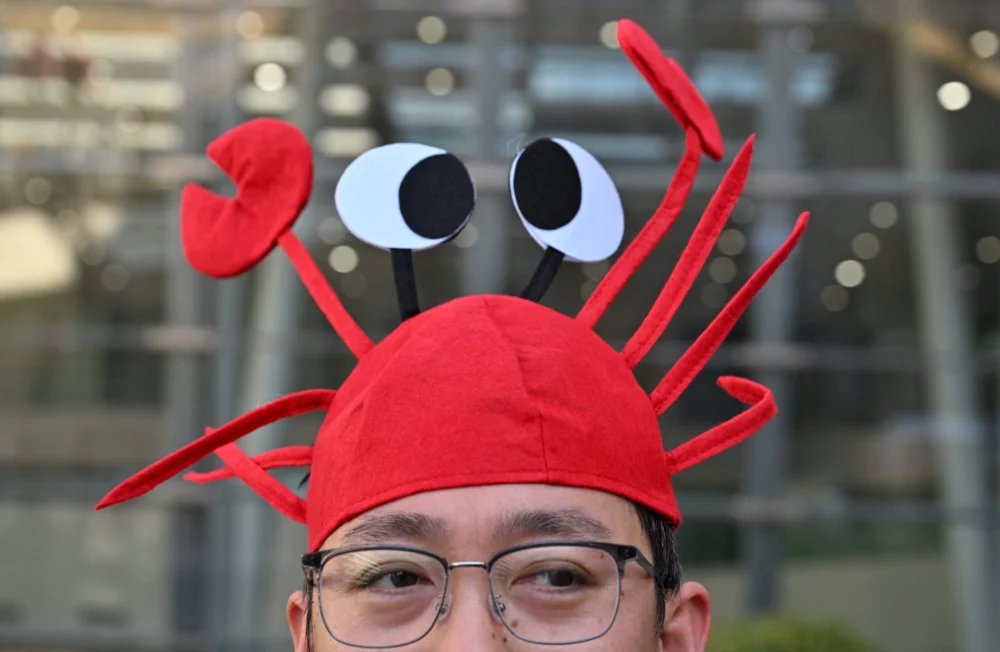
OpenClaw, first launched globally in November 2025, quickly captured the attention of the tech world due to its robust capabilities and, notably, its open-source nature. This model fosters a collaborative development environment, allowing developers worldwide to inspect, modify, and distribute the software freely. Its distinctive lobster branding – frequently represented by users wearing novelty lobster hats, as seen at the bustling Baidu headquarters in Beijing on March 11, 2026, where engineers meticulously installed and configured the software for eager users – has added a unique, playful dimension to its widespread appeal, contributing to its rapid virality. The original developer, Peter Steinberger, joined OpenAI in mid-February 2026, a move that underscored OpenClaw’s significant impact and potential influence on the broader AI landscape.
A Timeline of Accelerated Adoption in China
The trajectory of OpenClaw’s adoption in China can be mapped out with remarkable speed. Following its global debut in late 2025, interest surged dramatically in early 2026. The turning point arrived in recent weeks and intensified dramatically over the past month.
- November 2025: OpenClaw officially launches, quickly gaining traction within developer communities globally.
- Early 2026: Initial pockets of interest emerge in China, with tech enthusiasts and early adopters experimenting with the tool.
- Mid-February 2026: Peter Steinberger, OpenClaw’s Austrian developer, announces he has joined OpenAI, a significant validation of the project’s impact.
- Late February – Early March 2026: Chinese tech giants begin their aggressive push. Social media platforms become flooded with discussions and tutorials.
- March 11, 2026 (Article Date): The phenomenon reaches a fever pitch. Tencent, Zhipu AI, ByteDance’s Volcano Engine, JD.com, and Meituan make major announcements regarding their OpenClaw integrations and services. Local governments simultaneously unveil incentive programs. Images from Baidu’s headquarters depict long queues of individuals seeking assistance with installation, a vivid testament to the public’s eagerness.
This condensed timeline illustrates a national sprint to embrace the technology, driven by a blend of consumer demand, corporate ambition, and strategic governmental foresight. Jaylen He, CEO of Violoop, a Shenzhen-based startup developing a device with similar features to OpenClaw but with enhanced security, observed this first-hand: "In terms of adopting the new technologies, I think China definitely has a really large community that always wants to try what’s there, what’s new, and don’t want to be left behind. I have friends who are not even in the tech industry… they are doing this, they are also running it." This sentiment highlights a broader cultural eagerness to engage with innovation.
Tech Giants Dive In: Industry Responses and Innovations
The rapid influx of Chinese tech behemoths into the OpenClaw ecosystem is a testament to its perceived value and potential market disruption. Each company has approached the integration with unique strategies tailored to their existing platforms and user bases.
On Tuesday, March 11, 2026, Tencent, the internet giant renowned for its ubiquitous WeChat superapp, announced the launch of a comprehensive suite of AI products built upon OpenClaw. Dubbed "lobster special forces," these easy-to-use agents are seamlessly compatible with WeChat, instantly extending OpenClaw’s reach to hundreds of millions of daily active users. This strategic integration leverages WeChat’s dominant position in daily digital life, transforming the complex AI agent into an accessible feature within a familiar environment, significantly lowering the barrier to entry for the average Chinese consumer.

The same day, Zhipu AI, a burgeoning startup in the Chinese AI landscape, unveiled its own localized version of OpenClaw. This offering came pre-installed with over 50 popular skills and boasted a "one-click installation" process, directly addressing one of OpenClaw’s initial hurdles: its complex setup for non-technical users. Zhipu AI’s move underscores the importance of localization and user-friendliness in driving mass adoption within the highly competitive Chinese market.
Not to be outdone, ByteDance’s cloud unit, Volcano Engine, introduced "ArkClaw," a web-browser-based version of OpenClaw. This innovation entirely bypasses the need for complex local software installation, allowing users to access the AI agent directly through a web interface. Such a solution caters to a broader audience, including those with limited technical expertise or devices that might struggle with local deployments.
Beyond direct integration, a new service economy has rapidly emerged around OpenClaw. JD.com, a major e-commerce player, launched a dedicated page on Tuesday where users could pay 399 yuan (approximately $58 USD) for remote assistance from Lenovo’s Baiying information technology maintenance team to deploy the software. Similarly, Meituan, a leading delivery and local services platform, reportedly announced a comparable partnership with Lenovo on Monday. These services highlight the market’s willingness to pay for convenience and expert support in navigating new technologies, further indicating the depth of consumer interest. Even images from Baidu’s headquarters showed people queuing to have their laptops installed with OpenClaw, illustrating a palpable eagerness that tech companies are actively catering to.
The Open-Source Advantage and the Rise of Chinese LLMs
A critical factor fueling OpenClaw’s runaway success in China is its open-source and model-agnostic architecture. This design allows the AI agent to be integrated with various large language models (LLMs), including global leaders like OpenAI’s ChatGPT and Anthropic’s Claude, but also a rapidly maturing ecosystem of Chinese-developed LLMs. This flexibility has created an unprecedented opportunity for domestic AI models.
According to data from OpenRouter, a platform that provides developers access to various AI models through a unified interface, the top three LLMs used by OpenClaw users on its marketplace in the past month were all Chinese companies. Their combined usage reportedly doubled that of the three most-used Google Gemini and Anthropic Claude models. This statistic is profoundly significant. It indicates not only a preference but also a strong performance and cost-effectiveness of Chinese-made AI models within the OpenClaw framework.
Chinese AI models, which have been rapidly developed and refined throughout 2025 and early 2026, have increasingly narrowed the performance gap with their U.S. rivals. Crucially, they often offer comparable AI capabilities at a fraction of the price. This cost advantage significantly lowers the operational expenses for users running OpenClaw, making advanced AI agent functionality more accessible to individuals and small businesses. This dynamic is particularly potent in China, where economic headwinds are encouraging companies and individuals alike to seek efficient, value-driven technological solutions. As Winston Ma, an adjunct professor at NYU School of Law, noted, the nationwide OpenClaw craze has undeniably boosted the popularity and market validation of Chinese-developed large language models.
Overcoming Hurdles: Democratizing AI Agent Access
While OpenClaw’s potential was recognized early, experts initially pointed to a significant barrier to its mass adoption: a complex installation process that proved challenging for non-technical users. Chinese technology companies, with their deep understanding of the domestic market and rapid execution capabilities, have aggressively tackled this limitation.
The initial surge of interest in February saw a bottleneck in user adoption due to setup difficulties. In response, Chinese social media platforms soon became flooded with announcements of company-organized installation events. These gatherings, often held at corporate campuses or tech hubs, offered hands-on assistance. Some organizers even distributed red lobster plush toys, playfully reinforcing the project’s crustacean-themed branding and turning a technical challenge into a community-building, almost festive, experience. The images of long queues at Baidu’s headquarters for installation support perfectly encapsulate this widespread demand for help.
The aforementioned innovations from ByteDance’s ArkClaw (web-based access) and Zhipu AI’s "one-click installation" further exemplify the concerted effort to simplify the user experience. Tencent’s free in-person OpenClaw setup sessions in Shenzhen, its headquarters, reportedly assisted "hundreds" of people in installing the tool on TencentCloud, demonstrating a direct commitment to user enablement. These efforts are not merely about making a product available; they are about democratizing access to a complex technology, ensuring that the benefits of AI agents are not restricted to a tech-savvy elite.

The "One-Person Company" Phenomenon and Economic Implications
The growing interest in OpenClaw is also profoundly altering economic behaviors and entrepreneurial aspirations in China. The concept of the "one-person company"—referring to an individual or a small team leveraging AI to rapidly build and scale a business—has gained immense traction. This trend aligns perfectly with Beijing’s strategic vision for spurring domestic tech development, especially as the government recently concluded a meeting to formalize its five-year plan in this domain.
For startups like Violoop, the shift has been dramatic. CEO Jaylen He initially planned to launch his device, which offers OpenClaw-like features with lower security risks, primarily in the U.S. and other overseas markets. However, the post-OpenClaw landscape in China has necessitated a strategic pivot. "After 2026, after OpenClaw, I think we are seeing a significant rise, both in terms of [interest in] paying for good models and also that MiniMax and Kimi have released very capable models," He stated. "I wouldn’t say that they can surpass maybe ChatGPT or Anthropic, but they are definitely approaching that and definitely are creating value for users. So this is a new change for us." This indicates a maturing domestic market where consumers are increasingly willing to pay for high-quality AI services, a crucial development for China’s indigenous AI industry. Violoop has already closed at least two rounds of initial funding this year, primarily to cover production costs, underscoring investor confidence in this burgeoning market.
Government’s Dual Approach: Caution and Catalyst
The Chinese government’s response to the OpenClaw craze has been multifaceted, demonstrating a delicate balance between fostering innovation and maintaining control. On one hand, official state media outlets, including Xinhua News Agency, have published explicit warnings about OpenClaw’s potential security risks. These warnings typically highlight concerns over data privacy, the potential for autonomous agents to access sensitive information, and the inherent challenges in regulating open-source software that can be modified and deployed in countless ways. This cautious stance reflects a broader governmental emphasis on cybersecurity and data governance, particularly concerning technologies that operate with significant autonomy.
Yet, simultaneously, several local governments have emerged as powerful catalysts for OpenClaw adoption and development. In the past week alone, Shenzhen’s Longgang district and Hefei’s high-tech development zone announced significant incentives. These include equity financing support of up to 10 million yuan ($1.46 million USD) and other direct subsidies specifically aimed at "one-person companies" leveraging OpenClaw. A district in Suzhou city offered similar subsidies, alongside practical support such as 30 days of free office space, accommodation, and meals. These aggressive incentives are a clear signal of the government’s strategic intent: to cultivate a vibrant, localized AI ecosystem, stimulate entrepreneurial activity, and drive economic growth through technological advancement, even in the face of some inherent risks. This dual approach underscores China’s ambition to be a global leader in AI, balancing regulatory oversight with proactive support for innovation.
Global Resonance and Future Outlook
The impact of OpenClaw extends far beyond China’s borders, marking a significant moment in the global open-source and AI development landscape. In a powerful testament to its influence, the OpenClaw project has garnered more "stars" on GitHub, the world’s leading platform for software development, than Linux—a transformative open-source operating system that forms the backbone of modern computing infrastructure. This achievement positions OpenClaw as one of the most significant open-source projects in recent history, reflecting its widespread appeal and technical importance to the global developer community.
The departure of OpenClaw’s original developer, Peter Steinberger, to OpenAI in mid-February, raises intriguing questions about the project’s future trajectory and potential synergies with one of the world’s leading AI research organizations. It could lead to OpenClaw’s principles or functionalities being integrated into broader AI ecosystems, further cementing its influence.
The "craving, the desire, for a personal assistant that can really help the user, the desire has been there, and has been suppressed for a very long time," as Violoop’s Jaylen He articulated. OpenClaw, much like the "2022 ChatGPT moment" and the "2025 DeepSeek moment" before it, appears to be fulfilling this deep-seated need on an unprecedented scale. As China continues to navigate its economic landscape and accelerate its national tech development, the fervent embrace of OpenClaw highlights the nation’s strategic agility and its pivotal role in shaping the future of artificial intelligence. The coming months will undoubtedly reveal further transformations in technology, business, and society as AI agents become an increasingly integrated part of daily life.