


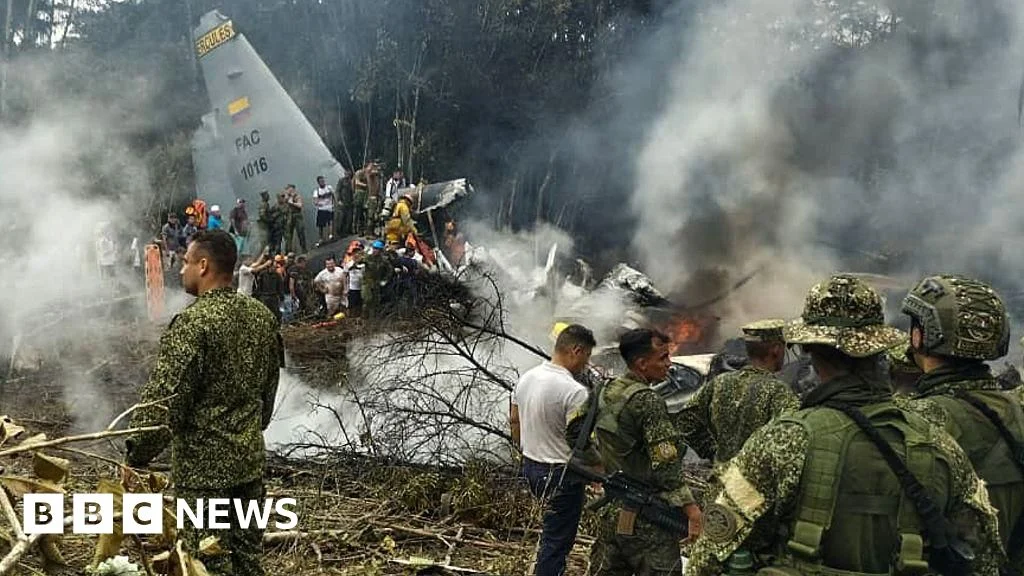
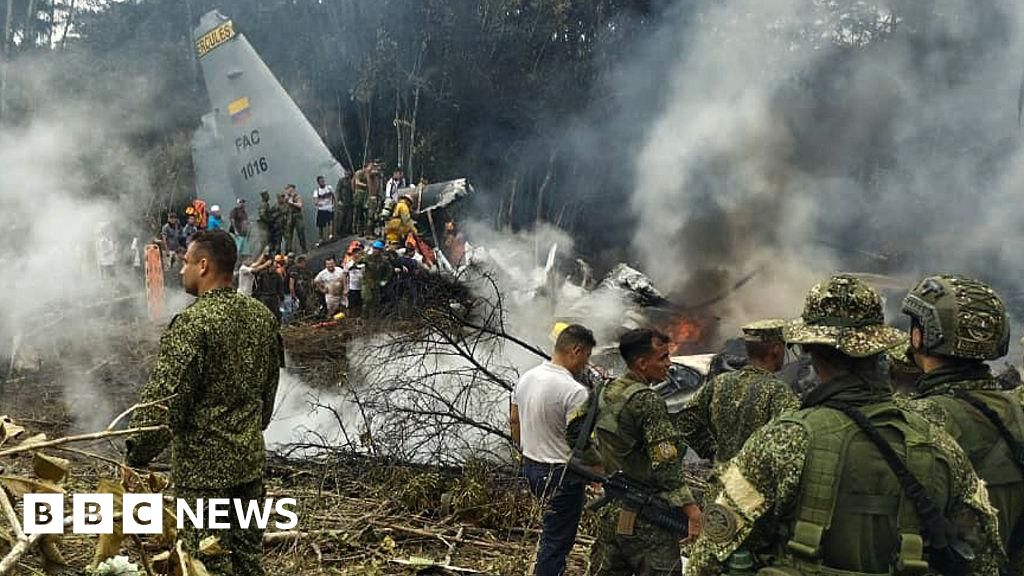
A catastrophic incident unfolded on March 23, 2026, when a Colombian Air Force (FAC) C-130 Hercules transport aircraft crashed shortly after takeoff in the remote southern region of Putumayo province, resulting in the deaths of at least 66 people. The tragedy, which occurred near the town of Puerto Leguízamo, a strategically vital yet often turbulent area bordering Peru, has sent shockwaves through the nation, prompting an immediate investigation and drawing a sharp rebuke from President Gustavo Petro regarding the state of the country’s military equipment.
The ill-fated flight was carrying a significant contingent of military personnel, underscoring the vital role these aircraft play in Colombia’s security operations. Air Force Commander Carlos Fernando Silva Rueda confirmed that 114 army personnel and 11 crew members were on board the Lockheed Martin-built C-130 Hercules, a workhorse of military air transport globally. While initial reports mentioned "dozens injured," the subsequent breakdown of fatalities indicated that the vast majority of those on board perished in the fiery crash. Military sources, speaking to AFP and Reuters, later specified the casualties as 58 soldiers, six air force personnel, and two police officers, totaling the confirmed death toll of 66. This incident stands as one of the deadliest air accidents in the recent history of the Colombian Air Force, casting a somber shadow over the nation’s armed forces.
Details of the Tragic Incident
The events leading to the disaster began moments after the robust C-130 Hercules departed from the Puerto Leguízamo air base. Eyewitnesses reported seeing smoke emanating from the aircraft almost immediately after it lifted off the runway, followed by a rapid descent and impact with the ground in a rural area. The force of the crash, combined with a subsequent fire, led to the tragic detonation of ammunition being transported on board, as later confirmed by Defence Minister Pedro Sánchez. This secondary explosion intensified the inferno, scattering debris over a wide area and severely complicating initial rescue efforts.
Footage shared by local media outlets depicted a thick plume of smoke rising ominously from the crash site, painting a grim picture of the devastation. Images also showed military trucks rushing towards the area, ferrying emergency workers and additional troops to aid in the grim task of searching through the wreckage for any potential survivors. In a testament to the immediate community spirit, local news sites broadcasted scenes of residents using small motorbikes to transport what appeared to be injured soldiers from the accident site to nearby hospitals, highlighting the urgent and chaotic nature of the initial response before official channels could fully mobilize. The sheer scale of the destruction and the high fatality count quickly indicated the severity of the incident.
Chronology of a Catastrophe
The timeline of the disaster, while still under comprehensive investigation, unfolded rapidly:
- Departure: On the morning of March 23, 2026, the C-130 Hercules took off from the military air base in Puerto Leguízamo, Putumayo province. The exact destination of the flight has not been publicly disclosed but was understood to be an internal military transport mission.
- Immediate Distress: Shortly after achieving airborne status, the aircraft reportedly encountered severe difficulties. Unconfirmed reports from ground witnesses suggest mechanical failure or an engine issue may have preceded the crash.
- Impact and Fire: The plane crashed violently into a rural area not far from the air base. The impact immediately ignited a fire, consuming much of the fuselage and its contents.
- Ammunition Detonation: Defence Minister Pedro Sánchez later confirmed that ammunition being carried as cargo detonated as a direct consequence of the fire, exacerbating the damage and significantly reducing the chances of survival for those on board.
- Initial Response: Local residents were among the first to reach the crash site, attempting to provide assistance and transport injured individuals. Simultaneously, military and civilian emergency services were alerted and dispatched to the remote location.
- Official Confirmation: Within hours, Air Force Commander Carlos Fernando Silva Rueda confirmed the crash and the approximate number of personnel on board. Defence Minister Pedro Sánchez issued a statement expressing profound sorrow and outlining initial details.
- Presidential Reaction: President Gustavo Petro took to X (formerly Twitter) to express his grief and, significantly, to lament the accident as avoidable, tying it to "bureaucratic problems" hindering military modernization.
- Ongoing Recovery: Rescue and recovery operations continued through the day and into the following days, focusing on securing the site, recovering remains, and initiating the official investigation.
The Workhorse Aircraft: C-130 Hercules in Focus
The Lockheed Martin C-130 Hercules, the aircraft involved in this tragedy, is one of the most recognized and enduring military transport aircraft in aviation history. First introduced in the 1950s, it has been continuously produced and upgraded, serving in over 70 nations worldwide, including Colombia. Renowned for its ruggedness, versatility, and ability to operate from unprepared runways, the C-130 is a cornerstone of military logistics. It is primarily used for troop transport, cargo delivery, aerial refueling, and various special operations missions.
The Colombian Air Force (FAC) operates a fleet of C-130s, which are critical assets for projecting power, transporting personnel and equipment to remote areas, and providing humanitarian assistance across the nation’s diverse and challenging geography. These aircraft are particularly vital in regions like Putumayo, where ground infrastructure is limited, and military presence is crucial for maintaining security and combating illicit activities. While the C-130 has an impressive safety record given its long operational history and demanding missions, any accident involving such an aircraft prompts immediate and thorough scrutiny, especially concerning maintenance, operational procedures, and the age of the specific airframe. The incident will inevitably lead to a comprehensive review of the FAC’s C-130 fleet’s operational readiness and maintenance protocols.
Geopolitical Significance of Putumayo Province
The crash site’s location near Puerto Leguízamo in Putumayo province is not incidental but highlights the strategic importance and inherent dangers of military operations in this part of Colombia. Putumayo is a department situated in the southwestern Amazon basin, bordering both Peru and Ecuador. This region is geographically complex, characterized by dense jungle, numerous rivers, and limited road access, making air transport indispensable for military logistics and civilian connectivity.
However, Putumayo is also a hotbed of illegal activities. It lies along critical drug trafficking routes, is a major area for coca cultivation, and is plagued by the presence of various armed groups, including dissidents of the FARC (Revolutionary Armed Forces of Colombia) who rejected the 2016 peace accord, and elements of the National Liberation Army (ELN). These groups engage in illicit mining, extortion, and clashes with state forces. Consequently, the Colombian military maintains a significant presence in Putumayo, conducting continuous operations to combat these criminal enterprises and assert state control. The frequent deployment of troops and supplies via air transport, often into austere and challenging environments, underscores the high-stakes nature of military missions in this volatile frontier region. The C-130 crash, therefore, not only represents a tragic loss of life but also impacts the operational capacity and morale of forces deployed to a critical security zone.
Official Responses and the Investigation Unfolds
The Colombian government swiftly responded to the tragedy. Defence Minister Pedro Sánchez described the incident as a "tragic accident" and expressed profound sorrow, calling it "deeply sad for the country." His confirmation of ammunition detonation on board provided a critical piece of information regarding the intensity of the crash and the minimal chances of survival.
The investigation into the precise cause of the accident has been launched immediately. Military and civilian aviation authorities, including the Colombian Air Force’s Accident Investigation Board (JIAAC), will collaborate to uncover the facts. This comprehensive inquiry will involve several critical steps:
- Site Analysis: Forensic examination of the wreckage and crash site to determine the impact sequence and contributing factors.
- Black Box Recovery: Locating and analyzing the flight data recorder (FDR) and cockpit voice recorder (CVR) – commonly known as "black boxes" – which contain crucial information about the aircraft’s performance and crew communications leading up to the crash.
- Maintenance Records Review: Scrutiny of the aircraft’s maintenance history, recent inspections, and repair logs to identify any potential mechanical issues or overlooked faults.
- Crew History: Examination of the pilot and crew’s training, experience, and flight hours.
- Operational Procedures: Reviewing the procedures for loading cargo, particularly ammunition, and takeoff protocols.
- Environmental Factors: Assessing weather conditions and any other external elements that might have played a role.
While the investigation is in its early stages, the government has committed to a transparent and thorough process to ensure accountability and prevent future occurrences. The findings will be crucial for understanding not only the immediate cause but also any systemic issues that may have contributed to this devastating loss.
President Petro’s Stance: A Call for Modernization
In the aftermath of the crash, President Gustavo Petro used his platform on X to lament the incident, stating, "this horrendous accident… should not have happened." His message went beyond mere condolences, directly linking the tragedy to what he termed "bureaucratic problems" that have stalled his administration’s plans to modernize the armed forces’ equipment and aircraft fleet.
Petro’s lengthy post underscored a broader political and strategic concern: the aging military assets of Colombia. He declared, "I will allow no further delays, the lives of our young people are at stake," without explicitly attributing the cause of the accident to equipment age. However, the implication was clear: a more modern and well-maintained fleet might have averted such a disaster. This statement injects the crash into a national debate about defense spending, procurement processes, and the long-term strategic readiness of Colombia’s military. Petro’s administration has often advocated for reforms across various state institutions, and his comments suggest that the military’s logistical and operational capabilities are a key area he intends to address more forcefully. The incident could serve as a powerful catalyst for pushing through long-stalled initiatives aimed at upgrading the armed forces’ capabilities, ensuring that they are equipped to meet both internal security challenges and humanitarian demands with reliable and modern assets.
Rescue, Recovery, and National Mourning
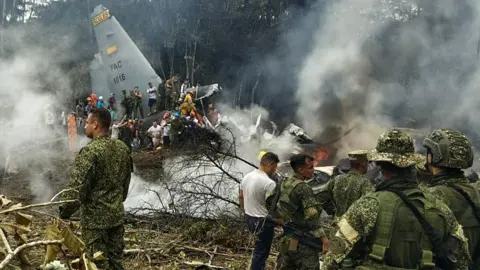
The immediate aftermath of the crash saw a harrowing scene of destruction. Emergency workers, military personnel, and local volunteers converged on the crash site, which was described as chaotic, with scattered debris, smoldering wreckage, and the acrid smell of burnt fuel and explosives. The primary objective shifted quickly from rescue to recovery, given the intensity of the fire and the high fatality rate.
The process of recovering remains and identifying victims is a painstaking and emotionally draining task. Forensic teams were deployed to the site to assist with this sensitive operation, working under challenging conditions. Support services for the families of the victims were immediately activated, including psychological assistance and logistical aid for travel and identification procedures. The nation entered a period of mourning, with flags flying at half-mast and public figures expressing their condolences. The loss of 66 service members represents a profound blow to the military community and the nation as a whole, highlighting the sacrifices made by those who serve to protect Colombia’s security and sovereignty.
Historical Context of Air Accidents in Colombia
Colombia, with its vast and complex geography ranging from Andean mountains to Amazonian jungles, presents significant challenges for aviation. The country has a history of both civilian and military air accidents, some of which have been among the deadliest in Latin America. Factors such as varied topography, unpredictable weather patterns, and the operational demands placed on aircraft in often remote and challenging environments contribute to these risks.
While military aviation accidents are less frequently reported than civilian ones, they underscore the inherent dangers faced by armed forces personnel. Past incidents, whether due to mechanical failure, adverse weather, or human error, have consistently prompted calls for improved safety standards, better maintenance protocols, and modernization of the fleet. The C-130 crash in Putumayo will undoubtedly reignite these discussions, forcing a critical reevaluation of the resources allocated to military aviation safety and the pace of equipment upgrades.
Broader Implications and the Path Forward
The tragic crash of the C-130 Hercules carries significant implications for Colombia. Firstly, it represents a substantial loss of life and human capital for the Colombian military, affecting morale and operational capacity, particularly in a critical security zone like Putumayo. The 66 fallen personnel leave a void in their units and communities, and their sacrifice will be deeply felt.
Secondly, the incident places renewed and intense scrutiny on the country’s defense procurement and maintenance policies. President Petro’s strong statements indicate a political will to accelerate modernization efforts, potentially leading to increased budget allocations for new aircraft and improved maintenance infrastructure. This could have long-term positive effects on the safety and effectiveness of the armed forces, but it will also require navigating complex bureaucratic and financial hurdles.
Thirdly, the investigation’s findings will be crucial. Depending on whether the cause is attributed to mechanical failure, human error, or an external factor, there will be specific recommendations for corrective actions. These could range from changes in maintenance schedules and pilot training to alterations in cargo loading procedures or even the accelerated phasing out of older aircraft models.
Internationally, the incident has drawn condolences from allied nations, many of whom operate similar C-130 fleets and understand the risks associated with military air transport. As Colombia grapples with this profound loss, the focus remains on supporting the affected families, conducting a thorough investigation, and implementing measures to prevent such a tragedy from recurring, ensuring the safety of those who serve the nation.