


The landscape of Indian aviation, already undergoing a seismic shift through consolidation and rapid infrastructure expansion, faces a new point of contention as the central government explores a policy change that would permit airport operators to hold equity stakes in commercial airlines. This potential regulatory pivot has drawn sharp criticism from the nation’s largest carrier, IndiGo, with its co-founder and interim CEO Rahul Bhatia warning of severe systemic risks. During the company’s recent earnings call, Bhatia characterized the proposal as a move without global precedent, suggesting that such vertical integration could compromise fair competition and ultimately harm the Indian consumer. The debate highlights a fundamental tension in the world’s third-largest aviation market: the need for fresh capital and operational synergy versus the necessity of maintaining a level playing field in a sector increasingly dominated by a few powerful entities.
The controversy stems from reports that the Ministry of Civil Aviation is reviewing existing regulations that currently prevent airport developers and operators from owning significant stakes in airlines. This "cross-holding" ban was originally designed to prevent monopolistic practices, ensuring that the entities controlling the ground infrastructure—runways, gates, and terminals—do not favor their own flight operations over those of competitors. However, as the Indian government seeks to attract more investment into the aviation ecosystem to support its ambitious "Ude Desh ka Aam Naagrik" (UDAN) regional connectivity scheme and the privatization of more airports, the idea of allowing conglomerate-led integration has gained internal traction.
The IndiGo Perspective: A Warning of Institutional Conflict
Rahul Bhatia’s public opposition marks one of the most vocal corporate pushbacks against the proposed policy change. Addressing analysts and investors, Bhatia emphasized that the roles of an airport operator and an airline operator are fundamentally distinct and should remain so to protect the integrity of the market. He argued that if an airport operator were to own an airline, the temptation to provide preferential treatment in slot allocations, ground handling services, and terminal space would be nearly impossible to regulate. "It has no global precedent because it typically would reflect a massive conflict of interest," Bhatia stated. "And over a period of time, it would actually be against the interest of consumers."
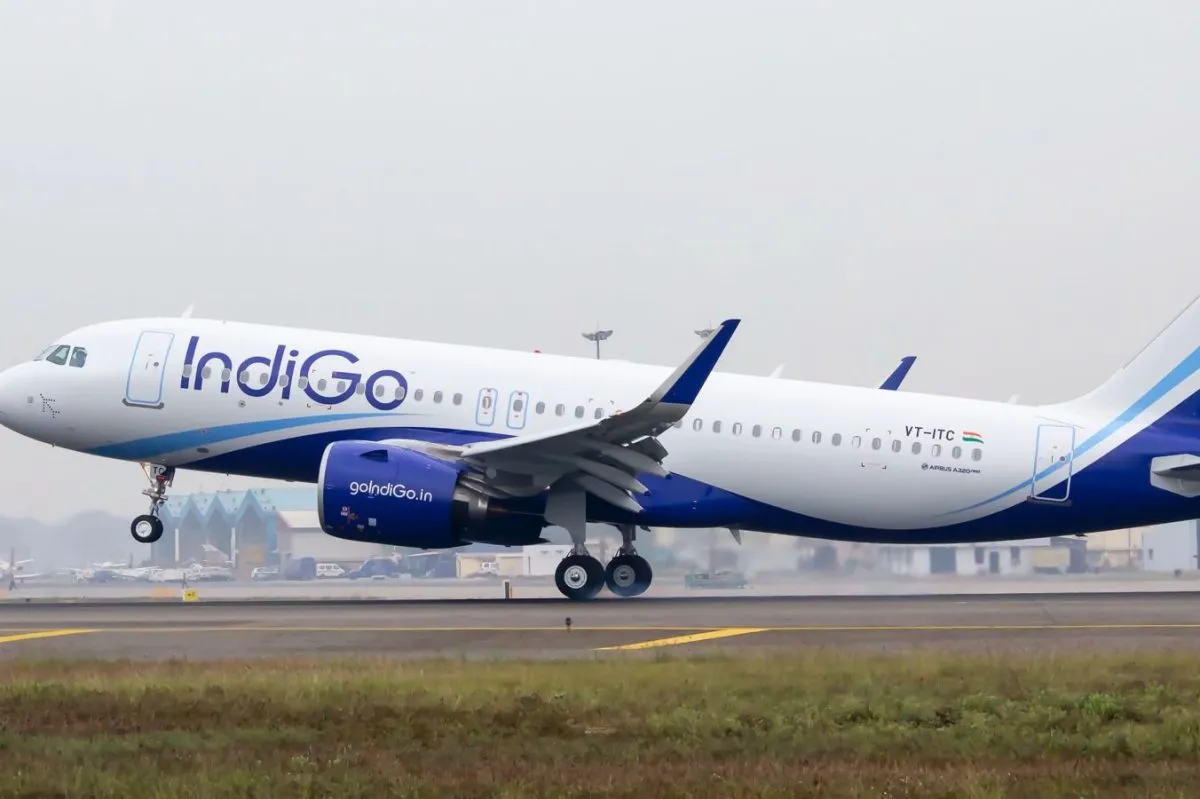
When questioned about whether IndiGo would consider its own partnerships with airport operators should the law change, Bhatia remained cautious. He described the scenario as "moot" until a formal policy is enacted. His reluctance to embrace the idea, even as a potential beneficiary, underscores a broader industry fear: that such a policy would favor massive conglomerates capable of owning the entire value chain, rather than specialized aviation companies. For IndiGo, which currently commands over 60% of the domestic market share, the entry of an airport-backed competitor could disrupt the operational efficiencies that have made the low-cost carrier the dominant force in Indian skies.
Contextual Background: The Indian Aviation Duopoly
To understand the weight of Bhatia’s comments, one must look at the current state of the Indian aviation market. Following the collapse of Go First in early 2023 and the prolonged financial struggles of SpiceJet, the market has effectively evolved into a duopoly. On one side stands IndiGo, with its massive fleet of Airbus A320-family aircraft and a disciplined low-cost model. On the other side is the Tata Group, which has consolidated Air India, Vistara, and AIX Connect into a formidable full-service and low-cost hybrid.
The Indian government is reportedly concerned that this concentration of power limits consumer choice and leaves the market vulnerable to price volatility. By allowing airport operators—entities that often possess deep pockets and diversified business interests—to invest in or launch airlines, the government may be hoping to introduce a "third force" into the market. However, critics argue that this solution could create a new type of concentration. Instead of a duopoly of airlines, India could see the rise of "mega-conglomerates" that control both the skies and the infrastructure, potentially squeezing out any smaller players or new entrants who do not have the backing of a landlord.
Chronology of Infrastructure Privatization and Policy Shifts
The evolution of Indian airport management provides a roadmap for how the current situation developed. For decades, the state-owned Airports Authority of India (AAI) managed almost all civil aviation infrastructure. The shift toward privatization began in the mid-2000s with the modernization of Delhi and Mumbai airports under the Public-Private Partnership (PPP) model, led by the GMR and GVK groups, respectively.
The second major wave of privatization occurred between 2019 and 2021, when the Adani Group won bids to operate six major airports: Ahmedabad, Lucknow, Mangaluru, Jaipur, Guwahati, and Thiruvananthapuram. Later, the group also acquired a controlling stake in Mumbai International Airport. This rapid expansion made the Adani Group the largest private airport operator in the country. In 2023, rumors began to circulate within New Delhi’s policy circles that the government was considering relaxing the 10% cap on cross-holdings between airlines and airports. This was followed by reports in early 2024 that the Ministry was drafting a consultation paper to solicit feedback from stakeholders on the viability of integrated aviation hubs.
Supporting Data: Market Share and Infrastructure Growth
The scale of the Indian aviation market provides the data-driven justification for the government’s desire for expansion. According to data from the Directorate General of Civil Aviation (DGCA), Indian domestic airlines carried over 152 million passengers in 2023, representing a significant recovery and growth trajectory compared to pre-pandemic levels. Projections suggest that India will require more than 2,000 new aircraft over the next two decades to meet demand.
Currently, the infrastructure landscape is dominated by a few key players:
- IndiGo: Holds approximately 60-63% of the domestic market share.
- Air India Group: Holds approximately 26-28% of the domestic market share.
- Adani Airports: Manages seven operational airports and is developing the greenfield Navi Mumbai International Airport, handling roughly 25% of India’s passenger traffic.
- GMR Group: Operates the Delhi and Hyderabad airports, which are among the busiest in Asia.
The financial stakes are equally high. The government has committed to an investment of nearly $11 billion (INR 91,000 crore) for the modernization of existing airports and the creation of new ones by 2025. In this high-capital environment, the government’s logic appears to be that allowing airport operators to invest in airlines would provide a much-needed infusion of liquidity into the airline sector, which has historically been plagued by high operating costs and low margins.
The Conflict of Interest: Slot Allocation and Ground Handling
The primary technical concern raised by analysts involves "slot allocation"—the scheduled time a plane has to land or depart. Slots are the lifeblood of an airline’s schedule and profitability. In a neutral environment, slots are allocated based on historical precedence and "use-it-or-lose-it" rules. If an airport operator owns an airline, there is a perceived risk that the best slots (morning and evening peaks) would be reserved for the "house" airline, while competitors are relegated to less desirable times.
Furthermore, ground handling and fuel throughput charges are significant revenue streams for airport operators. An integrated entity could potentially subsidize its own airline’s ground costs while charging competitors higher rates, effectively using its monopoly on infrastructure to gain an unfair advantage in the air. This form of vertical integration is what Rahul Bhatia and other critics describe as "anti-consumer," as it could lead to higher ticket prices on routes where the integrated operator faces no meaningful competition.
Global Precedents and Deviations
Internationally, the separation of airport management and airline operations is a standard recommended by the International Civil Aviation Organization (ICAO). Most major global aviation hubs, such as London Heathrow, Paris Charles de Gaulle, and Singapore Changi, operate under strict regulatory frameworks that prevent airport owners from exerting control over carriers.
There are rare exceptions, often in states where both the airport and the airline are government-owned, such as in certain Middle Eastern jurisdictions. However, even in those cases, the entities are typically run as separate commercial units to satisfy international competition laws and bilateral air service agreements. The Indian proposal is unique because it would apply to private, profit-driven conglomerates in a deregulated market, a scenario that has few, if any, direct parallels in modern aviation.
Potential Implications and Future Outlook
If the Indian government proceeds with this policy change, the implications for the industry will be profound. For the Adani Group or GMR Group, it could open the door to acquiring a struggling airline or launching a new carrier that operates as a "feeder" to their massive airport hubs. This could lead to the creation of "fortress hubs," where a single entity controls every aspect of the journey, from the parking lot to the boarding gate to the aircraft seat.
For the consumer, the impact is a double-edged sword. On one hand, an integrated operator might offer a more seamless travel experience, with synchronized schedules and better terminal facilities. On the other hand, the erosion of competition typically leads to higher fares and reduced service quality in the long run.
The Ministry of Civil Aviation has yet to release a formal draft of the policy, and the intense scrutiny from market leaders like IndiGo suggests that any move toward vertical integration will be met with significant legal and regulatory challenges. As India strives to become a global aviation hub, the decision on whether to allow airport operators to own airlines will be a defining moment for the country’s commitment to a transparent and competitive market. For now, the industry remains in a state of watchful waiting, as the government weighs the immediate need for capital against the long-term health of its skies.