



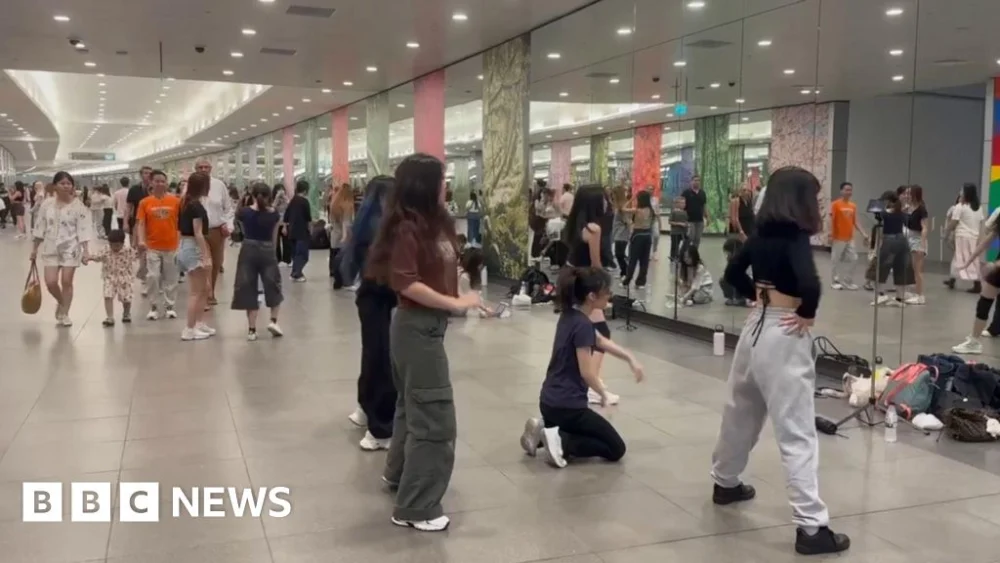
The vibrant pulse of Singapore’s burgeoning dance community, long manifest in the underground passage connecting Bayfront MRT station to the iconic Gardens by the Bay, was abruptly silenced on January 1st. What had for years served as an informal, yet cherished, practice ground for aspiring dancers, with its wide, mirrored walls and a constant stream of curious onlookers, suddenly transformed. The floor-to-ceiling mirrors, once reflecting energetic routines and youthful ambition, were frosted over, a stark visual metaphor for a debate that has once again gripped the city-state: the perennial tension between meticulous order and organic spontaneity in its tightly managed public spaces.
A Spontaneous Stage: The Bayfront Walkway’s Allure
For countless dancers, this particular subterranean artery beneath the Marina Bay Sands complex was more than just a transit route; it was an accidental studio. Its unique features—expansive, smooth floors ideal for intricate footwork, and long stretches of reflective glass—made it a perfect, free alternative to costly rented studios. The mirrors provided crucial visual feedback, essential for honing choreography and technique, while the constant flow of commuters and tourists inadvertently formed an appreciative, if transient, audience. The energy was palpable, often punctuated by the catchy rhythms of K-pop, hip-hop, or contemporary beats, turning a utilitarian corridor into an unexpected cultural spectacle. Dancers, ranging from solo practitioners to small groups, would gather most days, their dedication a vibrant counterpoint to the hurried pace of city life. "Seeing other dancers around me was really motivating," shared Wilson Tay, a regular at the walkway who practiced there twice a week. "It was also fun when tourists stopped by and tried to mimic my moves."
This informal creative hub thrived for years, emblematic of the kind of organic urban activity that often blossoms in the overlooked corners of major cities. However, in a nation renowned for its meticulous planning and strict regulations, such spontaneity frequently finds itself at odds with the prevailing ethos of order.
The Catalyst: Complaints and the Frosted Mirrors
The decision to frost the mirrors was a direct response to complaints. Local media reported that concerns had been raised about dancers "blocking pedestrian flow at this high-traffic area." The walkway, a crucial link to one of Singapore’s number-one attractions, sees hundreds of thousands of commuters and tourists pass through annually. While many found the dancers an engaging diversion, others perceived their presence, sometimes accompanied by props or larger groups, as an impediment to efficient movement.
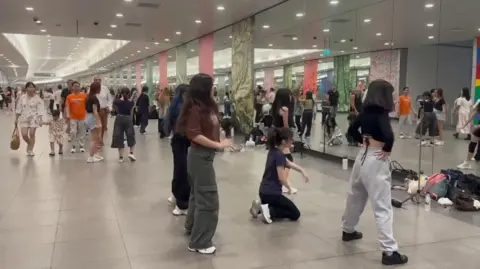
Marina Bay Sands (MBS), the luxury integrated resort that owns and maintains this particular underground passage, confirmed that the mirrors were installed "to enhance the visual appearance and experience," but reiterated that the "primary function" of the walkway was for walking. This distinction underscores the core of the conflict: for some, the space was purely functional; for others, it had evolved into something more. The frosting of the mirrors, a swift and decisive action taken on January 1st, effectively eradicated the walkway’s utility as a dance space, triggering a widespread public debate that transcended the immediate issue.
Voices from the Ground: A Divided Public
The immediate aftermath saw a flurry of reactions across social media and local forums. On one side, some Singaporeans expressed relief, echoing the sentiments of the complainants. Comments like, "If they had kept to one side, no-one would have complained," garnering thousands of likes on Instagram, suggested that the issue was one of inconsiderate behavior rather than a fundamental clash over space. These voices emphasized the need for order and unimpeded passage, particularly in a high-density urban environment where space is a premium and efficiency is highly valued.
Conversely, a significant portion of the public viewed the measure as "blunt" and "rigid." Many expressed sympathy for the dancers, acknowledging the prohibitive cost of renting dedicated studio space in Singapore, a factor that pushed many aspiring artists into public areas. Others lamented the loss of an enjoyable, unexpected cultural element in their daily commute. "I always looked forward to seeing the dancers on my way to work; it added a little sparkle to the day," one commuter shared online, reflecting a desire for more vibrancy and less sterility in public spaces. The incident highlighted a broader societal question: whose needs are prioritized in Singapore’s meticulously managed urban landscape? As urban planning expert Tan Shin Bin from the National University of Singapore posed, "[What should] give us pause is really whether the decision was a well-considered and fair one… Whose needs are being prioritised as legitimate, and whose desires are deemed secondary?"
Singapore’s Urban Ethos: Order, Efficiency, and Control
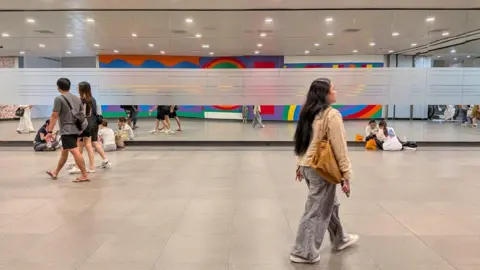
The Bayfront walkway incident is not an isolated occurrence but rather a microcosm of a larger, ongoing dialogue about public space in Singapore. The city-state, often lauded for its gleaming infrastructure, verdant landscapes, and unparalleled efficiency, has built its success on a foundation of rigorous urban planning and strict social norms. With over 8,300 people per square kilometer, Singapore is one of the world’s most densely populated countries, making efficient land use and harmonious co-existence paramount.
This "well-planned" reputation stems from the vision of its founding prime minister, Lee Kuan Yew, who famously attributed Singapore’s "swift, impressive change to efficient administration." He articulated a philosophy of unwavering adherence to a "definite plan," free from corruption and deviation. This top-down control, guided by documents like the long-term "Concept Plan" and reviewed every five years, ensures that urban development is largely in the hands of state agencies, prioritizing long-term foresight and expert management.
Current Prime Minister Lawrence Wong has embraced this orderly nature, describing it as a "competitive advantage." He noted, "We are boring, and we will never have the same offerings as New York and Paris… But at the same time, we are stable, we are predictable. We are reliable and we are trusted, and these are intangible assets that others would die to have." This perspective highlights the deliberate trade-off between vibrant, unpredictable urban life and the stability and reliability that underpin Singapore’s economic and social success.
The Debate Over Public Space: A Recurring Theme
The friction between spontaneity and regulation is a recurring theme in Singapore. From debates over whether frisbees should be allowed in parks to benches fitted with dividers to deter rough sleepers, the allocation and use of common spaces frequently ignite public discussion. Past examples abound:
- Pickleball Disputes: Recently, the growing popularity of pickleball led to complaints about noise pollution. Local authorities responded by shortening court hours and issuing noise reminders, even turning off lights earlier in some neighborhoods to prevent late-night games.
- Void Deck Barriers: In 2016, metal railings were installed at an open space (a "void deck") under a public housing block to deter football games after complaints about noise and potential damage. A resident lamented that the space, "originally filled with so much potential for use and creativity, is now effectively transformed into a dead space."
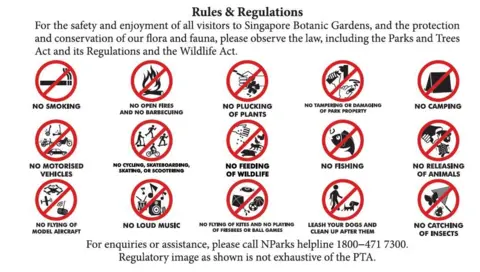
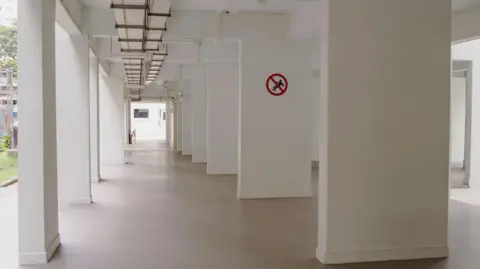
- Highly Regulated Parks: Singapore’s numerous parks, while beautiful, are governed by elaborate rulebooks that often ban activities like cycling, skating, kite-flying, and even frisbee, depending on the specific location.
- Controlled Artistic Expression: Graffiti, a ubiquitous form of urban art elsewhere, is illegal in Singapore, with severe penalties including fines, jail time, and caning. Public murals are exclusively commissioned by authorities. Busking, too, is only permitted at designated spots, requiring aspiring performers to pass auditions judged by the National Arts Council.
These examples illustrate a consistent pattern: when informal activities in public spaces generate complaints, the state often intervenes with regulations or physical modifications to restore order, sometimes at the expense of organic community use and creative expression.
Expert Perspectives: Balancing Pragmatism and Vibrancy
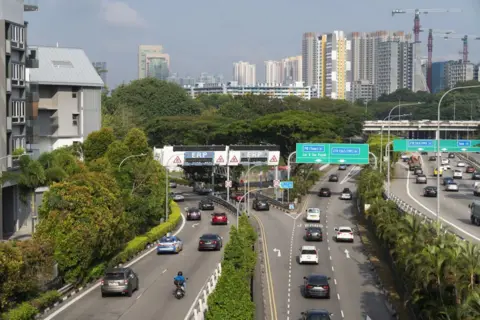
The unique Singaporean approach has garnered both fervent admiration and sharp criticism. Harvard economist Edward Glaeser, in his book Triumph of the City, lauded the city-state: "You have the second densest country in the world, that has virtually uncongested streets. Americans visiting Singapore can be forgiven for wistfully wondering why our own cities don’t seem so well-managed."
However, Dutch architect Rem Koolhaas offered a more critical take in his seminal essay Singapore Songlines, describing a city managed in a way that "excludes accident and randomness." He argued, "It is pure intention: if there is chaos, it is authored chaos: if it is ugly, it is designed ugliness; if it is absurd, it is willed absurdity." This "authored chaos" reflects the government’s attempts to inject vibrancy while maintaining control. Initiatives like the "Lively Places Fund," which offers residents up to S$20,000 ($15,800) to activate public spaces, and the national transport operator setting aside specific mirrored spots in some train stations for dancers, are examples of this top-down approach to fostering community and creativity.
Yet, some Singaporeans, like writer Justin Zhuang, wish for more room for genuine spontaneity. "We shouldn’t let the small size limit our thinking of what our city can be," he stated. "If we want Singapore to be a diverse city, we should also accept that there would be diverse activities." Authorities acknowledge this evolving need: "As Singapore becomes denser, shared public spaces will increasingly need to accommodate diverse users and activities," the urban planning authority told the BBC. However, they stressed that this requires "both thoughtful design and shared stewardship," emphasizing that users must also be "mindful of how their activities may affect others."
The Search for Alternatives: Designated Dance Spots
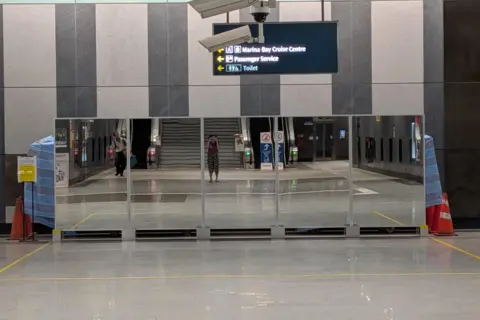
For dancers like Wilson Tay, the abrupt change at Bayfront meant finding new locations. The government’s provision of designated practice spots at other train stations, like the one two stops away from Bayfront, offers a structured alternative. These areas feature full-length mirrors, often carefully marked with yellow tape to delineate the practice zone. While providing a legal and undisturbed space, these alternatives often lack the energy and incidental audience of the Bayfront walkway. "It is very quiet here and much less vibrant. I’ve often found myself practising alone," Tay noted. "But the good thing, I guess, is that I get to dance without being disrupted." This shift underscores a fundamental difference: from a lively, organic public stage to a functional, controlled practice zone, losing a layer of spontaneous cultural interaction in the process.
Beyond Regulation: Cultivating Community and Spontaneity
The "nanny state" label, proudly embraced by Lee Kuan Yew, describes a society where the government plays a significant role in guiding citizen behavior and resolving disputes. This often leads to citizens looking to the state to "fix" problems, even minor ones. Former PM Lee Hsien Loong observed, "If you ask the Singaporeans, on the one hand, they’ll say let us do our own thing, on the other hand, whenever an issue comes up, they’ll ask what the government is doing about it." This dynamic shapes how conflicts over public space are managed.
However, amidst this highly regulated environment, examples of grassroots initiatives pushing the boundaries of public space usage do emerge. Wong Kae Chee’s endeavor to establish a community library in a void deck in her apartment building in 2022 offers a compelling counter-narrative. Initially fraught with bureaucratic hurdles and concerns from local authorities regarding "fire hazards" and unauthorized furniture, Wong and her team persevered. Facing skepticism like, "You think this is your house?", Wong retorted, "Yes! We all live in the block of flats above this library. What’s wrong with making good use of a space that would otherwise be left empty, as it has been for years?"
Through persistent advocacy and sustained community engagement, the library flourished. Today, it boasts over 7,000 titles in 14 languages, musical instruments, a playpen for the community cat, and serves as a venue for group singing, weekly dinners, and even an "IT helpdesk" for elderly residents. This "little library," as its sign proudly proclaims, has become a vibrant hub for organic community life, demonstrating that with determination, residents can transform underutilized spaces into meaningful social assets, even within Singapore’s structured environment.
Conclusion: A City at a Crossroads
The frosting of the Bayfront walkway mirrors, while seemingly a minor incident, encapsulates a profound and ongoing debate within Singaporean society. It highlights the city-state’s dedication to order and efficiency, its unique approach to urban planning, and the pervasive influence of the "nanny state" philosophy. Yet, it also underscores a growing yearning among some residents for more spontaneous, less regulated public spaces where diverse activities can flourish organically.
As Singapore continues to grow denser, the challenge of accommodating varied needs and fostering a sense of shared stewardship will only intensify. The question remains: can the meticulously planned metropolis find a way to gracefully integrate the "unauthored chaos" that gives other global cities their distinctive character, or will the impulse for order continue to prevail, shaping a future where vibrancy is primarily "designed ugliness" or "willed absurdity"? The dancers, now relocated to quieter, designated corners, and the community library, born from a struggle against regulation, represent two divergent paths in Singapore’s evolving relationship with its public realm. The future of the city’s spirit may well depend on which path ultimately gains precedence.