

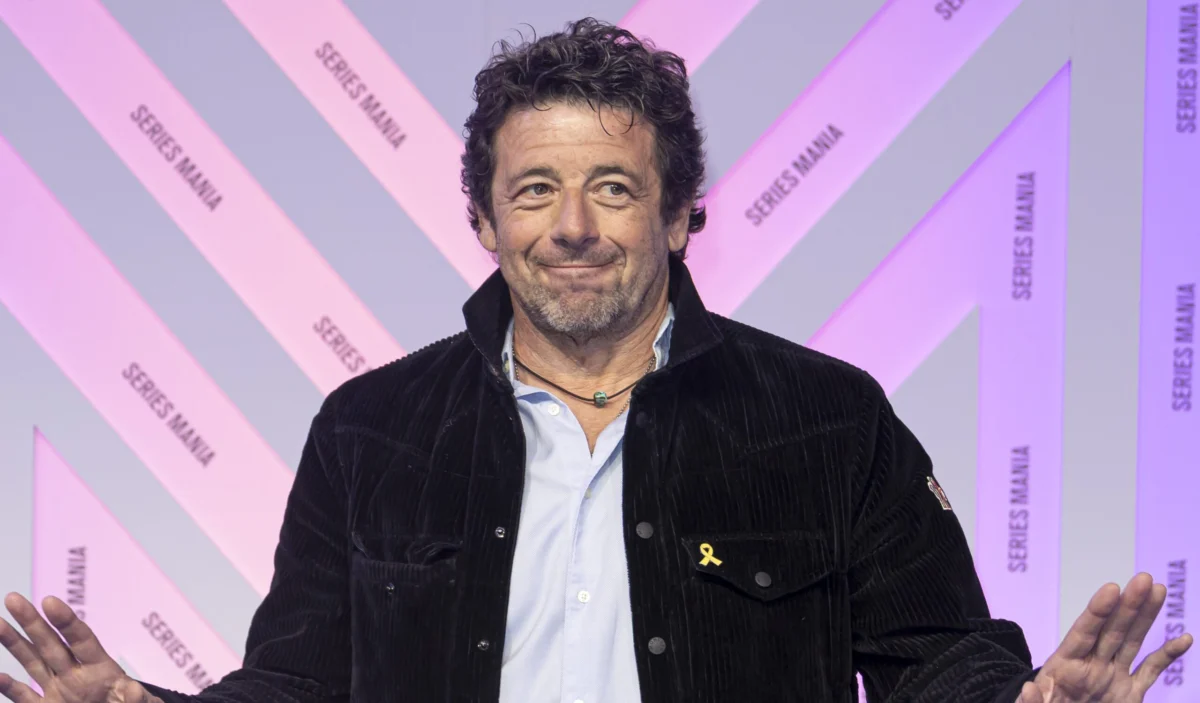
Daniela Elstner, the influential managing director of Unifrance, the French cinema and TV export agency, has formally filed a police complaint against renowned French actor and singer Patrick Bruel. The complaint, lodged on March 12th, accuses Bruel of attempted rape and sexual assault stemming from an alleged incident that occurred in 1997. This development surfaces amid a broader wave of accountability for sexual misconduct within the French entertainment industry, bringing renewed attention to past allegations and the complexities of seeking justice.
Elstner, a prominent figure in the international promotion of French film and television, had previously spoken about her experience in a public forum, notably with The Hollywood Reporter. At that time, she alluded to an assault by a high-profile individual within the film industry but withheld the perpetrator’s name, citing the sensitive nature of the situation and her desire to protect her anonymity. Her decision to now name Patrick Bruel and file a formal complaint marks a significant escalation, driven by a desire for recognition and potentially, though acknowledged as unlikely due to the statute of limitations, a form of closure.
The French investigative news website Mediapart played a crucial role in bringing the allegations against Bruel to wider public attention. On Wednesday, Mediapart reported that Elstner is one of eight women who have accused Bruel of sexual violence, with alleged incidents spanning from 1992 to 2019. This comprehensive report details a pattern of alleged misconduct, contributing to a more complete picture of the accusations.
Further compounding the allegations, Mediapart also reported on a separate complaint for rape filed against Bruel by a second woman. This incident is alleged to have taken place in 2012 during the Dinard British Film Festival, an event where Bruel served as the president of the jury. The timing and context of this alleged assault, during a festival celebrating cinematic arts, add another layer of concern to the ongoing accusations.
The Acapulco Incident: A Detailed Account
Elstner’s complaint specifically details the alleged assault by Patrick Bruel during Unifrance’s French Film Festival in Acapulco, Mexico, in 1997. At the time of the incident, Elstner was 26 years old and working as an assistant for Unifrance. Bruel was attending the festival to promote the French thriller K, a film in which he held a starring role alongside Italian actress Isabella Ferrari and Swiss actress Marthe Keller.
According to Elstner’s account to Mediapart, the alleged assault occurred after Bruel reportedly pushed her into a VIP car and proceeded to engage in unwanted physical advances. She described being kissed and fondled against her will, while she actively protested. The harrowing nature of the experience is underscored by her recollection of the driver’s reaction and Bruel’s dismissive words.
"I remember the Mexican driver’s smiles in the rearview mirror as I struggled, and Patrick Bruel’s words, which were more or less: ‘Who are you? Nobody will believe you. You’re nothing. Do you know who I am?’" Elstner recounted to Mediapart. She further elaborated on the profound impact of Bruel’s alleged statement, stating, "That sentence affected me as much as the physical assault, because it was very clearly intended to tell me that I didn’t exist. The car drove back up to the bungalow; it felt like the journey lasted forever.”
Elstner’s narrative continues with Bruel allegedly bundling her into his hotel room. However, she claims to have managed to escape the situation through significant struggle and vocal protest.
Legal Responses and Bruel’s Defense
Representing Patrick Bruel, lawyer Christophe Ingrain has vehemently denied all allegations leveled against his client. In a statement to Mediapart, Ingrain asserted that Bruel "never forced anyone into a sexual act or relationship" and "never overruled a refusal." This categorical denial forms the basis of Bruel’s defense against the accusations.
Patrick Bruel: A Prominent Figure in French Entertainment
While not an international superstar in the vein of some Hollywood actors, Patrick Bruel is a deeply recognized and celebrated figure within France. His career spans decades, marked by numerous chart-topping music albums and a substantial filmography encompassing dozens of television and film credits. Notable works include the 2012 film What’s in a Name? and the 2019 drama The Best Is Yet to Come. His public profile and established reputation in France undoubtedly amplify the impact of these allegations.
A Pattern of Allegations and Dismissed Cases
The Mediapart investigation into Bruel’s alleged misconduct highlights that these are not isolated incidents. The report details earlier accusations, including complaints filed in 2019 by women working as masseuses in various luxury spas across France. These women also accused Bruel of sexual violence. However, those particular cases were ultimately dismissed by legal authorities, reportedly due to insufficient evidence to proceed. The dismissal of these prior complaints underscores the challenges faced by accusers, particularly when dealing with incidents that occurred years prior.
The Weight of Statute of Limitations and the Pursuit of Liberation
Elstner’s lawyer, Jade Dousselin, emphasized the deliberate and significant nature of her client’s decision to file the official complaint. Speaking to Mediapart, Dousselin acknowledged that Elstner is well aware that the statute of limitations for the alleged crimes has long expired, rendering a criminal prosecution highly unlikely.
"Her approach today is less about seeking condemnation than about seeking liberation," Dousselin stated. This framing suggests that Elstner’s motivation extends beyond legal recourse, perhaps seeking to reclaim her narrative, publicly confront her alleged abuser, and contribute to a broader cultural shift regarding accountability for sexual misconduct. This sentiment reflects a growing trend among survivors who, even when legal avenues are closed, find empowerment in speaking their truth.
Broader Context: France’s Reckoning with Sexual Misconduct
The allegations against Patrick Bruel are unfolding against the backdrop of an ongoing and significant reckoning within the French entertainment industry regarding sexual harassment and abuse. This period of introspection and accountability has seen several high-profile cases come to light, signaling a potential shift in how such issues are addressed.
One of the most prominent cases is that of veteran French actor Gérard Depardieu. In May of the previous year, Depardieu was convicted of sexual assault against two members of a film production crew. While he was not incarcerated, he was placed on a sex offender registry. He is also slated to stand trial in a separate, more serious case involving allegations of rape and sexual assault by actress Charlotte Arnould. Depardieu has consistently denied all charges against him.
More recently, in 2024, an extensive exposé published in the French edition of Elle magazine detailed accusations from nine women who publicly accused veteran French producer Alain Sarde of rape and sexual assault. Sarde has denied these charges, and as of the latest reports, he has not been formally charged with any criminal offenses.
These cases, alongside Elstner’s complaint, illustrate a persistent struggle for survivors to achieve justice and recognition. The challenges are often compounded by the passage of time, the power dynamics inherent in the industry, and the legal hurdles posed by statutes of limitation. However, the increasing willingness of women to come forward, supported by investigative journalism and advocacy groups, suggests a growing momentum towards greater accountability and a cultural reevaluation of past transgressions.
The Unifrance festival, an event dedicated to showcasing French cinematic talent globally, serves as an ironic setting for such a serious allegation. The agency’s mission is to promote French culture and its artists, making the accusation against its own managing director, and involving a prominent figure within the industry itself, a particularly sensitive and complex situation. The repercussions for Unifrance, its reputation, and its future events remain to be seen, but the gravity of Elstner’s complaint is undeniable.
The legal landscape surrounding sexual assault in France, like in many countries, is complex. While statutes of limitation exist to provide finality, they often leave survivors of long-ago assaults without legal recourse. Elstner’s case, therefore, becomes not just a personal quest for justice, but a point of discussion regarding the efficacy and fairness of existing legal frameworks in addressing historical allegations of sexual violence. Her decision to speak out, despite the legal limitations, is a testament to the enduring impact of such experiences and the courage required to confront them publicly.