


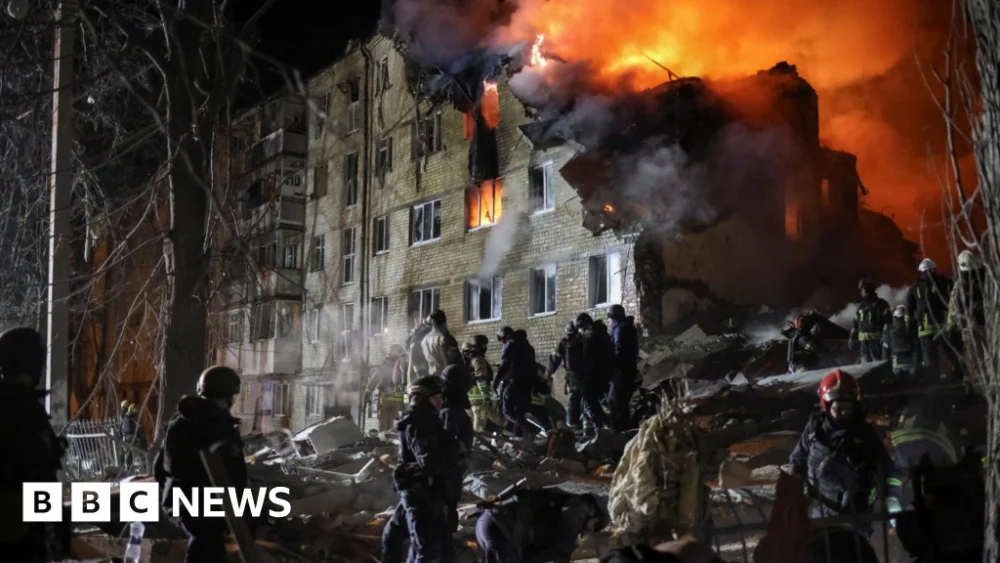
A devastating Russian airstrike on a residential apartment block in Kharkiv, Ukraine’s second-largest city, has claimed the lives of at least seven individuals, including children, and left numerous others injured. The morning attack, which unfolded on Saturday, has intensified concerns about the escalating targeting of civilian infrastructure and underscores the persistent humanitarian crisis gripping the nation. Ukrainian President Volodymyr Zelensky confirmed the tragic casualty figures, emphasizing the brutal nature of the assault that reverberated across several regions of the country, triggering widespread air alerts and prompting defensive measures from neighboring nations.
The Kharkiv Tragedy: A Morning of Devastation
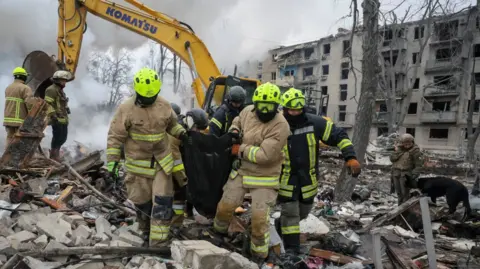
The strike in Kharkiv targeted a five-storey residential building, transforming a scene of ordinary life into one of destruction and despair. Regional governor Oleg Synegubov provided grim details of the aftermath, confirming that rescue workers immediately mobilized to the site, tirelessly sifting through the rubble in a desperate search for survivors. The initial reports indicated three fatalities: a 65-year-old woman, a 40-year-old man, and a 13-year-old girl, underscoring the indiscriminate impact on civilian lives. As rescue operations progressed, the grim discovery of four additional bodies, including a nine-year-old boy, tragically raised the death toll to seven. President Zelensky later stated that at least ten more people, including children, had sustained injuries in the attack, and expressed profound concern that "there may still be people under the rubble," highlighting the ongoing urgency of the rescue efforts. Emergency services, comprising firefighters, paramedics, and specialized search and rescue teams, worked relentlessly amidst the debris, facing the harrowing task of recovering victims and providing aid to the wounded.
Beyond the immediate human cost, the strike inflicted significant material damage across the city. Governor Synegubov reported that seven apartment buildings suffered varying degrees of damage, alongside critical power grids and an administrative building, further disrupting essential services and exacerbating the challenges faced by Kharkiv’s residents. The city, located just kilometers from the Russian border, has endured relentless bombardment since the full-scale invasion began in February 2022, becoming a symbol of Ukrainian resilience in the face of sustained aggression. This latest attack adds to a long and painful chronology of strikes against its civilian population and infrastructure, consistently challenging the city’s ability to recover and rebuild.
A Night of Extensive Russian Air Assaults
The Kharkiv tragedy was part of a much broader series of coordinated Russian overnight attacks that swept across Ukraine. Air alerts blared in multiple regions, including Dnipropetrovsk and Zaporizhzhia, signaling the extensive reach and intensity of the offensive. President Zelensky detailed the scale of the aggression, revealing that Russia had deployed 29 missiles and a staggering 480 drones. These aerial assaults were not random; Zelensky specifically stated they "targeted energy facilities" in the Kyiv, Khmelnytskyi, and Chernivtsi regions, as well as railway infrastructure in the Zhytomyr region. This strategic targeting of critical infrastructure aligns with Russia’s documented tactics aimed at degrading Ukraine’s ability to sustain its defense efforts, disrupt supply lines, and inflict widespread economic and social hardship, particularly impacting heating and electricity supplies during colder months.
The Russian Ministry of Defence, through the Interfax news agency, subsequently confirmed its forces had carried out strikes on Ukrainian targets using drones. The ministry specified its targets as "Ukrainian military compounds, airfields, and energy facilities," a claim that often contrasts with Ukrainian reports of civilian casualties and infrastructure damage. The disparity between these accounts underscores the ongoing information warfare accompanying the physical conflict, where each side presents narratives that support its strategic objectives. However, the consistent pattern of civilian casualties and damage to non-military sites documented by independent observers and international organizations casts serious doubt on Russia’s claims of exclusively targeting military installations.
Regional Impacts and Escalating Humanitarian Concerns
The widespread nature of the overnight attacks ensured that the impact was felt far beyond Kharkiv. In the Dnipropetrovsk region, Oleksandr Ganzha, head of the Regional Military Administration, reported a fatality and another person wounded in a Russian attack on the Nikopol district. Ganzha detailed on Telegram that the Russian army had targeted the area approximately 20 times using a combination of drones, artillery, and rockets, illustrating the multi-pronged approach of the assaults. Nikopol, situated on the Dnipro River and frequently exposed to shelling from Russian-occupied territory across the water, has become another hotspot for persistent attacks, leading to chronic insecurity for its residents.
Further south, in Zaporizhzhia, a separate strike resulted in a baby being wounded, a harrowing reminder of the indiscriminate nature of modern warfare and its devastating impact on the most vulnerable. Meanwhile, in Chuguiv, a city within the broader Kharkiv region, Mayor Halyna Minayeva confirmed that a drone attack on a house in the city’s center injured two people. These scattered but concurrent incidents paint a grim picture of a nation under constant aerial threat, where civilians in diverse geographical locations face the ever-present danger of missile and drone strikes. The cumulative effect of these attacks is a deepening humanitarian crisis, placing immense strain on healthcare services, emergency responders, and local authorities struggling to provide basic necessities and ensure safety.
International Repercussions and Calls for Enhanced Support
The extensive Russian attacks did not go unnoticed by Ukraine’s neighbors and international partners. The Polish air force, a member of NATO, issued a statement confirming it had scrambled military jets to protect its airspace in regions bordering Ukraine. This has become a routine defensive measure for Poland during large-scale Russian strikes, reflecting the heightened state of alert on NATO’s eastern flank and the potential for spillover effects from the conflict. The deployment of Polish jets, often involving F-16 fighter aircraft, serves as a clear signal of vigilance and readiness to defend sovereign territory, underscoring the broader geopolitical implications of the war in Ukraine.
President Zelensky, in his address following the attacks, issued a fervent plea to Ukraine’s international allies. "There must be a response from partners to these brutal attacks on life," he declared, reiterating Ukraine’s urgent need for more robust air defense systems. For months, Ukraine has called for advanced Western air defense capabilities, such as Patriot missile systems, to counter Russia’s persistent aerial bombardments. While partners have provided significant military aid, the sheer volume and sophistication of Russian missile and drone attacks continue to overwhelm existing defenses, highlighting critical gaps. Zelensky’s call for a "response" extends beyond defensive weaponry; it implies a broader demand for increased political, economic, and military pressure on Russia to cease its aggression, as well as sustained humanitarian assistance to cope with the ongoing destruction.
Background and Context: Russia’s Strategy of Attrition
The latest wave of attacks fits into a discernible pattern of Russia’s strategic objectives in Ukraine. Since the initial phase of the full-scale invasion, Russia has increasingly focused on targeting Ukraine’s critical infrastructure, particularly its energy grid. This strategy aims to break the morale of the Ukrainian populace, hinder economic activity, and undermine the government’s ability to function, especially during the colder months when reliable heating and electricity are vital for survival. The use of large numbers of inexpensive Shahed drones, often alongside more costly cruise and ballistic missiles, is a tactic designed to deplete Ukraine’s air defense stockpiles and overwhelm its systems.
Kharkiv, in particular, holds significant strategic importance due to its size, industrial capacity, and geographical proximity to Russia. Before the full-scale invasion, it was a thriving metropolis of over 1.4 million people. Its resilience in the face of continuous bombardment has been remarkable, yet each attack exacts a heavy toll on its infrastructure and its citizens. The city’s history since February 2022 is one of constant threat, with regular shelling and missile strikes becoming an unfortunate part of daily life. The consistent targeting of residential areas, as witnessed in this latest incident, has been widely condemned by international bodies as potential war crimes, though Russia consistently denies targeting civilians.
Implications and the Path Forward
The recent attacks carry significant implications for the ongoing conflict and the broader international landscape. For Ukraine, they underscore the urgent and unyielding need for comprehensive air defense solutions. Without sufficient protection, civilian casualties and infrastructure damage will continue to mount, placing immense pressure on the country’s recovery efforts and its ability to withstand prolonged conflict. The attacks also reinforce the narrative of Russia’s disregard for international humanitarian law, complicating any potential future peace negotiations and deepening the resolve of many nations to support Ukraine.
Globally, these assaults serve as a stark reminder of the humanitarian catastrophe unfolding in Eastern Europe and the fragility of peace in the region. The repeated scrambling of NATO jets highlights the indirect, yet palpable, threat to neighboring countries. President Zelensky’s impassioned plea for a "response from partners" will likely intensify discussions among Western allies regarding the provision of additional military aid, particularly advanced air defense systems and ammunition. Furthermore, the systematic destruction of energy infrastructure raises concerns about long-term reconstruction needs and the potential for a protracted humanitarian crisis, particularly as winter approaches. The international community faces the ongoing challenge of balancing support for Ukraine’s defense with efforts to de-escalate the conflict, all while ensuring accountability for actions that violate international law and inflict suffering on innocent civilians. The latest tragedy in Kharkiv is a stark and painful reminder of the human cost of this brutal war.