

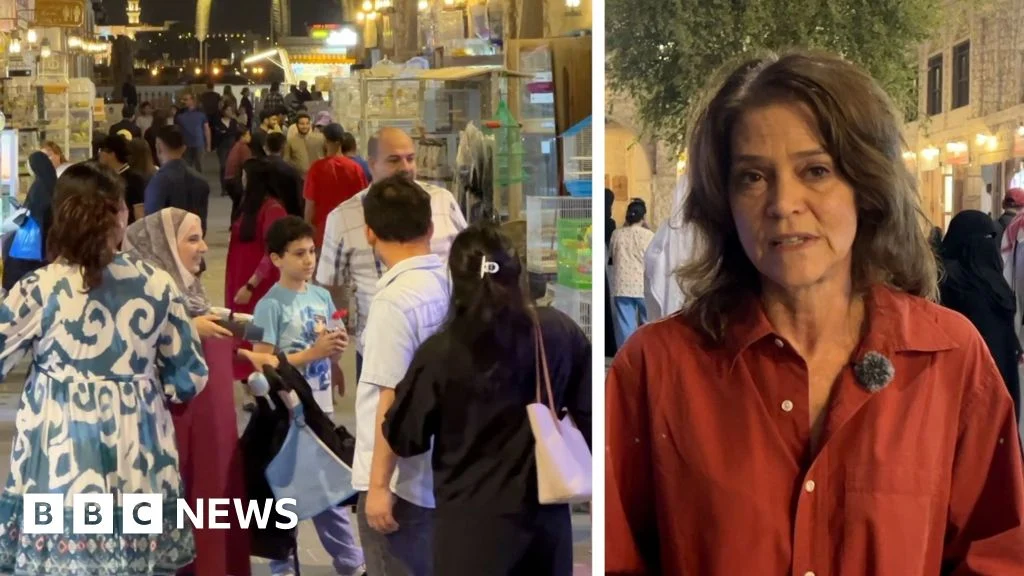
At the beginning of the significant escalation of regional tensions involving Israel, the United States, and Iran on 28 February, Doha’s historic Souq Waqif market, usually a vibrant hub of commerce and culture, was almost entirely deserted, with residents and visitors in the typically safe and stable Qatari capital expressing profound shock and apprehension over the unfolding attacks across the broader Middle East. This palpable sense of unease marked a stark departure from the typical bustling atmosphere of one of the Gulf’s most iconic traditional marketplaces, reflecting the immediate psychological impact of an intensifying geopolitical landscape. The region, already grappling with a complex web of conflicts, witnessed a new phase of confrontation, prompting widespread concern among populations accustomed to relative stability, particularly within Qatar.
The initial days of this renewed phase of conflict saw a dramatic shift in public sentiment and daily life across several Gulf states. While Qatar itself has largely been spared direct casualties, its neighbouring countries have tragically felt the severe repercussions of Tehran’s retaliatory strikes and associated hostilities, with at least 18 people reported killed across various Gulf states so far. These incidents, often involving drone and missile attacks, underscore the volatile nature of the current regional security environment and the pervasive threat posed by escalating military actions. Targets have varied, from critical infrastructure to security installations, demonstrating the wide-ranging intent of these strikes and their capacity to destabilize an already delicate geopolitical balance. The ripple effects of these attacks have extended beyond immediate casualties, impacting regional trade routes, energy markets, and the overall sense of security for millions residing in the Gulf Cooperation Council (GCC) countries.
Meanwhile, a series of strikes explicitly aimed at Qatar, some directly targeting the critical US military bases situated within the country, have been successfully intercepted by sophisticated air defence systems. These interceptions have been remarkably effective, resulting in minimal damage on the ground and, crucially, no reported deaths within Qatar’s borders. This success highlights the robustness of Qatar’s national security infrastructure and its strategic defence partnerships, particularly with the United States. As the conflict in the Middle East now enters its third week, a noticeable shift has occurred in Doha. The once-deserted alleys and courtyards of Souq Waqif are once again beginning to fill with the familiar sounds of commerce, conversation, and daily life, signaling a return to normalcy. Barbara Plett Usher of the BBC recently visited the revitalized market, engaging with its patrons and merchants to gauge their feelings and perspectives on this remarkable resurgence of public life amidst ongoing regional volatility.
The Genesis of Apprehension: February 28th and Regional Escalation
The specific date of 28 February marked a critical inflection point, triggering widespread alarm across the Gulf. While the broader regional conflict has roots stretching back decades, this particular period saw a significant intensification following a series of events involving tit-for-tat actions between various state and non-state actors. The conflict referenced, broadly characterized as involving Israel, the US, and Iran, manifests through proxy conflicts, maritime incidents, and direct military actions. Iran’s "retaliatory strikes" are understood in the context of perceived aggressions or provocations, often involving its allied militias and revolutionary guard forces targeting interests or assets linked to its adversaries in the region. These actions, often conducted using sophisticated drone swarms and ballistic or cruise missiles, have become a hallmark of the modern Middle Eastern security landscape.
On that particular day, news of these escalating hostilities reverberated across the Gulf. For Doha, a city often perceived as an oasis of calm, the sudden proximity of such intense regional strife was deeply unsettling. The immediate reaction was a collective retreat from public spaces. Souq Waqif, a cultural landmark and a symbol of Doha’s vibrant social life, became an unwitting barometer of public anxiety. Its empty stalls and silent walkways spoke volumes about the shock felt by a population unaccustomed to such direct threats. "It was like nothing I had ever seen before," recounted Fatima Al-Ali, a long-time resident and a regular visitor to the Souq. "The usual buzz, the laughter, the chatter – it was all gone. Replaced by an eerie quiet that truly made you feel the weight of what was happening around us." This initial response underscored a profound psychological impact, demonstrating how geopolitical tensions can rapidly translate into tangible shifts in daily routines and public confidence.
The broader regional toll has been tragically significant. Reports of at least 18 fatalities across various Gulf states illustrate the widespread danger posed by these intensified strikes. While specific locations often remain sensitive, incidents have been documented in areas critical to regional security and energy infrastructure. These attacks have not only claimed lives but also caused significant property damage and disrupted vital economic activities. The nature of these assaults, frequently involving uncrewed aerial vehicles (UAVs) and various missile types, signifies a new era of asymmetric warfare that poses unique challenges to regional defence systems. The psychological toll on populations living under the constant threat of such attacks cannot be overstated, contributing to an atmosphere of uncertainty that permeates daily life.
Qatar’s Robust Defence and Strategic Position
Amidst this regional turmoil, Qatar has demonstrated remarkable resilience, largely attributable to its strategic defence capabilities and proactive diplomatic efforts. The small, gas-rich nation hosts Al Udeid Air Base, the largest US military installation in the Middle East and a critical hub for American operations in the region. This presence inherently makes Qatar a potential target during periods of heightened conflict, as evidenced by the strikes specifically aimed at its territory. However, Qatar’s advanced air defence systems, bolstered by its security partnership with the United States, have proven exceptionally effective.
These sophisticated systems, which likely include a combination of US-supplied Patriot missile batteries and potentially other advanced anti-missile technologies, have successfully intercepted incoming projectiles, preventing both significant material damage and, crucially, any loss of life within Qatar. The Qatari Ministry of Defence, while typically discreet about operational specifics, has implicitly confirmed the effectiveness of its layered air defence network through its continued assurances of national security. "Our commitment to the safety and security of our citizens and residents is paramount," stated a spokesperson, reiterating the government’s vigilance. "We work tirelessly, in cooperation with our strategic partners, to maintain an impenetrable shield against any threats." The success of these interceptions is not merely a technical achievement; it is a critical factor in maintaining public confidence and stability, allowing life to return to normal even as conflicts rage nearby.
Qatar’s strategic importance extends beyond its military installations. The nation plays a pivotal role in regional and international diplomacy, often serving as a mediator in complex conflicts. This dual role—hosting a major US military base while maintaining channels of communication with a wide array of regional actors, including Iran—positions Qatar uniquely. This delicate balancing act requires astute diplomacy and a robust security apparatus to navigate the intricate geopolitical currents of the Middle East. The successful defence against incoming strikes reinforces Qatar’s image as a reliable and secure environment for both its citizens and the international community, a perception vital for its economic and diplomatic standing.
Souq Waqif’s Revival: A Symbol of Resilience
Now, as the conflict enters its third week, a distinct shift is evident in Doha. The initial shock and fear that gripped the capital have begun to recede, replaced by a renewed sense of purpose and a visible return to daily routines. Souq Waqif stands as a vibrant testament to this resilience. The once-empty alleys are again teeming with activity. The aroma of spices, oud, and traditional Arabic coffee once more permeates the air. Merchants, who had braced for a prolonged downturn, are reporting a steady increase in foot traffic and sales.
"For a few days, it was truly worrying," remarked Mohammed Al-Ansari, a textile merchant whose family has operated a stall in Souq Waqif for generations. "Business dropped to almost nothing. But then, slowly, people started coming back. First a trickle, then more and more. Now, it feels almost like before." His sentiment is echoed by many others. "We have seen many regional crises," added Ayesha Abdullah, who sells traditional Qatari garments. "But our country has always remained safe. We trust our leadership, and we trust our security forces. Life has to go on."
The return of normalcy to Souq Waqif is not merely an economic recovery; it is a profound social statement. It signifies the community’s determination to reclaim its routines, to reject the paralysis of fear, and to assert its enduring spirit. Families are once again seen strolling through the labyrinthine passages, children laughing as they chase pigeons in the main square, and tourists cautiously venturing back to experience the authentic charm of Qatari culture. Barbara Plett Usher’s observations captured this mood, noting the palpable shift from apprehension to cautious optimism, a testament to the deep-seated resilience of Doha’s populace. This revival underscores the belief that despite external threats, the core fabric of society remains strong, and daily life must continue.
Economic and Social Implications: Weathering the Storm
The ability of Doha, and particularly its emblematic Souq Waqif, to rebound so swiftly from the shadow of regional conflict speaks volumes about Qatar’s underlying economic and social resilience. Economically, Qatar has invested heavily in diversifying its economy beyond its vast hydrocarbon wealth, channeling resources into tourism, logistics, and finance. The legacy of hosting the FIFA World Cup 2022 has significantly boosted its global profile as a safe and attractive destination, a reputation the nation is keen to protect.
During the initial period of heightened tensions, there was an understandable dip in international tourist arrivals and potentially a slowdown in certain sectors. However, the quick containment of threats and the government’s swift reassurance efforts have helped mitigate long-term damage. Qatar Tourism has continued its campaigns, highlighting the country’s unique cultural attractions and its robust safety measures. "Maintaining stability and security is paramount for our tourism sector," noted a representative from Qatar Tourism, emphasizing the ongoing efforts to reassure international visitors and investors. "Our strategic investments in infrastructure and safety are paying dividends, allowing us to maintain our appeal even in challenging times."
On a social level, the collective experience of navigating regional instability has, in some ways, reinforced community cohesion. The vast expatriate population, which constitutes a significant majority of Qatar’s residents, has largely remained confident in the country’s ability to protect its inhabitants. Testimonials from various communities highlight a shared sense of vigilance coupled with an unwavering trust in the Qatari authorities. This social stability is a cornerstone of Qatar’s appeal as a regional hub for business and living, allowing it to attract and retain talent despite the broader regional volatility. The government’s consistent communication and visible commitment to public safety have played a crucial role in preventing widespread panic or exodus.
Qatar’s Diplomatic Balancing Act and Regional Role
Qatar’s capacity to weather these storms is intricately linked to its unique diplomatic strategy. The nation has meticulously cultivated a role as a critical mediator in some of the world’s most intractable conflicts, from Afghanistan to the Israeli-Palestinian conflict. This positioning requires maintaining open channels with a diverse range of state and non-state actors, often those at odds with each other. While this strategy can sometimes expose Qatar to criticism or geopolitical pressures, it also provides invaluable leverage and insight, reinforcing its image as a crucial interlocutor.
The ongoing conflict involving Iran, Israel, and the US presents a formidable challenge to this balancing act. Hosting a major US military base while simultaneously maintaining diplomatic relations with Iran demands exceptional finesse. Qatar’s ability to prevent direct escalation on its soil, coupled with its continued engagement in de-escalation efforts, underscores the effectiveness of its foreign policy. Analysts frequently cite Qatar’s pragmatic approach, focusing on dialogue and conflict resolution as its primary tools for ensuring regional stability and its own security. This approach, while complex, has allowed Qatar to maintain its sovereignty and strategic importance amidst the turbulent currents of Middle Eastern geopolitics.
Expert Analysis and Future Outlook
Geopolitical analysts observe that the recent escalation underscores the inherent fragility of peace in the Middle East, a region perpetually on the brink. Dr. Omar Al-Shafi, a Doha-based political science professor, remarked, "Qatar’s experience serves as a microcosm of the region’s challenges and its potential for resilience. The successful interception of strikes highlights the importance of robust defence infrastructure, but the long-term solution lies in sustained diplomatic engagement and de-escalation." He added, "Qatar’s strategic location and its role as a key energy provider mean it cannot isolate itself from regional dynamics, but its proactive approach to security and diplomacy offers a model for navigating these complexities."
The future outlook for Qatar, while inherently tied to the broader regional security environment, remains cautiously optimistic. The nation’s leadership continues to prioritize national security through continuous investment in advanced defence systems and strategic alliances. Simultaneously, its commitment to economic diversification, human capital development, and international cooperation aims to build a future that is less dependent on regional volatility. The bustling Souq Waqif, now vibrant once more, stands as a powerful symbol of this determination: a nation and its people resolved to continue their journey of progress, even as the shadows of conflict loom large over the wider region. Qatar’s ongoing vigilance, combined with its unwavering commitment to stability and dialogue, will be crucial in navigating the persistent challenges that define the contemporary Middle East.