


The already fraught diplomatic relationship between Ukraine and Hungary has plunged into a deeper crisis following the arrest of seven Ukrainian bank employees in Hungary, accused of money laundering while transporting a substantial sum of $80 million (£60 million) in cash and 9 kilograms of gold. This incident, which Kyiv has vehemently denounced as "state banditry" and hostage-taking, has ignited a fierce war of words, further exacerbating long-standing disputes over Russian energy supplies, European Union aid, and Hungary’s perceived pro-Moscow stance amidst Russia’s full-scale invasion of Ukraine. The timing of the arrests, occurring deep within Hungary’s heated election campaign, adds another layer of complexity, with both nations trading sharp accusations and veiled threats, drawing in broader European attention and concern.
Deepening Crisis: The Arrest and Accusations
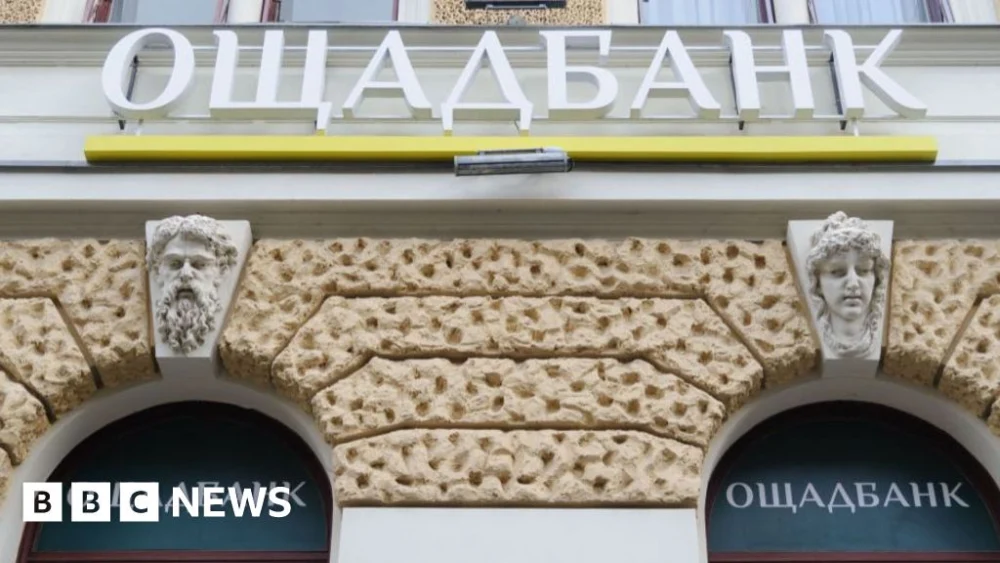
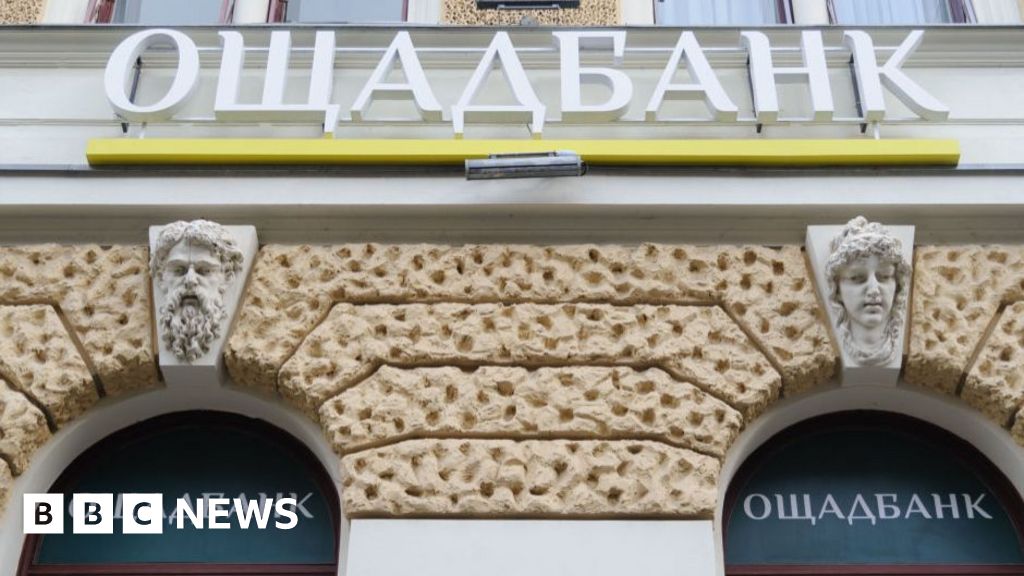
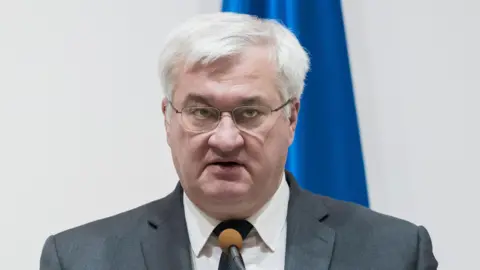
On Thursday, Hungarian authorities announced the expulsion of seven Ukrainian bank workers who had been detained while attempting to transport an astonishing $80 million in cash and 9 kilograms of gold through Hungarian territory. The assets were being moved in what Ukraine’s state savings bank, Oschadbank, described as regular cash-transport vehicles. The operation quickly escalated into an international incident, with Ukrainian Foreign Minister Andriy Sybiha accusing Budapest of seizing the group and stealing the funds, labeling the act as "state banditry."
In response, Hungary’s National Tax and Customs Administration (NAV) confirmed the detentions, stating that the individuals were under investigation on suspicion of money laundering. NAV further alleged that the significant cash and gold transfer was being overseen by a former general of Ukraine’s intelligence service, adding a layer of intrigue and suspicion to the Hungarian narrative. Oschadbank, however, maintained that its employees were "unjustifiably detained" and that the transport was a routine procedure between Austria and Ukraine. The sheer scale of the seized assets – $80 million and 9kg of gold – has raised eyebrows across the continent, prompting questions from Hungarian Foreign Minister Péter Szijjártó, who publicly challenged the rationale for such enormous sums being moved in cash rather than through standard banking transfers. Echoing Ukraine’s outrage, Polish Foreign Minister Radek Sikorski bluntly stated that Hungarian authorities had "stolen the money," highlighting a growing sentiment of concern and solidarity with Kyiv among some European partners.
A Web of Diplomatic Tensions: Historical Context
The current crisis is not an isolated event but rather the latest flare-up in a series of escalating tensions that have characterized Ukraine-Hungary relations for years, particularly since Russia’s 2014 annexation of Crimea and the subsequent full-scale invasion in February 2022. Hungary, under Prime Minister Viktor Orbán, has consistently maintained a distinct foreign policy approach within the European Union, often diverging from the consensus on issues related to Russia and Ukraine.
A significant point of contention has been the status of the ethnic Hungarian minority in Ukraine’s Transcarpathia region. Budapest has long championed the rights of these approximately 150,000 individuals, frequently clashing with Kyiv over Ukrainian language laws and education policies that Hungary claims infringe upon the minority’s cultural and linguistic autonomy. This concern for ethnic Hungarians has often served as a pretext for Orbán’s government to adopt positions perceived as hostile to Ukraine’s sovereignty and pro-Russian within the EU and NATO. For instance, Hungary has repeatedly blocked Ukraine’s progress towards NATO integration, citing unresolved issues regarding minority rights.
Furthermore, Orbán has cultivated a notoriously close relationship with Russian President Vladimir Putin, making him Moscow’s closest ally within the EU. This alignment has manifested in Hungary’s reluctance to fully support EU sanctions against Russia, its continued reliance on Russian energy, and its persistent criticism of Western military aid to Ukraine, which Orbán argues only prolongs the conflict. This stance has created a deep rift between Budapest and its EU partners, particularly those in Central and Eastern Europe who view Russia as an existential threat.
The Energy Standoff: Druzhba Pipeline Dispute
Adding fuel to the fire, the arrests occurred amidst a fierce dispute over the Druzhba pipeline, a critical artery for delivering Russian oil to landlocked Hungary and Slovakia. Shipments of Russian oil to both countries have been halted since January 27, creating significant energy security concerns for Budapest. Ukraine claims the pipeline was damaged in a Russian air strike in January, necessitating repairs and a temporary halt to operations.
However, Prime Minister Orbán has rejected Ukraine’s explanation, accusing Kyiv of deliberately halting Russian oil supplies. He cited unsubstantiated satellite images as evidence that there was "no reason" for the pipeline to be out of commission and has publicly threatened to "force the Ukrainians to restart deliveries." Kyiv, through President Volodymyr Zelensky, has vehemently denied these accusations, suggesting that the damage is real and that, even if it weren’t, Ukraine has no obligation to facilitate Russian oil transit, especially given Russia’s ongoing aggression. Zelensky even expressed a personal preference against restoring the pipeline, stating, "To be honest, I would not restore it. This is my position. I expressed it to European leaders… because this is Russian oil. Russians are killing Ukrainians and we have to give oil to Orbán, because he, the poor thing, cannot win the election without this oil." This raw statement underscores the deep bitterness and mistrust pervading the bilateral relationship.
EU Aid and Political Leverage: Hungary’s Obstruction
The energy dispute is inextricably linked to Hungary’s ongoing obstruction of a crucial €90 billion (£78 billion) EU aid package intended to provide vital financial support for Ukraine’s war efforts and national resilience. Orbán has repeatedly vetoed or delayed EU funding for Ukraine, explicitly linking its release to the resumption of Russian oil supplies through the Druzhba pipeline. He has publicly stated that he believes EU funding prolongs the war and has made an anti-Ukraine message a central pillar of his re-election campaign.
This tactic has drawn widespread condemnation from other EU member states and the European Commission, who view it as an attempt to hold Ukraine hostage and undermine European unity against Russian aggression. The financial aid is critical for Kyiv’s ability to maintain its economy and public services amidst the devastating war, and Hungary’s blockade represents a significant challenge to the EU’s collective response. Orbán’s actions are widely interpreted as leveraging Ukraine’s desperate situation and the EU’s desire for a united front to extract concessions beneficial to Hungary’s energy security and his domestic political agenda.
Domestic Politics and International Ramifications
The arrest of the bank workers and the subsequent diplomatic fallout are unfolding against the backdrop of a highly contested Hungarian election campaign. With national elections little more than a month away (though the article mentions April 12, typical Hungarian elections are in spring, usually April, so this fits), Prime Minister Orbán’s Fidesz party, long dominant, is facing an unexpected challenge. Opinion polls indicate that Orbán is trailing, particularly against the surging opposition Tisza party led by Peter Magyar, a former government insider turned fierce critic.
Orbán’s government appears to be using the crisis with Ukraine, including the oil dispute and the aid package blocking, to rally its nationalist base. His narrative frames Ukraine as an ungrateful and unreliable partner, and his actions as defending Hungarian interests against external pressures. This plays into his broader "sovereignty" rhetoric, portraying him as a strong leader protecting Hungary from both Brussels and Kyiv. However, the international outcry and the severity of the accusations from Ukraine and Poland risk further isolating Hungary on the European stage.
The European Commission, through spokesman Olof Gill, urged all sides to "calm down a bit, dial down the rhetoric, and deliver on… [putting] pressure on Russia to end its war of aggression." This plea highlights the EU’s concern that the internal squabbles are distracting from the primary goal of supporting Ukraine and countering Russia.
Escalating Rhetoric: Zelensky’s Warning and EU’s Response
The verbal sparring reached a new peak with President Zelensky’s impassioned remarks regarding the Druzhba pipeline and Hungary’s obstruction of aid. Beyond expressing his reluctance to restore Russian oil flows, Zelensky issued a thinly veiled threat directed at Prime Minister Orbán. He warned that if Hungary’s prime minister continued to block EU funding for Ukraine, then Ukrainian armed forces would be given his address to "call him and communicate with him in their own language."
This statement, though likely intended as a rhetorical flourish born of frustration, immediately drew strong condemnation. Peter Magyar, the leader of Hungary’s opposition Tisza party, swiftly criticized Zelensky’s "apparent threat," deeming it unacceptable. The European Commission also weighed in, with spokesman Olof Gill unequivocally stating, "That type of language is not acceptable; there must not be threats against EU member states." Such remarks, regardless of their intent, are highly unusual in diplomatic discourse between sovereign nations, especially between an EU aspirant and an EU member state, and serve only to deepen the animosity and distrust.
The POW Release: Another Point of Contention
In a separate but related development earlier this week, Hungary’s foreign minister, Péter Szijjártó, traveled to Moscow and secured the release of two ethnic Hungarian prisoners of war (POWs). Hungary asserted that the men, who hail from Ukraine’s Transcarpathia region, possessed dual Hungarian and Ukrainian citizenship and accused Kyiv of forcibly conscripting them into the Ukrainian army.
Kyiv, however, strongly condemned the transfer of these POWs to Hungary, describing it as a "gross violation of international humanitarian law." International law dictates that POWs should be repatriated to their country of origin or a neutral third country, not handed over to a state that is not directly involved in their capture and whose actions are seen as undermining the capturing state. Ukraine viewed this as a direct breach of its sovereignty and another instance of Hungary interfering in its internal affairs under the guise of protecting ethnic Hungarians. The incident further highlighted the deep chasm in trust and understanding between the two nations, demonstrating Hungary’s willingness to engage directly with Moscow on matters concerning Ukrainian citizens, bypassing Kyiv entirely.
Broader Geopolitical Implications
The escalating conflict between Ukraine and Hungary carries significant geopolitical implications, extending beyond their bilateral relationship. It underscores the fragility of European unity in the face of Russian aggression, with Hungary consistently acting as an outlier within the EU and NATO. Orbán’s actions, whether related to energy, aid, or the recent arrests, are frequently perceived as playing into Russia’s strategic interests by sowing discord and weakening the collective Western response to Moscow.
For Ukraine, the situation is particularly galling. As a nation fighting for its very survival against a brutal invasion, it desperately needs unwavering international support. Hungary’s obstructionism, coupled with what Kyiv views as hostile actions, not only diverts resources and attention but also erodes morale and complicates Ukraine’s path toward European integration. The public accusations of "state banditry" and the seizure of funds, regardless of the truth behind the money laundering claims, create an image of a lack of respect for international norms and diplomatic protocols.
The European Union faces a dilemma: how to maintain internal cohesion when a member state consistently undermines shared foreign policy objectives. The Commission’s call for de-escalation reflects a desire to manage the damage, but the underlying structural issues – Hungary’s unique position, its relationship with Russia, and its domestic political calculus – remain unresolved. As the Hungarian election looms, the outcome could either reinforce Orbán’s current trajectory or usher in a new era of relations. In the meantime, the diplomatic chasm between Kyiv and Budapest continues to widen, posing a persistent challenge to the unified front that Europe strives to present against the backdrop of the ongoing war in Ukraine.