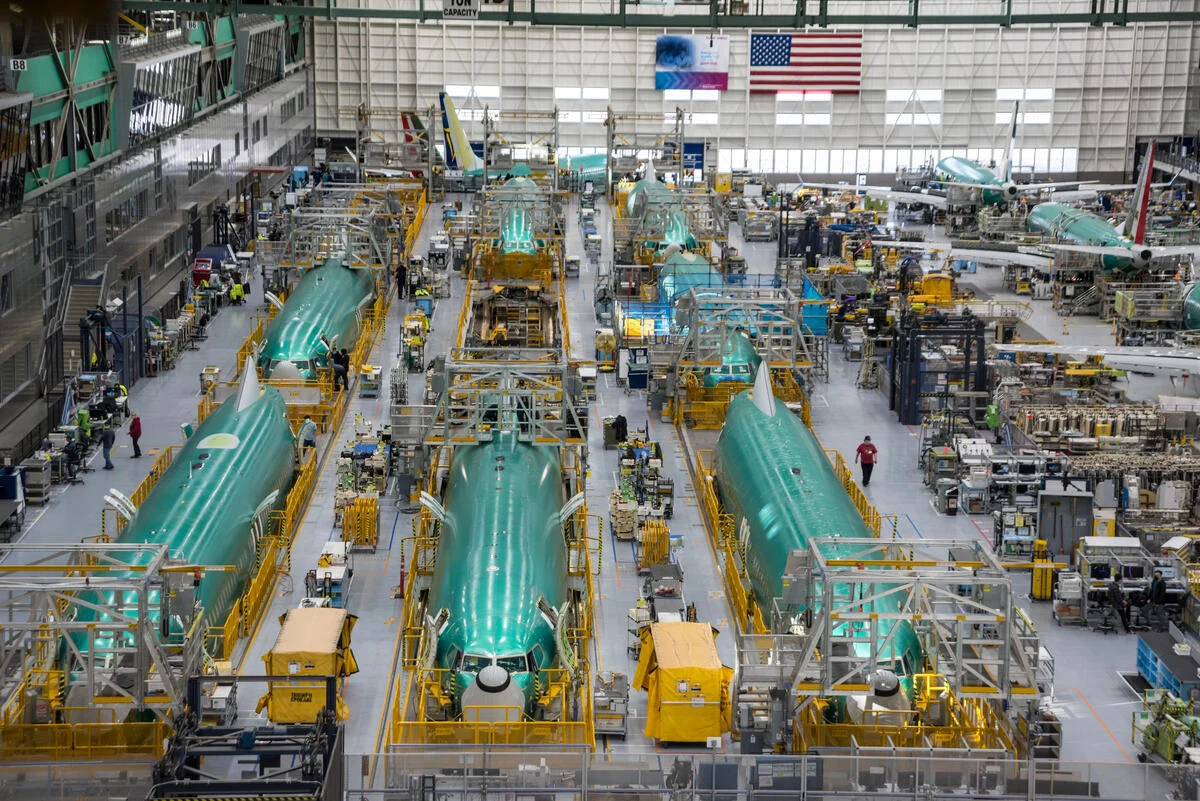
The Federal Aviation Administration (FAA) has officially granted type certification to the Boeing 737 Max 7, the smallest member of the manufacturer’s best-selling narrow-body aircraft family, marking the conclusion of a certification process that spanned more than a decade and was repeatedly stalled by technical failures, regulatory shifts, and global tragedies. The approval represents a pivotal milestone for Boeing as it seeks to stabilize its commercial aircraft division and fulfill a massive backlog of orders for its primary customers, most notably Southwest Airlines. In a statement released on Monday, the FAA confirmed that the aircraft had met all rigorous safety standards required for commercial service, signaling an end to the protracted regulatory limbo that had shadowed the Max 7 since its inception.
The approval reflects years of sustained work to resolve complex technical issues and complete a thorough review of the airplane’s design and supporting safety analyses, the agency said in its official announcement. The FAA further emphasized that its oversight of Boeing would not diminish following this certification; rather, the agency stated it would continue to remain on-site at Boeing facilities across the United States to monitor manufacturing processes and safety practices in real-time. This heightened level of scrutiny follows several years of intense criticism regarding the FAA’s previous "Organization Designation Authorization" (ODA) program, which had allowed Boeing employees to act on behalf of the regulator during the initial certification of the Max 8 and 9.
Mike Sinnett, Boeing’s senior vice president of product strategy, product development, and development programs, characterized the certification as a validation of the company’s renewed commitment to engineering transparency and safety. In a statement, Sinnett noted that the plane maker regularly met with the FAA to ensure the company "understood the requirements and provided transparency of our progress." He added that this important certification validates the hard work of Boeing’s engineering and flight test teams, who have spent years refining the aircraft’s systems to meet the most modern regulatory benchmarks.
Technical Specifications and the Role of the Max 7
The Boeing 737 Max 7 was designed to serve as the direct successor to the 737-700, occupying a specific niche in the short-to-medium-haul market. With a maximum seating capacity of approximately 172 passengers and a range of 3,800 nautical miles, the Max 7 offers the longest range of any aircraft in the 737 Max family. This range capability is intended to allow airlines to open new, thinner routes that do not require the higher capacity of the Max 8 but necessitate the efficiency of a modern narrow-body jet.
For major carriers like Southwest Airlines—which has hundreds of Max 7 jets on order—the aircraft is essential for fleet modernization. The Max 7 is expected to provide a 14% improvement in fuel efficiency and carbon emissions compared to the previous generation of 737s, a critical factor for airlines aiming to meet environmental targets and reduce operational costs. Despite these advantages, the aircraft’s path to the market was hindered by a series of crises that forced Boeing to rethink its entire approach to the Max program.
A Decade of Delays: A Chronology of the Max 7’s Path to Certification
The journey of the 737 Max 7 has been one of the most fraught in the history of modern commercial aviation. To understand the significance of Monday’s approval, it is necessary to look back at the timeline of events that delayed the aircraft for ten years.
- 2011–2016: Development and Launch: Boeing launched the 737 Max program in 2011 as a response to the Airbus A320neo. The Max 7 was initially scheduled to enter service in 2019.
- 2017: First Flight: The Max 7 took its maiden flight in March 2018, performing well in initial flight tests. At this stage, Boeing expected a relatively smooth certification process.
- 2018–2019: Global Grounding: Following the tragic crashes of Lion Air Flight 610 and Ethiopian Airlines Flight 302, which claimed 346 lives, the entire 737 Max fleet was grounded worldwide. Investigations revealed flaws in the Maneuvering Characteristics Augmentation System (MCAS). The certification of the Max 7 and Max 10 variants was immediately suspended as Boeing and regulators focused on fixing the existing Max 8 and 9 fleets.
- 2020–2022: Regulatory Reform: In 2020, the U.S. Congress passed the Aircraft Certification, Safety, and Accountability Act (ACSAA). This law implemented stricter requirements for cockpit alerting systems. Boeing initially struggled to meet these new standards for the Max 7 and Max 10, leading to a high-stakes legislative battle to secure a waiver that would allow the aircraft to be certified with the existing cockpit design to maintain fleet commonality.
- 2023: The Anti-Ice System Hurdle: Certification was further delayed when a potential safety issue was discovered regarding the engine inlet anti-ice system. Engineers found that if the system was left on in dry air for too long, the composite structure of the engine inlet could overheat and potentially break apart.
- 2024: The Alaska Airlines Incident and Final Review: The mid-air door plug blowout on an Alaska Airlines Max 9 in January 2024 led to a total overhaul of Boeing’s quality management systems. This incident prompted the FAA to slow down all certification activities to ensure that no technical detail was overlooked.
The final approval on Monday comes after Boeing successfully demonstrated a software-based fix and operational procedures to mitigate the anti-ice system concerns, alongside a comprehensive review of the aircraft’s flight control software.
Supporting Data and Market Impact
The certification of the Max 7 is not merely a technical win for Boeing; it is a vital economic necessity. As of late 2023, Boeing’s order book for the 737 Max family stood at over 4,000 aircraft. Of these, Southwest Airlines accounts for the largest share of Max 7 commitments, with over 300 firm orders and dozens of options.
The delay in Max 7 deliveries has forced Southwest to repeatedly adjust its capacity forecasts and extend the service life of its aging 737-700 fleet. According to industry analysts, the inability to deploy the Max 7 has cost the airline hundreds of millions of dollars in missed fuel savings and higher maintenance costs. With the FAA’s green light, Southwest is expected to begin receiving deliveries within the coming months, following a brief period of final interior outfitting and pilot training.
Beyond Southwest, the Max 7 faces stiff competition from the Airbus A220-300. While the A220 was designed as a clean-sheet aircraft with superior cabin economics for the 130-150 seat market, Boeing argues that the Max 7 offers superior "fleet commonality." For airlines that already fly the 737, the Max 7 allows pilots to transition between variants with minimal training, a significant cost-saving measure for large-scale operators.
Official Responses and Safety Oversight
The FAA’s decision to maintain a permanent presence at Boeing facilities is a direct response to the "safety culture" issues identified by multiple independent panels over the last two years. FAA Administrator Mike Whitaker has been vocal about the need for Boeing to move away from a production-speed-oriented mindset toward a safety-first philosophy.
"The FAA is taking a fundamentally different approach to oversight," an agency spokesperson noted. "For the Max 7, we did not just look at the new components; we looked at how the entire system interacts. Our inspectors were involved in every phase of the flight testing and the audit of the design documents."
Industry groups have reacted with cautious optimism. The Air Line Pilots Association (ALPA), which represents thousands of pilots who will fly the Max 7, issued a statement emphasizing that safety must remain the priority during the aircraft’s entry into service. "We have worked closely with Boeing and the FAA to ensure that the training protocols for the Max 7 are robust and that pilots are fully equipped to handle the aircraft’s specific flight characteristics," the union stated.
Broader Implications for the Aerospace Industry
The certification of the Max 7 provides a blueprint for the eventual approval of the Max 10, the largest variant of the family. The Max 10 is currently undergoing its own rigorous flight testing and is expected to face similar levels of scrutiny. By clearing the Max 7, Boeing has demonstrated that it can successfully navigate the FAA’s new, more stringent certification pathways.
However, the decade-long delay serves as a cautionary tale for the aerospace industry. It highlights the end of an era where manufacturers could expect a high degree of deference from regulators. The "delegated authority" model has been permanently altered, and the Max 7 is the first Boeing aircraft to be certified under this new, more adversarial regulatory environment.
For Boeing, the challenge now shifts from certification to execution. The company must prove it can ramp up production of the Max 7 without compromising quality—a task that has proven difficult for the manufacturer in recent years. With a massive backlog and a competitive market, the successful entry into service of the Max 7 will be a litmus test for Boeing’s ability to regain its status as a leader in engineering excellence.
As the first Max 7 prepares to join commercial fleets, the aviation world will be watching closely. The aircraft represents more than just a new model; it represents Boeing’s attempt to turn the page on a troubled chapter and demonstrate that the lessons of the past decade have been fully integrated into the wings and wires of its latest jet. The FAA’s approval is a significant step, but the true measure of success will be found in the millions of flight hours ahead, where the Max 7 must prove its reliability to pilots, airlines, and the traveling public alike.