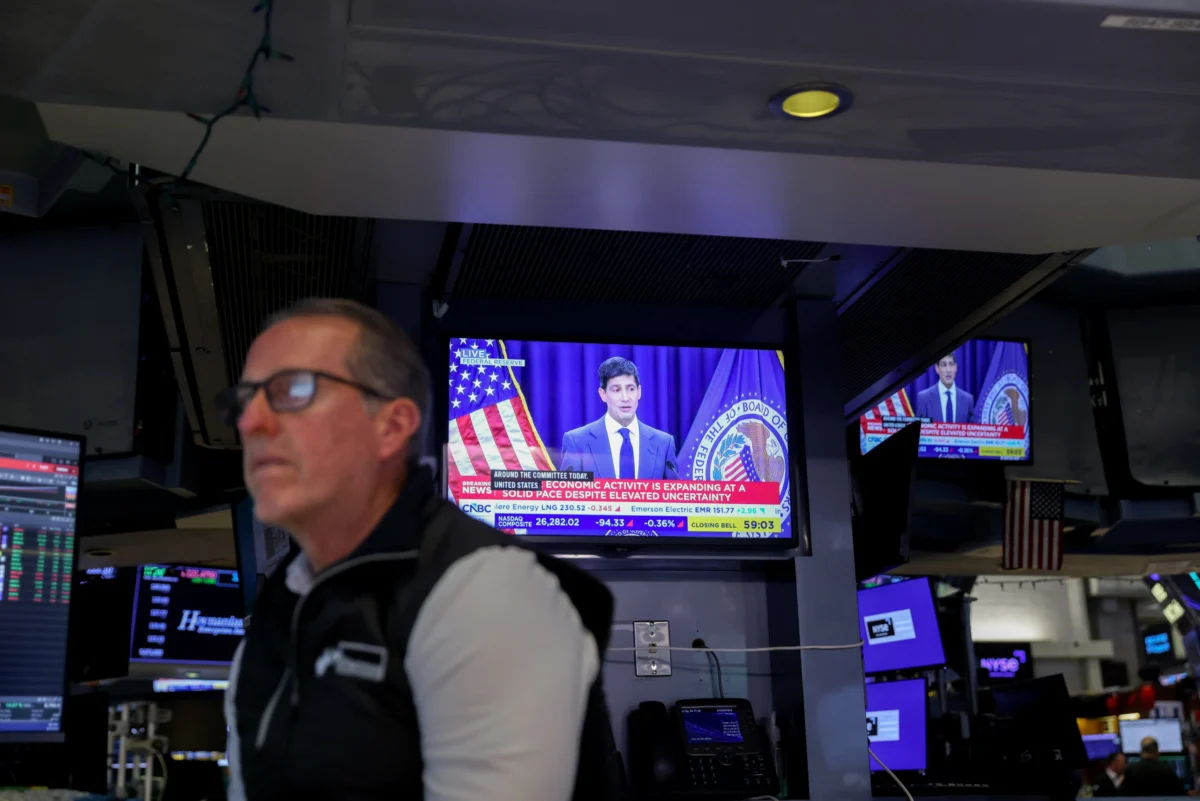
The financial world is bracing for a potential shift in monetary policy as mounting pressures from an escalating energy crisis and remarkably resilient employment figures significantly amplify expectations for a Federal Reserve interest rate hike. Investors are now aggressively re-evaluating their positions, with market indicators pointing to a heightened probability of the central bank tightening borrowing costs sooner than previously anticipated. This evolving landscape has already sent ripples through global markets, triggering notable downturns in major stock indices and adding a layer of complexity to the Fed’s upcoming policy deliberations.
Heightened Anticipation for Rate Increases
The most immediate reflection of this sentiment shift is evident in the Fed funds futures market, a crucial barometer for predicting the Federal Reserve’s monetary policy decisions. According to CME’s widely referenced FedWatch tool, the likelihood of the Federal Reserve raising interest rates at its September policy meeting has surged to approximately 82%. This marks a dramatic increase from just a week prior, when the odds stood considerably lower at below 53%. The rapid recalibration underscores a profound change in market perception, driven by a confluence of macroeconomic factors that appear to be challenging the Fed’s current stance of maintaining relatively stable rates. The significant jump in these probabilities signals that market participants are now pricing in a near certainty of a rate hike within the next two months.
While the consensus for the Federal Open Market Committee (FOMC) meeting scheduled for next week still leans towards maintaining the current target range for the federal funds rate of 3.50% to 3.75%, a growing minority of market participants are now factoring in a potential increase even at this imminent gathering. Fed funds futures trading currently indicates a nearly 38% probability of a quarter percentage point hike (25 basis points) at next week’s meeting, a stark jump from less than 12% a mere seven days ago. This growing conviction, though still representing a minority view for the immediate meeting, signals a clear acceleration of hawkish sentiment across the trading floor. A 25-basis point increase, while seemingly small, can have widespread implications, translating into higher costs for everything from credit card debt and mortgage rates for consumers to corporate borrowing for businesses, ultimately impacting overall economic activity and asset valuations.
The Energy Market Ignites Inflationary Fears
A primary and highly visible catalyst for this intensified rate hike speculation is the sudden and sharp escalation in global oil prices. Brent crude, the international benchmark for oil, pierced the critical $100 per barrel threshold on Thursday, marking its first ascent to this psychologically significant level since late May. This dramatic price surge is directly attributable to a renewed and increasingly hostile round of "tit-for-tat" attacks between the United States and Iran. These escalating geopolitical tensions in the Middle East have injected significant uncertainty into global oil supply chains, particularly concerning the vital Strait of Hormuz. This narrow maritime chokepoint, strategically located between the Persian Gulf and the Gulf of Oman, is crucial for global energy markets, as a substantial portion of the world’s seaborne oil passes through it daily. Any disruption or perceived threat to this essential waterway inevitably sends shockwaves through energy markets, prompting traders to price in substantial supply risks and pushing crude futures higher.
The direct consequence of this global crude spike is already being keenly felt by consumers and businesses alike. The average price for a gallon of gasoline across the United States has climbed to $4 this week, according to data from AAA, reaching its highest point in over a month. For the average American household, this represents a tangible increase in daily living expenses, eroding disposable income and forcing budget reallocations away from discretionary spending. Businesses, particularly those heavily reliant on transportation, logistics, and energy-intensive manufacturing, face rapidly rising input costs. These increased operational expenses can either squeeze profit margins, leading to reduced investment and hiring, or be passed on to consumers in the form of higher prices for goods and services, further exacerbating the broader inflation cycle. This direct link between geopolitical events, global energy prices, and domestic inflationary pressures places immense pressure on the Federal Reserve, whose primary mandate includes maintaining price stability.
Unwavering Strength in the Labor Market
Compounding the inflationary concerns stemming from energy prices, robust new employment data has provided the Federal Reserve with additional impetus to prioritize its inflation-fighting mandate. The Labor Department reported a significant drop in initial jobless claims, which fell to a remarkably low 187,000 in the week ended July 18. This figure represents the fewest claims for unemployment benefits since 1969, a historical benchmark that underscores the extraordinary tightness and resilience of the current labor market. To put this into perspective, the U.S. population in 1969 was approximately 60% of what it is today, making the current low claims even more remarkable in terms of labor market participation relative to the overall population. Such a low level of claims suggests minimal layoffs and robust hiring activity, indicative of a very strong demand for labor.
Such strong employment figures typically signal a healthy and expanding economy, which is generally a positive indicator. However, in the context of persistent inflationary pressures, an exceptionally tight labor market can contribute to upward wage pressures. If wage growth outpaces productivity gains, it can feed into a wage-price spiral, a phenomenon where workers demand higher wages to offset rising living costs, and businesses, in turn, raise prices to cover their increased labor expenses, perpetuating the inflationary cycle. This dynamic is a key concern for central bankers striving to achieve price stability.
Christopher Rupkey, chief economist at FWDBONDS, articulated this concern clearly, stating, "At the moment, the outlook for economic growth is showing some signs of overheating if today’s weekly jobless claims figures can be believed." He added a critical caveat, "But for how long is the question if energy prices continue to spiral upward." Rupkey’s analysis highlights the Fed’s delicate balancing act: while a strong labor market is generally desirable and aligns with the "maximum employment" mandate, its current vigor, when combined with external inflationary shocks, may necessitate a more aggressive monetary policy response to prevent the economy from running too hot and inflation from becoming entrenched.
Market Repercussions: A "Perfect Storm"
The confluence of surging oil prices, an unexpectedly strong jobs report, and the resulting hike in interest rate expectations has created what some analysts are calling a "perfect storm" for financial markets. On Thursday, the stock market experienced significant downward pressure across the board. The blue-chip Dow Jones Industrial Average tumbled more than 600 points in midday trading, reflecting broad-based investor apprehension and a flight from riskier assets. The Nasdaq Composite, heavily weighted towards technology and growth stocks, shed nearly 3%. Technology companies are particularly sensitive to higher borrowing costs because their valuations often rely heavily on discounting future earnings, which are diminished when interest rates rise. Furthermore, growth-oriented tech firms frequently depend on readily available and cheap capital for expansion and innovation, making a tighter monetary environment less favorable for their business models.
Larry Tentarelli, chief technical strategist at the Blue Chip Daily Trend Report, summarized the current turbulent environment: "You really just have a perfect storm of headwinds right now." He elaborated on the multiple factors contributing to market anxiety, including the sudden breakout in oil prices, rising Treasury yields (which move inversely to bond prices and reflect higher borrowing costs), and specific corporate earnings disappointments, citing Alphabet’s post-earnings swoon as an example of company-specific pressures adding to the broader market malaise. Tentarelli advised investors to exercise caution and patience in the current climate, suggesting, "We’ve got a Fed meeting in six days, and I think investors should not be in a hurry to buy anything. There’s times where you can just sit it out and be patient." His recommendation underscores a broader sentiment of uncertainty and the need for strategic patience in a volatile market.
The Bellwether of Treasury Yields
Beyond the equity markets, the bond market, particularly the 2-year U.S. Treasury yield, is offering crucial insights into the Fed’s potential next moves. On Thursday, the 2-year yield rose more than 6 basis points, a significant move that signals increased expectations for tighter monetary policy. As Ross Mayfield, an investment strategist at Baird, noted, the 2-year Treasury yield serves as "a readthrough on what the Fed might do next." This specific yield is highly sensitive to changes in the federal funds rate because it reflects market expectations for short-term interest rates over the next two years. When investors anticipate higher rates, they demand a higher yield for holding shorter-term government debt, causing the yield to rise. This immediate and pronounced market reaction in the Treasury market reinforces the narrative that a rate hike is increasingly on the table.
While Mayfield expressed confidence that investors need not worry about an interest rate move at next week’s meeting, he unequivocally characterized the September meeting as "live." This distinction highlights the market’s expectation that while the Fed might opt for a wait-and-see approach in the immediate term, the cumulative weight of economic data and geopolitical developments could compel decisive action in the near future. The sentiment is echoed by other predictive markets, with Kalshi traders similarly increasing their bets on a September quarter-point increase. Odds for such a move on Kalshi rose to 48% midday on Thursday, up from approximately 30% a week ago, further cementing the market’s evolving outlook.
The Federal Reserve’s Dual Mandate and the Road Ahead
The Federal Reserve operates under a dual mandate from Congress: to achieve maximum employment and maintain price stability. The current economic environment presents a particularly challenging scenario for the central bank as it navigates these two, sometimes conflicting, objectives. On one hand, the labor market exhibits robust health, with historically low jobless claims suggesting that the maximum employment goal is largely being met. This strength typically provides the Fed with more flexibility to focus on its other mandate: price stability, especially when inflation risks are pronounced.
However, the sudden surge in energy prices, driven by geopolitical tensions, introduces an external inflationary shock that is largely beyond the Fed’s direct control. While the Fed cannot directly influence oil supply or geopolitical conflicts, it can use monetary policy tools, primarily interest rate adjustments, to manage the demand side of the economy and prevent these external shocks from becoming entrenched in broader inflation expectations. The dilemma lies in calibrating the right response: tightening monetary policy too aggressively could risk slowing economic growth and potentially harming the robust labor market, while inaction could allow inflation to become deeply rooted, leading to more painful and disruptive interventions later.
Historically, periods of significant oil price spikes have often preceded or coincided with Fed tightening cycles as policymakers sought to curb inflationary pressures. The 1970s oil shocks, for instance, prompted aggressive rate hikes that eventually led to recessions but were deemed necessary to break the back of persistent and runaway inflation. While the current situation is not a direct parallel, the historical context underscores the seriousness with which the Fed typically views energy-driven inflation and its potential to destabilize the economy.
Divergent Forecasts: Market vs. Economists
Interestingly, the aggressive market pricing for rate hikes stands in contrast to the broader consensus among economists surveyed by FactSet. The prevailing forecast among economists remains that the Fed will not hike rates this year, meaning through the remainder of 2026. Furthermore, looking ahead to 2027, economists largely anticipate that the central bank will actually lower borrowing costs by half a percentage point (50 basis points).
This divergence between market expectations, as reflected in rapidly shifting futures contracts and trading probabilities, and the consensus among economic forecasters highlights a fundamental difference in how these two groups assess the future. Markets are often more reactive to immediate data and geopolitical headlines, rapidly adjusting probabilities based on the latest incoming information and momentum. Economists, on the other hand, tend to rely on broader macroeconomic models, longer-term trends, and often incorporate a degree of policy inertia, assuming that central banks prefer gradualism over abrupt shifts. They might also be factoring in a potential cooling of inflation from other sources, or a belief that the current energy spike is transient, or that the Fed would prioritize avoiding a recession over minor inflationary bumps if the labor market showed any signs of weakness. This disconnect creates an additional layer of uncertainty for policymakers and investors alike.
Navigating the Weeks Ahead
As the Federal Reserve approaches its next policy meeting, all eyes will be on the statements issued by the FOMC. Beyond the immediate decision on interest rates, investors will scrutinize the accompanying statement for any shifts in language regarding inflation, the economic outlook, and the committee’s forward guidance. Any hints of a more hawkish stance or a stronger commitment to combating inflation could further cement market expectations for future hikes. The trajectory of global oil prices, the stability of geopolitical relations, and subsequent employment reports will all play critical roles in shaping the Fed’s ultimate decisions in the coming months. For investors, the advice to "sit it out and be patient" offered by Larry Tentarelli rings particularly true. The coming weeks promise to be a critical period, defining not only the immediate path of monetary policy but also setting the tone for economic performance and market sentiment for the remainder of 2026 and into 2027. The delicate balance between managing inflation, sustaining employment, and responding to external shocks will undoubtedly test the Fed’s resolve and strategic acumen in an increasingly complex and volatile global economic environment.