


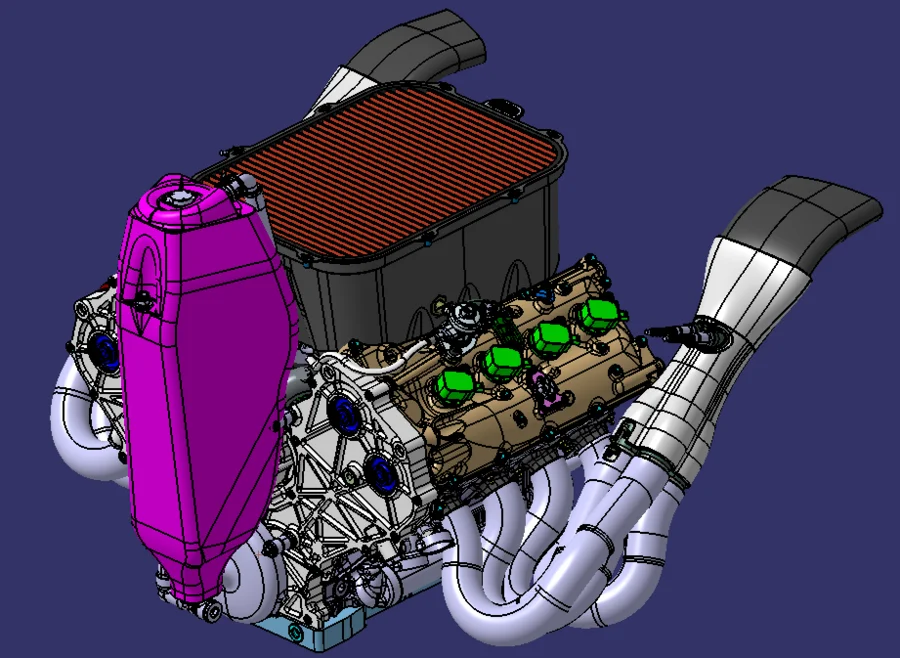
Ford Performance has officially moved into the next phase of its ambitious return to the pinnacle of global endurance racing, marking a significant milestone by firing up the internal combustion heart of its upcoming Le Mans Hypercar. The American manufacturer, which has not claimed an outright victory at the 24 Hours of Le Mans since 1969, is preparing a new contender under the LMDh (Le Mans Daytona h) regulations for a full-scale assault on the FIA World Endurance Championship (WEC) beginning in 2027. This project represents more than just a return to the grid; it is a calculated effort to bridge the gap between Ford’s historic dominance in the 1960s and its modern identity as a leader in high-performance engineering.
The centerpiece of the new prototype is a 5.4-liter naturally aspirated V8 engine, a derivative of the "Coyote" power unit currently utilized in the Ford Mustang GT3. By selecting a high-displacement, naturally aspirated engine in an era increasingly defined by small-capacity turbocharged units, Ford is making a deliberate statement about its mechanical heritage. The engine fire-up, conducted at Ford’s specialized testing facilities, signals the transition from theoretical design to physical validation. This power unit will serve as the primary source of propulsion within the LMDh framework, which mandates a hybrid system to complement the internal combustion engine.
The Technical Foundation: The Coyote V8 and LMDh Regulations
The decision to utilize the 5.4-liter V8 was driven by both performance requirements and brand identity. Dan Sayers, the head of Ford Racing’s hypercar program, emphasized that the engine’s legendary status within the Ford portfolio made it the only logical choice. According to Sayers, the V8 acts as a "bridge between the legends of 1966 and the future of 2027," suggesting that the visceral sound and linear power delivery of a naturally aspirated engine are essential components of the Ford racing experience.
Under the LMDh technical regulations, Ford’s new hypercar must adhere to strict performance windows to ensure parity across the field. The total system output, combining the V8 engine and the spec hybrid system, is electronically capped at 500 kW (approximately 671 horsepower). The hybrid component of the powertrain is a standardized unit used by all LMDh competitors, featuring a Bosch electric motor-generator unit (MGU), a Williams Advanced Engineering battery pack, and an Xtrac gearbox. While the hybrid system is a "spec" part, manufacturers have significant freedom in the design and tuning of their internal combustion engines, provided they meet the total power curve and weight requirements.
Ford’s choice of the Coyote V8 is particularly notable because it avoids the complexity of turbocharging, which many rivals like Porsche, BMW, and Alpine have embraced. Naturally aspirated engines often provide better throttle response and simplified cooling requirements, though they can face challenges regarding fuel efficiency and torque curves compared to forced-induction counterparts. Ford’s engineers in Michigan are currently working to optimize the 5.4-liter unit for the unique demands of 24-hour endurance racing, focusing on thermal management and structural integrity as a stressed member of the chassis.
Strategic Partnerships and Chassis Selection
To bring the 2027 hypercar to life, Ford has partnered with the French racing constructor Oreca. Under LMDh rules, manufacturers must choose one of four licensed chassis providers: Oreca, Dallara, Ligier, or Multimatic. Ford’s selection of Oreca is a strategic move, as the French firm has a proven track record in prototype racing, having developed the highly successful Oreca 07 LMP2 chassis and the Acura ARX-06 LMDh currently competing in the IMSA SportsCar Championship.
The partnership allows Ford to focus its resources on engine development, aerodynamic styling, and electronic integration while utilizing a chassis with a proven kinetic baseline. While the underlying "spine" of the car is an Oreca product, Ford has the latitude to design the exterior bodywork to reflect the brand’s contemporary design language. This "bespoke styling" is a key marketing pillar of the LMDh category, allowing race cars to share visual DNA with their road-going counterparts—in this case, the Ford Mustang.
Furthermore, the development of the hypercar is benefiting from a cross-pollination of talent within the Ford ecosystem. Engineers from the Ford Performance headquarters in Dearborn, Michigan, are collaborating with personnel from the nascent Red Bull Ford Powertrains project. While the Red Bull partnership is primarily focused on Ford’s 2026 entry into Formula 1, the shared expertise in hybrid integration, simulation, and high-output combustion technology provides the hypercar program with a significant technical advantage.
A Legacy of Excellence: Contextualizing Ford’s Le Mans History
The 2027 entry is deeply rooted in the history of the Ford GT40, the car that famously broke Ferrari’s winning streak at Le Mans. The narrative of Ford’s dominance in the late 1960s remains one of the most celebrated chapters in automotive history. In 1966, the GT40 Mk II, powered by a massive 7.0-liter V8, secured a historic 1-2-3 finish. Ford followed this with victories in 1967, 1968, and 1969.
The transition between those winning years mirrors the technical evolution Ford is undertaking today. After the 7.0-liter units were restricted by rule changes, Ford pivoted to a 4.9-liter V8 for the 1968 and 1969 seasons, proving that the American V8 platform was adaptable to changing regulatory landscapes. The 2027 hypercar represents the first time in nearly six decades that Ford will compete for the "outright" win (the overall victory) at Le Mans, rather than competing in the GT classes. While Ford saw success in the GTE Pro class with the Ford GT in 2016, the hypercar program aims for the ultimate trophy: the General Classification title.
The Driver Lineup: A Mix of Experience and Youth
Ford has already secured a formidable trio of drivers to lead the development and competition phases of the project. The lineup includes Sebastian Priaulx, Mike Rockenfeller, and Logan Sargeant, representing a diverse range of motorsport backgrounds.
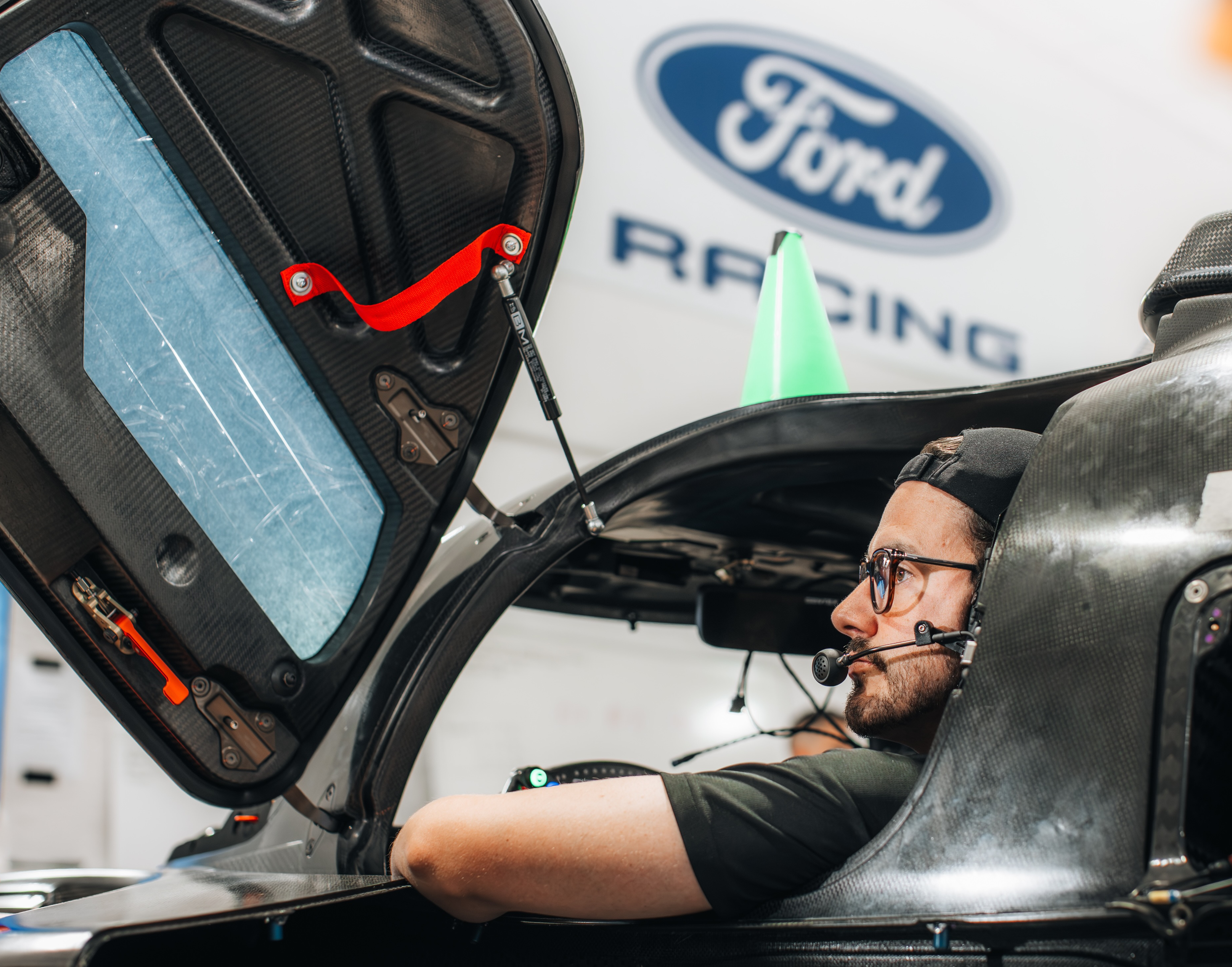
Mike Rockenfeller brings veteran expertise to the team. A winner of the 24 Hours of Le Mans in 2010 with Audi, Rockenfeller has extensive experience in top-tier prototype racing and was a key figure in the "Garage 56" NASCAR entry at Le Mans in 2023. His technical feedback will be vital as Ford begins full-scale testing of the hybrid system and aerodynamics.
Sebastian Priaulx, a rising star in sports car racing and the son of multi-time touring car champion Andy Priaulx, has already established himself within the Ford family by racing the Mustang GT3 in the IMSA SportsCar Championship. His familiarity with the Coyote V8’s characteristics in a GT3 setting will provide a baseline for the engine’s transition to the LMDh platform.
The most high-profile addition is Logan Sargeant, who joins the program following a stint in Formula 1 with Williams Racing. Sargeant’s transition to endurance racing follows a well-trodden path for former F1 drivers seeking a second chapter in their careers. His experience with high-downforce machinery and complex hybrid power units in Formula 1 makes him an ideal candidate for the hypercar era, where energy management is as critical as raw speed.
To prepare for 2027, Priaulx and Rockenfeller are currently competing in an Oreca-built LMP2 prototype in the European Le Mans Series (ELMS). This program serves as a "dress rehearsal," allowing the drivers and the operational crew to familiarize themselves with Oreca’s chassis dynamics and the high-speed traffic management required in prototype racing.
Timeline and Next Steps: The Road to 2027
The successful engine fire-up marks the end of the laboratory phase and the beginning of track-based development. Ford has confirmed that full-scale testing of the hypercar prototype will commence next month. The testing program is scheduled to take place at several major European circuits, which provide the varied topography and high-speed sections necessary to validate the car’s aerodynamic efficiency.
The primary goals for the upcoming testing phase include:
- Hybrid Integration: Ensuring the seamless handover between the V8 engine and the electric MGU, particularly during braking (energy recovery) and acceleration.
- Aerodynamic Validation: Correlating wind tunnel data with real-world track performance to ensure the car remains stable in high-speed corners.
- Reliability Testing: Subjecting the 5.4-liter engine to simulated 24-hour endurance runs to identify potential points of failure.
- Tire Development: Working with Michelin, the spec tire provider for the Hypercar class, to optimize the mechanical grip of the Oreca chassis.
Ford intends to spend the entirety of 2025 and 2026 refining the car before its competitive debut. This extended development window is necessary given the high level of competition in the Hypercar class, which currently includes giants such as Toyota, Ferrari, Porsche, Cadillac, BMW, and Lamborghini.
Broader Impact and Industry Implications
Ford’s commitment to the WEC and Le Mans reflects a broader trend in the automotive industry where manufacturers are returning to sports car racing to showcase "electrified" performance. The LMDh and LMH (Le Mans Hypercar) regulations have created a "golden age" of endurance racing, offering a cost-effective way for brands to compete on a global stage.
By choosing the LMDh path, Ford ensures that its car can compete in both the FIA WEC and the IMSA SportsCar Championship in North America. This dual-market eligibility is crucial for Ford, as it allows the brand to market the Mustang-inspired hypercar to its primary consumer base in the United States while pursuing the prestige of Le Mans in Europe.
Furthermore, the project serves as a high-speed laboratory for Ford’s road car division. The lessons learned in thermal management for the Coyote V8 and the software integration of the hybrid system are expected to trickle down to future high-performance road versions of the Mustang and other Ford Performance vehicles. As Ford transitions toward a more electrified lineup, the hypercar program acts as a bridge, proving that the company can maintain its performance "DNA" while embracing the technical complexities of modern hybridization.
As the testing phase begins in the coming weeks, the racing world will be watching closely to see if Ford can truly replicate the magic of the 1960s. With a proven V8 engine, a world-class chassis partner, and a driver lineup hungry for success, the 2027 Le Mans 24 Hours is already shaping up to be one of the most anticipated events in the history of American motorsport.