


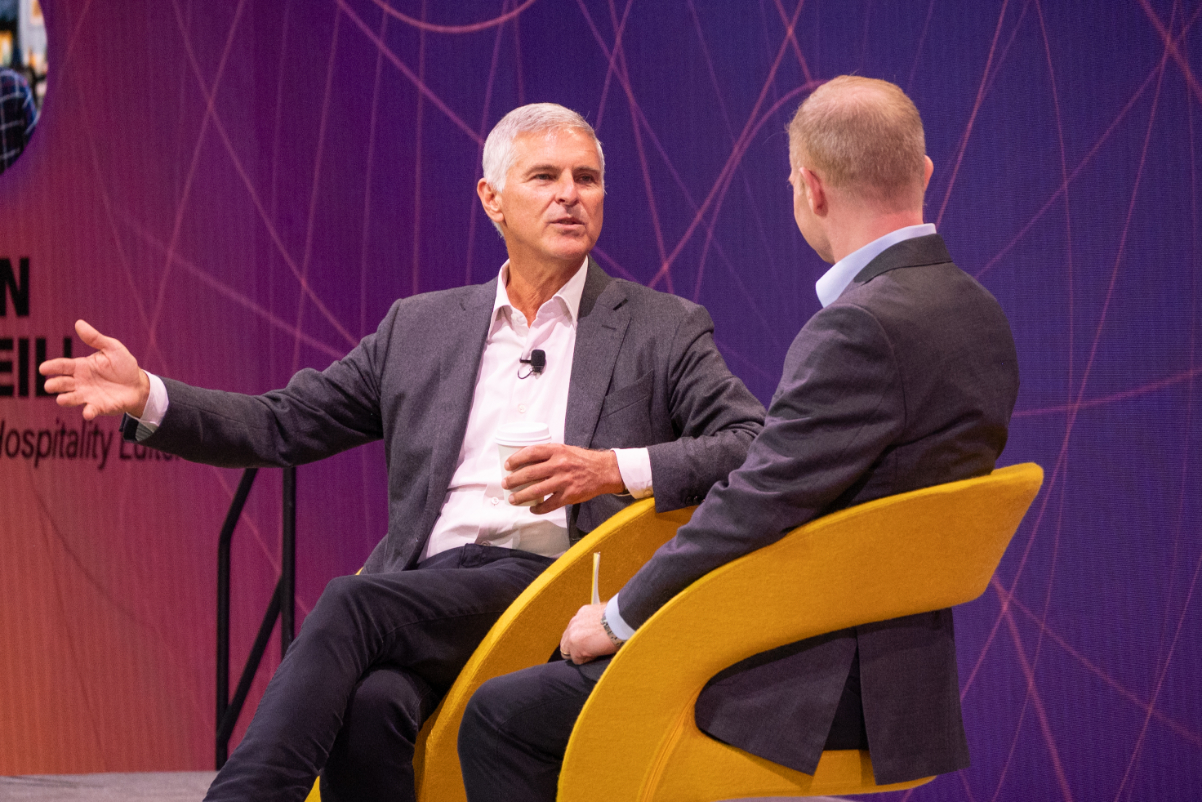
The global hospitality landscape has undergone a radical transformation over the last decade, characterized by a rapid proliferation of hotel brands that has left some industry analysts questioning the necessity of such extensive portfolios. Addressing these concerns during a recent appearance on The Angle podcast, Hilton President and CEO Chris Nassetta provided a robust defense of the company’s current strategy, which encompasses 28 distinct brands. Nassetta argued that Hilton’s portfolio is not a product of uncontrolled sprawl but rather a disciplined, data-driven response to the specific demands of both hotel owners and global travelers. By leveraging advanced analytics and a "capital-light" business model, Hilton aims to capture every segment of the market while utilizing artificial intelligence as the next frontier for operational efficiency and guest satisfaction.
The Strategic Framework of Brand Proliferation
The debate over "brand fatigue" or "brand bloat" has intensified as the world’s largest hotel companies continue to launch new flags. Critics argue that having too many brands confuses consumers and potentially cannibalizes existing business. However, Nassetta countered this narrative by positioning Hilton as a model of relative restraint. He noted that while Hilton’s 28 brands may seem numerous to an outside observer, they are significantly fewer than the portfolios of its primary competitors. According to Nassetta, major rivals such as Marriott International, Accor, and Hyatt Hotels Corporation manage portfolios ranging from 30 to over 45 brands.
Nassetta’s defense rests on the premise that each brand in the Hilton ecosystem serves a specific purpose, backed by rigorous market data. He emphasized that the company does not launch a brand simply for the sake of expansion; instead, new entries are created to fill "white spaces" where existing brands do not meet the needs of a particular demographic or price point. This strategy is essential for maintaining the loyalty of the 180 million members of the Hilton Honors program, who require a diverse range of options—from economy conversion brands to ultra-luxury resorts—to stay within the Hilton ecosystem regardless of their travel intent.
Performance Metrics and the 100-Hotel Benchmark
One of the most compelling arguments Nassetta presented involved the financial performance of these brands relative to their competitors. He asserted that every Hilton brand with at least 100 open properties consistently outperforms the local market average in terms of Revenue Per Available Room (RevPAR) index. RevPAR is a critical industry metric used to assess a hotel’s ability to fill its rooms at a competitive rate.
By exceeding the RevPAR average of local competitors, Hilton demonstrates to its franchise owners that its brands command a premium. This performance is a key driver for Hilton’s development pipeline. When a brand shows a high RevPAR index, it attracts more investment from developers, which in turn fuels the company’s organic growth. Nassetta dismissed the notion that additional brands steal business from existing Hilton properties. He argued that the data shows these brands are "incremental," meaning they attract new customers or capture different types of trips from existing customers, rather than shifting existing demand from one Hilton hotel to another.
A Chronology of Strategic Expansion
To understand Hilton’s current position, it is necessary to examine the timeline of its portfolio expansion under Nassetta’s leadership. Since he took the helm in 2007, Hilton has transitioned from a company with a handful of legacy brands to a global powerhouse with a highly segmented offering.
In the mid-2010s, Hilton focused on filling the "midscale" and "upscale" gaps with the launch of Tru by Hilton and Home2 Suites. Tru, in particular, became one of the fastest-growing brands in hospitality history, targeting a younger, value-conscious demographic. This was followed by the introduction of lifestyle brands like Canopy by Hilton and Motto by Hilton, which aimed to provide more localized, boutique-style experiences within a reliable corporate framework.
In 2023 and early 2024, the expansion accelerated with a focus on two extremes: the premium economy segment and the luxury lifestyle sector. The launch of Spark by Hilton marked the company’s entry into the high-growth conversion space, allowing owners of existing independent hotels to join the Hilton network with lower capital expenditures. More recently, Hilton significantly bolstered its luxury credentials through the acquisition of the Graduate Hotels brand and a strategic partnership with Small Luxury Hotels of the World (SLH), as well as the acquisition of a majority stake in the Sydell Group to expand the NoMad brand globally. This chronological progression illustrates a shift from building brands from scratch to a hybrid model of organic creation and strategic acquisition.
The Role of Artificial Intelligence in Guest Resolution
Beyond the physical expansion of brands, Nassetta identified technology—specifically artificial intelligence (AI)—as the most significant "lever" for the next phase of Hilton’s evolution. While Hilton has long used technology to streamline the booking process and enable features like Digital Key, Nassetta sees AI as the solution to one of the industry’s most persistent challenges: resolving guest issues in real-time.
The CEO envisions a future where AI-driven systems can identify and rectify service failures before the guest even feels the need to complain. By analyzing data from "Connected Room" sensors and guest interaction patterns, AI can alert staff to a malfunctioning air conditioner or a delay in room service, allowing for "in the moment" fixes. This proactive approach is intended to reduce friction and enhance the overall guest experience, which is increasingly important as the variety of brands grows. The goal is to ensure that while the aesthetic and price point of a stay might change between a Spark and a Waldorf Astoria, the reliability of service—bolstered by AI—remains a constant.
Economic Implications for Owners and Developers
The proliferation of brands is as much about the "supply side" (hotel owners) as it is about the "demand side" (guests). For hotel developers, a multi-brand strategy provides more opportunities to build in a single market. If a city already has a Hilton Garden Inn and a Hampton Inn, a developer may be barred from building another due to territorial protection agreements. However, they could still build a Tempo by Hilton or a Motto by Hilton in the same neighborhood.
This allows Hilton to increase its "market share of rooftops" in lucrative urban centers. For the parent company, this translates into more franchise fees and management contracts without the risk associated with owning the real estate. Hilton’s "capital-light" model means it owns very few of the hotels that carry its name, instead focusing on the intellectual property, the reservation system, and the loyalty program. Nassetta’s defense of 28 brands is therefore a defense of the company’s primary engine for shareholder value: the ability to scale rapidly across all segments of the market.
Industry Reactions and Market Analysis
Industry analysts remain divided on the long-term implications of this brand volume. While Hilton’s financial results have been strong—reporting significant net income growth and record-breaking development pipelines in recent quarters—some observers worry about the "dilution" of brand identity.
"The challenge for Hilton, and indeed for Marriott and Accor, is ensuring that the consumer actually understands what they are buying," noted one hospitality consultant. "When you have 28 brands, the differences between an ‘upscale lifestyle’ brand and a ‘premium midscale’ brand can become blurry."
However, the market’s reaction to Hilton’s strategy has been largely positive. The company’s stock has performed well, reflecting investor confidence in Nassetta’s ability to drive growth through brand diversification. The acquisition of Graduate Hotels was seen as a particularly savvy move, giving Hilton immediate access to the niche but high-barrier-to-entry market of university towns. By integrating these unique properties into the Hilton Honors ecosystem, the company creates a powerful incentive for guests to choose Hilton over independent boutique options.
Broader Impact on the Global Hospitality Sector
Hilton’s strategy serves as a blueprint for the modern hospitality conglomerate. The move toward "lifestyle" and "experience-driven" brands reflects a broader cultural shift in travel, where guests are looking for more than just a place to sleep. They are seeking environments that reflect their personal values and aesthetic preferences.
Furthermore, the integration of AI at the corporate level signals a shift in labor dynamics. As the hospitality industry continues to grapple with labor shortages, AI and automation are becoming essential tools for maintaining service standards without significantly increasing headcount. Nassetta’s focus on AI-driven problem solving suggests that Hilton intends to lead the industry in "high-tech, high-touch" service, where technology handles the mundane and predictive tasks, freeing up human staff to focus on genuine guest hospitality.
As Hilton moves toward the 30-brand mark, the company’s success will depend on its ability to maintain the distinct identity of each flag while leveraging the massive scale of its global platform. Chris Nassetta’s comments on The Angle underscore a firm belief that in the modern economy, data and technology are the ultimate arbiters of strategy. For Hilton, 28 brands is not a sign of sprawl, but a calculated, data-backed architecture designed for a world where "one size fits all" is a relic of the past.