

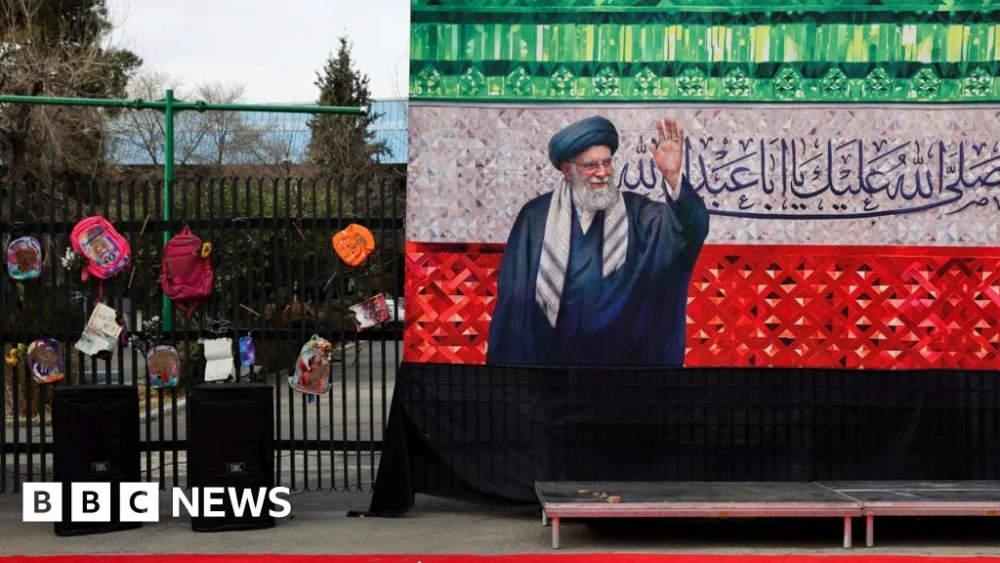
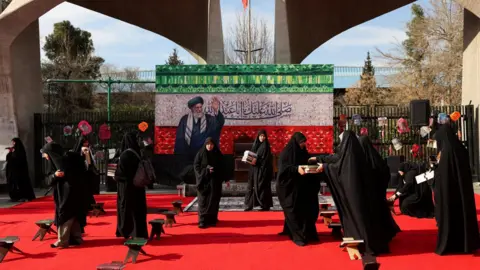
Authorities in Iran have announced the postponement of the funeral ceremony for the late Supreme Leader, Ayatollah Ali Khamenei, as the country grapples with an unprecedented wave of intense aerial and naval strikes from US and Israeli forces. The three-day mourning event, originally scheduled to commence on Wednesday night at a prominent Tehran prayer complex, was deferred due to overwhelming public demand to attend and the logistical challenges of ensuring adequate infrastructure amidst the ongoing conflict. This decision unfolds against a backdrop of rapidly escalating hostilities following Khamenei’s assassination in a targeted strike on Saturday, plunging the region into a perilous new phase of confrontation.
The Unfolding Crisis: Intensified Strikes and Regional Fallout
The assassination of Ayatollah Ali Khamenei on Saturday, 26 February 2026, marked a dramatic escalation in the long-simmering tensions between Iran, the United States, and Israel. The strike, which reportedly targeted his compound in Tehran, also claimed the lives of his wife, one of their adult sons, and several high-ranking officials. This initial assault ignited a fierce response from Tehran, with Iran launching hundreds of missiles and drones towards Israel and various Gulf states hosting US military installations.
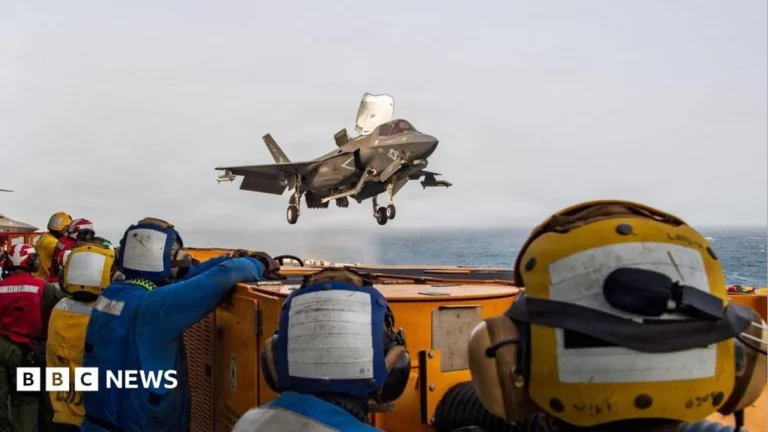
On Wednesday, the Israel Defense Forces (IDF) confirmed multiple waves of precision strikes across Iran. A military official detailed an operation involving over 100 Israeli fighter jets, which dropped approximately 250 munitions on a sprawling military compound in eastern Tehran, identified as housing multiple command centers. Further targets included critical ballistic missile arrays, air defense systems, a missile storage and production facility, and "defense and detection systems" at Tehran’s Mehrabad airport, a key strategic hub. In a significant aerial engagement, the IDF also reported the historic shootdown of an Iranian Yak-130 manned fighter aircraft over Tehran by an Israeli F-35 fighter jet, marking the first such incident for the advanced stealth aircraft. Iranian authorities have yet to issue an official comment on these specific claims.
The US military’s Central Command chief, Admiral Brad Cooper, asserted on Tuesday night that the joint US-Israeli campaign was "ahead of our game plan," emphasizing a strategic focus on neutralizing Iranian capabilities. "In simple terms, we’re focused on shooting things that can shoot us," Adm. Cooper stated, underscoring the defensive and preemptive nature of their operations.
Beyond aerial bombardments, the conflict has also spilled into international waters. US Secretary of State Hegseth revealed that an Iranian warship, the Iris Dena, had been sunk by a torpedo in international waters, describing it as a "quiet death." The Pentagon later released video footage purportedly showing the moment a US torpedo struck the vessel. Sri Lanka’s Defence Secretary Air Vice Marshal Sampath Thuyyakontha confirmed the recovery of 80 bodies from the Iris Dena, with 32 individuals rescued and dozens more reported missing, highlighting the devastating human cost of these naval engagements.
The Assassination of a Supreme Leader and the Succession Scramble
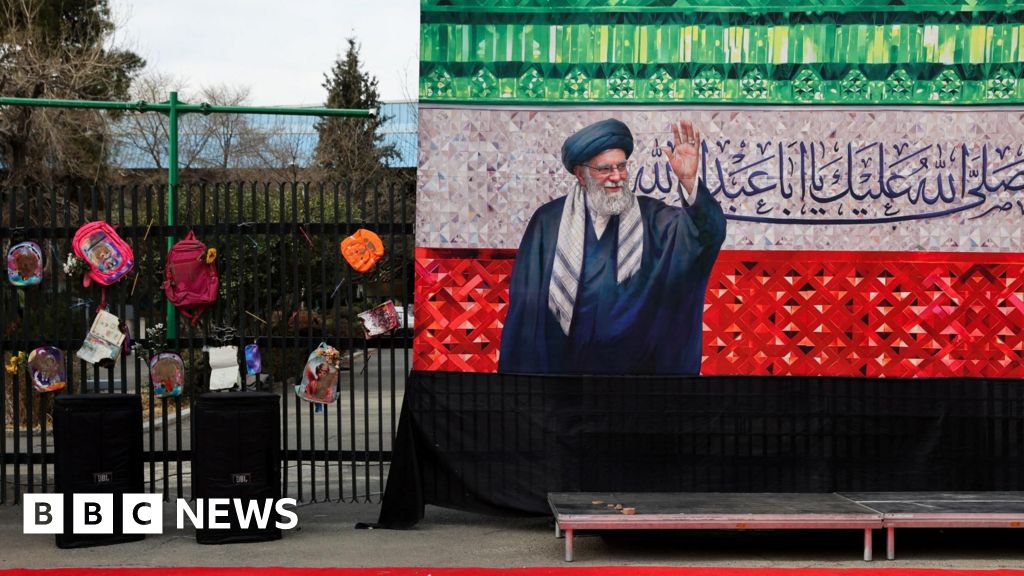
Ayatollah Ali Khamenei, 86, had served as Iran’s spiritual leader and its highest authority since 1989, succeeding the Islamic Republic’s founding father, Ayatollah Ruhollah Khomeini. His long tenure was characterized by a firm grip on Iran’s political landscape and its formidable armed forces, particularly the Islamic Revolutionary Guard Corps (IRGC). He was instrumental in shaping Iran’s domestic and foreign policy, often through a conservative and anti-Western stance. Throughout his rule, Khamenei consistently suppressed challenges to the ruling system, often with considerable force. Human rights organizations reported that security forces under his command crushed widespread nationwide protests in late December and early January with unprecedented brutality, resulting in at least 6,480 fatalities. His death has thus created a profound power vacuum at a moment of extreme national crisis.
The initial public reaction in Iran has been mixed. State media channels showcased gatherings of the Islamic Republic’s loyalists protesting the US and Israeli attacks, portraying a unified front of outrage. However, social media platforms concurrently broadcast videos of opponents celebrating on the streets of Tehran and other major cities, reflecting deep internal divisions and dissent that characterized much of Khamenei’s later rule.
The immediate priority for Iran’s clerical establishment is the selection of a new Supreme Leader. This critical decision falls to the Assembly of Experts, an 88-member clerical body whose members are nominally elected by Iranians every eight years. However, Khamenei meticulously ensured that only staunch conservatives, loyal to his vision and guidance, were approved as candidates for the Assembly, thereby guaranteeing its adherence to the established system’s continuity.
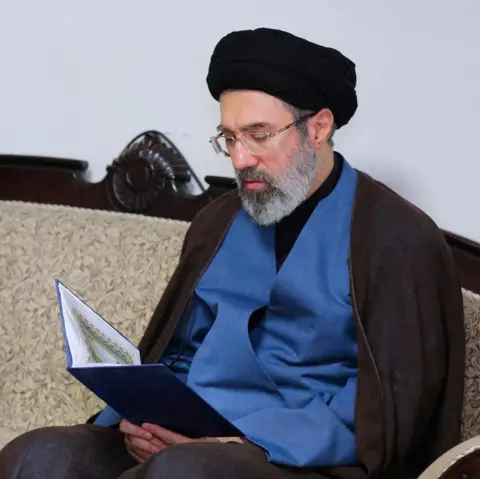
Ayatollah Ahmad Khatami, a member of the Assembly of Experts, informed state television that potential candidates for the leadership had already been identified, though he refrained from naming them. "The supreme leader will be identified in the closest opportunity, we are close to a conclusion. However, the situation in the country is a war situation," Khatami stated, underscoring the urgency and gravity of the decision amidst active hostilities. Reuters, citing two Iranian sources, reported that Mojtaba Khamenei, the 56-year-old cleric and second son of the late leader, is considered the front-runner to succeed his father. Mojtaba, known for his shadowy influence and considerable amassed wealth, maintains close ties with conservative factions and the powerful IRGC, which is constitutionally tasked with safeguarding the country’s Islamic system. His potential ascension during wartime could further consolidate the IRGC’s influence. Israel’s defense minister, reflecting the regional animosity, issued a stark warning: any successor who continues to threaten Israel and the United States would be considered "an unequivocal target for elimination."
Regional Repercussions and International Concerns
The widespread Iranian retaliatory strikes have had significant regional repercussions, drawing neighboring states into the periphery of the conflict. In Kuwait, the health ministry reported the tragic death of an 11-year-old resident girl, killed by falling shrapnel from an Iranian attack overnight. This brings the total casualties in Kuwait since the conflict began to ten, including six US service personnel, two Kuwaiti army soldiers, and one other civilian.
Saudi Arabia’s crucial oil infrastructure also faced threats. Authorities reported an attempted drone attack on the kingdom’s largest oil refinery, Ras Tanura, located on the Gulf coast. While no immediate damage or disruption was reported, the incident follows a previous drone attack on Monday that forced the refinery to halt some operations after causing a fire, underscoring the vulnerability of critical energy supplies in the region.
Further afield, Turkey’s defense ministry confirmed that an Iranian missile, detected heading towards its airspace, was successfully intercepted by NATO air and missile defense systems operating in the Eastern Mediterranean. This incident highlights the broader international implications and the activation of collective defense mechanisms in response to the expanding conflict zone.
In Qatar, the State Security Service announced the arrest of ten individuals belonging to two separate cells, both allegedly linked to Iran’s IRGC. These cells were reportedly tasked with espionage against critical infrastructure and planning "sabotage operations," signaling Iran’s potential efforts to destabilize adversaries from within.
Meanwhile, the IDF’s defense systems in Israel continued to intercept multiple salvos of Iranian missiles. Despite the ongoing barrage, there were no immediate reports of new casualties. However, a total of 10 people have been killed in missile strikes across Israel over the past five days, illustrating the constant threat faced by Israeli civilians.
Iranian President Masoud Pezeshkian addressed neighboring states, asserting that the US-Israeli attack had "left us no choice but to defend ourselves" after diplomatic avenues had been exhausted. He sought to reassure regional partners, stating, "We respect your sovereignty and believe the region’s security and stability has to be achieved through the collective efforts of its states." This statement came after a phone call where Qatar’s Prime Minister, Sheikh Mohammed bin Abdul Rahman Al Thani, reportedly conveyed to Iranian Foreign Minister Abbas Araghchi that Iran was actively seeking to harm its neighbors and draw them into a conflict "that is not theirs," according to the Qatari government.
Humanitarian Toll and Verification Challenges
The human cost of this rapidly escalating conflict is becoming increasingly apparent. Iran’s state news agency, Irna, reported on Wednesday that US and Israeli strikes had tragically killed 1,045 military personnel and civilians since the start of the conflict on Saturday. Concurrently, the US-based Human Rights Activists News Agency (HRNA) provided an even grimmer civilian toll overnight, stating that the number of reported civilian deaths had reached 1,097, including 181 children under the age of 10.
Verifying these figures independently in an active warzone presents significant challenges. Access for international observers is severely restricted, and both sides are engaged in information warfare, making it difficult to ascertain precise casualty counts. However, the consistent reporting of civilian deaths by multiple sources underscores the devastating impact of the conflict on the general populace, adding another layer of humanitarian concern to the already volatile situation. The ruins of a police station in central Tehran, captured in photographs, serve as a stark visual reminder of the physical destruction and disruption gripping the Iranian capital.
Looking Ahead: Escalation or De-escalation?
The postponement of Ayatollah Khamenei’s funeral, ostensibly for logistical reasons, subtly reflects the profound disruption and uncertainty gripping Iran. The "war situation" described by Iranian officials leaves little room for traditional mourning ceremonies, as the nation mobilizes its resources to counter the sustained US-Israeli assault. With US and Israeli forces declaring objectives of achieving total aerial superiority and "soon" controlling the country, the trajectory of the conflict appears set for further escalation. The secretary of Iran’s Supreme National Security Council, Ali Larijani, condemned US President Donald Trump for having "dragged the American people into an unjust war," indicating Iran’s resolve to continue its defense.
The swift selection of a successor to Khamenei is paramount for Iran’s stability, but the process is fraught with peril. Any choice will be scrutinized internationally, particularly by Israel, which has already issued warnings against a hostile new leader. The ongoing conflict has transformed the succession process from a political formality into a critical wartime decision with potentially far-reaching consequences for regional stability. The international community watches with bated breath, as the Middle East stands at a critical juncture, balancing on the precipice between sustained conflict and the elusive hope of de-escalation.