

Global financial markets plunged and energy prices surged this week following an ominous declaration from an Iranian official, who vowed his country would "set fire" to any vessel attempting to traverse the strategically vital Strait of Hormuz. The statement, delivered amidst escalating regional tensions, sent immediate shockwaves through economies reliant on the critical shipping lane, prompting widespread investor concern over potential supply disruptions and a fresh wave of inflationary pressures. This dramatic escalation has ignited fears reminiscent of the global economic fallout observed four years ago following Russia’s full-scale invasion of Ukraine, which similarly triggered an unprecedented spike in energy costs and an ensuing cost-of-living crisis across the globe.
Immediate Market Tremors and Economic Anxiety
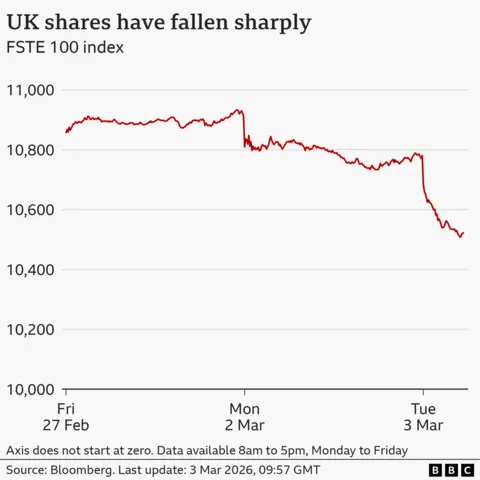
The reverberations of Iran’s assertive stance were felt instantaneously across major financial centers. In London, the benchmark FTSE 100 index experienced a significant decline, shedding 2.6% of its value on Tuesday. This downturn was mirrored across continental Europe, with France’s CAC-40 index sliding by a substantial 3% and Germany’s Dax index registering an even sharper fall of 3.7%. Asian markets were equally impacted, reflecting the global interconnectedness of trade and finance. Japan’s export-heavy Nikkei 225 index closed 3.3% lower, with industrial giants like Toyota, Panasonic, and Sony among the hardest hit. Hong Kong’s Hang Seng and mainland China’s Shanghai Composite also recorded declines, while South Korea’s Kospi, resuming trading after a public holiday on Monday, plummeted by more than 7%, underscoring the severity of the market’s reaction.
Investors are now grappling with the profound implications of this escalating conflict on the delicate balance of the global economy. A primary concern is the potential for renewed inflationary spirals, particularly as energy prices continue their upward trajectory. Such a scenario could compel central banks, which have only recently begun to hint at potential interest rate cuts after prolonged periods of tightening, to reconsider their monetary policy stances. The prospect of sustained high inflation, coupled with the necessity for central banks to maintain elevated interest rates, casts a long shadow over economic growth forecasts for the coming months and potentially years. The delicate path to economic recovery, already fraught with post-pandemic challenges and geopolitical uncertainties, now appears significantly more perilous.
The Volatile Energy Landscape
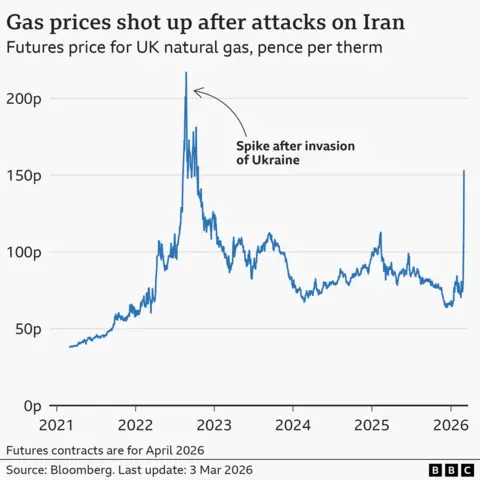
The energy sector has borne the brunt of the immediate impact. UK natural gas prices surged dramatically, reaching over 165 pence per therm on Tuesday. This level represents a stark return to prices not seen since less than a year after the commencement of the Ukraine war, a period characterized by extreme volatility and record-high energy costs. The recent surge in gas prices is not solely attributable to the Iranian threat; it follows a prior significant leap on Monday after QatarEnergy, one of the world’s leading liquefied natural gas (LNG) exporters, announced an abrupt halt in production. This decision by QatarEnergy was made in response to what it described as "military attacks" on its facilities, though specific details of these attacks were not immediately released. The Qatari state-owned company subsequently confirmed that it would also cease the production of other crucial materials, including aluminum and methanol, further tightening global supply chains for these industrial commodities.
The cumulative effect of these events has been staggering. UK gas prices have, in fact, doubled since Saturday, when the United States and Israel initiated a series of coordinated air strikes on targets within Iran. This sharp escalation in military activity in the region directly preceded the current market turmoil, highlighting the immediate and profound link between geopolitical instability and energy market dynamics. The chart depicting UK natural gas futures (April contract) vividly illustrates this volatility, showing a dramatic rise from approximately 39 pence per therm at the end of December to around 153 pence on March 3, 2026, following the US’s attacks on Iran, with a peak of 217 pence reached in late August 2022 after Russia’s invasion of Ukraine.
The Strategic Imperative of the Strait of Hormuz
The current crisis underscores the unparalleled strategic importance of the Strait of Hormuz. This narrow waterway, connecting the Persian Gulf with the Arabian Sea and the broader Indian Ocean, is a choke point through which approximately 20% of the world’s total petroleum consumption, and a significant portion of its liquefied natural gas, passes daily. Its closure, or even severe disruption, would have catastrophic consequences for global energy supplies and, by extension, the world economy. The Strait is merely 21 nautical miles (39 kilometers) wide at its narrowest point, making it highly susceptible to blockades or military actions.
The Iranian official’s menacing statement, delivered by Ebrahim Jabbari, an adviser to the commander-in-chief of Iran’s Islamic Revolutionary Guard Corps (IRGC), on state television, explicitly warned that ships "should not come to this region. They will certainly face a serious response from us." This unambiguous threat came after several vessels reportedly came under attack in recent days, bringing maritime traffic through the Strait of Hormuz to a virtual standstill. The immediate consequence has been not only a surge in global energy prices but also an unprecedented escalation in the cost of transporting crude oil.
Shipping Costs Skyrocket and Supply Chains Falter
The financial burden on global trade has become acutely evident in the shipping sector. The cost of hiring a supertanker to transport oil from the Middle East to China reached an astounding all-time high of over $400,000 (£298,300) per day on Monday. This figure represents an almost twofold increase from the previous week, according to data compiled by the London Stock Exchange Group, illustrating the immediate premium placed on secure maritime transport in a volatile region.
Sanne Manders, president of the logistics technology platform Flexport, confirmed the grim reality of the situation, telling the BBC that the Strait of Hormuz is "effectively closed." He elaborated on the dual reasons behind this critical blockage: a widespread reluctance among carriers to assume the immense risks associated with navigating the Strait, coupled with the unwillingness of insurance companies to underwrite such perilous voyages. Manders further predicted a cascading effect, suggesting that carriers would likely begin raising rates "for any shipping in the world" in anticipation of persistently higher fuel prices, indicating a broader disruption to global logistics far beyond the immediate vicinity of the Strait.
Broader Economic Ripple Effects and Inflationary Outlook
The implications of this energy crisis extend far beyond immediate market fluctuations. Rising crude oil prices, for instance, directly impact the cost of motor fuel, transport logistics, and subsequently, food production and distribution, leading to higher prices for consumers. This widespread inflationary pressure, if sustained, could significantly erode household purchasing power and stifle economic growth.
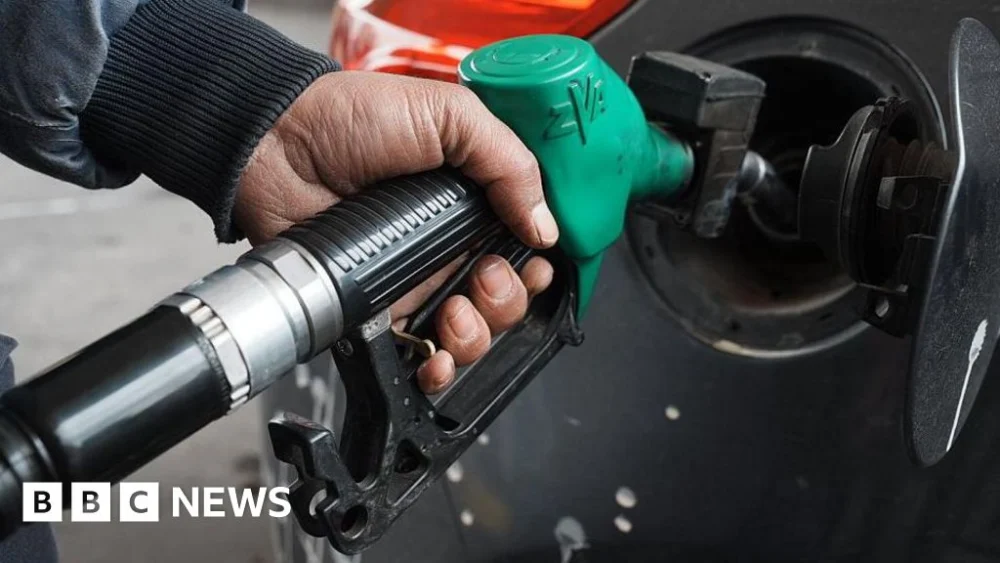
Srinivaasan Balakrishnan, an analyst from the risk research firm Avellon Intelligence, warned that crude oil prices could comfortably surpass the $100 per barrel mark if the disruption to shipments through the Strait of Hormuz is prolonged. He projected that if prices were to hold at this elevated level, US petrol prices could surge by as much as 25 cents per gallon, placing a considerable burden on American motorists and businesses. Similarly, Alasdair Locke, chairman of Motor Fuel Group, the UK’s largest independent forecourt operator, cautioned that the UK would inevitably experience higher fuel prices at the pump. "With the price of oil going up, that is inevitably going to feed through in due course to higher prices at the pump," he stated, emphasizing that the magnitude of the increase would depend on the duration and intensity of the oil price surge.
The resurgence of inflation presents a formidable challenge for central banks globally. Should the pace of price rises accelerate once more, central banks would be faced with a difficult dilemma: either risk embedding higher inflation into the economy by cutting interest rates, or further constrain economic activity by maintaining or even raising rates to combat inflation. This monetary policy tightrope walk could lead to prolonged periods of economic uncertainty and potential stagnation, commonly referred to as stagflation.
Official Responses and Mitigation Strategies
In response to the escalating crisis, government officials in the United States are actively engaging to address the mounting energy price concerns. High-level discussions are underway, with Treasury Secretary Scott Bessent and Energy Secretary Chris Wright scheduled to meet on Tuesday to deliberate on the issue. Secretary of State Marco Rubio affirmed Washington’s commitment to mitigating the economic fallout, stating, "We knew that going in would be a factor. Starting tomorrow you will see us rolling out those phases to try to mitigate against that." While specific details of these mitigation plans were not immediately disclosed, they are likely to involve a combination of strategic petroleum reserve releases, diplomatic efforts to de-escalate tensions, and potentially measures to stabilize international shipping routes.
The crisis also highlights the vulnerabilities of global supply chains and the urgent need for diversification and resilience. Countries heavily reliant on energy imports, particularly from the Middle East, are now confronting the stark reality of their dependencies. The situation serves as a critical reminder for policymakers to re-evaluate energy security strategies and invest in alternative sources and routes to minimize future exposure to geopolitical disruptions.
A Precarious Outlook
The current geopolitical tensions and their immediate economic consequences paint a precarious picture for the global economy. The closure, or even severe impediment, of a vital artery like the Strait of Hormuz has far-reaching implications that extend beyond just oil and gas prices. It affects the cost of everything from raw materials to finished goods, impacting manufacturing, transport, and ultimately, the purchasing power of consumers worldwide.
The world watches anxiously for signs of de-escalation, but the inflammatory rhetoric from Iran, coupled with the ongoing military actions, suggests that a swift resolution may not be imminent. The coming weeks will be critical in determining whether these events represent a temporary shock or the beginning of a prolonged period of elevated energy prices and heightened global economic instability. Governments, businesses, and consumers alike must brace for the potential for sustained volatility and the imperative of adapting to a rapidly changing and increasingly uncertain global economic landscape.