


Global oil prices have surged past the critical $100 per barrel threshold for the first time since 2022, a direct consequence of the escalating US-Israeli military confrontation with Iran. The intensified conflict, marked by fresh waves of airstrikes and growing geopolitical instability, has ignited profound fears of prolonged disruptions to vital energy shipments transiting the Strait of Hormuz, a crucial global chokepoint for crude oil and liquefied natural gas. This sharp escalation signals a significant shift in the global energy landscape, threatening to trigger widespread economic repercussions for consumers and businesses worldwide.
The dramatic spike in oil benchmarks was immediate and stark. In early Monday trading across Asian markets, Brent crude, the international benchmark, rocketed by approximately 15.5%, settling at $107.16 per barrel. Concurrently, Nymex light sweet crude (West Texas Intermediate), the US benchmark, experienced an even more pronounced jump, climbing over 17% to reach $106.77. The speed of the ascent caught many market observers off guard; what some analysts had predicted as a gradual climb to $100 over the week materialized in minutes, with prices leaping 10% in about 60 seconds, followed by another 10% increase within the subsequent 15 minutes. This rapid price action underscores the market’s acute sensitivity to geopolitical risk, particularly concerning the stability of Middle Eastern energy supplies.
The Weekend’s Provocations and Iran’s Leadership Shift
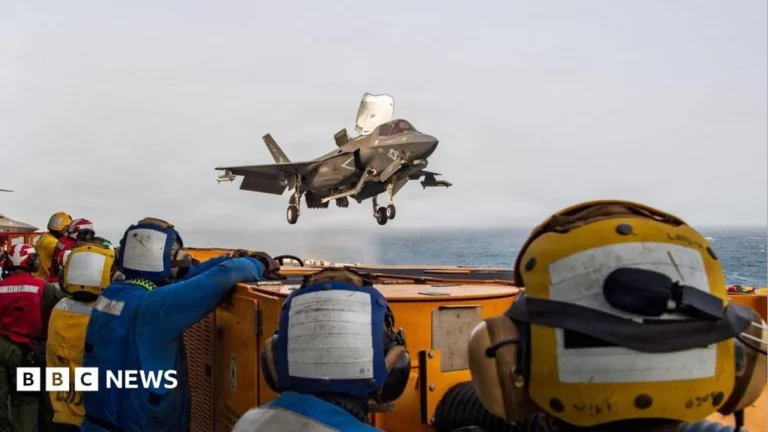
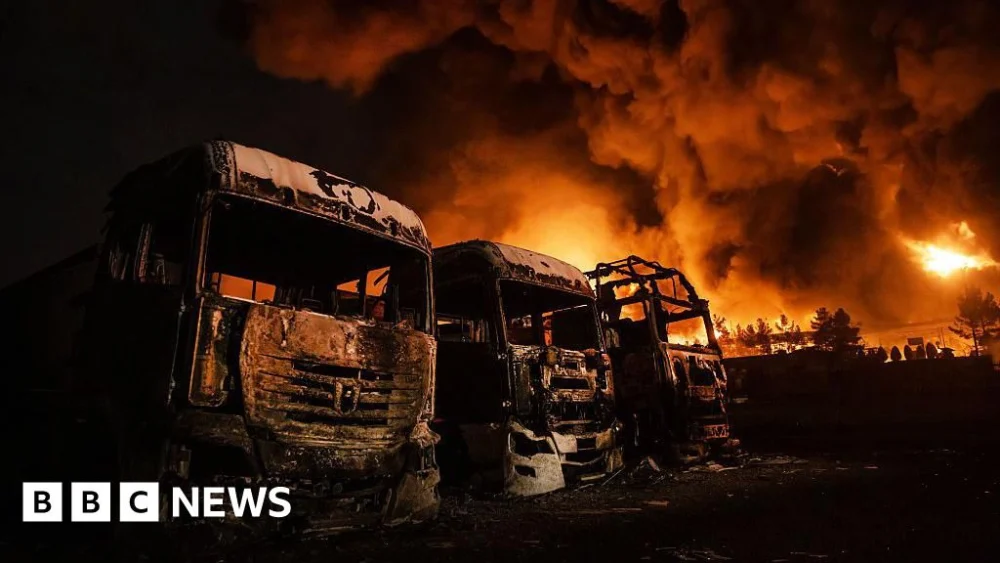
The catalyst for this market panic was a series of significant developments over the weekend. The United States and Israel launched coordinated airstrikes across Iran, targeting multiple strategic locations, including critical oil depots. Satellite imagery and reports from the ground, such as those from Anadolu via Getty Images, depicted significant damage to oil facilities in Tehran, with images showing burning fuel tankers and unusable vehicles at the Shahran oil depot. These attacks directly impacted Iran’s energy infrastructure, raising immediate concerns about its capacity to export oil, even under existing sanctions.
Compounding the geopolitical tension, Iran on Sunday announced the succession of Mojtaba Khamenei, son of the ailing Supreme Leader Ali Khamenei, to assume his father’s paramount role. This swift transition, occurring just a week into the burgeoning conflict, is widely interpreted as a clear signal that hardline elements remain firmly in control of the Islamic Republic’s leadership. For market analysts and international observers, Mojtaba Khamenei’s ascendancy suggests a continuation, if not an intensification, of Iran’s assertive foreign policy and its confrontational stance with Western powers and regional rivals. This leadership continuity under a hardline figure further exacerbates concerns that the conflict is unlikely to de-escalate quickly, thereby maintaining pressure on global energy markets.
The Geopolitical Significance of the Strait of Hormuz
The primary driver of the market’s "rapid fright" is the renewed and heightened threat to shipping through the Strait of Hormuz. This narrow waterway, situated between Iran and Oman, is arguably the world’s most critical oil chokepoint. Approximately one-fifth of global oil consumption, translating to roughly 21 million barrels per day (bpd), and a significant portion of the world’s liquefied natural gas (LNG) transits through this strait. Any prolonged disruption to this maritime artery would have catastrophic consequences for global energy supplies and the world economy.
Last week, markets had displayed a surprising degree of complacency regarding the potential "nightmare scenario" of millions of barrels of crude and LNG being trapped in the Persian Gulf. This relative calm was predicated on an assumption that despite the rhetoric, direct military action impacting the strait would be avoided due to the immense global economic fallout. However, the intensity and targeting of the weekend’s airstrikes, coupled with the explicit destruction of energy infrastructure in Iran and across the Gulf region, shattered this complacency. The market now perceives a tangible and immediate risk that the conflict could directly impede navigation through the strait, either through direct military action, mining, or Iran’s retaliatory closure.
Historical Context and Analyst Projections
The current surge in oil prices above $100 a barrel recalls previous periods of extreme market volatility and geopolitical crises. Historically, oil price spikes have often been linked to Middle Eastern conflicts, such as the 1973 Arab oil embargo, the Iran-Iraq War in the 1980s, and the Gulf Wars. While the immediate context differs, the underlying principle remains the same: any threat to the stability of supply from the world’s most prolific oil-producing region invariably sends shockwaves through global markets.
Analysts are now scrambling to re-evaluate their forecasts, with some predicting even more dramatic price increases if the situation deteriorates further. Should the shutdown of the Strait of Hormuz persist until the end of March, some experts are projecting that oil prices could soar past $150 per barrel, potentially even reaching record highs that surpass the $147.50 peak seen in July 2008. Such a scenario would represent an unprecedented challenge to the global economy, far exceeding the inflationary pressures witnessed in recent years.
Broader Economic Ramifications: Beyond the Pump
The existing rise in crude prices, even before any further escalation, is poised to have immediate and widespread economic consequences. Consumers will feel the pinch directly through significantly higher petrol (gasoline) prices at the pump. This will erode household disposable income, potentially dampening consumer spending and contributing to broader inflationary pressures.
Beyond direct fuel costs, the ripple effects will extend across numerous sectors. Jet fuel, a direct derivative of crude oil, will become substantially more expensive, impacting airline operating costs and likely leading to higher airfares. Shipping costs, already subject to various geopolitical and logistical challenges, will also climb, increasing the price of imported goods. Crucially, vital agricultural precursors such as fertilizers, whose production is energy-intensive and often reliant on natural gas (whose price is also being impacted), will see price hikes. This could lead to increased food production costs and, ultimately, higher food prices for consumers, exacerbating global food insecurity.
The physical supplies from the Gulf region are primarily consumed in Asia, a continent heavily reliant on Middle Eastern oil and gas imports. However, the energy market is globally interconnected. There are already anecdotal reports of Asian consumers aggressively bidding up prices for US liquefied natural gas (LNG), with some tankers initially bound for Europe reportedly turning around in the mid-Atlantic to capitalize on higher prices in the East. This diversion of supply could put upward pressure on European gas prices, further complicating Europe’s energy security efforts, particularly given its ongoing pivot away from Russian energy sources.
Official Reactions and International Response
In response to the sharp jump in prices and the escalating conflict, statements from key international players have begun to emerge. US President Donald Trump, addressing the situation, stated that short-term price increases were a "small price to pay" for effectively addressing and neutralizing Iran’s nuclear threat. This assertion underscores the administration’s strategic rationale behind its aggressive posture towards Tehran, prioritizing national security objectives over immediate economic discomfort.
However, the administration also sought to manage domestic concerns about rising pump prices. The US Energy Secretary clarified on Sunday that Israel, not the United States, was directly targeting Iran’s energy infrastructure. This distinction, while potentially aimed at deflecting domestic criticism, also highlights the complex and often compartmentalized nature of the US-Israeli alliance in the region.
The international community is likely to be closely monitoring the situation. Major oil-importing nations, particularly those in Asia like China, India, and Japan, will be deeply concerned about the economic implications. International bodies such as the International Monetary Fund (IMF) and the World Bank may issue warnings about the potential for a global economic slowdown or even recession if the conflict continues to escalate and energy supplies are significantly curtailed. Discussions within OPEC+ (Organization of the Petroleum Exporting Countries and its allies, including Russia) will undoubtedly intensify, with pressure mounting on swing producers, particularly Saudi Arabia and the UAE, to potentially increase output to stabilize markets, although their capacity and willingness to do so in such a volatile environment remain uncertain. Strategic petroleum reserves in major consumer nations, such as the US Strategic Petroleum Reserve (SPR), could also be considered for release to temper price surges, though such measures are typically reserved for acute supply crises.
Iran’s Internal Politics and Regional Dynamics
The appointment of Mojtaba Khamenei as Supreme Leader is a pivotal development within Iran’s internal political landscape. For decades, the succession of Ali Khamenei has been a subject of intense speculation. Mojtaba, long considered a powerful behind-the-scenes figure, particularly within the Revolutionary Guard Corps and the Basij militia, represents a continuation of the hardline clerical establishment that has governed Iran since the 1979 revolution. His ascendance signals that the regime is consolidating power and is unlikely to yield to external pressures or pursue a more moderate path in the face of conflict. This internal stability, albeit under a hardline leadership, suggests a protracted confrontation rather than a swift resolution.
Regionally, the conflict has profound implications. The US-Israeli alliance against Iran has long been a defining feature of Middle Eastern geopolitics. The direct targeting of Iranian assets by both nations marks a significant escalation from previous proxy conflicts or cyber warfare. This could draw in other regional actors, potentially destabilizing the entire Gulf region and beyond. The intricate web of alliances and rivalries – involving Saudi Arabia, the UAE, Qatar, and various non-state actors – makes the situation inherently fragile and prone to rapid expansion.
Energy Security and the Future Outlook
The current crisis underscores the perennial challenge of energy security for nations worldwide. The reliance on fossil fuels, particularly from geopolitically volatile regions, leaves economies vulnerable to shocks. In the short term, nations will be focused on securing existing supplies and potentially tapping into strategic reserves. In the medium to long term, this crisis could accelerate the global transition towards renewable energy sources and diversification of energy supply chains, although such transitions require significant time and investment.
The coming weeks will be critical. The trajectory of oil prices, and indeed the global economy, hinges on the de-escalation or further intensification of the US-Israeli conflict with Iran and, crucially, on whether the fears of disruption in the Strait of Hormuz materialize into an actual impediment to shipping. The world watches with bated breath as the geopolitical chessboard in the Middle East undergoes its most volatile re-ordering in years, with profound implications for energy markets and the stability of the international order.